
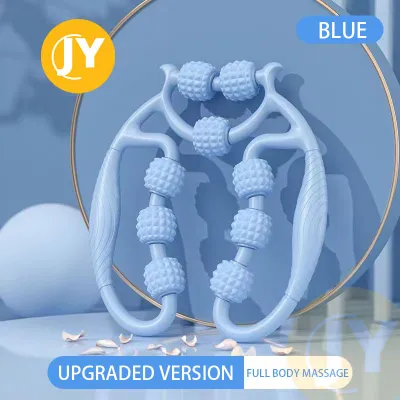
Finding the best 360 muscle roller massager for your yoga recovery in the Philippines depends on matching the tool’s material density, clamp flexibility, and texture to your specific practice and physical needs. Unlike traditional flat foam rollers that require you to roll on the floor using your body weight, a 360-degree muscle roller uses a flexible, spring-like clamp mechanism with multiple independent rolling wheels to wrap around your limbs. This allows you to control the pressure manually with your hands, making it highly customizable for post-yoga recovery. In a tropical climate where humidity and sweat are constant factors, choosing the right materials and design ensures your recovery tool remains hygienic, durable, and effective.
Key Features to Evaluate for Yoga Recovery
Traditional flat foam rollers require ample floor space and core strength to balance and apply pressure. This can sometimes feel exhausting after an intense, sweaty Vinyasa flow. A 360-degree clamp roller, by contrast, lets you sit comfortably on your yoga mat while manually squeezing the handles to compress your calves, thighs, or forearms. This targeted compression mimics a dual-sided massage, addressing both the front and back of a limb simultaneously without requiring you to support your own body weight. By eliminating the need to hold plank positions or awkward side bridges just to roll out your IT band, these clamp-style rollers make post-practice recovery significantly more relaxing and accessible.
The wheels of these rollers are typically made of either Ethylene-Vinyl Acetate (EVA) or Expanded Polypropylene (EPP). EVA is an elastomeric polymer that offers a rubber-like softness and flexibility. It provides a gentler, cushioning pressure that is ideal for restorative yoga practitioners or those with sensitive muscles. EPP, on the other hand, is a high-density, rigid foam that does not compress easily, making it better suited for deep tissue work. In the Philippines, high humidity can cause low-grade, open-cell foams to absorb moisture and develop odors. Verifying that your roller uses high-quality, closed-cell EVA or dense, non-porous plastic is essential for maintaining hygiene over time.
Products mentioned in this guide
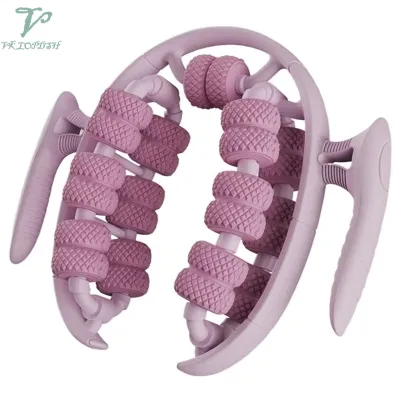

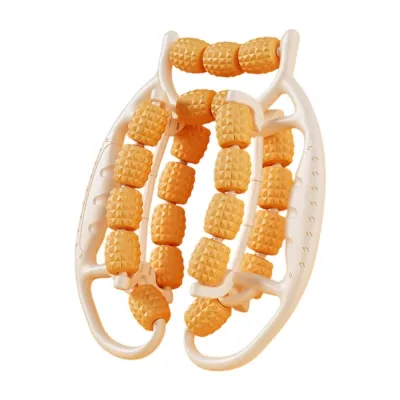
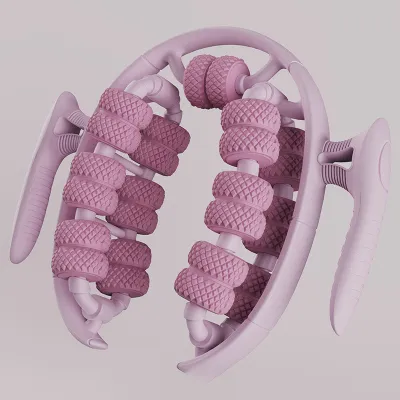
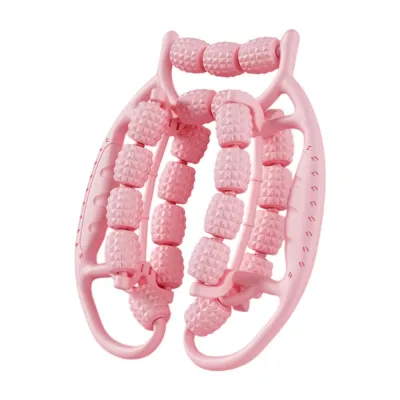

Prices are valid at publication and may change. Please refer to the product page for the latest price.
Surface textures also play a critical role in how the roller interacts with your fascia. Smooth wheels provide even, continuous pressure across the muscle belly, which is excellent for general relaxation and flushing out metabolic waste after a long session. Textured wheels, featuring grids, ridges, or pointed nodules, act like the fingers of a massage therapist to target specific trigger points. If your yoga practice involves deep lunges and balances that leave your calves and quadriceps tight, a textured surface can help release these stubborn areas, provided you can tolerate the deeper sensation. The independent rotation of each wheel is also crucial; look for rollers with smooth internal bearings that prevent the wheels from sticking or dragging against your skin.
Sizing and Ergonomics for Different Body Types
Because 360-degree rollers rely on a flexible U-shaped frame, the width and elasticity of this frame dictate which body parts you can massage. Most standard models are designed to flex wide enough to accommodate average calf and thigh sizes. However, if you have a highly muscular build or wish to use the roller on wider areas like the hips, you must verify the maximum expansion width of the clamp. A frame that is too stiff will pinch too hard, causing discomfort, while a frame that is too loose will not provide enough compression. Some advanced models feature adjustable spring-loaded frames that allow you to customize the tension to match your body type.

Controlling the pressure of a 360-degree roller requires a secure grip. Look for handles with ergonomic contours and non-slip rubber or textured plastic overlays. In the warm, humid climate of the Philippines, sweat is inevitable during and after yoga. Slippery, smooth plastic handles can cause your hands to slide, leading to uneven pressure or accidental drops. A secure, comfortable grip allows you to maintain steady, controlled compression without straining your wrists or hands. This is particularly important after arm-balance-heavy classes where your wrists and forearms are already fatigued and need a gentle, strain-free recovery process.
Many yogis in the Philippines commute to local studios in urban centers or travel to coastal areas for weekend yoga retreats. A lightweight, compact 360-degree roller is highly portable and can easily fit into a standard gym bag or backpack alongside your yoga mat. Consider the weight of the plastic frame and wheels; hollow-wheel designs are generally lighter and easier to carry, though you should verify that the plastic core is reinforced to prevent cracking under repeated tension. Choosing a compact model ensures you can maintain your recovery routine whether you are practicing at home, in a studio, or on a trip.
Budgeting and Value Across Price Tiers
Typically priced under ₱300 on local e-commerce platforms, entry-level 360 rollers feature basic polypropylene frames and hard plastic or low-density foam wheels. While highly affordable, these models often have limited flexibility, and the plastic joints may squeak or wear out quickly under regular use. They are suitable for beginners who want to test the concept of clamp rolling before investing in a more durable tool. However, be prepared for a firmer, less cushioned feel, as the wheels on these budget options are often made of hard, unyielding plastics rather than soft EVA foam.
Ranging from ₱400 to ₱900, mid-range rollers offer a significant upgrade in material quality and ergonomics. You will find flexible, high-tensile plastic frames that retain their shape over time, along with comfortable rubberized handles. The wheels are usually made of medium-density EVA foam with defined textures for better myofascial release. These rollers strike an excellent balance of durability and comfort for regular yoga practitioners. They are built to withstand daily use and are less likely to lose their clamping tension after a few months of stretching and squeezing.
Priced above ₱1,000, premium 360 muscle rollers may feature adjustable spring-loaded tension mechanisms, eco-friendly high-density materials, and specialized multi-angle wheel configurations. Some premium models allow you to adjust the distance between the rollers to customize the fit for different limb sizes. These are ideal for dedicated athletes, yoga teachers, or individuals recovering from chronic muscle tightness who require a highly customizable tool. The materials used in this tier are highly resistant to sweat and humidity, ensuring a much longer lifespan.
When shopping on e-commerce platforms, price alone should not dictate your choice. Always check the seller’s rating and read customer reviews, focusing on feedback regarding the flexibility of the frame and whether the wheels spin smoothly. Look for shops that offer clear return policies in case the roller arrives with stiff wheels or a cracked frame, ensuring your investment is protected. Pay close attention to user photos to verify that the product matches the description and that the materials look durable.
Building Your Shortlist: Matching Rollers to Recovery Goals
Active, strength-based yoga styles like Ashtanga, Vinyasa, or Power Yoga place high demands on your major muscle groups, particularly the quadriceps, hamstrings, and calves. To recover effectively, look for a high-density, textured 360 roller. The firm nodules will help address deep-seated tension and promote circulation in fatigued limbs. A sturdy, high-tensile frame is necessary to deliver the deep compression required to penetrate these larger muscle groups. Using the roller immediately after your practice can help ease the transition from intense physical exertion to a state of rest.
If your practice focuses on slow stretching, joint mobility, and relaxation, such as Yin or Restorative yoga, your recovery tool should match this gentle approach. A medium-density roller with smooth or lightly textured EVA wheels is ideal. This setup provides a soothing, broad compression that encourages the nervous system to wind down without triggering a pain response. The goal here is gentle myofascial release that complements the passive stretches of your practice, helping you sink deeper into a state of physical and mental relaxation.
While 360-degree clamp rollers are exceptionally efficient for limbs—such as the IT band, calves, and forearms—they have structural limitations. Because of their U-shaped design, they cannot be used effectively on the flat surfaces of your back, spine, or shoulder girdle. If your yoga-related tension is concentrated in your upper back or shoulders, you should pair your 360 roller with a traditional flat foam roller or a massage ball. For lower-body tension, however, the 360 roller excels at wrapping around the calf or thigh to flush out tightness that flat rollers often miss. Understanding these structural boundaries helps you build a well-rounded recovery toolkit.
Safe Usage Guidelines and Equipment Maintenance
When using a 360-degree muscle roller, always focus on the fleshy muscle bellies of your arms and legs. Avoid applying direct pressure to bony areas, such as the kneecap, shinbone, elbow, or ankle joints. Squeezing the clamp directly over joints can cause inflammation or bruising. Additionally, never attempt to clamp the roller around your neck or directly over your spine, as this can compress delicate nerves and vertebrae. Keep your movements slow and controlled, gliding the roller along the length of the muscle rather than rushing back and forth.
Self-myofascial release should feel like a deep, dull pressure that gradually releases. If you experience sharp, shooting, or radiating pain, stop immediately. This is a sign that you may be compressing a nerve or aggravating an underlying injury. Do not force your muscles to endure extreme pain, as this causes them to tense up defensively, defeating the purpose of recovery. If soreness persists for several days or is accompanied by swelling, consult a healthcare professional rather than continuing to roll.
The tropical climate of the Philippines creates a warm, humid environment where bacteria and mold can thrive on sweat-soaked equipment. After every recovery session, wipe down your roller’s wheels and handles with a damp cloth and a mild, non-abrasive soap. Avoid harsh chemical cleaners that can degrade EVA foam or weaken the plastic frame. Allow the roller to air dry completely in a well-ventilated indoor space before storing it. This simple routine prevents the buildup of odors and ensures your equipment remains hygienic for your next practice.
To prolong the lifespan of your 360 muscle roller, store it in a cool, dry place away from direct sunlight. Leaving your roller on a sunny balcony or inside a hot car can warp the plastic frame and cause the foam wheels to dry out, crack, or lose their elasticity. Keep it in a dedicated storage bin or on a shelf alongside your yoga blocks and straps to ensure it remains in peak condition. Proper storage protects your investment and ensures the materials retain their supportive properties for years to come.
Frequently Asked Questions (FAQ)
Can a 360 muscle roller replace professional massage therapy?
No, a 360 muscle roller is designed for daily maintenance and minor muscle tension relief; it cannot replace the targeted assessment and clinical treatment provided by a professional massage therapist or physical therapist. While it is an excellent tool for self-myofascial release between yoga sessions, you should seek professional care for persistent pain, joint issues, or acute injuries. Using the roller should be viewed as a supportive self-care practice rather than a medical solution.
How long should a single rolling session last after yoga?
A post-yoga rolling session should be relatively brief, focusing on target muscle groups for about 1 to 2 minutes per area. Spending too much time on a single spot can irritate the skin and underlying tissues, leading to bruising or increased soreness. Keep the movements slow and controlled, and stop immediately if you feel any sharp discomfort. A total session of 10 to 15 minutes for both legs is usually sufficient to promote relaxation.

Community discussion
Share your experience or ask a question. Comments are reviewed before publication.