
Choosing a walking pad that fits seamlessly into a compact condominium requires balancing your daily fitness goals with the physical realities of limited floor space. To find the right machine, you must measure your available floor area, compare the physical footprints of different models, and evaluate how easily the unit folds or slides away when not in use. By focusing on these spatial constraints alongside your personal stride length and weight requirements, you can maintain an active lifestyle without turning your living room into a permanently cluttered gym.
Measure Your Available Space Before Buying
Before browsing online marketplaces or visiting showrooms, you must establish the exact physical boundaries of your workout zone. Start by measuring the floor area where you plan to use the walking pad. A safe setup requires more than just the machine’s physical dimensions. You must account for a safety clearance zone around the perimeter, particularly behind the belt, to prevent injury in case of a slip. Ensure there is enough lateral space for natural arm swinging and adequate ventilation around the motor housing.
The journey of your walking pad from delivery to your living room also requires careful planning. Measure the narrowest points of your condo building’s entryways, including elevator doors, hallway corners, and your unit’s main doorway. Many buyers overlook these transit routes, only to find that a bulky box cannot clear the tight angles of a standard corridor. Knowing these dimensions beforehand helps you verify whether a packaged machine can safely reach your front door.
Products mentioned in this guide
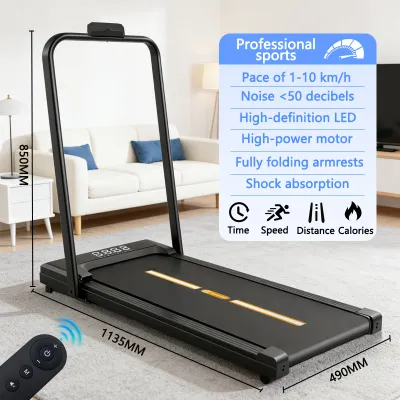
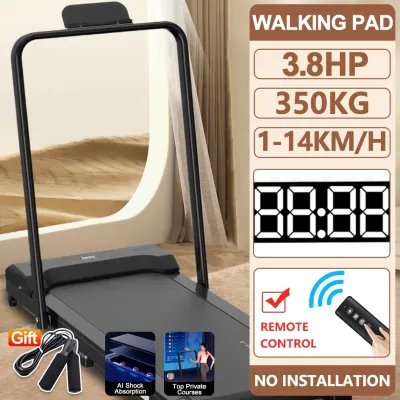
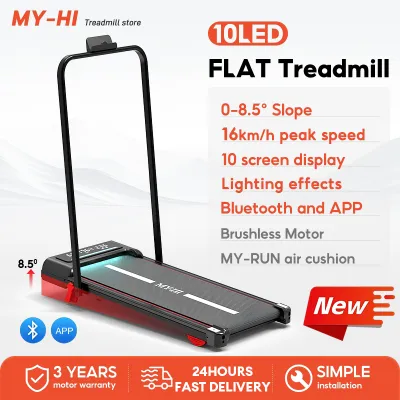
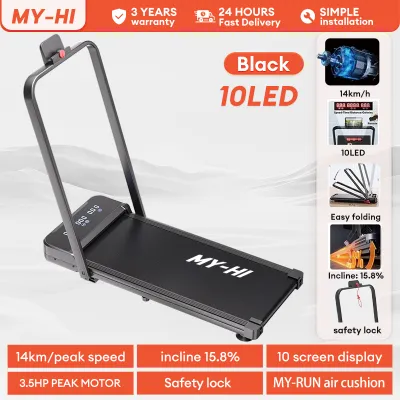
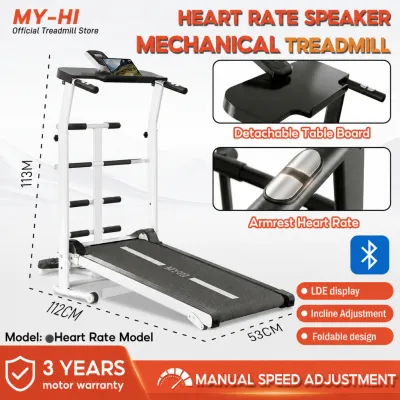
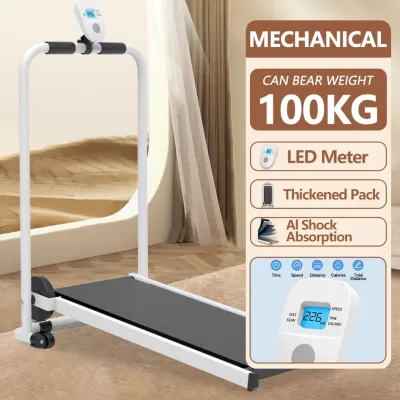
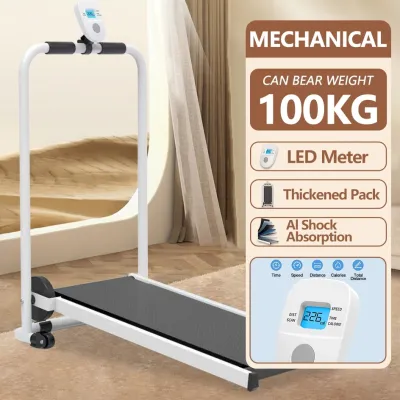
Prices are valid at publication and may change. Please refer to the product page for the latest price.
Finally, identify your primary storage locations and take precise measurements of their height, width, and depth. If you plan to slide the walking pad under a sofa or bed, measure the vertical clearance from the floor to the lowest point of the furniture frame. For vertical storage behind a door or inside a closet, measure the available depth and height to ensure the unit can stand securely without blocking pathways.
Compare Walking Pad Dimensions and Footprints
Understanding the structural differences between traditional treadmills and low-profile walking pads is essential for managing condo space. Traditional treadmills feature bulky frames, upright consoles, and wide running decks. In contrast, walking pads are streamlined, low-profile machines built specifically for walking or light jogging. They feature a significantly lower deck height, which makes them easier to store and preserves precious vertical headroom in units with lower ceilings.

When comparing walking pad dimensions, you must match the running belt size to your physical height and natural walking stride. A belt that is too short or too narrow can force you to shorten your stride or constantly monitor your footing, increasing the risk of stepping off the edge. Taller users with longer strides generally require a longer deck to walk comfortably. Conversely, if you have a shorter stride, you can safely opt for a more compact model that saves valuable floor space.
The visual footprint of the machine also plays a major role in how spacious your condo feels. Some walking pads come with a fixed or foldable handlebar that provides stability but adds visual bulk when stored. Models without handlebars offer a completely flat profile that blends easily into the room when tucked under a bed. Consider whether you require the physical support of a handlebar or if you prefer the minimalist aesthetic of a completely flat, handle-free design.
Evaluate Folding and Storage Mechanisms
The storage mechanism of a walking pad determines how easily you can transition your living space from a home gym back to a relaxing environment. Walking pads generally fall into two design categories: 180-degree foldable models and flat, non-folding models. Foldable models use a hinged deck that folds completely in half, significantly reducing the machine’s length for storage in tight closets. However, this folding mechanism increases the overall thickness of the folded unit, which may prevent it from sliding under low-clearance furniture.
Flat, non-folding under-desk models maintain a constant length but offer an ultra-slim profile. These units are ideal if your primary storage strategy is to slide the machine directly under a bed or sofa. Because they do not fold, they require a longer storage space but remain thin enough to clear low furniture frames. When choosing between these designs, evaluate your daily routine and determine whether you prefer lifting a folded unit into a closet or sliding a flat unit under furniture.
Regardless of the folding style, you must check the overall weight of the walking pad and verify the presence of transport wheels. Moving a heavy piece of fitness equipment every day can quickly become a chore if the machine lacks built-in wheels. Look for models equipped with smooth-rolling transport wheels on the base, which allow you to tilt and roll the machine across your floor with minimal physical strain. Always review the manufacturer’s instructions for safe folding and unfolding, and ensure that any unit stored vertically is properly secured.
Check Weight Capacity and Motor Specs for Your Needs
A compact design should never come at the expense of safety and mechanical durability. Before making a purchase, verify the maximum weight capacity listed on the product label. It is highly recommended to choose a walking pad with a weight capacity that comfortably exceeds your actual body weight. Operating a machine close to its maximum limit puts excessive strain on the motor and drive belt, which can lead to overheating and premature mechanical failure.
The motor horsepower and speed limits of a walking pad are directly tied to its physical size. Ultra-compact and lightweight models typically feature smaller, lighter-duty motors with lower horsepower ratings. These motors are designed specifically for walking speeds and may struggle if subjected to continuous running. Check the specifications to ensure the motor can sustain your intended walking pace, and verify the top speed limit to confirm it aligns with your fitness goals.
Living in a multi-story condominium means your workouts can easily affect your neighbors. Walking pads with poorly insulated motors or inadequate shock absorption can transfer loud vibrations and thumping sounds through the floor to the unit below. Look for models that feature noise-reduction technology, brushless motors, and multi-layered running belts designed to absorb impact. Checking these specifications helps ensure your daily exercise routine remains quiet enough to maintain good relations with neighbors.
Common Mistakes When Buying a Walking Pad for Small Spaces
One of the most frequent oversights when setting up a walking pad in a condo is ignoring the placement of power outlets. Walking pads require a reliable power source, and using long extension cords can create serious tripping hazards or overload your electrical circuits. Always plan your workout setup near an existing wall outlet, keeping the machine’s power cord path clear of high-traffic walkways.
Another common mistake is assuming that any machine labeled ‘under-desk’ or ‘ultra-slim’ will automatically fit under your existing furniture. Furniture heights vary widely, and even a small discrepancy can prevent a walking pad from sliding under a sofa. Always measure the exact clearance height of your furniture and compare it directly to the deck height of the walking pad, accounting for any raised feet.
Finally, some buyers prioritize a small physical footprint so heavily that they select a machine with a dangerously narrow running belt. While a very narrow belt saves floor space, it leaves almost no room for lateral movement, making it easy to step onto the side rails and lose your balance. Prioritize a belt width that allows you to walk naturally and safely, even if it means dedicating a slightly larger area to your workout setup.
Frequently Asked Questions (FAQ)
Can I use a walking pad on a condo balcony?
Using a walking pad on an outdoor or semi-outdoor condo balcony is generally not recommended due to environmental risks. High humidity, direct sunlight, and unexpected rain can quickly damage the motor, degrade the running belt, and corrode internal electronic components. Exposure to moisture also creates electrical safety hazards and will likely void the manufacturer’s warranty. For safe operation and to extend the lifespan of your machine, always use and store the walking pad inside a fully enclosed, climate-controlled room.
Do I need a protective mat under my walking pad?
Yes, using a dedicated equipment mat under your walking pad is highly beneficial. A high-density rubber or PVC mat protects your condo’s hardwood, laminate, or tile flooring from scratches and scuffs caused by the machine’s weight and movement. Additionally, the mat helps absorb vibrations, significantly reducing the amount of noise transmitted to the neighbors living directly below you. When planning your setup, remember that the mat will add slightly to the overall footprint and should be sized to fit completely under the walking pad’s base.

Community discussion
Share your experience or ask a question. Comments are reviewed before publication.