
Selecting the right diving flashlight is not just about finding the brightest beam; it is about matching technical specifications to your specific underwater environment, skill level, and safety requirements. Whether you are exploring a vibrant coral reef in the warm tropical waters of the Philippines, navigating a dark shipwreck, or conducting a night dive, your light is a critical piece of safety and exploration gear. To make an informed decision, you must understand how three core specifications—lumens, beam angle, and depth rating—interact with the physics of water.
Equipment cannot replace proper training and situational judgment, so your choice should always align with your certification limits. A light that fails at depth can turn a routine dive into an emergency, making it essential to evaluate these specifications before your next descent.
Understanding Lumens and Light Output
Lumens measure the total amount of visible light emitted by a source. Underwater, however, the light you actually see is heavily influenced by water absorption and scattering. Water is much denser than air and absorbs light rapidly, filtering out warmer red and orange wavelengths first, which means even a high-lumen light will have a shorter effective range than it would on land.
Products mentioned in this guide
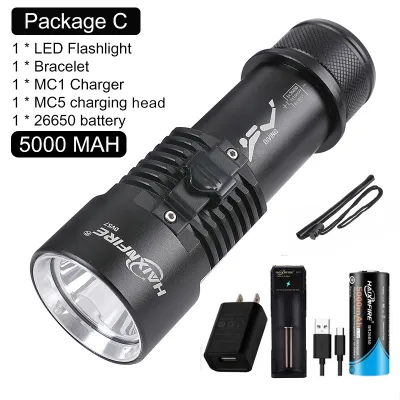
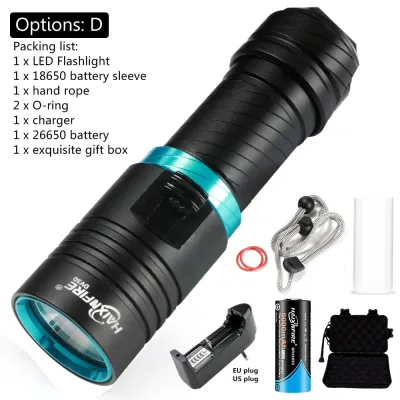
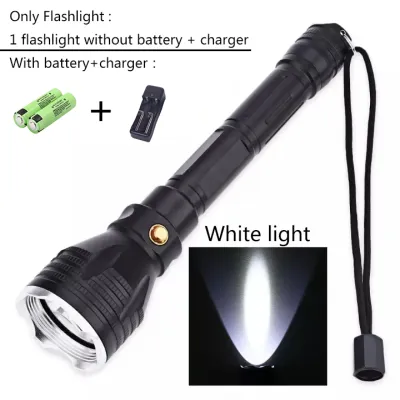
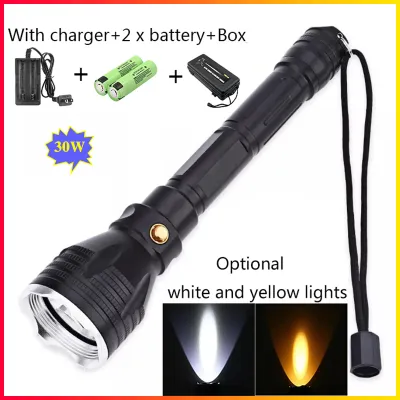
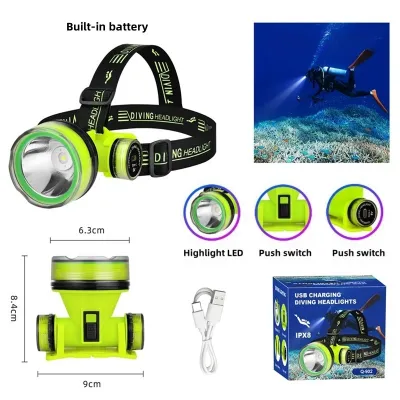
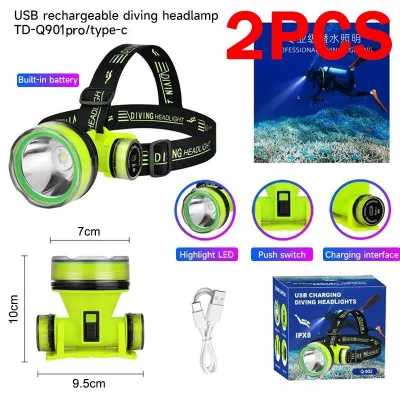
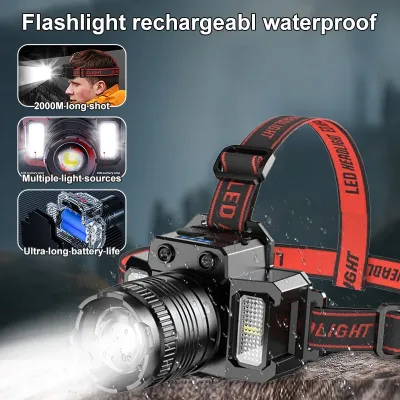
Prices are valid at publication and may change. Please refer to the product page for the latest price.
When evaluating diving flashlights, it is vital to differentiate between peak lumens and sustained output. Many manufacturers advertise a high “turbo” lumen rating that the flashlight can only maintain for a few minutes before thermal regulation automatically steps down the brightness to prevent overheating. For safe underwater navigation, you should look for the rated or sustained output specifications, which indicate the continuous brightness the light can maintain over the course of a standard dive.
Your choice of light output should depend entirely on your diving environment and task. A compact light emitting 300 to 800 lumens is ideal for daytime crevice inspection, allowing you to spot hidden marine life without washing out natural colors. For recreational night diving, a primary light offering 1,000 to 2,000 sustained lumens provides ample illumination to navigate clear tropical waters without blinding your dive buddies. Technical, cave, or wreck diving in murky water may require lights exceeding 2,000 lumens, though these must be balanced against battery capacity and burn time to ensure you are never left in the dark.
Choosing the Right Beam Angle for Your Dive
The beam angle determines how the light is distributed, directly affecting both your field of view and how far the light can penetrate through the water. Choosing between a narrow spot beam and a wide flood beam is a trade-off between throw distance and coverage area.

A narrow spot beam, typically ranging from 5 to 15 degrees, concentrates the light into a tight, intense column. This design is highly effective for cutting through murky water, illuminating distant objects, and signaling your dive buddy. The concentrated beam allows you to point out specific marine life or communicate standard light signals across a distance, making it the preferred choice for primary dive lights and technical diving.
Conversely, a wide flood beam, usually between 60 and 120 degrees, spreads the light evenly across a broad area. This is the standard configuration for underwater photography and videography, as it eliminates harsh hotspots and mimics natural ambient light. However, wide beams are highly susceptible to backscatter in water with high concentrations of suspended particles, plankton, or silt. The wide light path illuminates these particles directly in front of your eyes or camera lens, creating a snowy effect that severely degrades visibility. To mitigate backscatter, divers should position wide lights off-axis or switch to a narrower beam when water clarity drops.
For a versatile setup, many experienced divers utilize a multi-light configuration. This involves carrying a narrow-beam primary light on your hand or harness for signaling and general navigation, paired with a compact, wide-beam backup light or video light that can be switched on when inspecting reef walls or capturing close-up footage.
Decoding Depth Ratings and Pressure Resistance
A flashlight’s depth rating is a measure of its structural integrity under the immense pressure of the ocean. For every 10 meters of depth, pressure increases by approximately one atmosphere, meaning your gear must withstand significant crushing forces.
It is crucial to understand that a manufacturer’s tested depth rating represents a static laboratory limit, not a dynamic diving limit. Movement through the water, temperature fluctuations, and aging seals can all reduce the effective waterproof limit of your light. To ensure safety and longevity, always maintain a conservative safety margin; for example, if you plan to dive to the recreational limit of 40 meters, select a light rated to at least 100 meters to guarantee structural integrity under real-world conditions.
When purchasing, inspect the physical construction of the light’s sealing system. High-quality diving flashlights feature double or triple O-ring seals at every joint, robust anodized aluminum or heavy-duty engineered polymer bodies, and deep, clean threads on the battery compartment. These features prevent the high-pressure water from forcing its way past the seals and destroying the internal electronics.
Before every dive, perform a mandatory seal check to prevent flooding. Open the battery compartment and inspect the O-rings for hair, sand, lint, or cracks. Even a single strand of hair can create a micro-channel for water to enter under pressure. Apply a very thin film of manufacturer-approved silicone grease to the O-rings to keep them supple and ensure a smooth seal; the grease should make the O-ring look shiny, not gloppy or thick, as excess grease can attract sand and debris. Ensure the O-rings sit perfectly flat in their grooves without twists or pinches before screwing the compartment shut. If you observe any cracks, stretching, or if the light shows signs of internal condensation during setup, stop using the light immediately and do not take it underwater.
Secondary Specs That Influence Your Decision
Beyond brightness, beam angle, and depth ratings, several auxiliary specifications will influence how user-friendly and reliable your diving flashlight is over time.
Battery type and runtime are critical considerations, especially if you travel frequently. Rechargeable Lithium-ion batteries (such as 18650 or 21700 cells) offer superior power density, stable voltage output, and are highly cost-effective over their lifespan. However, they require access to charging infrastructure, which can be a challenge on remote liveaboard trips or isolated island destinations. Disposable alkaline batteries are widely available in local shops, but they suffer from rapid voltage drops, shorter runtimes, and present significant environmental disposal challenges.
Color temperature and the Color Rendering Index (CRI) dictate how natural underwater scenes will appear. Water filters out warm colors, leaving deep dives looking monochromatic and blue. A light with a high CRI (typically 90 or above) and a warm-to-neutral color temperature (around 4000K to 5000K) will restore the brilliant reds, oranges, and yellows of tropical corals and marine life. Cooler color temperatures (6000K and above) may appear brighter to the eye but can make the underwater environment look washed out and artificial.
Finally, consider the materials and buoyancy of the flashlight. Anodized aircraft-grade aluminum bodies offer exceptional durability, impact resistance, and excellent heat dissipation, which is vital for keeping high-powered LEDs cool. While high-end aluminum lights can represent an investment of ₱5,000 or more, their durability makes them a safer choice for deep dives. However, aluminum lights are heavier in the water, which can affect your wrist fatigue and overall underwater trim. Engineered plastics and composites are lighter, corrosion-free, and often more budget-friendly, but they may not dissipate heat as efficiently, sometimes requiring the light to be used only underwater to prevent thermal damage.
Frequently Asked Questions (FAQ)
Can I use a regular waterproof flashlight for scuba diving? (FAQ)
No, standard waterproof flashlights are not designed to withstand the pressure of scuba diving. A typical household waterproof light is rated using the IPX system (such as IPX7 or IPX8), which only certifies protection against temporary immersion in shallow water, usually up to 1 or 2 meters. At scuba depths, the crushing pressure will easily bypass the single seals of a standard flashlight, flooding the battery compartment and causing immediate electrical failure. Professional diving flashlights are specifically engineered with thick walls, reinforced lenses, and multi-O-ring sealing systems designed to withstand multiple atmospheres of pressure.
How do I maintain the O-rings on my diving flashlight? (FAQ)
Proper O-ring maintenance is the single most effective way to prevent your diving flashlight from flooding. After every dive, rinse the sealed flashlight thoroughly in fresh water to remove salt deposits and sand. To service the seals, carefully remove the O-rings using a blunt tool, such as a plastic card or a dedicated O-ring remover, to avoid scratching the metal or plastic grooves. Clean the O-rings and the grooves with a lint-free cloth, inspect them under good light for any signs of cracking, flattening, or debris, and apply a light coating of silicone grease before reassembling. If an O-ring appears stretched, cracked, or loses its elasticity, replace it immediately with an identical manufacturer-approved spare.

Community discussion
Share your experience or ask a question. Comments are reviewed before publication.