
Landing a fish successfully requires the right tool, especially when dealing with steep banks, high concrete piers, or the unstable deck of a small boat. A foldable fishing net with rod offers the perfect balance of reach and portability, allowing you to secure your catch without carrying a bulky, fixed-frame net. To choose the right model, you must evaluate the environments you fish in, the species you target, and the mechanical reliability of the folding and extending components.
Selecting the wrong net can lead to lost fish, damaged gear, or even safety hazards if you overextend yourself on slippery surfaces. By focusing on key specifications like handle length, frame materials, mesh types, and locking mechanisms, you can find a tool that enhances your fishing experience while remaining easy to transport. This guide breaks down the essential features to verify before making your choice.
Match the Rod Length and Net Size to Your Fishing Environment
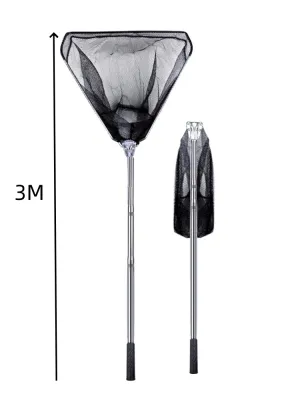
The physical environment where you fish dictates the handle length you need. If you frequently fish from high concrete piers, steep riverbanks, or elevated coastal rocks, a long telescopic handle is necessary to reach the water safely. Conversely, if you cast from a low-profile kayak, a paddleboard, or a traditional small boat, a shorter handle is much easier to maneuver in tight spaces and prevents the net from becoming unwieldy.
Products mentioned in this guide
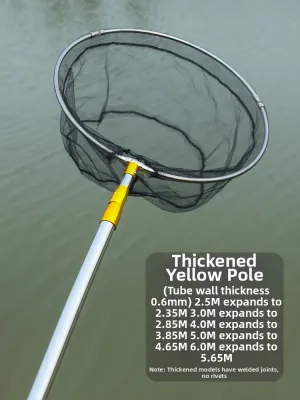
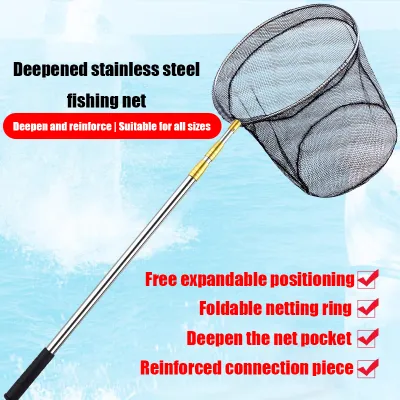
Prices are valid at publication and may change. Please refer to the product page for the latest price.
Safety must always be your primary concern when landing a fish. Equipment cannot replace sound judgment, and you should never lean over dangerous ledges or step onto wet, algae-covered rocks just to reach a fish. If a fish is out of reach of your extended net, it is safer to reposition yourself or let the fish go rather than risking a fall into deep or fast-moving water.
Net hoop size and depth must match your target species. Small tilapia or local panfish require only a shallow, compact hoop that is easy to sweep through the water. Larger species like mangrove jack, barramundi, or coastal groupers need a deep, wide net that can accommodate their entire body length and prevent them from flopping out during the lift.
Consider the physical trade-offs of handle length. A longer handle provides excellent reach but acts as a lever, making the net feel significantly heavier when fully extended. Verify your physical strength and the stability of your fishing platform before choosing an ultra-long handle, as managing a heavy, extended net with one hand while holding a loaded fishing rod with the other requires substantial coordination.
Evaluate Frame Materials and Folding Mechanisms for Durability
The materials used in the frame and handle determine the net’s weight, strength, and resistance to the elements. Aluminum is a popular choice because it balances structural rigidity with corrosion resistance, though it can bend if subjected to extreme leverage. Carbon fiber offers exceptional lightweight performance and stiffness, making it ideal for long handles, but it can be brittle if knocked against hard rocks or boat gunwales. Fiberglass is highly durable and flexible, though it tends to be heavier than carbon fiber.

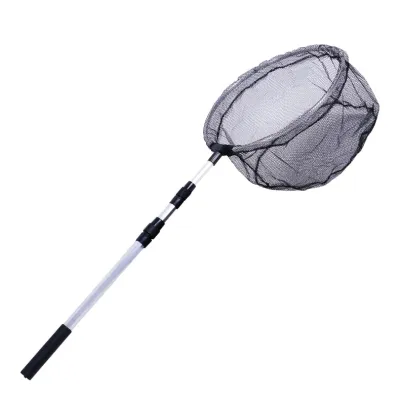
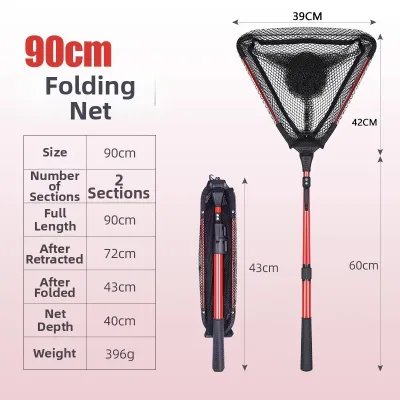
Folding mechanisms are what make these nets highly portable, but they also introduce potential points of failure. Common designs include telescopic handles that slide into themselves, collapsible hoops that fold in half or thirds, and detachable heads that unscrew completely. Each system affects the packed size, so you should choose one that fits your primary transportation method, whether that is a tackle backpack, a boat compartment, or a motorcycle storage box.
Before purchasing, inspect the locking pins, twist-locks, or latches that keep the handle and hoop secure. A weak locking mechanism can fail under the weight of a wet net and a struggling fish, causing the handle to collapse unexpectedly. Look for heavy-duty spring pins or robust threaded collars that lock securely without slipping, and verify that they can be operated easily even when your hands are wet or cold.
Avoid nets with overly complex folding joints made of thin plastic, as these are prone to cracking under stress. Metal hinges or high-density composite joints offer much better longevity. If you plan to fish in demanding conditions, prioritize simple, rugged locking systems that can be easily cleaned of sand and grit in the field.
Select the Right Mesh Type to Protect Your Catch and Prevent Tangles
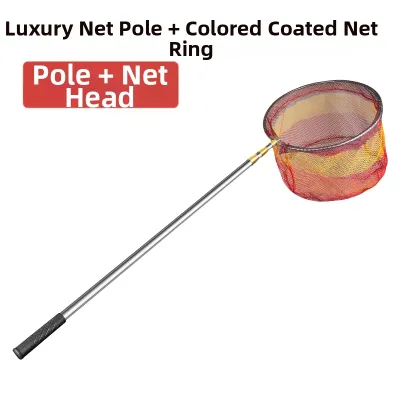
Mesh material choice is critical for both fish conservation and angler convenience. Rubber-coated mesh or pure silicone nets are highly recommended for catch-and-release fishing. These smooth materials are gentle on the fish’s protective slime coat and scales, which helps reduce post-release mortality. Nylon mesh, while lighter and easier to sweep through the water, can strip away this vital barrier and easily tangle with multi-hook lures.
If you use lures with treble hooks, a rubberized net is almost essential. Standard nylon mesh allows hook points and barbs to penetrate the fibers, leading to frustrating tangles that waste valuable fishing time and can damage the net. Rubber-coated mesh resists hook penetration, allowing you to free your lure quickly and get back to fishing.
Consider mesh size and knotting relative to your target species. Knotless mesh is far superior for fish safety, as knots can act like sandpaper against a fish’s skin and fins. Smaller mesh sizes are ideal for delicate baitfish or small species, while larger, open mesh patterns are better for larger fish because they reduce water resistance and allow for faster movement.
Water drag is a major factor when landing a fish in moving water or from a drifting boat. A fine, dense mesh acts like a bucket in the water, creating immense drag when you try to sweep it quickly. A larger, open mesh allows water to flow through freely, giving you the speed and agility needed to scoop up a fast-moving fish before it throws the hook.
Assess Ergonomics, Grip, and Portability for Field Comfort
Grip materials dictate how well you can control the net when your hands are wet, slimy, or covered in fish attractant. EVA foam grips provide comfortable cushioning and remain slip-resistant when wet, while textured rubber sleeves offer a highly secure, tactile hold. Cork grips provide a classic feel and excellent buoyancy but can degrade faster under high humidity and constant exposure to moisture.
Portability is key for active anglers who walk long distances along shorelines or hike to remote spots. Consider the folded dimensions relative to your transport method. If you hike to remote riverbanks or fish along crowded coastal walls, a net that folds down to a compact size and features a built-in belt clip or lanyard attachment will keep your hands free while walking.
Evaluate the center of gravity and balance of the net. When a telescopic rod is fully extended, the weight of the wet net at the far end creates a strong rotational force. Check how the net balances in your hand when extended; a poorly balanced net will strain your wrist and make precise landing attempts difficult, especially in windy conditions.
Weight distribution is particularly important if you often fish alone. You must be able to hold the net steady with one hand while guiding the fish with your rod in the other. If the net feels front-heavy even when dry, it will be significantly harder to manage once wet and carrying a fish.
Inspect Build Quality and Plan Routine Maintenance
Before heading out for your first trip, conduct a thorough physical inspection of all joints, hinges, and connection points. Check for any loose screws, play in the folding hinges, or rough edges on the metal frame that could fray the mesh or cut your line. Ensuring these components are tight and properly aligned prevents catastrophic failures at the water’s edge.
Establish a strict post-trip maintenance routine, particularly in tropical environments where high humidity and saltwater accelerate corrosion. Always rinse the entire net, handle, and folding mechanism with clean freshwater after every outing. Allow the net to dry completely in a shaded, well-ventilated area before folding and storing it to prevent mold, mildew, and the degradation of synthetic mesh fibers.
Store the net away from direct sunlight. Prolonged UV exposure weakens nylon mesh and degrades plastic components, making them brittle over time. Keep the folding mechanism clean and free of sand, salt crystals, and organic debris to ensure smooth operation during your next fishing adventure.
Periodically check the tension of any screws or fasteners on the folding mechanism. Vibrations from travel and the stress of landing fish can loosen these parts over time. Keeping a small screwdriver in your tackle box allows you to make quick adjustments in the field and keeps your gear in top working order.
Frequently Asked Questions (FAQ)
Can I use a foldable fishing net in saltwater?
Yes, but you must select a net specifically designed with corrosion-resistant materials like anodized aluminum, stainless steel hardware, or carbon fiber. Saltwater is highly corrosive and will quickly seize folding hinges and telescopic joints if they are not properly maintained. Always check the manufacturer’s specifications for saltwater suitability, and make freshwater rinsing an absolute rule after every saltwater trip.
How do I safely unjam a stuck telescopic handle?
If a telescopic handle becomes jammed due to sand, salt, or debris, do not force it or use heavy tools, as this can permanently bend the metal or crack composite shafts. Gently rinse the joint under warm running water while tapping the frame lightly to loosen trapped particles. If permitted by the manufacturer, apply a small amount of silicone-based lubricant to the joint, and slowly work the sections back and forth until they slide smoothly.

Community discussion
Share your experience or ask a question. Comments are reviewed before publication.