
Selecting the right ball storage rack for a volleyball team or training facility in the Philippines requires balancing high capacity, structural durability, and daily workflow efficiency. Rather than relying on a single universal model, facility managers and coaches must evaluate how the equipment interacts with court-side routines, storage room dimensions, and long-term maintenance needs. This guide outlines the critical decision-making criteria, design variations, and capacity planning strategies to help you identify the most suitable storage solution for your specific environment.
Core Evaluation Criteria for Volleyball Storage Racks
To establish a standardized framework for assessing the structural and functional quality of potential storage racks, you must first look at how the equipment interacts with standard volleyballs. A standard Size 5 volleyball has a diameter of approximately 21 centimeters. Therefore, the spacing between the horizontal rails of any storage rack must be carefully calibrated. If the rails are spaced too far apart, the balls will slip through and roll onto the court, creating a severe tripping hazard for players. Conversely, if the rails are too close together, the balls will sit too high on the frame, making the entire unit top-heavy and prone to tipping over when pushed. Optimal spacing typically ranges between 15 and 18 centimeters, which keeps the balls secure without causing physical deformation or putting unnecessary pressure on the valve stems.
Material strength and weight-bearing limits are equally critical when managing a large inventory of balls. A fully loaded rack carrying 30 to 45 synthetic leather volleyballs can easily weigh up to 15 kilograms, excluding the weight of the metal frame itself. To prevent the horizontal bars from sagging or bowing over time, look for racks constructed from high-quality steel tubing or heavy-duty aluminum. In the tropical climate of the Philippines, where relative humidity is consistently high and coastal air can accelerate metal oxidation, the quality of the protective finish is paramount. Raw or poorly painted steel will begin to rust within a few months of exposure to humid gym environments. Opt for frames treated with a baked-on powder-coated finish or galvanized steel, as these coatings provide a robust barrier against moisture, sweat, and physical impacts.
Products mentioned in this guide
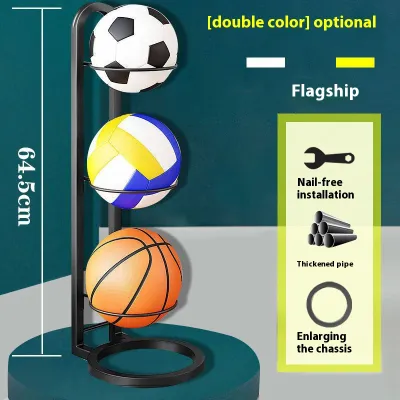

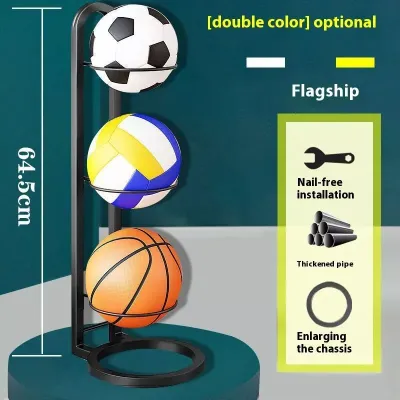
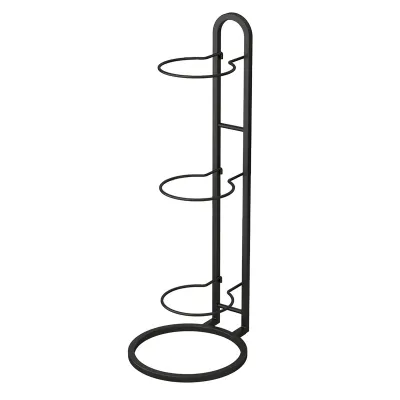
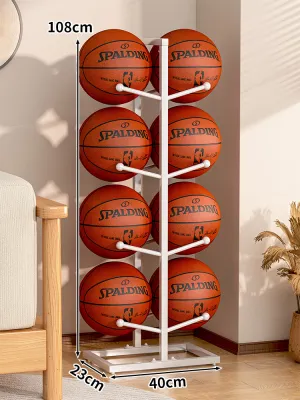

Prices are valid at publication and may change. Please refer to the product page for the latest price.
Mobility features dictate how easily a coach or player can deploy the equipment during fast-paced training sessions. A high-capacity rack must be equipped with heavy-duty caster wheels that can glide smoothly over various sports surfaces. The material of the wheels is a vital consideration; cheap, hard plastic wheels can easily scratch or scuff expensive polished hardwood or synthetic taraflex indoor court floors. Instead, look for casters made from non-marking polyurethane or thermoplastic rubber. These materials absorb vibrations, roll quietly, and protect the integrity of the playing surface. Additionally, the rack must feature reliable locking mechanisms on at least two of the casters. Foot-activated brakes ensure that the rack remains completely stationary during high-velocity hitting or serving drills, preventing runaway carts from rolling onto the active playing area.
Matching Rack Designs to Facility Workflows
Selecting the appropriate rack configuration depends heavily on your facility’s spatial constraints and daily operational routines. Stationary multi-tier shelving units are designed primarily for dedicated equipment rooms, school supply closets, or long-term warehousing. These units maximize vertical space, often featuring four or five tiers that can hold up to 60 balls in a highly compact footprint. Because they lack wheels, stationary racks offer unmatched stability and are highly resistant to tipping. They are ideal for storing off-season inventory or securing equipment in multi-sport complexes where gear is only retrieved at the start of a semester or league. However, because they cannot be rolled onto the court, coaches must rely on secondary carrying bags or baskets to transport balls to the active training area, which can slow down daily setup and teardown routines.

For active, daily training sessions, mobile rolling carts are the industry standard. These carts are optimized for court-side access, quick deployment, and frequent relocation. They generally fall into two design categories: open-basket hoppers and enclosed cage designs. Open-basket carts feature a low-profile, wide-mouth design that allows coaches to grab balls rapidly during defense, setting, or hitting drills. The open top ensures that players can quickly toss balls back into the cart from a distance, keeping the court clear of stray hazards. Enclosed cage designs, on the other hand, feature a lockable wire-mesh lid. This design is highly beneficial for multi-use school gyms or community sports centers where different groups share the same space. Locking the cage prevents unauthorized access, reducing the risk of equipment loss or theft when the facility is unsupervised.
When floor space is extremely limited, space-saving alternatives offer practical workarounds. Heavy-duty hanging nets and wall-mounted bins are excellent for small barangay multi-purpose halls or school gyms that lack dedicated storage rooms. Wall-mounted racks utilize unused vertical wall space, keeping the gym floor completely clear for other activities. Another highly versatile option is the folding ball cart, which utilizes a lightweight, scissor-style aluminum frame paired with a durable nylon bag. These carts can be collapsed in seconds and stored in a narrow closet or transported in the trunk of a vehicle for away games. While folding carts offer excellent portability, they generally have a lower weight capacity and are more susceptible to wear and tear compared to rigid steel frames.
Calculating Capacity and Footprint for Team Environments
To ensure your storage solution fits seamlessly into your facility, you must calculate your required storage volume based on your current and future ball inventory. A single volleyball team consisting of 12 to 18 players typically requires a minimum of 24 to 36 balls to run continuous, high-repetition drills without constant interruptions to retrieve stray balls. If your facility hosts multi-squad programs, club tournaments, or simultaneous training sessions on multiple courts, your inventory can easily scale to 60 or even 100 balls. When estimating capacity, always plan for a buffer; a rack filled to its absolute maximum capacity is difficult to maneuver and increases the likelihood of balls spilling over the sides during transport.
Physical dimensions of the rack must be cross-referenced with your facility’s architectural layout. Measure the narrowest points of your daily workflow path, including equipment room doorways, hallway corners, and storage closet clearances. A standard single-door frame in many school gyms or community centers is approximately 80 to 90 centimeters wide. If you purchase a high-capacity double-wide rolling cart that exceeds these dimensions, you will be forced to unload the balls manually every time you move the equipment in or out of storage. Additionally, consider the height of the rack; taller multi-tier units may block overhead light fixtures or be difficult for younger student-athletes to reach safely.
Planning for future inventory expansion is a smart financial strategy that prevents the need to purchase entirely new storage systems down the line. Look for modular rack designs that allow you to attach add-on baskets, side pockets, or extra horizontal tiers as your program grows. Alternatively, choosing stackable stationary bins allows you to scale your storage capacity vertically without expanding the physical footprint on your equipment room floor. Investing in a slightly larger or modular system from the beginning is often more cost-effective than purchasing multiple small, mismatched carts over time.
Durability and Maintenance in High-Traffic Gyms
Maintaining your storage equipment is essential to extending its lifespan and ensuring player safety in demanding sports environments. In high-traffic gyms, rolling carts are subjected to constant movement, frequent impacts from stray balls, and occasional collisions with walls or bleachers. Establish a weekly inspection protocol to check all structural joints, weld points, and caster attachments. Over time, the vibrations from rolling over tile, concrete, or wood floors can loosen assembly bolts. Tightening these bolts promptly prevents structural warping and ensures the frame remains rigid under heavy loads.
The tropical climate of the Philippines presents unique challenges for metal equipment maintenance. High relative humidity, combined with sweat from players’ hands, can quickly degrade protective coatings and initiate rust. If you notice any chips or scratches in the powder-coated finish, clean the area immediately and apply a rust-inhibiting touch-up paint to prevent moisture from spreading beneath the surrounding coating. For facilities located near coastal areas, where salty air accelerates corrosion, wiping down the metal frame with a dry microfiber cloth after humid training sessions is highly recommended to remove accumulated moisture and salt residue.
Regular cleaning routines also prevent dust, dirt, and floor grime from transferring from the storage rack to your volleyballs. Wire grids, horizontal rails, and fabric liners should be wiped down periodically with a mild, non-abrasive soap and warm water solution. Avoid using harsh chemical solvents or abrasive scrubbing pads, as these can strip away the protective clear coat or damage nylon fabrics. Ensure that the entire rack is completely dry before reloading the volleyballs, as trapped moisture can degrade the synthetic leather covers of the balls, leading to peeling seams and reduced grip performance.
Pre-Purchase Checklist and Sourcing Guidelines
Before finalizing your purchase, verify the assembly requirements and structural stability of the rack. Most high-capacity ball storage units are shipped flat-packed to minimize shipping volume and costs. Check whether the package includes all necessary assembly tools, or if you will need to provide your own wrenches and screwdrivers. Once assembled, perform a manual stability check by loading the rack with your actual ball inventory and rolling it across the gym floor. If you detect any excessive wobbling, uneven wheel alignment, or structural flexing, re-tighten the joints and ensure the casters are fully threaded into the frame.
When procuring equipment for schools, clubs, or commercial facilities, carefully review the manufacturer’s warranty terms and return policies. Institutional equipment should ideally come with a warranty that covers structural frame failures and caster defects for at least one year. If you are purchasing multiple units for a large sports complex, contact specialized sports equipment suppliers directly to inquire about bulk order discounts, which can significantly lower the unit cost.
Sourcing strategies should compare specialized local sports distributors with established online marketplaces. While online marketplaces offer convenience and a wide variety of designs, shipping heavy, bulky metal items can incur substantial handling fees in ₱, especially when delivering to provincial areas outside Metro Manila. In some cases, purchasing from a local sports distributor who includes delivery and assembly services, or even hiring a local metal fabricator to build a custom rack based on your exact dimensions, can be more practical and cost-effective than importing a pre-fabricated unit.
Frequently Asked Questions (FAQ)
How many volleyballs should a standard team rack accommodate?
A standard team rack should comfortably accommodate between 24 and 36 volleyballs. This capacity allows a single squad to run high-repetition drills, such as serving and hitting lines, without frequent pauses to collect loose balls. For multi-team facilities, school athletic departments, or commercial training centers, a rack capacity of 48 to 60+ balls is recommended to support multiple simultaneous courts or larger training groups.
Are locking casters necessary for indoor gym floors?
Yes, locking casters are highly necessary for safety and operational efficiency on indoor gym floors. Polished hardwood and synthetic taraflex surfaces are highly slick, meaning an unlocked rolling cart can easily drift due to minor floor slopes, wind from ventilation fans, or accidental player contact. Locking at least two wheels prevents the cart from rolling onto the active court during play, reducing the risk of player collisions and ankle injuries.
Can standard metal ball racks be left outdoors?
Standard metal ball racks designed for indoor use should not be left outdoors. Exposure to tropical rain, intense sunlight, and high humidity will rapidly break down standard powder coatings, leading to severe rust and structural failure. If your facility features outdoor or semi-outdoor courts, such as open-air barangay plazas, you must source racks specifically rated for outdoor use, which are typically constructed from hot-dip galvanized steel, stainless steel, or heavy-duty UV-resistant plastics.

Community discussion
Share your experience or ask a question. Comments are reviewed before publication.