
Finding the right fitness equipment for a high-density condominium in the Philippines requires balancing your health goals with the realities of limited square footage. A side stepper offers an excellent low-impact cardiovascular workout, but selecting the wrong model can quickly turn your living room into an obstacle course. To choose the perfect side stepper for your condo, you must evaluate the machine’s physical footprint, dynamic clearance requirements, noise-dampening features, and storage capabilities. By matching these specifications to your specific layout, you can maintain an active lifestyle without sacrificing your valuable living space or disturbing your neighbors.
Assess Your Condo Space and Layout
Before browsing online marketplaces or local fitness stores, you need to map out your intended workout zone. Start by measuring the floor area where you plan to exercise, ensuring there is ample room to step on and off the machine safely. Do not forget to measure your ceiling height; because a side stepper elevates your body with every stride, you must verify that your head will not clear the ceiling or impact low-hanging light fixtures and ceiling fans during use.
Next, consider the logistics of getting the equipment into your unit. Measure the width of your condo’s entryways, hallway corners, and especially the elevator doors, as some fully assembled fitness machines can be surprisingly difficult to maneuver through tight common areas.
Products mentioned in this guide
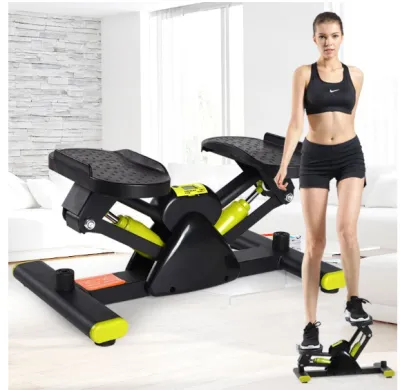
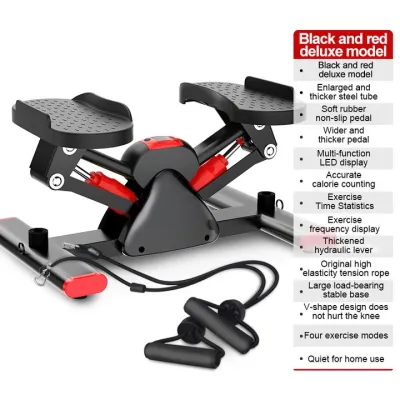
Prices are valid at publication and may change. Please refer to the product page for the latest price.
Finally, take a close look at your flooring. Most Philippine condominiums feature tile, vinyl plank, or polished concrete floors, which can amplify the mechanical vibrations of a workout. Planning for a high-density rubber equipment mat is essential to protect your floor from scratches and, more importantly, to absorb the sound of hydraulic cylinders so that your workouts do not disturb the residents living directly beneath you.
Understand Side Stepper Dimensions and Footprint
Side steppers come in various configurations, and understanding their physical dimensions is key to maintaining an organized home. The static footprint—the space the machine occupies when it is turned off—varies significantly depending on whether the model includes built-in handlebars or is a minimalist, pedal-only design. Models with integrated handlebars provide excellent balance support but require a permanent, larger footprint that can dominate a small studio or one-bedroom layout.

Conversely, compact pedal-only side steppers are highly space-efficient but require you to have excellent core stability or exercise near a stable surface like a heavy dining table for occasional balance checks.
However, the static footprint is only half the story. You must also account for the dynamic space required during an active workout. Because a side stepper moves your body in a lateral, side-to-side motion rather than a strictly vertical path, your hips, knees, and arms will extend beyond the physical frame of the machine.
Always check the manufacturer’s official specifications for exact length, width, and height measurements rather than relying on stylized product photos, which often make the equipment look smaller than it is in reality.
Match Weight Capacity and Stability Requirements
A compact design should never come at the expense of structural safety. When evaluating different side steppers, your first step should be verifying the manufacturer’s stated maximum weight capacity. Ensure this limit comfortably accommodates your body weight, leaving a safe margin to prevent premature wear on the internal hydraulic systems.
Stability is particularly critical for side steppers because the lateral motion exerts side-to-side forces that can cause a lightweight or narrow machine to wobble. Look for models with a wide, heavy-duty steel base frame that anchors the unit firmly to the ground during intense sessions.
Additionally, check for non-slip, oversized footplates that keep your feet secure even when sweating in the tropical heat.
Many condo floors are not perfectly level, so prioritizing a model with adjustable leveling feet or rubber end caps will allow you to stabilize the machine on slightly uneven surfaces, preventing annoying rocking motions while you exercise.
Evaluate Space-Saving and Apartment-Friendly Features
Living in a compact condo means prioritizing multi-functional or easily hidden equipment. If you choose a model with handlebars, look for foldable designs or collapsible frames that allow the upright bars to fold flat against the base. Some models feature detachable handlebars, allowing you to convert the machine into a low-profile pedal unit that easily slides out of sight.
Built-in transport wheels are another invaluable feature for apartment dwellers. These wheels allow you to roll the stepper from its storage spot in a closet or bedroom to your active workout zone in front of the television without straining your back.
Noise control is another critical factor in shared residential buildings. Prioritize side steppers equipped with high-quality hydraulic cylinders and sealed joints, which operate much more quietly than chain-driven or basic spring-loaded alternatives.
In the humid climate of the Philippines, keeping these joints clean and occasionally applying manufacturer-approved lubricant will prevent the development of high-pitched squeaks that could irritate your household or neighbors.
Avoid Common Space-Matching Mistakes
One of the most frequent mistakes condo owners make is measuring only the static base of the stepper and forgetting about their own body’s range of motion. If you position the machine directly against a wall or next to a glass sliding door, you risk striking your elbows, hips, or the machine’s handlebars against these surfaces during a vigorous workout. Keep a clear safety buffer of at least two feet around the entire perimeter of the machine during use.
Another common oversight is ignoring the total weight of the machine. While a heavier frame provides superior stability, it can be incredibly frustrating to drag across a room daily if it lacks transport wheels.
Lastly, avoid storing the machine vertically if the manufacturer’s manual explicitly warns against it, as some hydraulic fluids can leak when stored at improper angles, potentially damaging both the machine and your condo’s flooring.
Frequently Asked Questions (FAQ)
Can I use a side stepper on a carpeted condo floor?
Yes, you can use a side stepper on carpet, but you must take precautions to ensure stability and protect your flooring. Hydraulic cylinders generate heat and require a firm, level base to function optimally without putting uneven stress on the frame. Placing the stepper directly on a plush carpet can cause it to sink or tilt, compromising your balance. To prevent this, place a high-density equipment mat over the carpet to create a flat, stable surface while protecting the carpet fibers from grease, sweat, and heavy pressure marks.
How do I store a side stepper when not in use?
Storing your side stepper efficiently depends on its design. For models with handlebars, follow the manufacturer’s instructions to fold the frame flat or remove the upright bars entirely. Once collapsed, many mini side steppers are compact enough to slide horizontally under a bed frame, sofa, or inside a utility closet. If you plan to store the unit vertically to save floor space, verify in the user manual that the hydraulic cylinders are sealed for vertical storage to prevent any oil leaks.

Community discussion
Share your experience or ask a question. Comments are reviewed before publication.