
Selecting the right under water diving flashlight requires looking past simple brightness claims to evaluate how a light performs under pressure. The key specifications that determine a dive light’s safety and utility are its depth rating, beam angle, sustained lumen output, battery chemistry, and physical switch design. Understanding these technical details ensures you choose a tool that matches your specific diving environment, whether you are exploring shallow tropical reefs or navigating deep, low-visibility waters.
Understanding Depth Ratings and Waterproof Standards
When choosing an under water diving flashlight, the depth rating is the most critical safety specification. Many general-use flashlights carry an IPX8 rating, which only guarantees water resistance up to two meters. Scuba diving requires a dedicated dive light with an explicit depth rating, starting at thirty meters for shallow dives and extending to one hundred meters or more for deep or technical diving.
Never rely on vague marketing terms like “waterproof.” Always consult the manufacturer’s manual to confirm the maximum operating depth, as exceeding it can compress the casing, crack the lens, or force water past the seals.
Products mentioned in this guide
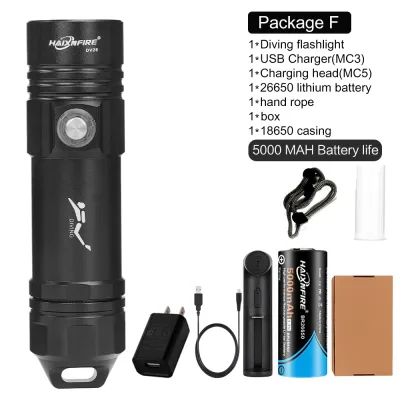
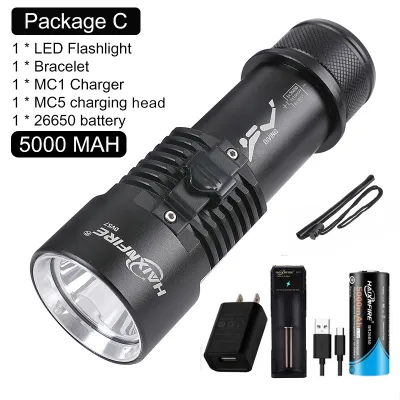
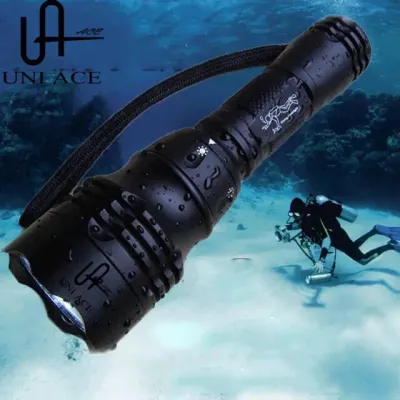
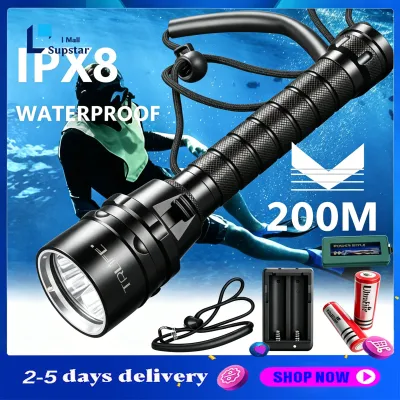
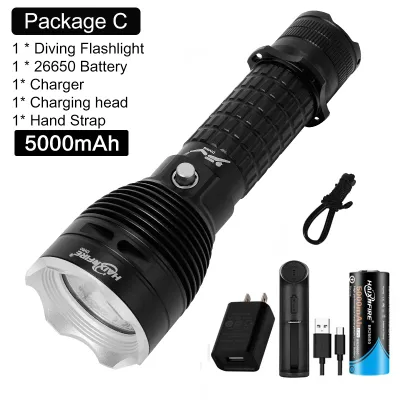
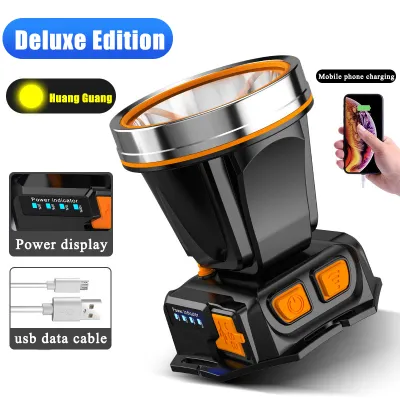
Prices are valid at publication and may change. Please refer to the product page for the latest price.
Additionally, depth ratings are not permanent. The waterproof seal depends heavily on regular O-ring maintenance. Over time, exposure to saltwater, fine sand, and tropical humidity can degrade these seals, while physical impacts or thread wear can compromise pressure resistance.
Evaluating Lumens and Beam Angles for Visibility
Brightness is important, but high lumen numbers can be deceptive. Manufacturers often advertise “peak lumens,” which represents the maximum brightness the light can produce for a brief period. However, high-output LEDs generate significant heat, causing the flashlight to automatically step down its brightness. When comparing lights, look for the “sustained lumens” specification, which indicates the actual brightness level the light can maintain over the course of a dive.

The beam angle determines how that light is distributed. A narrow beam (five to fifteen degrees) concentrates light into a tight, intense spotlight, which is highly effective for cutting through murky water or signaling your dive buddy. Conversely, a wide beam (sixty to one hundred and twenty degrees) spreads light evenly over a large area, making it ideal for underwater photography or wide-area observation in clear water.
Color temperature also plays a major role in underwater visibility. Cool white light can cause significant backscatter in water filled with plankton or suspended sediment, reflecting light directly back into your eyes. Warm yellow light or lights with a high Color Rendering Index (CRI) penetrate particles more effectively and help restore the warm red and orange hues of marine life that are lost at depth.
Comparing Battery Types and Burn Time
The power source of your under water diving flashlight dictates both its runtime and its convenience during travel. Rechargeable lithium-ion batteries, such as 18650 or 21700 cells, are the standard for modern dive lights due to their high energy density and steady voltage. Disposable alkaline batteries are easy to find but suffer from rapid voltage drops, resulting in a light that dims quickly. They also generate significant environmental waste and are less cost-effective over time.
When evaluating “burn time,” be cautious of generic runtime claims. Some brands measure burn time until the light is completely extinguished, which includes hours of dim, unusable light. Look for specifications that detail the regulated burn time at specific lumen levels. A reliable dive light should provide a consistent level of brightness for the entire duration of your planned dive.
The design of the charging port also affects long-term durability. Internal USB-C ports require you to unscrew the body and expose the internal O-rings to salt air and moisture. External magnetic charging ports eliminate this risk by keeping the light completely sealed, but the exposed metal contacts must be thoroughly rinsed with fresh water after every saltwater dive to prevent corrosion.
Checking Build Materials and Switch Mechanisms
The materials used to construct a dive light affect its durability, weight, and buoyancy. Aerospace-grade aluminum with a hard-anodized finish is highly durable and provides excellent heat dissipation, though it requires diligent rinsing to prevent galvanic corrosion in saltwater. High-strength polymers are lightweight, completely immune to corrosion, and generally more affordable, but they do not dissipate heat as efficiently as metal, which can limit their maximum brightness.
The switch mechanism must be easy to operate while wearing thick neoprene diving gloves. Magnetic slider or rotary switches are highly favored because they do not require a physical opening through the flashlight casing, eliminating a common point of water entry. If you choose a push-button switch, ensure it features a physical lock or requires a long press to turn on, preventing accidental activation inside your gear bag.
Finally, pay attention to the physical design and buoyancy of the light. An anti-roll body shape prevents the flashlight from rolling off a moving boat deck. Robust lanyard attachment points are essential for securing the light to your wrist. You should also check whether the light is positively or negatively buoyant; a heavily negative light can drag your hand down, while a positive light might float away if dropped.
Matching Specs to Your Diving Profile
To find the right under water diving flashlight, match these specifications to your primary diving activities. If you focus on snorkeling or shallow freediving in clear tropical waters, a lightweight polymer light with a moderate depth rating of thirty meters and a wide beam is usually sufficient. These activities do not require extreme brightness, and a compact, easy-to-carry light is ideal for casual reef exploration.
For recreational scuba diving, especially night dives or deeper reef explorations, you will need a more robust setup. Look for a light rated to at least one hundred meters, featuring high sustained lumens, a versatile beam angle, and a reliable rechargeable lithium-ion battery system. Having a light that can easily last through a sixty-minute dive with consistent brightness is essential for safety.
Technical and cave diving demand the highest level of specification and redundancy. Divers in these challenging environments require lights with extreme depth ratings, tight narrow beams to cut through silt, long regulated burn times, and highly secure switches. In these scenarios, carrying multiple independent backup lights with matching specifications is a standard safety protocol.
Frequently Asked Questions (FAQ)
Can I use a regular waterproof flashlight for scuba diving?
No, standard waterproof flashlights are not built to withstand the intense pressure of scuba diving. A typical water-resistant light, even one rated IPX8, is only tested for shallow, temporary submersion. At depth, the water pressure will compress the flashlight’s body, flatten its buttons, and force water past the seals, causing immediate electrical failure.
How should I pack my diving flashlight for a flight?
When traveling by air, you must remove the lithium-ion batteries from your under water diving flashlight and pack them in your carry-on baggage, as they are prohibited in checked luggage. To prevent the light from accidentally turning on during transit—which can generate extreme heat and create a fire hazard—unscrew the tail cap slightly or engage the physical switch lock.

Community discussion
Share your experience or ask a question. Comments are reviewed before publication.