
Selecting the right cheerleading pompoms for school competitions in the Philippines is a critical decision that directly impacts both your squad’s visual score and the physical safety of your athletes. Whether you are preparing for a major national league like the UAAP or NCAA, or gearing up for a local high school intramural meet, your choice of equipment must balance strict competition guidelines with the realities of performing in a tropical environment. The right gear does not just complement your choreography; it must also withstand intense humidity, high-velocity routines, and the demanding lighting of local arenas. By understanding the technical specifications of different materials, handles, and sizing options, coaches and team captains can make informed purchasing decisions that elevate their team’s performance.
Checking Competition Rules and Visual Standards
Before browsing catalogs or contacting suppliers, obtain the official rulebook for your specific competition. Many athletic associations in the Philippines enforce strict regulations regarding the size, material, and handle design of hand-held props. For instance, some leagues prohibit hard plastic baton handles that protrude past the blades to minimize the risk of injury during complex tosses, partner stunts, and pyramids. Other rulebooks specify a maximum diameter for pompoms to ensure they do not obstruct the judges’ view of the cheerleaders’ formations, transitions, or facial expressions. Failing to comply with these guidelines can result in severe point deductions or even disqualification before your squad steps onto the mat.
Color accuracy is another vital factor that requires careful verification. School pride in the Philippines is deeply tied to specific, historic color schemes—such as the distinct shades of green, gold, blue, red, or maroon associated with major universities and local colleges. When ordering, do not rely solely on digital screens, which can distort hues. Request physical color swatches or pantone codes from your supplier to ensure your pompoms perfectly match your team uniforms. Furthermore, consider how these colors behave under different lighting conditions. A shade that looks vibrant in a well-lit showroom might appear dull under the yellow-tinted lights of an older school gymnasium or washed out under the intense midday sun of an outdoor track oval.
Products mentioned in this guide
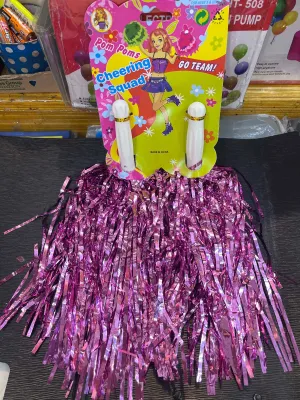
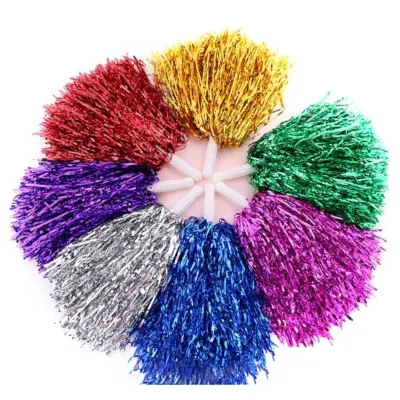
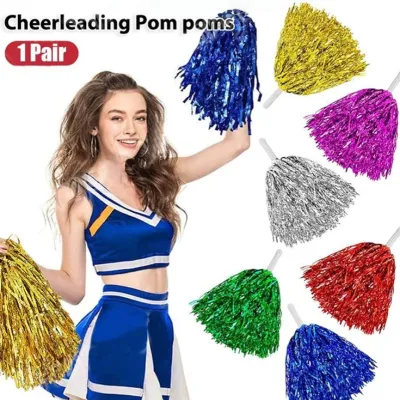
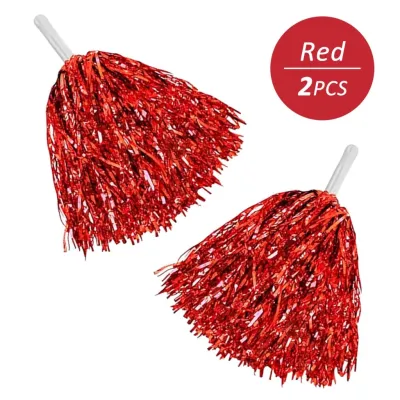
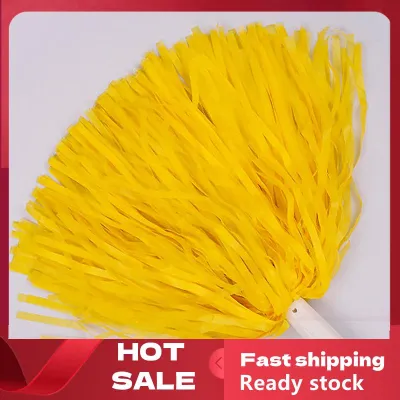
Prices are valid at publication and may change. Please refer to the product page for the latest price.
Finally, establish a realistic budget in Philippine Pesos (₱) early in the planning phase. High-quality, competition-grade pompoms typically range from ₱300 to ₱1,200 per pair, depending on customization, materials, and handle types. When calculating your total budget, remember to factor in local shipping costs, customization surcharges, and taxes. It is highly recommended to allocate a portion of your budget for backup pairs to avoid last-minute financial strain if equipment is damaged close to competition day. Purchasing in bulk as a unified athletic department can also help secure volume discounts from local distributors.
Comparing Pompom Materials and Blade Styles
The material of your pompom blades determines both their visual texture and how they handle the local climate. The two primary options are metallic foil and plastic poly (polyethylene). Metallic foil pompoms are highly favored for televised events and large-scale arena performances because they catch and reflect light with exceptional brilliance. However, foil is susceptible to creasing and can lose its luster if exposed to high humidity or sweat over extended periods. If your squad performs primarily in air-conditioned indoor arenas, metallic foil remains an excellent choice for maximum visual impact.

In contrast, plastic poly materials offer superior durability and structural resilience. Poly pompoms are highly resistant to moisture, making them the ideal choice for outdoor field performances or schools located in high-humidity coastal regions. While they lack the intense sparkle of metallic foil, they provide a classic, matte, or semi-gloss look that remains highly visible from a distance. For squads wanting the best of both worlds, mixed-material pompoms combine metallic and poly strands. This hybrid style leverages the structural fullness of plastic to keep the pompom fluffy while incorporating metallic accents to catch the light during sharp movements.
Blade cuts also play a significant role in the overall volume and movement of the pompom. Standard cuts feature straight, uniform strands that offer a clean, traditional look. Narrow cuts use thinner strands to create a denser, fluffier appearance that moves fluidly with subtle wrist motions, making them ideal for dance-heavy routines. Wide cuts, on the other hand, feature broader strands that create a bolder, more block-like visual effect, which is excellent for sharp, synchronized arm motions. When choosing a blade style, test how the material drapes and moves during practice to ensure it matches the tempo and style of your choreography.
Matching Size, Weight, and Handle Types to Your Squad
The physical dimensions of your pompoms must match the age, physical strength, and skill level of your cheerleaders. Pompom diameters generally range from 4 inches to 10 inches. Smaller sizes, such as 4 to 6 inches, are lightweight and highly aerodynamic, making them the preferred choice for fast-paced dance routines, junior squads, or routines featuring frequent transitions and tumbling. Larger sizes, ranging from 8 to 10 inches, deliver maximum visual impact but require more physical effort to control, making them better suited for senior squads focusing on traditional cheer-stunt routines.
Weight is a critical factor that is often overlooked until mid-routine fatigue sets in. A pompom that feels light during a simple warm-up can feel incredibly heavy during the final minute of a high-energy, three-minute routine. Excessively heavy pompoms can slow down arm motions, leading to a loss of synchronization across the squad. To prevent arm fatigue and potential shoulder strain, verify the weight of the pompoms with your supplier and have your athletes practice with weighted training props if necessary. Ensuring your squad has the physical conditioning to handle their equipment is just as important as the equipment itself.
Handle selection is equally vital for safety and performance. Baton handles feature a rigid plastic tube in the center, providing a solid grip for sharp, precise movements. Hidden handles, or dowel grips, are concealed entirely within the strands, giving the pompom a perfectly spherical look from all angles. Wrist straps or loop handles allow cheerleaders to let go of the pompom body during stunts, pyramids, or tumbling passes without dropping the equipment. Always cross-reference your handle choice with your league’s safety guidelines, as some safety panels restrict specific handle designs to prevent accidental injuries during catches and tosses.
Sourcing and Ordering Custom Pompoms in the Philippines
Sourcing competition-grade equipment locally requires careful planning. While basic party-store pompoms are widely available, they lack the durability and professional appearance required for competitive cheerleading. Instead, look for specialized sports equipment suppliers or reputable online marketplaces that cater specifically to athletic teams. Many of these suppliers are concentrated in major urban hubs like Metro Manila, Cebu, and Davao, but they frequently ship nationwide. Working with a local supplier who understands the requirements of Philippine school sports can streamline the customization process.
When ordering custom color blends—such as a specific ratio of metallic blue to matte white—be prepared for longer production lead times. During the peak school sports season, which typically runs from September to March, local suppliers face high demand. It is wise to place your custom orders at least six to eight weeks before your first scheduled performance. This buffer allows time for production, shipping, and any necessary adjustments if the initial batch does not meet your specifications.
Before finalizing a bulk order for your entire squad, always check the supplier’s minimum order quantity (MOQ) and return policies. Many custom manufacturers do not accept returns on personalized colorways unless there is a clear manufacturing defect. To safeguard your investment, request a physical sample or a detailed video proof of your chosen color blend and handle style before authorizing full production. This step ensures that the final product aligns perfectly with your team’s expectations and uniform design.
Maintaining and Storing Pompoms for the Season
Proper maintenance is essential to extend the lifespan of your pompoms and keep them looking pristine throughout the competition season. Sweat, dust, and hairspray can quickly dull the finish of both metallic and plastic blades. To clean them, gently wipe the strands with a damp, lint-free microfiber cloth. Avoid soaking the pompoms in water or using harsh chemical cleaners, as moisture can weaken the adhesive or rust the metal staples holding the strands to the handle. If the strands become tangled, gently separate them by hand rather than using a comb, which can tear the delicate material.
Storage techniques are equally important for maintaining the shape and fluffiness of your gear. Never cram pompoms into the bottom of a cramped team gear bag under heavy shoes or uniforms, as this will permanently crease the blades and flatten the shape. Instead, store them fluff-side up in a dedicated, breathable mesh bag. The mesh allows air circulation, which is crucial for preventing mold and mildew growth in the humid Philippine climate. If your pompoms do get flattened during transit, you can gently shake them out over a source of mild steam or use a hair dryer on a cool, low-pressure setting to restore their volume.
Finally, establish a routine inspection protocol before every practice and performance. Check the handle attachment points for any signs of cracking or loosening. Inspect the staples or binding wires to ensure they are secure and do not present sharp edges that could scratch an athlete’s hand. Shake out the pompoms vigorously before stepping onto the mat to release any loose strands, ensuring a clean, professional presentation when it matters most.
Frequently Asked Questions (FAQ)
Adapting Pompom Choices for Indoor and Outdoor Venues
Indoor and outdoor venues present distinct environmental and lighting challenges. Indoor arenas with bright, direct spotlights are ideal for metallic foil pompoms, which maximize reflectivity and create a dazzling visual effect for the judges and audience. However, if your competition is held in an outdoor stadium or an open-air campus court, direct sunlight can cause intense glare off metallic surfaces, which may distract the athletes or judges. For outdoor venues, plastic poly pompoms or mixed-material blends are highly recommended. Poly materials maintain consistent color saturation under natural light and are far more resilient against sudden tropical downpours or high humidity, ensuring your equipment retains its shape and performance quality regardless of the weather.
Calculating Squad Inventory and Backup Pairs
To calculate your squad’s total pompom inventory, start with your active roster size and add all alternates. Multiply this total by 1.2 to determine the minimum number of pairs you should order. For example, a squad with 20 active cheerleaders and 4 alternates should order at least 29 pairs of pompoms. This formula ensures you have dedicated practice pairs—which naturally wear out faster—and pristine, unused pairs reserved exclusively for competition day. Having a surplus of identical backup pairs on hand during competition day is essential for quickly replacing any equipment that suffers sudden damage, tears, or loss during warm-ups.

Community discussion
Share your experience or ask a question. Comments are reviewed before publication.