
Finding the right training shuttlecock in the Philippines requires balancing durability, flight consistency, and cost. Because badminton practice involves high-repetition drills, smash sessions, and multi-shuttle feeding, using premium tournament-grade feathers for every session can quickly become prohibitively expensive. Conversely, low-quality options that wobble or break after a single rally disrupt your rhythm and hinder skill development. By understanding how different materials, construction methods, and local environmental factors influence performance, you can select a training shuttlecock that withstands rigorous practice while maintaining a realistic flight path.
Selecting the ideal shuttlecock involves analyzing your specific training goals. If you are focusing on footwork and high-volume feeding drills, your priorities will differ from a player practicing tactical net play or match simulations. The right choice ensures that your practice hours translate directly to improved performance on the court without draining your sports budget.
Understanding Shuttlecock Materials for Training
When selecting training shuttlecocks, the primary decision lies between natural feather and synthetic materials. Natural feather shuttlecocks are typically constructed from either goose or duck feathers. Goose feathers are widely regarded as the premium option due to their thick, sturdy shafts and high natural oil content, which provide excellent structural integrity and a crisp, responsive feel off the racket strings. Duck feathers offer a more economical alternative; they share a similar flight profile but tend to have thinner shafts that are more prone to splitting under heavy impact, making them better suited for intermediate or control-focused drills rather than intense smash practice.
Products mentioned in this guide
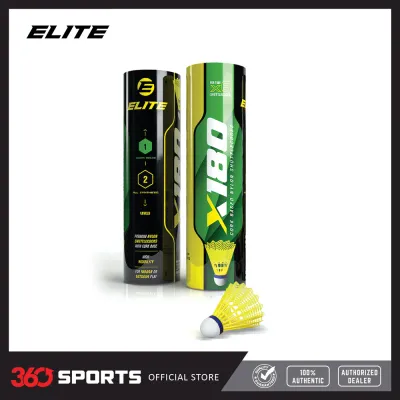
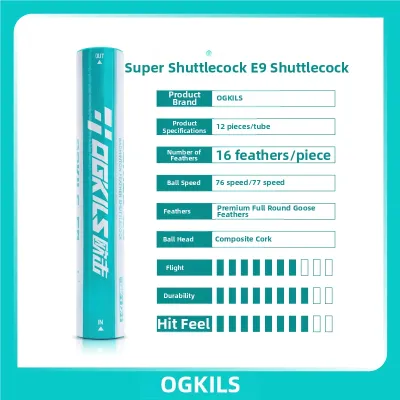
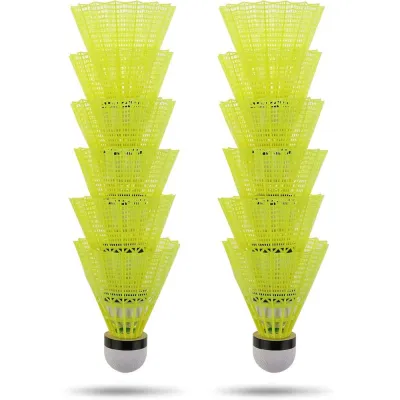
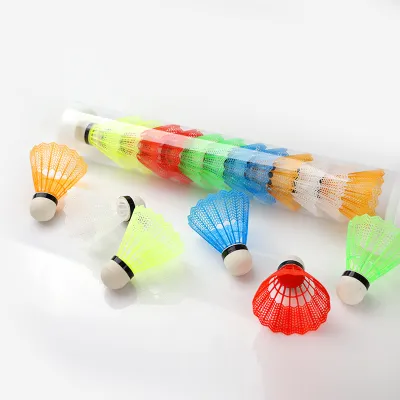
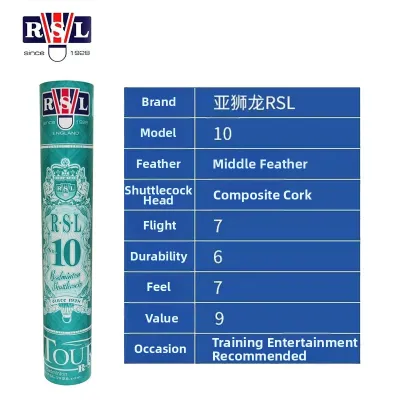
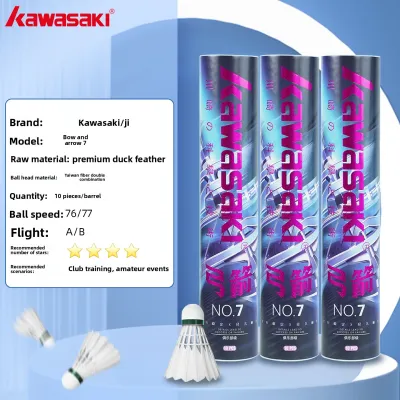
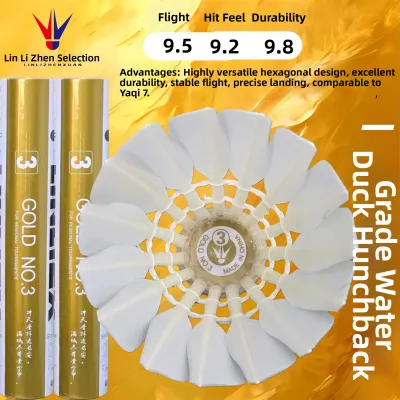
Prices are valid at publication and may change. Please refer to the product page for the latest price.
Synthetic shuttlecocks, usually featuring a molded nylon skirt attached to a cork or synthetic base, offer unmatched durability. A single high-quality nylon shuttlecock can often survive multiple training sessions without losing its shape or tearing. However, the flight trajectory of synthetic models differs noticeably from natural feathers. Feather shuttlecocks experience a rapid deceleration after the initial hit due to the natural drag of the overlapping feathers, resulting in a sharp, predictable drop. Nylon shuttlecocks tend to maintain their speed longer and follow a more parabolic flight path, which can slightly alter a player’s timing and perception of distance.
For repetitive drilling, such as multi-shuttle feeding where a coach rapidly feeds dozens of shuttles to a player, nylon options are highly practical. These drills focus on footwork, stamina, and muscle memory, where the absolute precision of the flight path is secondary to the volume of repetitions. Using nylon shuttles prevents the constant interruption of replacing broken feathers, allowing for continuous, high-intensity workouts.
For match-simulation practice, tactical drills, and net-play training, natural feather shuttlecocks remain the preferred choice. The delicate touch required for net drops, tight spins, and deceptive slices cannot be accurately replicated with synthetic skirts. If you are preparing for a tournament, training with the material you will compete with is essential for developing the correct touch and timing.
To optimize your training budget, consider a hybrid approach based on cost-per-session calculations. While a tube of feather shuttlecocks may have a lower initial price point than a pack of premium nylon shuttles, the rapid degradation of feathers during hard-hitting drills means you may go through multiple feather shuttles per session. Nylon shuttles, despite a higher upfront cost per unit, often deliver a much lower cost-per-session due to their extended lifespan. By reserving feathers for tactical play and utilizing synthetics for physical conditioning, you can maximize both your skill development and your budget.
Evaluating Durability and Construction Quality
Before purchasing a batch of training shuttlecocks, a close inspection of their construction quality can save you from premature wear and inconsistent flight. The foundation of any shuttlecock is its cork base, which directly affects rebound, weight distribution, and impact resistance. Natural cork, harvested in solid pieces, offers the most consistent rebound and retains its shape over long sessions, though it is more expensive. Composite cork, which blends natural cork particles with synthetic binders or features a sandwich construction with polyurethane layers, provides excellent impact resistance at a lower price point. Full synthetic or EVA foam bases are highly durable and waterproof, making them ideal for humid outdoor play, though they lack the precise feel required for advanced touch shots.

The visual inspection of the skirt is another critical step in verifying quality. Examine the glue application along the bands that secure the feathers or synthetic ribs; the adhesive should be smooth, even, and free of bubbles, gaps, or excess globs. The stitching density around the feathers must be tight and uniform, as loose threads allow the feathers to spread apart during flight, causing the shuttlecock to wobble or lose speed prematurely.
Rib stiffness is a key indicator of how well a shuttlecock will resist bending and deformation during high-speed impacts. For feather shuttles, gently press the shafts of the feathers near the base; they should feel firm and resilient rather than soft or brittle. For synthetic shuttles, the nylon ribs should quickly snap back to their original shape when lightly compressed. If the ribs remain bent or show signs of stress whitening, the material is likely to deform permanently after a few hard smashes.
Rather than relying on vague marketing terms like “ultra-durable” or “shatterproof,” players should verify the technical specifications provided on the packaging. Look for details regarding the feather grade, glue type, and base composition. Reputable manufacturers clearly label these components, allowing you to make objective comparisons between different training models. Checking for certifications or compliance with international badminton standards can also provide peace of mind regarding manufacturing consistency.
Matching Shuttlecock Speed to Your Practice Environment
Selecting the correct shuttlecock speed is essential for maintaining consistent flight dynamics during local practice sessions. Shuttlecocks are manufactured with specific speed ratings, typically indicated by numbers such as 76, 77, or 78 printed on the tube’s cap. A lower number represents a slower shuttlecock designed for warm, humid, or high-altitude environments, while a higher number indicates a faster shuttlecock suited for cold or dry conditions.
In the Philippines, local temperature and humidity play a massive role in shuttlecock flight. On hot, humid days in non-air-conditioned community courts, the air is less dense, which naturally causes the shuttlecock to fly faster and further. Consequently, speed 76 or 77 is generally preferred for local play to prevent clear shots from easily sailing out of bounds. In cooler, air-conditioned tournament venues or higher-altitude regions, a speed 78 might be necessary to achieve a natural flight distance.
To test if you have the correct speed, perform a baseline-to-baseline clear test. Stand on the back boundary line of the court and hit the shuttlecock with a full, underhand stroke parallel to the sideline. A shuttlecock of the correct speed should land between 530 mm and 990 mm short of the opposite back boundary line. If it lands short of this zone, the speed is too slow; if it flies past the boundary, the speed is too fast.
Adjusting your speed selection based on this test ensures that your training remains realistic. Practicing with a shuttlecock that is too fast can lead to defensive habits, as players hesitate to hit deep clears for fear of hitting out. Conversely, a shuttlecock that is too slow can cause physical strain, as players overcompensate with excessive force to reach the backcourt, increasing the risk of shoulder and elbow injuries.
Creating Your Training Shuttlecock Shortlist
To build a practical shortlist of training shuttlecocks, start by establishing a clear budgeting strategy. Compare the upfront cost of a tube (typically containing 12 shuttlecocks, priced in ₱) against the expected number of games or drills each tube can support. For high-volume training, allocating a portion of your budget to durable nylon shuttles for drills and a separate portion to mid-grade duck feather shuttles for match play can optimize your spending.
Always purchase from authorized sports retailers or official brand stores to ensure you are getting genuine products. Counterfeit shuttlecocks are common in online marketplaces, and they often suffer from poor glue quality, brittle feathers, and inconsistent flight paths that ruin practice sessions. Genuine training models undergo strict quality control to ensure uniform weight and balance.
When researching options, look for verified user reviews that specifically discuss breakage rates and skirt deformation. Pay attention to feedback from players who train in similar tropical climates, as high humidity can affect how certain glues and synthetic materials hold up over time. Reviews that mention consistent flight even after the feathers begin to fray are strong indicators of a reliable training model.
Before purchasing in bulk, buy a single tube of your shortlisted model to conduct initial testing on your regular court. This allows you to evaluate the speed, durability, and feel under your specific playing conditions without committing to a large financial investment. Once you verify that the shuttlecock performs well, bulk purchasing can offer significant cost savings per tube.
Frequently Asked Questions (FAQ)
How can I extend the lifespan of feather shuttlecocks during practice?
Store your shuttlecocks in a cool, dark place away from direct sunlight, keeping the tube standing vertically with both caps securely fastened to maintain internal humidity. If recommended by the manufacturer, you can use a gentle humidification method, such as placing a lightly damp sponge near the feather end of the tube a few hours before play, to restore moisture to dry, brittle feathers. Rotate your shuttlecocks during a practice session rather than playing with a single one until it disintegrates; cycling through three or four shuttles distributes the impact wear and allows the feathers to recover their shape.
Are synthetic shuttlecocks suitable for advanced smash training?
Synthetic skirts absorb and transfer high-impact forces differently than natural feathers, often compressing more during a hard smash and resulting in a slightly heavier feel on the racket face. Check the manufacturer’s specifications to ensure the synthetic shuttlecock is rated for high-impact or advanced training, as some basic models are designed only for recreational backyard play. Stop using any synthetic shuttlecock immediately if the skirt begins to tear, deform, or separate from the cork base, as this causes erratic flight paths and can lead to wrist strain or tennis elbow due to uneven vibrations.

Community discussion
Share your experience or ask a question. Comments are reviewed before publication.