
For beginners setting up a home gym in the Philippines, the most reliable and effective choice is a pair of wooden gymnastic rings with a standard 1.25-inch (32mm) diameter, paired with numbered nylon straps and heavy-duty metal cam buckles. This specific configuration provides the safest, most ergonomically sound foundation for mastering bodyweight movements.
The high humidity and warm temperatures typical of the Philippine climate make grip security a primary concern for home workouts. Wooden rings absorb sweat naturally, preventing slippage without requiring excessive chalk. Numbered straps eliminate the frustration of uneven ring heights, ensuring that transitions between exercises like pull-ups, dips, and rows are seamless, safe, and balanced.
Because gymnastic rings introduce high-instability forces to your joints, selecting high-quality suspension components is just as critical as choosing the rings themselves. Investing in robust hardware ensures your home workouts remain safe and effective over years of training.
Products mentioned in this guide
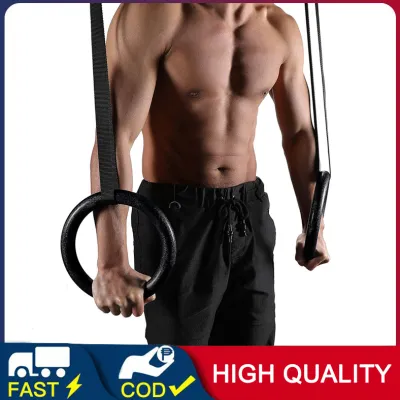
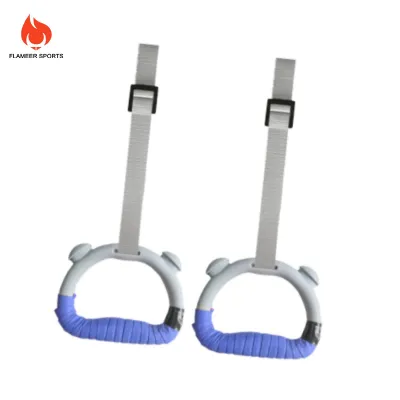
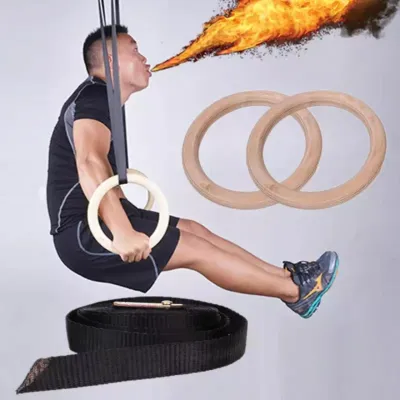
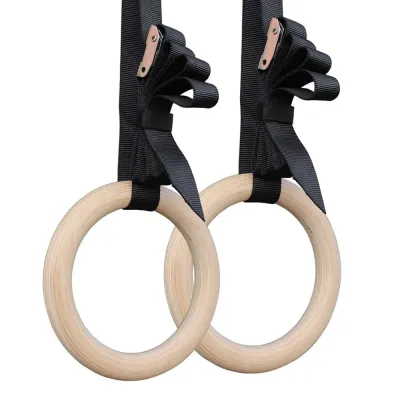
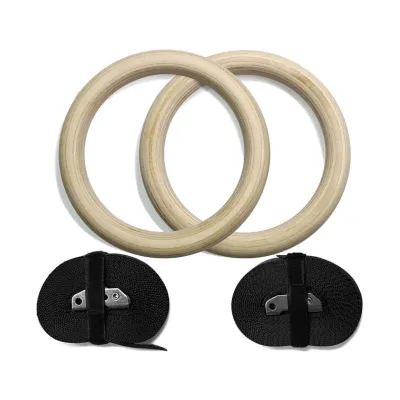
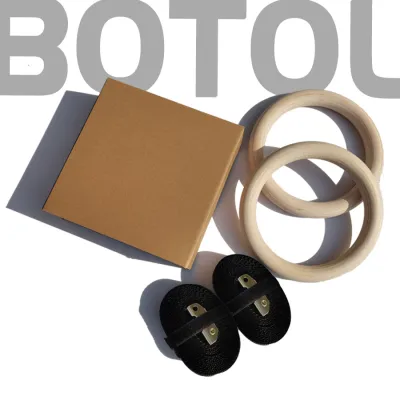
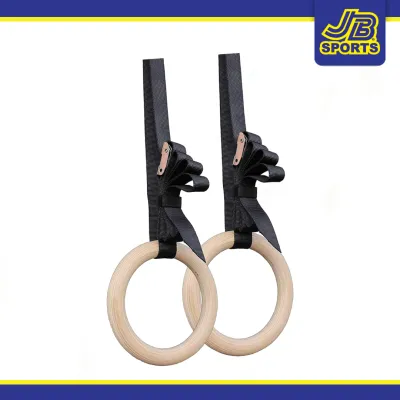
Prices are valid at publication and may change. Please refer to the product page for the latest price.
Quick Guide: The Ideal Gymnastic Ring Setup for Beginners
When purchasing your first set of gymnastic rings, selecting the correct dimensions and materials will directly impact your training progress and safety. The standard beginner ring diameter is 1.25 inches (32mm). This thickness provides a larger surface area that distributes your body weight more evenly across your palms, reducing localized pressure and hand fatigue during pressing exercises like dips and push-ups. It also helps beginners develop the “false grip” required for advanced calisthenics movements later on.
For indoor or covered home use, wood is the highly recommended material. It offers a natural, slightly textured surface that feels comfortable against the skin, minimizing the risk of blisters and tearing. Unlike plastic or metal, wood maintains its grip even when exposed to humid air or sweaty palms, making it the superior choice for local training environments.
Safety and ease of adjustment depend entirely on the suspension system. Look for heavy-duty, high-density nylon straps that feature clearly printed or stitched numbers along their length. These markings allow you to level both rings instantly, preventing asymmetrical muscle loading. The straps must be paired with thick, spring-loaded metal cam buckles that bite firmly into the webbing to prevent any slippage under load.
This guide will break down the structural differences between materials, explain how to evaluate strap and buckle safety, outline secure installation methods for various home layouts, and provide practical tips for sourcing quality gear in the local market.
Wood vs. Resin: Which Ring Material Suits Your Home Gym?
Wooden Rings (The Indoor Standard)
Wooden gymnastic rings, typically crafted from multi-layered birch or maple plywood, are the gold standard for indoor training. The cross-grain lamination process used in their construction provides immense structural strength, ensuring the rings do not warp or split under heavy dynamic loads.

The standout feature of wood is its natural porosity. In a tropical country like the Philippines, where indoor temperatures and humidity levels can soar, hands sweat quickly during a workout. Wood absorbs minor moisture, maintaining a reliable coefficient of friction. This natural grip reduces your reliance on gym chalk, keeping your indoor workout space clean and free of white dust.
However, wooden rings require basic maintenance to preserve their structural integrity. They are not weather-proof and must never be left outdoors, exposed to rain, or kept in open-air balconies with high ambient humidity. Prolonged exposure to moisture can cause the wood to swell, splinter, or develop mold. To keep them in peak condition, always store them indoors in a dry, well-ventilated area and wipe them down with a clean, dry cloth after sweaty sessions.
Resin and Plastic Rings
Resin and plastic rings, usually molded from polycarbonate, ABS plastic, or high-density polyethylene (HDPE), are highly valued for their absolute weather resistance. They do not warp, rot, or degrade when exposed to water, making them the ideal choice for outdoor setups, open garages, or backyard rigs where tropical rain is a frequent occurrence.
The primary drawback for beginners is that plastic is entirely non-porous. When your hands sweat, the moisture sits on the surface of the ring, making it incredibly slippery. This lack of traction can compromise your safety during hanging or support holds. To use plastic rings safely, you will almost always need to apply gymnastics chalk, which can create a mess in an indoor home environment. Additionally, cheap molded plastic rings often have rough seam lines that can chafe your hands unless sanded down.
Rubber-Coated or Textured Alternatives
Rubber-coated steel or textured plastic rings are designed to bridge the gap between durability and grip. These rings feature a solid steel or dense plastic core covered with a textured, vulcanized rubber grip.
These alternatives offer excellent weather resistance and can be washed easily with mild soap and water. The rubber provides a high-friction surface even when wet, reducing the immediate need for chalk. However, the rubber coating adds significant thickness to the ring, which can feel uncomfortable or fatiguing for those with smaller hands. Over time, exposure to intense heat and sweat can also cause some rubber compounds to degrade, become sticky, or peel away from the core, making them a less durable long-term investment than high-quality wood.
Straps and Buckles: The Hidden Safety Features You Must Check
Strap Length and Width
A standard pair of gymnastic ring straps should be 15 to 20 feet (4.5 to 6 meters) in length. Because the strap must loop over an anchor point and double back down to the buckle, a 15-foot strap gives you a maximum working height of about 7.5 feet. This is sufficient for most standard residential ceilings in the Philippines, which typically range from 2.4 to 3 meters high.
Strap width should ideally be 1.5 inches (38mm), though 1-inch (25mm) is also common. Wider straps distribute the load over a larger surface area of the anchor point, reducing wear. They are also less likely to twist during use or cut into your skin when the straps rub against your forearms during exercises like dips or support holds.
Numbered vs. Unnumbered Straps
Numbered straps feature woven or printed measurement marks along their entire length. During a typical workout, you will frequently transition between different heights: high for pull-ups, chest-high for dips, and low to the ground for push-ups or mountain climbers.
With unnumbered straps, leveling the rings is a tedious guessing game. You must constantly adjust, step back to visually align them, and readjust. More importantly, training on uneven rings forces one side of your body to work harder, leading to asymmetrical muscle development and placing unnecessary stress on the shoulder joint of the lower ring. Numbered straps allow you to adjust both sides to the exact same increment in seconds, ensuring a balanced and safe workout.
Cam Buckle Quality
The cam buckle is the single point of failure in a gymnastic ring setup. It must be a heavy-duty, spring-loaded metal buckle made of cast iron, steel, or high-strength zinc alloy. Avoid plastic buckles or cheap friction sliders entirely, as they can slip under dynamic loads.
When purchasing, verify the manufacturer’s stated Working Load Limit (WLL) rather than just the “breaking strength.” The breaking strength is the force at which the strap or buckle physically fails under static laboratory conditions. The WLL is the maximum weight the system is safely rated to support during active, dynamic use. For a single person, a WLL of at least 300 to 400 lbs (136 to 181 kg) per strap is recommended to safely handle the dynamic forces generated during exercises like dips or transitions.
Webbing Material
The straps must be made of high-density, military-grade nylon or polyester webbing. Look for a tight, heavy-duty weave. Low-quality straps will stretch under your body weight, requiring constant readjustment during a workout. They are also prone to fraying at the edges when threaded through the sharp metal teeth of the cam buckle. Ensure the ends of the straps are cleanly melted or capped to prevent unravelling over time.
Safe Installation: Mounting Rings in Limited Home Spaces
Evaluating Your Mounting Options
- Pull-Up Bars: Many beginners hang their rings from an existing doorway or wall-mounted pull-up bar. If using a doorway bar, it must be a heavy-duty, screw-in or bolted model. Never hang gymnastic rings from a pure friction-mounted telescopic bar, as the lateral and dynamic forces of ring exercises can easily dislodge the bar from the doorframe, leading to severe falls. Wall-mounted pull-up bars bolted into solid concrete or brick walls offer a much safer, highly stable anchor point.
- Ceiling Joists and Beam Mounts: Hanging rings directly from the ceiling provides the best range of motion. In typical Philippine residential construction, ceilings may consist of concrete slabs or light drywall/gypsum board suspended under wooden or metal joists. You must never mount eye-bolts or anchors directly into drywall, plaster, or drop ceilings. For concrete ceilings, use heavy-duty steel expansion bolts (anchor bolts) rated for overhead loads. For wooden joists, locate the center of a solid structural beam and install heavy-duty steel eye-bolts. If you are unsure of your ceiling's structural capacity, consult a professional contractor or structural engineer.
- Outdoor Trees and Pillars: If mounting outdoors on a tree branch, choose a thick, healthy, living branch (at least 8 inches in diameter) and ensure the strap is positioned close to the trunk to minimize bending forces. Use a protective sleeve or a towel wrapped around the branch to prevent the strap from cutting into the bark and to protect the webbing from abrasive wear. For concrete pillars or structural columns in carports, wrap the straps securely, ensuring there are no sharp edges that could slice the webbing under tension.
Clearance and Space Planning
To train safely, you need adequate clearance around your rings. Vertically, you need enough space above the rings to perform support holds or dips without hitting your head on the ceiling. Ideally, there should be at least 2 to 3 feet of clearance between the top of the rings and the ceiling.
Laterally, you require a clear radius of at least 3 to 4 feet in all directions. Dynamic movements, even simple ones like bodyweight rows or push-ups, cause the rings to swing. Ensure there are no walls, glass windows, mirrors, or sharp furniture within your swinging range. Clearing the space prevents painful collisions and protects your home environment.
Pre-Workout Safety Inspections
Before every single workout, perform a quick safety check. Inspect the entire length of both straps for any signs of fraying, cuts, or UV damage (which makes nylon brittle). Check the metal cam buckles to ensure the spring-loaded teeth snap back vigorously and are free of rust or dirt.
Once threaded, pull down hard on the rings with your full body weight while your feet are still on the ground to verify that the straps do not slip through the buckles. Remember, gymnastic equipment cannot replace structural integrity; if your anchor point or the straps show any signs of compromise, immediately stop your workout and address the issue.
Shopping in the Philippines: How to Spot Quality Rings Online and In-Store
Navigating Online Sports Retailers
When shopping on local e-commerce platforms or online fitness stores in the Philippines, filter for established, highly-rated sellers specializing in calisthenics or functional fitness gear. Look for listings that provide detailed, high-resolution photographs of the actual metal cam buckles and the texture of the wooden rings.
Read customer reviews carefully, paying close attention to photos uploaded by buyers. Verify if the reviews mention strap slippage, rough wood finishes, or missing parts. Avoid listings that rely solely on generic stock photos.
Red Flags to Avoid
Be highly skeptical of extremely cheap listings. High-quality wooden rings with heavy-duty numbered straps and cast-metal buckles typically cost between ₱1,200 and ₱2,500. Listings priced under ₱600 often compromise on safety, using low-grade, brittle wood, thin unnumbered straps, or weak plastic/flimsy metal buckles.
Another major red flag is the use of cheap climbing carabiners or simple spring clips instead of proper cam buckles. These alternative fastening systems often lack the precise micro-adjustability needed for ring training. Avoid listings that use vague marketing terms like “heavy-duty” or “commercial grade” without stating the actual material specifications, strap dimensions, and Working Load Limits.
Verifying Specifications
If the product description is incomplete, use the seller chat feature to ask specific questions before purchasing. Confirm the exact ring diameter (ask if it is 28mm or 32mm), the strap length (ensure it is at least 15 feet), and the material of the buckle (confirm it is solid metal, not plastic). A reputable seller will gladly provide these specifications.
Local Store Advantages
If you prefer a hands-on approach, visit specialized fitness equipment showrooms in Metro Manila or major provincial cities. Physically inspecting the gear allows you to feel the texture of the wood—ensuring it is smoothly sanded without splinters—and test the weight and spring tension of the cam buckles. You can also verify the thickness and stiffness of the strap webbing, giving you absolute confidence in your purchase.
Frequently Asked Questions (FAQ)
Can I use gymnastic rings if I don't have a pull-up bar or ceiling mount?
Yes, you can use alternative outdoor anchor points such as sturdy tree branches, outdoor calisthenics parks, or structural beams in carports and balconies. Some users also hang them from sturdy swingsets or goalposts at local parks. Regardless of the location, the anchor point must be completely stable, capable of supporting several times your body weight, and free of sharp edges that could damage the straps. Always prioritize safety and verify the structural integrity of any alternative mount before hanging your rings.
How thick should gymnastic rings be for small hands?
For individuals with smaller hands, a standard 1.11-inch (28mm) ring can provide a more secure and comfortable closed grip, especially when learning basic hanging exercises. However, the thicker 1.25-inch (32mm) ring remains highly recommended for general fitness because it is gentler on the palms during pressing movements like dips and push-ups. If you have very small hands and find it difficult to wrap your fingers fully around a 32mm ring, choosing a 28mm wooden ring is a perfectly acceptable alternative that will still offer excellent grip.
Do I need chalk for wooden gymnastic rings at home?
Generally, no. One of the main benefits of wooden rings is that the natural wood grain absorbs moisture from your hands, providing a reliable grip without any additives. However, if you are training in highly humid conditions without air conditioning, or if you are performing high-repetition workouts that cause heavy sweating, using a small amount of liquid or block gymnastic chalk can further enhance your grip security. If training indoors, liquid chalk is highly recommended as it dries quickly and produces significantly less airborne dust than traditional block chalk, keeping your home clean.

Community discussion
Share your experience or ask a question. Comments are reviewed before publication.