
Selecting the right karate gloves for your home training setup is a critical decision that directly affects your safety, hand health, and the lifespan of your equipment. Unlike standard boxing gloves, karate gloves are designed with specific martial arts movements in mind, offering varying levels of knuckle coverage, thumb protection, and wrist support. To choose the correct pair, you must evaluate your primary training activities—whether you are striking a heavy bag, practicing precision drills on focus pads, or engaging in light sparring with a partner. By matching the glove’s padding density, weight, and closure system to your specific routine and home environment, you can prevent painful hand injuries and ensure your gear withstands the demands of your workouts.
Identify Your Primary Home Training Activity
Before browsing online marketplaces or local sports shops, take a close look at your dedicated home training space. A typical martial arts corner in a local home might consist of a hanging heavy bag on a veranda, a freestanding punching bag in a garage, or simply a set of focus mitts stored in a closet for partner drills. The specific equipment you own, along with the physical space available, dictates the type of impact your hands will endure. For instance, shadowboxing in a small, fan-cooled room requires virtually no impact protection, whereas regular sessions on a dense, synthetic leather heavy bag demand substantial shock absorption to safeguard your knuckles and wrists.
The intensity and frequency of your workouts also play a major role in your decision. If your routine consists of high-velocity, full-power strikes against a heavy bag, your hands require dense, multi-layered padding that can disperse heavy forces repeatedly. Conversely, if your home workouts focus on speed, coordination, and light contact drills with a family member or training partner, a lighter and more flexible glove is more appropriate. Understanding the primary nature of your training prevents the common mistake of buying a single, generic pair of mitts and expecting them to perform safely across highly diverse training scenarios.
Products mentioned in this guide
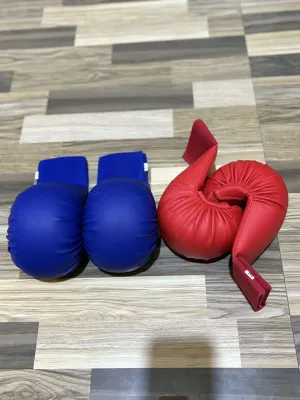
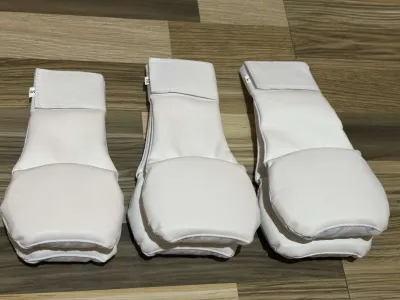
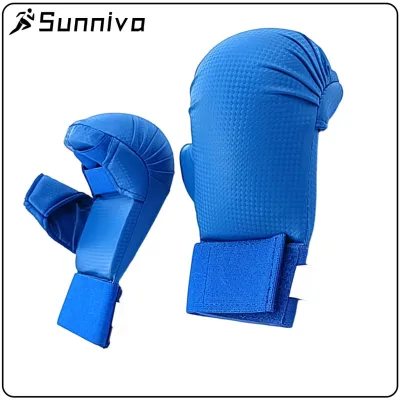
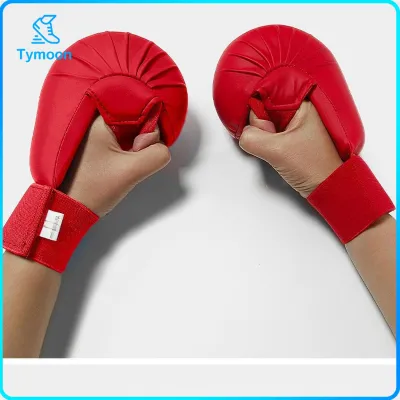

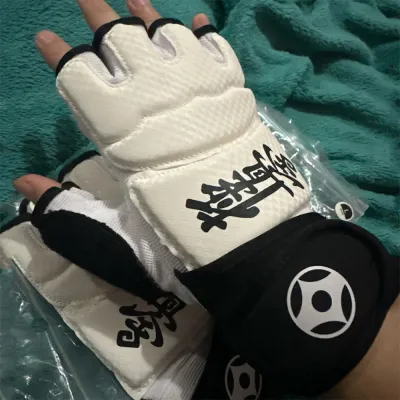
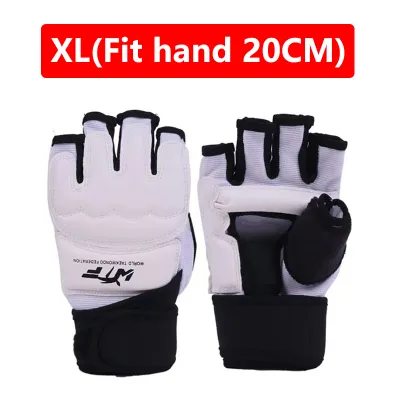
![[COD] EHBqna 1Pair Karate Gloves Martial Taekwondo Leather Foot Gloves Equipment Half Finger Protector Boxing Hand Foot Protection Guards](https://img.lazcdn.com/g/p/5e0cbbd28ed1a6d755b0d52286c9af0a.jpg_400x400q80.jpg_.webp)
Prices are valid at publication and may change. Please refer to the product page for the latest price.
It is highly practical to acknowledge that one pair of karate gloves may not safely cover every single activity in your home routine. If your budget or space is limited, prioritize the specific drill you perform most often for your primary purchase. For example, if eighty percent of your weekly training consists of solo heavy bag workouts, you should invest first in a dedicated bag glove that offers robust knuckle protection. You can then add specialized sparring mitts later as your training regimen expands to include partner work.
Match Glove Padding and Weight to Your Drill
The weight and padding density of karate gloves are engineered for specific impact levels, and using the wrong type can lead to joint strain or premature gear failure. For heavy bag work, you must look for gloves with dense, high-impact foam designed specifically to absorb repetitive, high-force shocks. These gloves typically feature a thicker profile over the knuckles and may have a slightly higher weight rating specified by the manufacturer. The dense padding prevents your knuckles from bottoming out against the hard core of a heavy bag, which is especially important when training on dense canvas or thick vinyl surfaces in humid tropical conditions where materials can stiffen.

Focus pad drills require a completely different set of glove characteristics. When working with focus mitts, the emphasis is on speed, precision, timing, and rapid combinations rather than raw power. For these workouts, opt for lighter, more compact karate gloves that allow for natural hand movement and tactile feedback. Lightweight gloves prevent your shoulders and forearms from fatiguing prematurely, allowing you to maintain proper striking form throughout your session. They also make it easier to practice open-hand techniques, deflections, and quick transitions that are central to karate training.
If your home routine includes light sparring with a partner, your priority must shift from protecting your own hands to protecting your training partner. Sparring gloves feature softer, highly resilient, shock-dispersing foam designed to cushion the impact of a strike and prevent cuts, bruises, or more serious injuries. These gloves often feature a curved design that keeps the hand in a semi-closed position and must include adequate thumb protection, such as a thumb compartment or attachment, to prevent the thumb from catching on your partner’s gear or clothing.
Always check the manufacturer’s label and product specifications for the intended use case of the gloves. Karate gloves range from ultra-lightweight, traditional point-sparring mitts with minimal foam to heavily padded hybrid gloves designed for multi-purpose training. Never assume that a glove labeled for “karate” is automatically suitable for heavy bag work; using a thin, traditional sparring mitt on a heavy bag can lead to immediate hand pain and rapid degradation of the glove’s foam core.
Evaluate Design, Fit, and Closure Systems
The physical design of your karate gloves determines how easy they are to use during solo home workouts and how well they support your wrists. Wrist support is a critical factor, especially when striking heavy targets. While professional fighters sometimes prefer lace-up gloves for a highly customized fit, hook-and-loop closure systems are far more practical for home training. A wide, high-quality hook-and-loop strap allows you to put on and take off your gloves quickly without assistance, which is incredibly convenient when you need to adjust your music, grab a drink of water, or transition between different exercises.
Achieving a proper fit is essential for both safety and comfort. Instead of relying on generic small, medium, or large labels, which vary significantly between brands, take the time to measure your hand circumference. Use a flexible measuring tape wrapped around your dominant hand just below the knuckles, excluding the thumb. Compare this measurement directly to the brand’s specific sizing chart before making a purchase. A glove that is too tight can restrict blood circulation and cause hand cramping, while a glove that is too loose will slide around during impact, increasing the risk of skin chafing and wrist misalignment.
In a tropical climate where humidity levels are consistently high, breathability and material choice are vital considerations for home gear. Look for karate gloves that incorporate mesh palm panels, ventilation holes, or moisture-wicking inner linings. These design features help dissipate heat and sweat, keeping your hands dry and improving your grip inside the glove. Proper ventilation also prevents the buildup of moisture that can degrade the inner foam and lead to persistent, unpleasant odors in your home training area.
Pay close attention to the thumb placement and design of the glove. For bag and pad work, look for gloves where the thumb is either fully attached or ergonomically tucked alongside the index finger. This design prevents the thumb from sticking out awkwardly, reducing the risk of jamming or spraining the joint during off-center strikes. An ergonomically aligned thumb also encourages proper fist formation, which is the foundation of safe and effective striking technique.
Verify Safety and Equipment Compatibility
Before you begin your first workout, you must confirm that your new karate gloves are fully compatible with your home training equipment. Using thin, traditional sparring gloves on a hard, canvas-covered heavy bag can cause rapid wear to the glove’s outer material and lead to hand injuries. Conversely, using heavy, abrasive bag gloves on soft leather focus pads can scuff and damage the pads over time. Always cross-reference the glove manufacturer’s guidelines with the material and density of your targets to ensure a safe match.
When your gloves arrive, perform a thorough physical inspection before using them. Check the structural integrity of the gloves by examining the stitching along the seams, the security of the hook-and-loop straps, and the distribution of the internal padding. The foam should feel consistent and resilient, without any noticeable lumps, hollow spots, or shifting. If you detect any manufacturing defects or uneven padding, do not use the gloves; instead, contact the manufacturer or retailer for a replacement.
Maintaining your gloves is essential for preserving their protective qualities and hygiene, especially in warm and humid environments. After every training session, wipe down the exterior of the gloves with a damp cloth to remove sweat and dust. Open the wrist straps fully and place the gloves in a well-ventilated area away from direct sunlight to air dry. Avoid leaving damp gloves inside a gym bag or a closed closet, as this creates an ideal environment for mold and bacteria to grow, which can permanently ruin the materials.
Over time, all protective gear will wear out and lose its effectiveness. Establish a routine to inspect your gloves regularly for signs of wear, such as compressed or crumbling foam, tearing seams, exposed stitching, or loose wrist straps that no longer provide secure support. When the foam loses its springiness or the wrist support becomes compromised, the gloves can no longer protect your hands or your training partner safely. At this point, you should stop using them immediately and replace the pair to maintain a safe home training environment.
Frequently Asked Questions (FAQ)
Can I use the same karate gloves for both heavy bag work and sparring?
It is generally not recommended to use the same pair of karate gloves for both heavy bag work and sparring due to the conflicting requirements of these activities. Heavy bag gloves are designed with dense, firm foam to absorb high-impact forces and protect your knuckles from bottoming out against a hard target. Over time, striking a heavy bag compresses and hardens this foam even further. If you use these same compressed gloves for sparring, you risk injuring your training partner with a surface that has become too hard. Conversely, soft sparring gloves do not offer enough density to protect your hands during heavy bag workouts, which can lead to joint strain or hand injuries.
Do I need hand wraps under my karate gloves for home bag training?
Using hand wraps under your karate gloves is highly recommended for home bag training, as they provide essential structural support to your wrists, knuckles, and the small bones in your hands. Hand wraps help keep your wrist aligned during impact, reducing the risk of hyperextension or sprains when striking a heavy bag. Additionally, wraps act as a highly effective barrier that absorbs sweat, preventing moisture from seeping directly into the inner lining of your gloves. Always check the glove manufacturer’s fitting guidelines, as you may need to select a slightly larger glove size to comfortably accommodate the extra bulk of wrapped hands.

Community discussion
Share your experience or ask a question. Comments are reviewed before publication.