
Selecting the right roller skates for your child requires balancing safety, comfort, and adaptability. Because children grow rapidly and are still developing their motor skills, the ideal pair of skates must provide robust physical support while allowing room for growth. In tropical environments like the Philippines, where outdoor skating often takes place on warm subdivision roads, barangay multi-purpose courts, or concrete driveways, factors like ventilation, wheel grip, and humidity resistance become just as critical as the skate’s structural design.
Before your child takes their first glide, it is vital to recognize that roller skating carries inherent risks of falls and collisions. No amount of high-quality equipment can replace proper training, adult supervision, and sound judgment. Beginners should start in flat, traffic-free areas, and parents must establish clear stop conditions—such as halting practice immediately if the pavement is wet, if the child is fatigued, or if they are skating near steep inclines. By prioritizing the right features and safety protocols, you can ensure your child’s introduction to skating is both safe and enjoyable.
Understanding Skate Types and Skill Levels
Matching the skate style to your child’s age, balance, and specific skating goals is the first step in your buying journey. The two primary options you will encounter are quad skates and inline skates, each offering distinct mechanical advantages and riding experiences. Understanding how these designs interact with a child’s developing coordination will help you make an informed decision.
Products mentioned in this guide
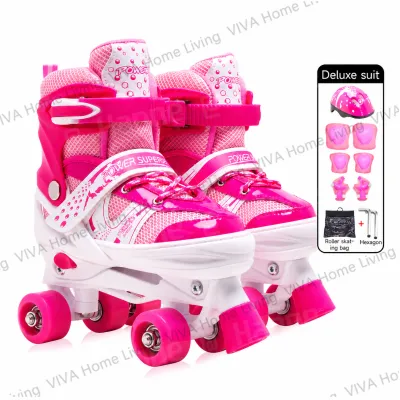
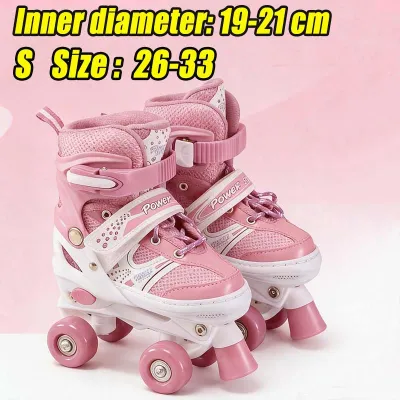
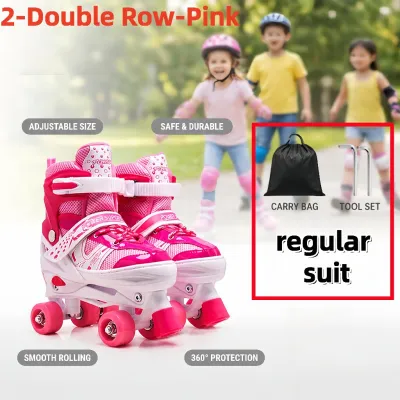
![IMUTO[Free protective gear]Roller Skate Shoes for Kids Adjustable Quad Skates Roller Blades Skate Shoes for Girls Boys](https://img.lazcdn.com/g/p/b32923ce443d92478176e84e3910fd79.jpg_400x400q80.jpg_.webp)
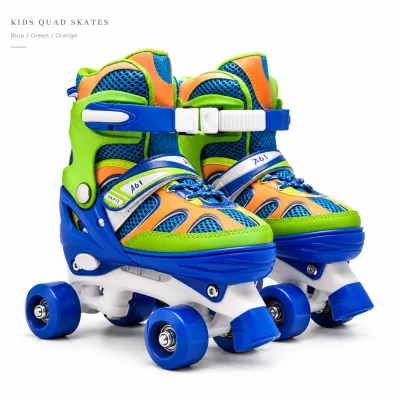
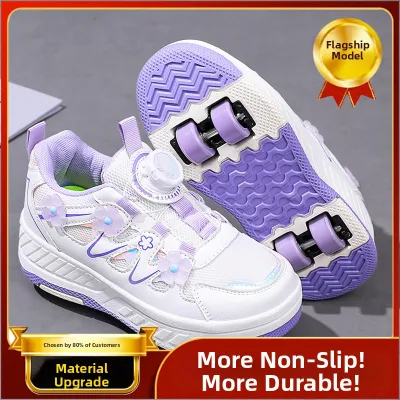
Prices are valid at publication and may change. Please refer to the product page for the latest price.
Quad skates feature four wheels arranged in a two-by-two configuration, resembling a small vehicle. This design provides excellent lateral stability when standing still, making it highly reassuring for very young children or absolute beginners who feel anxious about balancing. The wider wheelbase prevents the foot from tipping sideways easily, allowing kids to focus on the basic mechanics of stepping and rolling. Quad skates are highly suited for indoor roller rinks, smooth concrete patios, and casual neighborhood play.
Inline skates, often referred to as rollerblades, feature wheels arranged in a single straight line. While they require more ankle strength to keep the feet upright, they offer superior forward-and-backward balance and glide efficiency. The narrower profile of inline wheels makes them much better at rolling over small pebbles, cracks, and uneven surfaces commonly found on outdoor pavements and subdivision roads. If your child is older, has strong ankles, or expresses an interest in speed skating or hockey, inline skates are often the more practical choice.
Your child’s intended skating venue should heavily influence your choice. If they plan to skate primarily on rough outdoor asphalt, inline skates with slightly larger wheels will handle the terrain with less vibration. Conversely, if they are skating on smooth indoor floors or flat garage spaces, quad skates offer a classic, rhythmic experience. Discussing these options with your child can also help gauge their motivation, as choosing a style they find exciting will encourage them to practice more consistently.
Key Features to Prioritize for Safety and Comfort
When evaluating different skate models, you must look closely at the structural and mechanical components that directly impact safety and comfort. A poorly constructed skate can cause physical discomfort, discourage your child from practicing, or even lead to preventable injuries. Prioritizing high-quality materials and reliable mechanisms is essential.

Ankle support is the most critical structural feature of any children’s skate. Hard-shell boots, constructed from molded plastic, provide maximum lateral support to keep the ankle locked in an upright position. This prevents the ankles from rolling inward or outward, which is a common cause of fatigue and strain for beginners. Soft boots, made of canvas or mesh, offer greater flexibility and breathability, but they should only be considered for older children who already possess strong ankle stability. In warm, humid climates, look for hard-shell boots that feature ventilated cutouts and removable, washable fabric liners to keep feet cool and prevent mold growth.
Wheel material and hardness, measured by a durometer rating, determine how the skates grip the ground and absorb shock. Avoid cheap skates that feature hard plastic wheels, as they slide unpredictably on smooth surfaces and vibrate painfully on rough concrete. Instead, look for polyurethane wheels, which offer excellent grip and shock absorption. For outdoor skating on subdivision roads, a softer wheel rating (around 78A to 82A) is ideal because it cushions the ride against bumps. For indoor rinks, slightly harder wheels (82A and above) provide a smoother, faster glide.
Braking systems must be highly reliable and easy for a child to operate. Quad skates typically feature a toe stop at the front of the boot, which the skater uses by dragging the toe behind them or tipping the foot forward to stop. Inline skates usually feature a heel brake attached to the rear of the right skate, allowing the child to lift their toes and press the rubber pad against the ground. Before purchasing, verify that the brake pad is made of high-friction rubber rather than slick plastic, and check if replacement brake pads are readily available from the manufacturer.
Closure systems secure the foot inside the boot and prevent dangerous heel slippage. The most secure skates utilize a triple-closure system: traditional laces for a customized fit along the top of the foot, a 45-degree Velcro power strap to lock the heel down, and a micro-adjustable top buckle to support the upper ankle. Avoid skates that rely solely on weak Velcro straps, as they can loosen during active skating and compromise ankle support.
Finding the Perfect Fit: Sizing and Adjustability
Achieving the correct fit is essential for maintaining control, preventing painful blisters, and ensuring a positive skating experience. Because children’s feet grow rapidly, parents are often tempted to buy skates that are one or two sizes too large. However, oversized skates allow the foot to slide around inside, leading to severe friction blisters, a lack of control, and an increased risk of ankle sprains.
To find the correct size, measure your child’s feet at home using a precise millimeter-based method. Have your child stand barefoot on a sheet of paper with their heel resting flat against a wall. Mark the furthest point of their longest toe, and measure the distance from the edge of the paper to the mark in millimeters. Repeat this process for both feet, as one foot is often slightly larger than the other, and use the larger measurement as your guide.
Always consult the manufacturer’s specific size chart rather than relying on your child’s everyday street shoe size. Skate sizing is not standardized across brands, and a size 32 in one brand may fit completely differently than a size 32 in another. Comparing your child’s actual foot measurement in millimeters to the brand’s size chart is the most reliable way to ensure a proper fit.
Adjustable-size skates are an excellent, cost-effective solution for growing children. These skates feature a mechanical button or screw system that allows the toe cap of the boot to slide forward, expanding the skate across three to four full sizes. When buying adjustable skates, verify that the adjustment mechanism locks securely into place and does not slip under pressure. Keep in mind that while adjustable skates offer great longevity, they can be slightly heavier than fixed-size skates due to the internal sliding tracks.
When your child tries on the skates for the first time, perform a quick fit check before letting them roll. Have them stand up with the skates fully buckled and laced. Their toes should gently touch the front of the toe box when standing straight, but when they bend their knees into a active skating stance, their toes should slide back slightly, leaving a comfortable gap. If their heel lifts up significantly when they walk or bend their knees, the skates are too large and require adjustment or a smaller size.
Essential Protective Gear for Young Skaters
Roller skating is a high-risk sport for beginners, and falls are an inevitable part of the learning process. Equipping your child with a complete set of high-quality protective gear is non-negotiable. Proper safety gear not only prevents painful scrapes and serious injuries but also builds your child’s confidence, allowing them to learn without fear.
A properly fitting helmet is the most crucial piece of safety equipment. Do not use a standard bicycle helmet, as they are designed primarily to protect against forward impacts. Instead, choose a certified multi-sport or skate-specific helmet that extends lower down the back of the skull to protect against backward falls. Look for safety certifications such as CPSC or EN 1078 printed on the inner foam liner, and ensure the helmet sits flat on the forehead, about two finger-widths above the eyebrows.
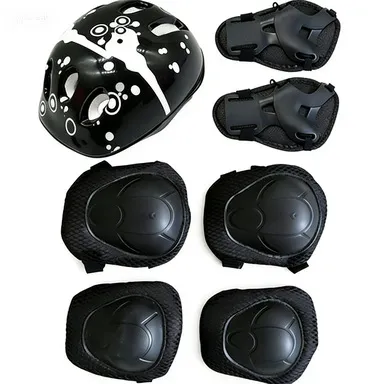
Joint protection is equally vital to absorb impacts and prevent painful road rash. A standard protective gear set should include knee pads, elbow pads, and wrist guards. Wrist guards are particularly important because children instinctively put their hands out to break a fall, which can lead to wrist fractures without proper support. Look for wrist guards with rigid plastic splints on both the palm and the back of the hand to prevent hyperextension.
To ensure the protective gear remains effective, you must regularly inspect its fit and condition. The straps should be adjusted tightly enough so the pads do not slide out of place during a fall, but not so tight that they restrict blood circulation or pinch the skin. In hot and humid tropical conditions, sweat will accumulate rapidly on the inner padding. Air out all protective gear in a well-ventilated area after every use, and inspect the plastic shells regularly for cracks or deep gouges that indicate the gear needs to be replaced.
Building Your Shortlist: A Pre-Purchase Checklist
Before finalizing your purchase from an online marketplace or a local sporting goods store, take the time to verify several key specifications. Having a structured checklist ensures you do not overlook critical safety or durability details in favor of appealing colors or low prices.
First, verify the skate’s maximum weight capacity and recommended age range on the product packaging or manufacturer’s specification sheet. Some budget-friendly skates designed for toddlers have very low weight limits and flexible plastic frames that will bend or crack under the weight of an older child. Ensuring the skate is rated for your child’s current weight is a fundamental safety requirement.
Second, check the retailer’s return and exchange policy. Because proper fit is so critical, you need the flexibility to return or exchange the skates if they do not fit correctly. When the skates arrive, have your child try them on indoors on a clean, carpeted floor. This allows you to test the fit and adjustability without scratching the wheels or chassis, preserving your ability to make a return if necessary.
Third, inspect the material of the chassis, which is the frame holding the wheels to the boot. For younger, lighter children, a high-impact composite (plastic) frame is often preferred because it is lightweight and absorbs road vibrations, making the ride smoother. For older, heavier, or more aggressive skaters, an aluminum frame is superior because it offers greater rigidity, durability, and better power transfer.
Finally, ensure that all necessary maintenance tools are included in the box. Quality skates typically come with one or two Allen keys or specialized wrenches. You will need these tools to regularly tighten the axle bolts, rotate the wheels to ensure even wear, adjust the sizing mechanism, and replace the brake pad when it becomes worn down. If tools are not included, make sure you have a compatible set at home before your child’s first skating session.
Frequently Asked Questions (FAQ)
At what age can a child start roller skating?
Most children develop the necessary balance, coordination, and motor skills to begin learning how to roller skate between the ages of three and five. Rather than relying strictly on chronological age, look for physical milestones such as the ability to run confidently, jump with both feet, and balance on one foot for a few seconds. If your child can perform these movements easily, they likely possess the physical readiness to stand and glide on skates. Always supervise early attempts closely, keep the initial practice sessions short (around 15 to 20 minutes) to prevent muscle fatigue, and focus on making the experience fun rather than pushing for rapid progress.
Should I buy quad skates or inline skates for a beginner?
For absolute beginners, both quad and inline skates are viable options, but they cater to different physical strengths and preferences. Quad skates offer excellent side-to-side stability when standing still, which can help build immediate confidence in younger children. However, inline skates are often easier for kids to push forward and glide on, especially when skating outdoors on uneven subdivision pavements where the single line of wheels rolls over cracks more smoothly. Consider your child’s personal preference, where they will be skating most often, and what type of skates their friends or siblings use, as peer motivation plays a significant role in their willingness to practice.
How often do kids need new roller skates?
If you purchase high-quality adjustable-size roller skates, a single pair can easily last between two to three years, as the boot can expand across several sizes to accommodate natural growth spurts. For non-adjustable skates, you will likely need to replace them every time your child outgrows their current street shoe size. Regularly inspect the fit of the skates by checking for physical signs of discomfort, such as your child complaining of toe cramping, red pressure marks on their feet, or heel blisters. Additionally, check the physical condition of the skates regularly; if the wheels are heavily worn down on one side, the bearings are rusted from humidity, or the plastic ankle cuff shows signs of cracking, it is time to invest in a new pair for safety.

Community discussion
Share your experience or ask a question. Comments are reviewed before publication.