
Finding the perfect pair of swimming goggles often feels like a trial-and-error process, but achieving a leak-free swim comes down to understanding your facial structure and matching the gear to your environment. A properly fitting pair of goggles relies on a physical seal against your orbital bone rather than tight straps. By focusing on gasket suction, nose bridge adjustability, and lens suitability, you can prevent water from seeping in and enjoy uninterrupted sessions in the water.
Whether you are training in a local sports complex pool or swimming in open water, the right goggles protect your eyes from chlorine, salt, and UV rays. Investing a little time to understand how different designs interact with your face will save you from the constant distraction of clearing water mid-lap.
Quick Answer: The Core Rules for a Leak-Free Seal
The absolute foundation of a leak-free goggle is the “suction test.” To perform this, press the goggle eye cups gently against your eye sockets without using the head strap. If the goggles stick to your face for a few seconds before releasing, the shape is a good match for your facial structure. This temporary vacuum indicates that the gasket contours naturally to your skin without requiring external pressure.
Products mentioned in this guide
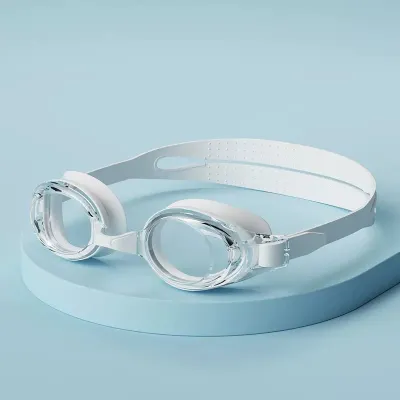
Prices are valid at publication and may change. Please refer to the product page for the latest price.
If the goggles fall off immediately, it is a clear sign of a poor fit. Look closely for visible gaps, particularly around the nose bridge or the outer corners of your eyes. Direct pressure on your eyeball or pinching at the bridge of your nose are also immediate indicators that you should stop and try a different size, shape, or style. The strap should only serve to keep the goggles in place during movement, not to force a seal that does not naturally exist.
Matching Goggle Types to Your Swimming Goals
Selecting the right goggles requires matching their design to your specific swimming activities. Different styles prioritize comfort, visibility, or hydrodynamics, and choosing the wrong category can lead to discomfort or premature wear.

- Recreational Goggles: These are designed with casual swimming, resort visits, and beach days in mind. They typically feature larger frames, wider lenses for an expansive field of vision, and thick, soft silicone seals. While they are highly comfortable for long periods of wear, their bulkier profile makes them less suited for high-speed lap swimming.
- Fitness and Training Goggles: Built for regular lap swimmers, these goggles offer a balanced middle ground. They feature a more streamlined profile than recreational models to reduce drag, yet they retain comfortable, durable gaskets that can withstand hours of weekly use. They are designed to stay secure during turns and active workouts.
- Competition Goggles: Also known as racing goggles, these are engineered for maximum hydrodynamics and speed. They feature a very low profile, rigid seals, and a tight fit to minimize drag during dives and sprints. However, because they sit deep within the eye socket, they often sacrifice long-term comfort and are generally saved for race days rather than daily training.
Evaluating the Seal, Frame, and Nose Bridge
The physical components of the goggle frame dictate how well the gear conforms to your unique facial bone structure. Understanding these components helps you identify why a particular pair might leak or cause discomfort.
First, consider the eye cup depth and gasket materials. Most modern goggles use liquid silicone gaskets, which are highly flexible, durable, and resistant to the tropical heat and humidity that can degrade cheaper plastics. Silicone conforms well to various facial shapes. Foam gaskets are still available on some budget models, but they tend to degrade quickly when exposed to sweat, sunscreen, and chlorine, eventually losing their sealing ability.
Next, assess the nose bridge, which is often the primary culprit behind persistent leaks. Goggles generally come with one of three nose bridge styles:
- Fixed Nose Bridges: These are molded as a single piece with the frame. While durable, they offer no adjustability and only fit faces that match their exact dimensions.
- Adjustable Nose Bridges: These feature a notched strap or threaded design that allows you to customize the distance between the eye cups.
- Interchangeable Nose Bridges: Common in fitness and racing models, these packages include three to five different nose pieces of varying lengths, allowing you to snap in the perfect size for your face.
Finally, identify potential pressure points before committing to a purchase. The gasket must rest securely on the hard orbital bone surrounding your eye. If the frame is too small, the seal will press directly into the soft tissue of your eye socket, causing pain, high pressure, and eventual leaking. If the frame is too large, it may overlap with your temple or brow line, preventing a flush seal.
Choosing Lens Tints and Coatings for Your Environment
Once you have secured a proper fit, selecting the right lens tint ensures clear visibility and eye protection. Your choice should depend entirely on where you plan to swim.
For indoor pools, covered facilities, or early morning swim sessions, clear or light-tinted lenses are ideal. They maximize light transmission, allowing you to see lane lines and other swimmers clearly in low-light conditions. Yellow or blue tints can also help enhance contrast in indoor environments.
For outdoor swimming under the bright sun, mirrored and dark-tinted lenses are essential. Mirrored coatings reflect harsh light away from your eyes, significantly reducing glare off the water’s surface. Dark tints act like sunglasses, protecting your eyes from strain and fatigue during long outdoor workouts. When buying outdoor goggles, always check the packaging to verify they offer UV protection to shield your eyes from solar radiation.
Regardless of the tint, almost all modern goggles come with an anti-fog coating applied to the inner surface of the lens. It is important to understand that these coatings are temporary and highly sensitive. High humidity, sweat, and physical contact can wear them down. To preserve the coating, never wipe or touch the inside of the lenses with your fingers, towels, or shirts, as this will scratch and remove the anti-fog layer.
Step-by-Step Guide to Trying On and Adjusting Goggles
To ensure your goggles perform flawlessly in the water, follow this systematic process when trying them on and adjusting them for the first time.
- Step 1: Perform the strapless suction test. Press the eye cups firmly but gently against your eyes without putting the strap over your head. Press slightly to expel the air. If they hold their position for a few seconds, the frame shape is compatible with your face.
- Step 2: Position the strap correctly. Place the goggles on your eyes first, then pull the strap over your head. The strap should split or sit high on the back of your head at a 45-degree angle. Never let the strap rest over your ears, as this causes painful chafing and pulls the goggles downward, breaking the seal.
- Step 3: Adjust the strap tension to the minimum. Loosen the straps completely, then tighten them just enough to keep the goggles secure during movement. The strap's purpose is to hold the goggles in place, not to pull them tighter against your face to stop leaks. Over-tightening actually distorts the silicone gasket, causing it to buckle and let water in.
- Step 4: Check for hair and cap interference. Ensure that no strands of hair, swim cap edges, or facial hair are trapped underneath the silicone gasket. Even a single strand of hair can create a microscopic channel that allows water to slowly seep into the eye cup.
Caring for Your Goggles to Maintain the Seal
Proper maintenance is crucial for preserving the flexibility of the silicone gaskets and the clarity of the lenses. Neglecting your gear can cause the materials to warp, harden, or crack, leading to premature leaks.
After every swim, rinse your goggles thoroughly with fresh, cool tap water. This removes chlorine, salt, sweat, and sunscreen residues that slowly degrade silicone and eat away at lens coatings. Avoid using hot water, dish soaps, or harsh detergents, as these chemicals can damage the delicate anti-fog treatment.
Once rinsed, allow your goggles to air-dry completely in a shaded, well-ventilated area. Never leave them to dry in direct sunlight or inside a hot car, as extreme tropical heat will warp the plastic frame and dry out the silicone gaskets, rendering them stiff and useless.
Finally, store your dry goggles in a dedicated protective pouch or hard case. Tossing them loose into a swim bag exposes the lenses to scratches from keys, zippers, or rough fabrics, and can crush the eye cups, permanently distorting the shape of the seal.
Frequently Asked Questions (FAQ)
Why do my swimming goggles leave deep marks around my eyes?
Deep, red marks around your eyes are typically caused by over-tightening the head strap. Many swimmers tighten the strap excessively to stop leaks, but this forces the gasket to press painfully into the delicate skin around the orbital bone. If you must pull the strap very tight to prevent water from entering, the goggles do not fit your face properly, and you should switch to a model with a different frame shape or a more suitable nose bridge size.
Can I wear swimming goggles if I have a beard or facial hair?
While a beard or mustache does not usually interfere with the eye cups directly, long sideburns or high facial hair can get caught under the outer edges of the goggle gasket or the strap. To ensure a reliable seal, make sure the skin where the silicone gasket rests is completely clear of hair. If you have long hair or facial hair near the temples, wearing a silicone swim cap and tucking all hair underneath it before positioning your goggle straps can help prevent hair from breaking the seal.

Community discussion
Share your experience or ask a question. Comments are reviewed before publication.