
To choose the right taekwondo shoes, you must evaluate the sole’s pivot points, the shoe’s overall weight, upper material breathability, and how securely the fit locks your midfoot. Unlike standard athletic footwear, martial arts shoes are specialized gear designed to facilitate rapid spinning, protect your feet during impact, and maintain a close connection to the training mat. In the Philippines, where training environments often range from humid, fan-cooled community gyms to polished indoor dojangs, selecting the right footwear requires balancing grip with rotational freedom. Proper shoes do not replace formal training or technique, but they serve as a critical tool to support your footwork while protecting your skin from friction burns and minor impacts.
Why Dedicated Taekwondo Shoes Matter
Taekwondo relies heavily on rapid, high-velocity kicks, quick pivots, and sudden shifts in stance. When you perform a turning kick or a spinning hook kick, your supporting foot must rotate smoothly on the training surface. Barefoot training is traditional, but repetitive pivoting on high-friction puzzle mats can lead to painful friction blisters, skin tears, and excessive torque on your ankle and knee joints. Dedicated taekwondo shoes are engineered with thin, low-profile soles that allow your foot to sit close to the ground, providing the necessary tactile feedback while facilitating smooth rotations.
Furthermore, these shoes offer a layer of defense during sparring drills and pad work. While they are not heavily padded like safety foot guards used in official sparring competitions, the leather or synthetic upper shields your toes and instep from minor scrapes, floor burns, and direct skin-to-skin friction. They also provide a hygienic barrier, which is particularly valuable in shared training spaces where sweat and humidity can create breeding grounds for bacteria and fungi.
Products mentioned in this guide

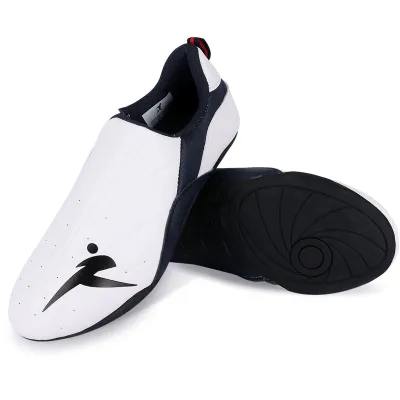
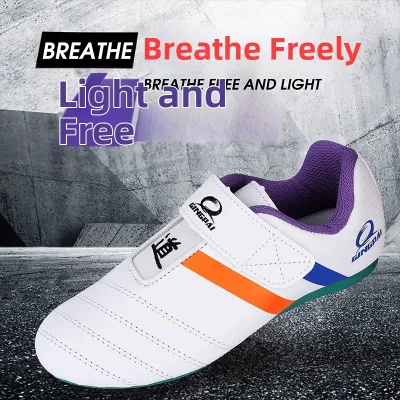
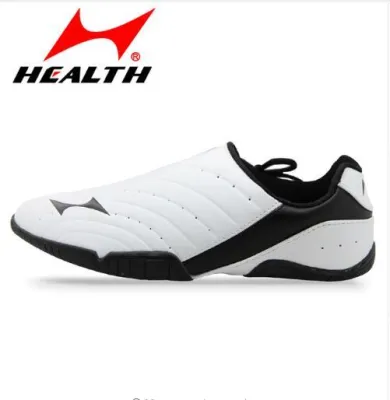
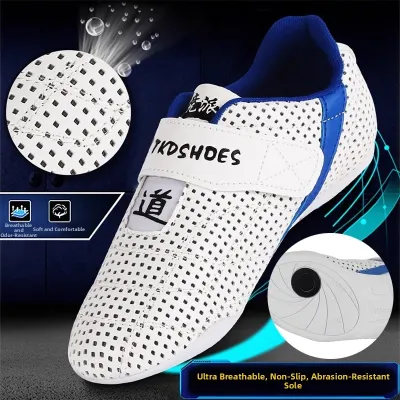
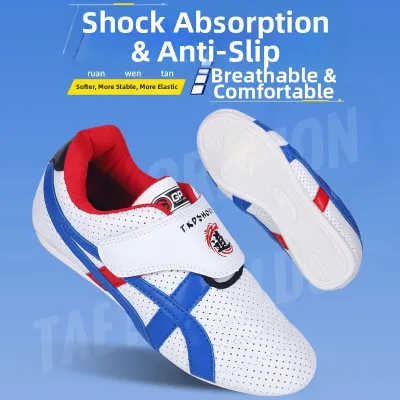
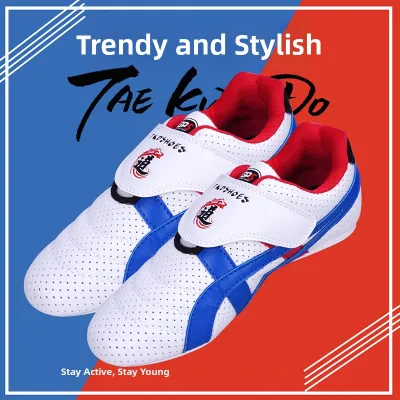

Prices are valid at publication and may change. Please refer to the product page for the latest price.
Standard athletic shoes, such as running or basketball shoes, are designed to grip the floor firmly to prevent slipping during linear or lateral movements. This high level of traction, combined with thick, cushioned midsoles, is counterproductive in martial arts. Attempting to pivot while wearing high-traction running shoes can lock your foot to the mat while your knee continues to spin, significantly increasing the risk of joint strain or ligament injuries. Dedicated martial arts shoes solve this by offering a balanced level of grip that allows controlled sliding and spinning.
Core Features to Evaluate for Movement and Grip
When shopping for taekwondo shoes, you should look closely at the construction of the outsole and the upper. These components work together to ensure you can execute kicks and footwork patterns without feeling weighed down or losing your footing.

Sole Design and Pivot Points
The outsole is the most critical part of a taekwondo shoe. When inspecting a pair, turn the shoe over and look at the tread pattern. You should see one or two circular, smooth areas located directly under the ball of the foot, and sometimes under the heel. These are known as pivot points or pivot pads. They are designed to reduce rotational friction, allowing you to spin smoothly on rubber puzzle mats or wooden floors without catching.
In addition to pivot points, evaluate the tread depth. The tread should be relatively shallow and flat. Deep, aggressive treads found on trail or running shoes can catch on the seams of interlocking puzzle mats, causing trips or sudden stops. The sole must also be highly flexible. You should be able to easily bend the shoe in half with your hands. A flexible sole ensures that your foot can arch, flex, and point naturally during stances and kicks, maintaining the ground feel necessary for balance.
Upper Material and Overall Weight
The upper portion of the shoe must be lightweight and streamlined to prevent drag during high kicks. Heavy footwear can alter your kicking mechanics and cause early fatigue during long training sessions. Look for shoes made from synthetic leather, lightweight natural leather, or a combination of synthetic panels and breathable mesh.
In warm, humid climates like the Philippines, ventilation is a major consideration. Dojangs can become incredibly warm, leading to heavy sweating. Shoes with mesh inserts or perforated uppers allow heat and moisture to escape, keeping your feet dry and reducing the risk of slipping inside the shoe. Additionally, inspect the interior lining and seam placement. Because many practitioners prefer to wear these shoes barefoot or with very thin socks, the inner seams should be flat and soft to prevent chafing and blisters along the sides of your feet and toes.
Assessing Fit, Sizing, and Ankle Support
Achieving the correct fit is essential for both performance and safety. A shoe that is too loose will slide around your foot, causing instability during rapid movements, while a shoe that is too tight can restrict blood flow and cause cramping.
When determining your size, do not rely solely on your standard street shoe or sneaker size. Martial arts shoes are designed to fit snugly, almost like a second skin, to prevent your foot from sliding inside the shoe during explosive kicks. Always consult the specific manufacturer’s sizing chart, which often uses millimeter or centimeter measurements of foot length. Measure your foot from the heel to the tip of your longest toe while standing, and compare this measurement to the brand’s guide.
The closure system plays a vital role in securing the midfoot. Most taekwondo shoes feature either a lace-up design, an elastic slip-on style, or a combination of laces with a hook-and-loop strap. Laces allow for a highly customizable fit, but they must be tucked away safely to prevent them from whipping your training partner or coming undone mid-kick. Slip-on designs with elastic bands offer a clean, streamlined profile with no loose parts, but you must verify that the elastic is strong enough to hold your foot securely during lateral movements.
Consider the level of ankle support you require. The vast majority of taekwondo shoes are low-top designs, which maximize ankle articulation and allow you to point your toes fully during kicks. However, if you have a history of ankle instability or are recovering from an injury, you might look for mid-top designs that offer slightly more lateral support around the ankle joint. Keep in mind that mid-tops may slightly restrict your range of motion, so you must weigh this trade-off based on your physical needs. When trying on new shoes, wear the exact socks or ankle wraps you plan to use during training to ensure an accurate fit.
Matching the Shoe to Your Training Environment
Your training venue dictates the type of shoe construction you need. Not all taekwondo shoes perform the same way on every surface, and using the wrong shoe on a specific floor can accelerate wear or compromise your safety.
If you train primarily indoors on standard EVA foam puzzle mats or tatami mats, look for shoes with soft, non-marking rubber soles. These soles provide the right balance of grip and slide without leaving black scuff marks on the mats, which can be difficult for dojang owners to clean. The rubber should feel slightly tacky to the touch but not overly sticky.
For outdoor training, such as practicing on concrete, asphalt, or hard dirt surfaces in community parks, you will need a shoe with a thicker, more durable rubber outsole. Soft indoor soles will wear down rapidly on abrasive outdoor surfaces, rendering the pivot points useless within a few weeks. Outdoor training also requires a bit more midsole cushioning to absorb the impact of jumping and landing on hard ground, though you should still avoid the thick midsoles of running shoes.
Before purchasing any footwear, always check your specific dojang’s rules. Some traditional schools require students to train strictly barefoot, while others permit shoes only of specific colors (such as all-white or black) to maintain a uniform appearance. Additionally, establish a routine to inspect your shoes regularly. Look for bald spots on the pivot points, peeling soles, or tears in the upper material. If the sole has worn completely smooth or the upper no longer holds your foot securely, it is time to replace them to maintain proper traction and support.
Frequently Asked Questions (FAQ)
Can I use regular running shoes for taekwondo?
No, regular running shoes are not suitable for taekwondo training due to their structural design. Running shoes are built for forward linear motion and feature thick, cushioned midsoles with high heel-to-toe drops. This design raises your center of gravity and creates instability during the rapid lateral movements and spinning kicks required in taekwondo. The high-grip rubber outsoles of running shoes can also lock onto the training mat, preventing your foot from pivoting and putting dangerous rotational stress on your ankles and knees.
How do I know when it is time to replace my taekwondo shoes?
You should replace your taekwondo shoes when you observe clear signs of structural wear that compromise your safety. Inspect the outsoles regularly; if the circular pivot points have worn completely flat or bald, the shoes will no longer allow you to spin smoothly, increasing joint strain. Check the uppers for any tearing or separation from the sole, especially around the toe box and the outer edges where lateral pressure is highest. Finally, if the internal elastic or lacing system has stretched out to the point where your foot slides inside the shoe during basic footwork, the footwear can no longer provide the necessary stability.

Community discussion
Share your experience or ask a question. Comments are reviewed before publication.