
Starting your angling journey in the Philippines is an exciting venture, given the country’s vast coastlines, rich estuaries, and inland freshwater bodies. However, walking into a local tackle shop or browsing an online marketplace for your first pamingwit—the Filipino term for a fishing rod—can quickly become overwhelming. With countless options in length, material, and action, the key to a successful start is simplicity. Choosing a beginner-friendly setup allows you to focus on learning basic casting techniques and understanding fish behavior rather than struggling with complex gear.
A well-chosen first rod should be forgiving of novice mistakes, versatile enough to handle different environments, and durable enough to withstand the tropical climate. By focusing on a few essential specifications and understanding where you plan to fish, you can easily find a reliable tool that fits your budget. This guide will help you navigate the selection process so you can step onto the water with confidence.
Identifying Your Fishing Environment and Target Species
Before looking at specific gear, you must define where you plan to fish, as the environment dictates the type of rod you need. The Philippines offers two primary fishing environments: freshwater and saltwater. Freshwater fishing typically occurs in lakes, rivers, reservoirs, and private fishponds, known locally as palaisdaan. In these calmer waters, your target species will likely be tilapia, dalag (mudfish), or hito (catfish). These species generally require a lighter, more sensitive rod that can detect subtle nibbles and cast lightweight baits.
Products mentioned in this guide
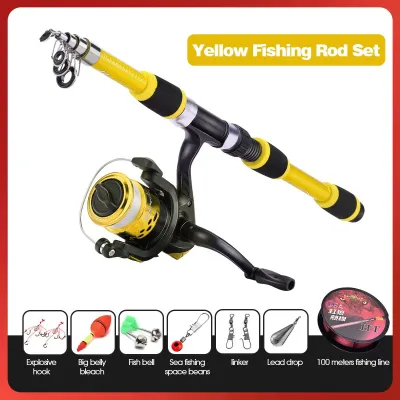
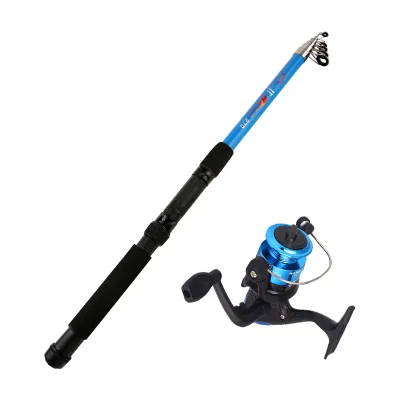
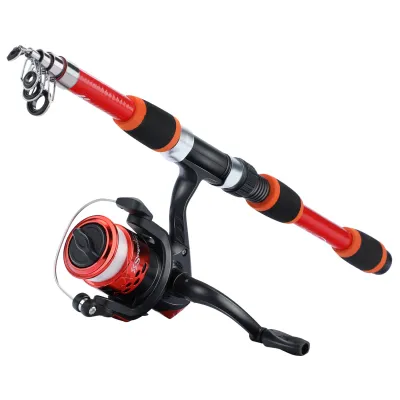
![[In Stock]Sougayilang Fishing Rod Set Full Set 1.8mTelescopic Fishing Rod and Spinning Fishing Reel and Fishing Accessories Fishing Rod Complete Set](https://img.lazcdn.com/g/p/e37753596223983276174dfaf93f2cb3.jpg_400x400q80.jpg_.webp)
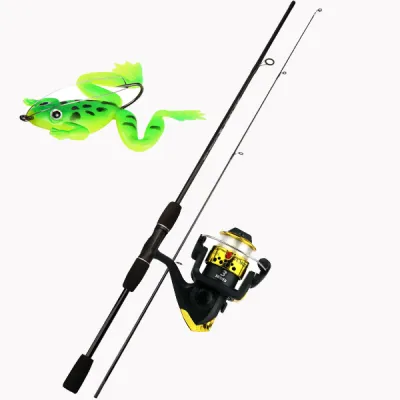
![[In Stock] Fishing Rod Set Full Set 1.8mTelescopic Fishing Rod and Spinning Fishing Reel and Fishing Accessories Fishing Rod Complete Set](https://img.lazcdn.com/g/p/65c6d5a4581153d8c18704a050abe73b.jpg_400x400q80.jpg_.webp)
Prices are valid at publication and may change. Please refer to the product page for the latest price.
Saltwater fishing, on the other hand, takes place along sandy beaches, rocky shorelines, concrete piers, or brackish estuaries. Here, you are more likely to encounter stronger, harder-fighting species such as talakitok (trevally), lapu-lapu (grouper), or small snappers. Saltwater environments demand gear with higher power to pull fish away from sharp rocks or barnacle-encrusted pilings. Additionally, the high salinity of coastal waters requires rods with corrosion-resistant components to prevent rapid rust and degradation.
Local weather and terrain conditions also play a significant role in your choice of gear. The tropical climate of the Philippines brings high humidity, intense sun exposure, and seasonal monsoons like the habagat (southwest monsoon) and amihan (northeast monsoon). These conditions mean your rod will be exposed to high heat and moisture, which can degrade low-quality materials quickly. Furthermore, if you plan to fish from crowded public piers or overgrown riverbanks, a shorter, more maneuverable rod is often more practical than a long, cumbersome surf rod.
Essential Specifications for a Beginner-Friendly Rod
Understanding basic rod specifications will help you decode the labels printed on the side of any pamingwit. The first key specification is rod power, which refers to the amount of force required to bend the rod. Power ratings range from ultra-light to extra-heavy. For beginners, a medium-light or medium power rod is highly recommended. This range provides a balanced middle ground, offering enough flexibility to cast light baits while retaining enough backbone to hook and control medium-sized fish.

The second specification is rod action, which describes where along the blank the rod bends when pressure is applied. Fast action rods bend primarily near the tip, providing excellent sensitivity and quick hook sets. Moderate or slow action rods bend further down the blank, creating a parabolic curve. For novices, a moderate-to-fast action rod is ideal. It offers a forgiving casting motion that cushions sudden movements, reducing the chances of snapping your line or pulling the hook out of a fish’s mouth.
Rod length is another critical factor that influences both casting distance and control. For general beginner use in local waters, a rod length between 6 and 7 feet (approximately 1.8 to 2.1 meters) is the sweet spot. A rod in this range is long enough to achieve decent casting distance from a pier or bank, yet short enough to handle easily without hitting overhanging tree branches or nearby anglers. It also fits more comfortably in standard vehicles and storage spaces.
Finally, consider the material of the rod blank. Fiberglass is the traditional choice for beginners because it is incredibly durable, highly impact-resistant, and budget-friendly. It can survive being dropped on rocks or bumped against boat gunwales, though it is relatively heavy and less sensitive. Graphite, or carbon fiber, is much lighter and highly sensitive, allowing you to feel the faintest vibrations, but it is more brittle and expensive. Composite rods, which blend fiberglass and graphite, offer a balanced blend of durability and sensitivity.
Top Fishing Rod Categories for First-Time Buyers
While specialized rods exist for every niche of angling, beginners should focus on versatile categories that minimize frustration. The two most practical options for starting out in local waters are spinning rods and telescopic rods. Both styles offer a low learning curve and can be used in a variety of fishing scenarios.
Spinning Rods for Versatile All-Around Use
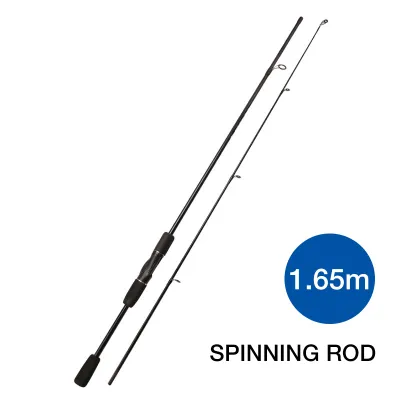
Spinning rods are a highly recommended standard for first-time buyers. These rods are designed to be paired with a spinning reel, which mounts underneath the rod blank. The line guides on a spinning rod face downward, allowing gravity to keep the entire setup naturally balanced in your hand. This ergonomic design makes it comfortable to hold and cast for hours without experiencing excessive wrist fatigue.
The primary benefit of a spinning setup is its ease of casting and resistance to line tangles. Unlike baitcasting reels, which feature a rotating spool that can easily overrun and create a tangled “bird’s nest” of line, spinning reels feature a stationary spool. When you cast, the line simply uncoils freely from the spool, guided by the rod’s large stripping guide. This design dramatically reduces the time spent untangling knots, allowing you to spend more time fishing and less time untangling lines.
Spinning rods are incredibly versatile, making them suitable for casting lightweight artificial lures, live bait under a float, or weighted bait rigs along the bottom. They perform well in both freshwater lakes and coastal shorelines. Their main limitation is when targeting exceptionally large, heavy deep-sea species, where specialized heavy-duty conventional tackle is required to handle extreme drag pressures. For the vast majority of shore-based and inland fishing in the Philippines, a medium-power spinning rod is highly effective.
Telescopic Rods for Portability and Casual Trips
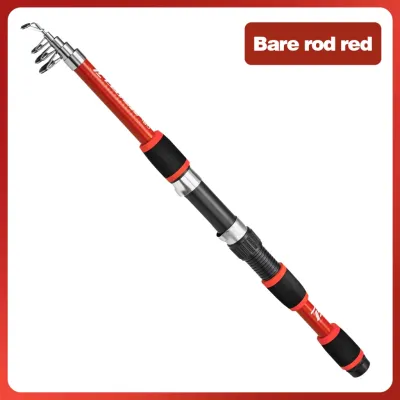
Telescopic rods feature a collapsible design where multiple hollow sections slide inside one another, allowing a full-length rod to shrink down to less than two feet. This extreme portability makes them highly appealing for casual anglers and travelers who want to keep a rod handy at all times.
For a beginner in the Philippines, transport convenience is often a major deciding factor. If you rely on public transportation like jeepneys and tricycles, or if you travel to your fishing spots on a motorcycle, carrying a standard one-piece or even a two-piece rod can be highly awkward and risky. A telescopic pamingwit fits easily inside a standard backpack, a gym bag, or under a motorcycle seat. This allows you to transport your gear safely without worrying about car doors or crowded spaces snapping your rod tip.
However, this convenience comes with specific trade-offs. The multiple joints required for a telescopic design introduce potential weak points along the blank, which can reduce the rod’s overall sensitivity and bending curve. To ensure safety and performance, always verify that each section is pulled tight and securely locked into place before casting. Additionally, inspect the joints regularly to ensure no sand, salt, or grit has lodged inside, as debris can scratch the material and cause the joints to jam or crack under pressure.
Pairing Your Rod with the Correct Reel and Line
To create a functional and balanced fishing setup, you must pair your rod with a compatible reel and line. A mismatched setup can make casting difficult, reduce your sensitivity, and even lead to gear damage. Fortunately, manufacturers print the recommended specifications directly on the rod blank, usually just above the handle. This label indicates the optimal line weight rating (in pounds) and lure weight rating (in ounces or grams) for that specific rod.
For a standard medium or medium-light beginner rod, a spinning reel in the 2000 to 3000 size range is generally the perfect match. A 2000-size reel is lightweight and holds plenty of line for freshwater targets, while a 3000-size reel offers slightly more line capacity and drag power for light saltwater shore fishing. Avoid pairing a light rod with a massive reel, as this will make the setup bottom-heavy and tiring to use.
When selecting your fishing line, monofilament is highly recommended for beginners. Monofilament is affordable, easy to tie knots with, and has a natural stretch that acts as a shock absorber. This stretch is highly forgiving when a fish strikes hard or when a beginner sets the hook too aggressively. A monofilament line rated between 8 and 12 pounds is versatile enough for most local applications. Before heading out, always verify that the reel sits securely in the rod’s reel seat without any wobbling, and ensure that all the line guides align perfectly in a straight line.
Pre-Purchase Checks and Basic Maintenance
Before finalizing your purchase at a local shop or accepting a delivery from an online marketplace, perform a few quick physical checks to ensure your gear is free of defects. Run your finger gently along the inside of each line guide to check for cracks, chips, or rough edges in the ceramic inserts. Even a tiny chip in a guide insert can act like a razor, fraying and snapping your line when under tension. Next, tighten the reel seat mechanism to ensure it holds a reel firmly without slipping or stripping the threads. Finally, gently flex the rod to check for any unusual creaking sounds that might indicate internal structural damage.
Once you own your rod, basic maintenance is essential to protect your investment, especially in a tropical, high-humidity environment. After every fishing trip—particularly if you fished in saltwater or brackish water—rinse the entire rod thoroughly with clean, running fresh water. This simple step removes salt deposits, sand, and organic debris that can corrode metal guide frames and seize the reel seat.
After rinsing, dry the rod completely with a soft cloth before storing it. Store your rods vertically in a dedicated rod rack or flat inside a protective rod tube to prevent warping. Avoid leaving your rod in high-heat environments, such as the trunk of a car parked in the sun or directly under a tin roof. Extreme tropical heat can weaken the adhesives and resins holding the guides and handle together, leading to premature gear failure.
Frequently Asked Questions (FAQ)
Can I use a freshwater rod for saltwater fishing?
Yes, you can use a freshwater rod in saltwater, but you must take immediate precautions to prevent damage. Freshwater rods often feature components, such as guide frames and reel seats, made from metals that are highly susceptible to saltwater corrosion. If you use your freshwater rod at the beach or on a coastal pier, you must rinse it thoroughly with fresh water immediately after your session. Failing to do so can lead to rapid rusting of the guides, which will ruin your fishing line during your next trip.
How much should I budget for my first fishing rod and reel combo?
For a reliable, entry-level rod and reel combo, a budget of approximately ₱1,000 to ₱2,500 is ideal in the local market. Within this price range, you can find durable fiberglass or composite spinning setups from reputable entry-level brands. Avoid the temptation to buy ultra-cheap, unbranded plastic toy sets, as they break easily and cause frustration. Similarly, there is no need to spend over ₱5,000 on high-end carbon fiber rods when starting out; prioritize durability, ease of use, and basic corrosion resistance over advanced, lightweight performance features.

Community discussion
Share your experience or ask a question. Comments are reviewed before publication.