
Choosing the right Alpsport badminton racket requires matching the frame’s weight, balance point, and shaft flexibility to your physical strength and technical skill. In the humid tropical climate of the Philippines, where indoor court conditions can be warm and sweat can affect your grip, selecting a racket that complements your natural swing speed is crucial for both performance and injury prevention. Rather than buying a racket based solely on aesthetic appeal, players must evaluate their current playing style and physical limits to find a balanced tool that enhances their game.
Assess Your Current Skill Level and Play Style
To find the ideal racket, you must first honestly evaluate your current playing ability. Beginners typically focus on basic hand-eye coordination, consistent contact, and learning fundamental footwork. At this stage, players often struggle to generate power from the wrist and rely heavily on full-arm swings. If you find yourself frequently hitting short clears, your priority should be a forgiving racket that assists with power generation.
Intermediate players have developed more consistent footwork and can execute a wider variety of shots, including drop shots, drives, and basic smashes. At this level, you are likely identifying your preferred play style. Offensive players favor aggressive, smash-heavy tactics from the backcourt, requiring equipment that maximizes downward force. Defensive players focus on quick rallies and rapid recovery, which demand a highly maneuverable frame. All-around players require a versatile setup that transitions smoothly between defense and offense.
Products mentioned in this guide
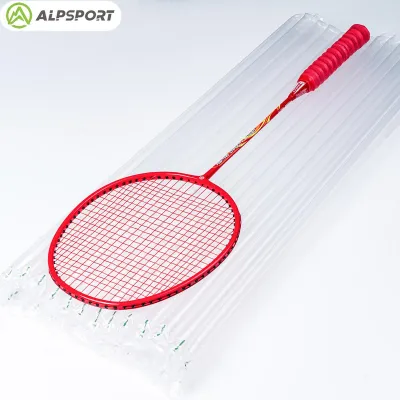
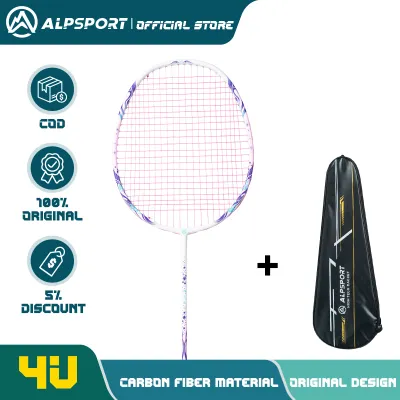
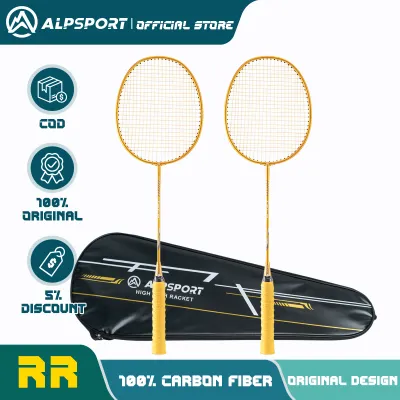

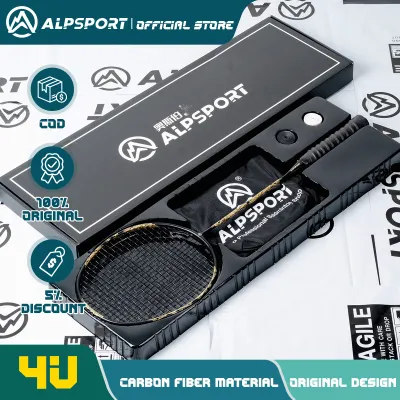
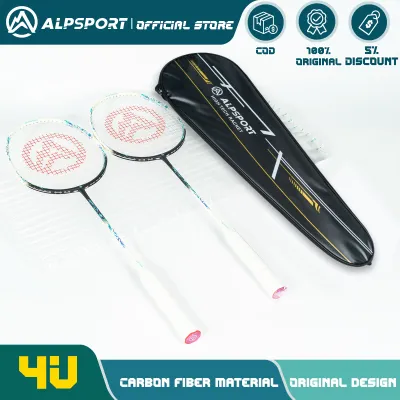
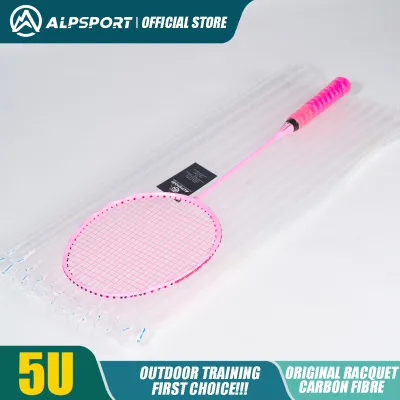

Prices are valid at publication and may change. Please refer to the product page for the latest price.
Advanced players possess explosive wrist speed, precise footwork, and the ability to control the shuttlecock from any position on the court. Your physical strength, wrist flexibility, and natural swing speed dictate how heavy or stiff a racket you can handle. Using a racket that does not match your physical conditioning can lead to rapid fatigue, reduced shot accuracy, and chronic shoulder or wrist strain.
Decode Badminton Racket Specifications
Understanding the technical specifications printed on Alpsport rackets is essential for making an informed choice. The weight of a badminton racket is categorized using the “U” classification system. A lower number indicates a heavier racket: 3U frames typically weigh 85 to 89 grams, 4U frames weigh 80 to 84 grams, and 5U or lighter frames weigh under 80 grams. Heavier rackets offer more momentum and power for smashes, while lighter frames provide superior speed and quicker defensive reactions.

The balance point of a racket determines where the majority of its weight is distributed. Head-heavy rackets have a balance point of 295 millimeters or higher, concentrating weight at the top of the frame to amplify smash power. Head-light rackets feature a balance point below 285 millimeters, shifting the weight toward the handle to allow for rapid defensive blocks and quick net exchanges. Even-balance rackets fall between 285 and 295 millimeters, offering a versatile compromise for players who refuse to compromise on either speed or power.
Shaft flexibility is another critical specification that dictates energy transfer during a swing. Flexible shafts bend easily during the backswing and snap forward, acting like a spring to generate power with minimal effort. Stiff shafts do not bend easily, requiring high swing speeds and precise timing to transfer energy directly to the shuttlecock. While stiff shafts offer unmatched placement accuracy for advanced players, they provide very little shock absorption, transferring the impact force directly to the player’s arm.
Match Racket Specs to Your Playing Ability
Connecting your self-assessment with these technical specifications is key to optimizing performance. For beginners, the recommended setup is a lightweight frame (typically 4U or 5U) paired with a flexible shaft and an even-balance or head-light distribution. This combination is highly forgiving, helping you clear the shuttlecock to the backcourt without straining your wrist or risking injury as you develop proper hitting form.
Intermediate players should look for medium-flex shafts that offer a balance of control and power as their swing speed increases. If your play style leans toward offense, a 4U head-heavy racket can help you develop a more powerful smash without overwhelming your forearm. If you prefer doubles play and quick defensive drives, a 4U head-light or even-balance racket will give you the speed needed to defend against fast attacks. This stage is about refining your technique, so your racket should support your evolving tactical preferences.
Advanced players can fully leverage high-performance specifications to dominate the court. A stiff or extra-stiff shaft combined with a head-heavy balance (often in the 3U or 4U weight class) allows for maximum power transfer and surgical precision. However, this setup is highly demanding. Without the necessary wrist strength and explosive swing speed, an advanced racket will feel sluggish, and the lack of shaft flex can lead to joint inflammation. Advanced players must ensure their physical conditioning matches the demands of their equipment.
Inspect and Verify Alpsport Rackets Before Purchase
Before finalizing your purchase, it is crucial to physically inspect the racket to verify its specifications and build quality. Locate the technical details printed on the shaft or the cone just above the handle. Ensure the weight (U) and grip size (G) match your requirements. In the Philippines, the high humidity and heat can cause hands to sweat profusely during intense indoor matches. Because of this, verifying the grip size is essential; most players prefer a G5 or G6 handle, which allows enough room to apply a sweat-absorbent towel grip or a tacky polyurethane overgrip without making the handle too bulky.
Next, check the recommended string tension limit printed on the frame. This is usually expressed in pounds (lbs). If you plan to string your racket at a higher tension for better control, ensure the frame is rated to handle that pressure. Exceeding the manufacturer’s recommended tension can warp or crack the graphite frame, especially during accidental racket clashes in doubles play.
Finally, inspect the overall structural integrity of the racket. Run your fingers along the frame to check for any hairline cracks, uneven paint finishes, or loose grommets. The grommets—the small plastic eyelets that protect the strings from the sharp edges of the frame holes—should be intact and properly seated. Replacing damaged grommets before stringing is vital to prevent the strings from snapping prematurely under tension.
Frequently Asked Questions (FAQ)
Does a heavier racket always generate more power?
No, a heavier racket does not automatically guarantee more power. Power is a product of both the racket’s mass and your swing speed. If a racket is too heavy for your physical strength, your swing speed will decrease significantly, resulting in weaker shots and increased fatigue. To maximize power, you must find a weight class that allows you to maintain a fast, explosive swing throughout your match.
How often should I restring my racket based on my skill level?
As a general rule, you should restring your racket as many times a year as you play per week. Casual players who play once a week may only need to restring twice a year, while intermediate and competitive players who play multiple times a week may require restringing every month. In the humid climate of the Philippines, strings naturally lose tension faster over time. You should restring your racket if you notice a significant drop in control, a dull sound upon impact, or visible fraying along the sweet spot. Budgeting around ₱250 to ₱500 for professional restringing services ensures your racket maintains its optimal playability.
Can beginners use advanced-level rackets?
It is highly discouraged for beginners to use advanced-level rackets. Advanced rackets feature stiff shafts and head-heavy balances that require exceptional technique and wrist strength to utilize effectively. A beginner using such a racket will likely struggle to clear the shuttlecock, experience rapid arm fatigue, and face a higher risk of developing tennis elbow or shoulder injuries. It is far better to start with a flexible, forgiving racket and upgrade as your skills and physical conditioning improve.

Community discussion
Share your experience or ask a question. Comments are reviewed before publication.