
Finding the right badminton racket as a beginner in the Philippines means looking for a frame that compensates for developing technique while handling the local humid climate. Instead of buying the most expensive professional model, a beginner should focus on a lightweight, flexible racket that prevents wrist fatigue and offers a generous sweet spot. By matching specific physical properties to your current physical strength and playing environment, you can build a solid foundation without risking injury or overspending.
Matching Racket Weight, Balance, and Flexibility to Your Skill
Racket weight is categorized using a standard “U” rating system, where a higher number indicates a lighter frame. For beginners, rackets in the 4U (typically 80 to 84 grams) or 5U (typically 75 to 79 grams) categories are highly recommended. Lighter frames reduce the physical strain on your wrist and shoulder during long rallies, allowing you to react faster and play longer without fatigue. Heavier rackets, such as those in the 3U category, require established forearm strength and clean technique to swing safely, making them less forgiving for those still mastering basic strokes.
The balance point of a racket determines how its weight is distributed between the head and the handle. Beginners generally benefit most from even-balance or slightly head-light frames. An even-balance racket provides a versatile mix of power and control, allowing you to practice both defensive clears and offensive drops with equal ease. A head-light racket makes it much easier to maneuver the frame quickly for defensive shots and fast net play, helping you keep up with rapid rallies. Head-heavy rackets are designed for aggressive smashing but can quickly tire out an untrained wrist and lead to poor form.
Products mentioned in this guide
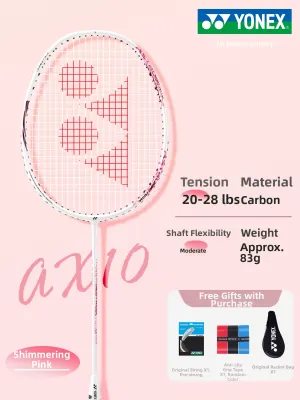
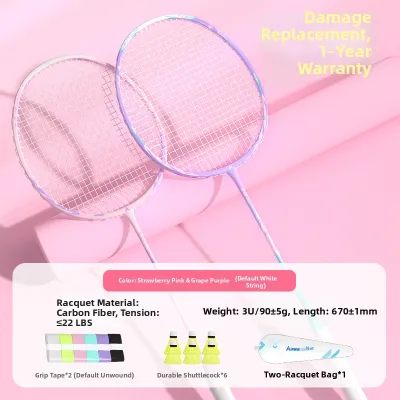
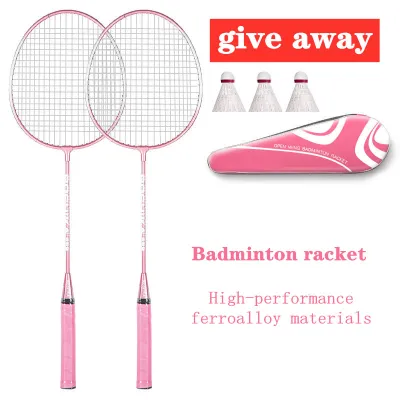
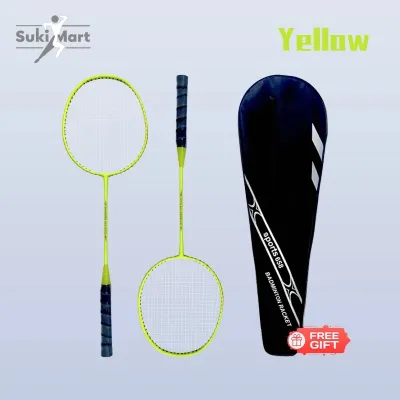
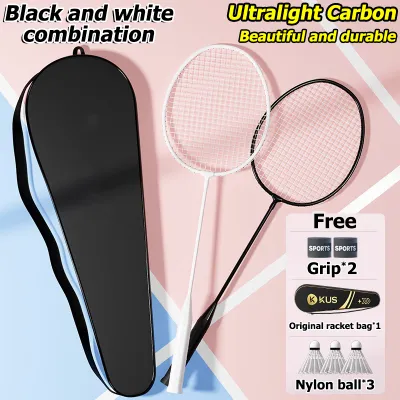
Prices are valid at publication and may change. Please refer to the product page for the latest price.
Shaft flexibility is another critical factor that dictates how easily you can generate power. Look for a racket with a flexible or medium-flexible shaft. When you swing, a flexible shaft bends and snaps back, acting like a spring to propel the shuttlecock even if your swing speed is relatively slow. This whip-like effect helps beginners clear the shuttlecock from baseline to baseline with less physical effort. Stiff shafts require rapid, precise swing speeds and advanced wrist snaps to generate power, which can lead to joint discomfort or elbow strain if your form is still developing.
Selecting the Correct Grip Size and Handle Shape
Choosing the right grip size ensures you can hold the racket securely without squeezing too tightly, which can restrict your wrist movement and cause blisters. Grip sizes are usually designated by a “G” rating, with G5 and G6 being the most common and suitable sizes for typical hand spans in the Philippines. A smaller grip size is highly versatile because you can always customize it by adding an overgrip, whereas a grip that is too large from the start cannot be easily reduced. To check the fit, hold the racket in a standard forehand grip; there should be a gap about the width of your index finger between your fingertips and the palm of your hand.

Handle shapes generally fall into slightly rounded rectangular or more pronounced conical profiles near the cone of the shaft. While personal preference plays a role, a standard rectangular handle helps beginners intuitively feel the angle of the racket face without looking at it. This tactile feedback is essential when learning to transition quickly between forehand and backhand grips during fast-paced rallies.
In the warm, humid climate of the Philippines, sweat can quickly degrade the factory-installed base grip. It is wise to inspect the base grip material for a firm, cushioned feel and plan to wrap it with a replaceable overgrip. Overgrips not only absorb moisture to prevent the racket from slipping out of your hand during intense rallies but also allow you to adjust the handle thickness to your exact comfort level. Regularly replacing your overgrip keeps your equipment hygienic and maintains the necessary tackiness for a secure hold.
Setting a Practical Budget for Your First Graphite Racket
When starting out, setting a realistic budget helps you avoid both low-quality recreational toys and overly expensive professional gear. In the Philippine market, entry-level graphite rackets typically range from ₱1,500 to ₱3,500. While you can find steel or aluminum rackets for under ₱800, these heavier metal alternatives lack the shock absorption and structural integrity needed for regular play, often leading to early wrist fatigue or bent frames. Investing in a full-carbon graphite frame within the ₱1,500 to ₱3,500 range ensures you receive a durable, lightweight instrument that can grow with your skills.
Graphite naturally dampens the vibrations from off-center hits, protecting your joints from repetitive shock. This material resilience is particularly important for beginners who are still developing their timing and frequently hit the shuttlecock near the frame edge. A quality graphite racket can withstand these minor mishaps far better than cheap composite alternatives, saving you money on early replacements.
When planning your budget, remember that the racket frame is only part of the initial cost. You should set aside a portion of your funds for essential accessories. If the racket does not come pre-strung, expect to pay for a set of beginner-friendly strings and the labor fee at a local sports shop. Additionally, budgeting for a couple of replacement overgrips and a basic padded racket bag will protect your investment from the tropical heat and humidity when traveling to and from the court. Having a dedicated bag also prevents the frame from getting scratched or warped by other gear.
Checking Frame Materials and Safe String Tension Limits
Before making a purchase, read the manufacturer specifications printed directly on the shaft or frame of the racket to verify its composition. Look for terms like “High Modulus Graphite,” “Carbon Fiber,” or “Nanocarbon.” Avoid rackets that list steel joints or aluminum heads, as these materials do not offer the same resilience, flexibility, or lightweight benefits as modern carbon composites. A single-piece graphite construction is much stronger and more aerodynamic than a two-piece racket joined by a heavy metal T-joint.
String tension is measured in pounds (lbs) and directly affects the size of the racket’s sweet spot—the central area of the string bed that produces the most controlled and powerful hits. For beginners, a lower string tension between 20 lbs and 24 lbs is ideal. Lower tension creates a “trampoline effect” that enlarges the sweet spot, providing more power on clears and cushioning the impact of off-center hits. High tensions (above 25 lbs) shrink the sweet spot and require perfect timing to avoid dead hits and frame damage, which can easily discourage a new player.
Always verify the manufacturer’s maximum recommended tension limit, which is usually printed near the cone or inner frame. Operating within these limits ensures you do not void the warranty or risk cracking the frame during a restringing session. If you plan to play in non-airconditioned local courts, keep in mind that high humidity can slightly affect string elasticity, making a moderate, conservative tension even more practical for maintaining consistent performance over time.
Inspecting and Buying from Local and Online Retailers
Purchasing your racket from authorized brand boutiques or established local sporting goods shops allows you to handle the racket physically before buying. This hands-on experience is invaluable for testing the weight, checking the grip size in your hand, and feeling the overall balance. If you choose to buy from an online marketplace or e-commerce platform, ensure you are purchasing from official brand stores or highly rated, verified sports retailers to avoid counterfeit products. Reading customer reviews specifically looking for packaging quality can help ensure your racket arrives undamaged.
When buying in person, use a simple physical inspection checklist to ensure the racket is in pristine condition. Run your fingers along the frame to check for hairline cracks, paint chips, or structural warping. Inspect the plastic grommets—the small eyelets that protect the strings from the sharp edges of the frame holes—to ensure they are intact and not split, as damaged grommets can cut your strings prematurely. Finally, look for official holographic authenticity stickers or scratch-off verification codes on the shaft to confirm you are getting a genuine product.
Before finalizing your purchase, ask the retailer whether the racket comes pre-strung or unstrung, as this affects your immediate readiness to play. Inquire about their return policies regarding manufacturing defects and ask if they offer warranty registration. Some local shops will even include a free basic stringing service if you purchase the frame and strings together, which can save you extra service fees and ensure the job is done by a professional using a proper electronic stringing machine.
Frequently Asked Questions (FAQ)
Should I buy a pre-strung racket or string it myself?
For absolute beginners, a pre-strung racket is highly convenient and cost-effective. Factory strings are typically tensioned at a moderate, forgiving level (around 20 to 22 lbs), which is perfect for learning basic strokes and clearing techniques without spending extra money on custom stringing. You should transition to custom stringing once you play regularly, start breaking strings, or find that you need a specific tension to match your developing play style. Custom stringing allows you to choose specific string types that prioritize either durability or control.
How often should a beginner replace their badminton racket?
A beginner racket can easily last one to two years if properly maintained and kept away from hard clashes with other rackets or the court floor. You should inspect your racket regularly for signs of wear, such as deep grooves worn into the grommets, frame warping, or structural cracks. As your skills improve and your swing speed increases, you may naturally outgrow your starter racket, signaling that it is time to upgrade to a stiffer shaft or a different balance profile to unlock more power and control. Taking care of your racket by storing it in a cool, dry place will maximize its lifespan.

Community discussion
Share your experience or ask a question. Comments are reviewed before publication.