
Finding the right badminton racket is not about buying the most expensive model on the shelf; it is about matching the equipment to your physical capabilities and tactical approach. A racket that works perfectly for a power-hitting advanced player can hinder a beginner’s progress or even cause physical strain. By understanding how your skill level and playing style interact with racket specifications, you can select a tool that enhances your strengths and protects your joints.
In the Philippines, where high humidity and warm indoor court temperatures affect both string tension and grip traction, making an informed choice is even more critical. The right gear allows you to execute precise drops, clear shots to the baseline, and rapid defensive drives without wasting energy. Evaluating your current game and translating those needs into the ideal racket specifications will elevate your performance on the court.
Assess Your Current Badminton Skill Level
Your technical proficiency determines how much assistance you need from your racket to generate power and control the shuttlecock. Beginners should prioritize forgiveness and ease of use. At this stage, players are still developing consistent swing mechanics and clean contact. A racket with a flexible shaft and a larger sweet spot helps compensate for off-center hits, ensuring the shuttlecock still travels deep into the opponent’s court even when your timing is slightly off.
Products mentioned in this guide
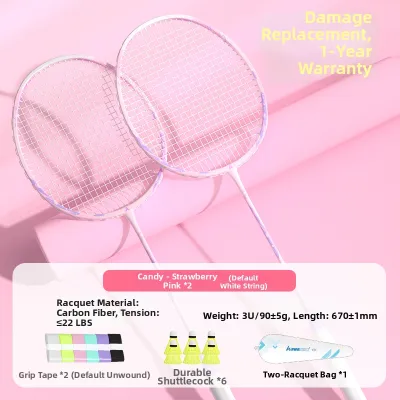
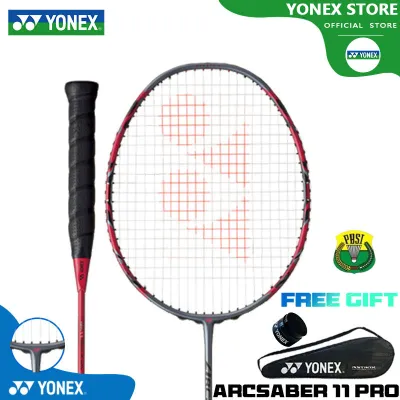

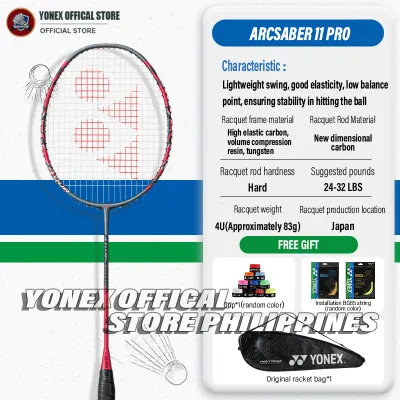
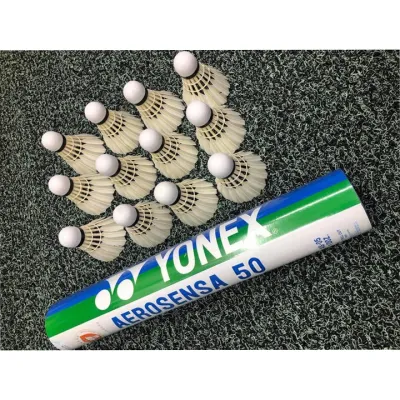
Prices are valid at publication and may change. Please refer to the product page for the latest price.
As you transition to an intermediate level, your footwork becomes more reliable, and your strokes grow more consistent. Intermediate players typically benefit from medium-flex shafts and standard-weight rackets. This setup provides a balanced blend of power generation and control, offering clearer feedback through the handle so you can feel the quality of each contact and adjust your technique accordingly.
Advanced players possess refined wrist action, precise timing, and rapid swing speeds. If you can consistently generate power from your forearm and wrist rather than your entire arm, you are ready for a stiff shaft and specialized weight distributions. These rackets offer maximum control and rapid recovery, allowing advanced players to direct the shuttlecock with pinpoint accuracy, though they require excellent physical conditioning to avoid fatigue.
Identify Your Dominant Playing Style on the Court
Your tactical preferences and movement patterns dictate the physical balance your racket should have. Attacking players thrive on steep smashes, aggressive downward shots, and forcing weak returns from the opponent. If your game relies heavily on offensive pressure from the backcourt, a head-heavy racket is highly beneficial. The extra weight concentrated at the top of the frame adds momentum to your swings, translating your physical effort into faster, more powerful smashes.

Defensive and speed-oriented players, on the other hand, focus on quick rallies, flat drives, and rapid reactions at the net. If you prefer to intercept shots early, defend against heavy smashes, and play a fast-paced counter-attacking game, a head-light racket is the ideal match. The reduced weight at the head allows for faster frame maneuverability, enabling you to reposition your racket in a split second during intense double rallies.
All-around players seek balanced court coverage, relying on a mix of clears, drops, and opportunistic smashes to outmaneuver opponents. If you do not lean heavily toward pure attack or pure defense, an even-balance racket offers the perfect compromise. This category provides enough maneuverability for quick defensive blocks while retaining sufficient head weight to deliver deep clears and controlled smashes when an opening arises.
Match Racket Specifications to Your Diagnosed Profile
To build a targeted shortlist, you must translate your skill level and playing style into specific technical measurements. The first specification to consider is weight, which is standardly categorized using the “U” rating system. Heavier rackets, such as those in the 3U range (typically 85 to 89 grams), offer excellent stability and momentum but require significant physical strength and proper technique to swing repeatedly. Lighter rackets, such as 4U (80 to 84 grams) or 5U (75 to 79 grams), reduce physical fatigue and increase swing speed, making them highly popular for recreational play and fast-paced doubles in warm, humid climates.
Next is the balance point, measured in millimeters from the bottom of the handle. A balance point above 295mm indicates a head-heavy profile designed for power, while a measurement below 285mm indicates a head-light profile optimized for speed. Even-balance rackets sit comfortably in the 285mm to 295mm range. Choosing the correct balance point ensures the racket’s center of gravity aligns with your natural swing path and reaction times.
Shaft flexibility directly influences energy transfer and physical feedback. Flexible shafts bend easily during a swing, acting like a spring to launch the shuttlecock with minimal wrist effort, which is ideal for beginners. Stiff shafts do not bend as much, requiring the player to generate their own power through rapid wrist snap, but they offer unmatched precision because the frame does not twist or lag during high-speed contact.
Finally, frame shape plays a crucial role in aerodynamic drag and sweet spot size. Isometric frames, which feature a squared head shape, enlarge the sweet spot to provide consistent power even on off-center hits. Traditional oval frames have a smaller, more concentrated sweet spot but offer superior aerodynamics and a highly solid feel when you strike the shuttlecock perfectly in the center.
Verify Your Racket Choice Before Buying
Before finalizing your purchase, you must verify how the racket feels in your hand and how it interacts with your physical setup. Grip size, represented by the “G” rating (where G5 is smaller than G4), must fit your hand comfortably to prevent over-tightening your muscles. In the humid climate of the Philippines, sweat can quickly make a grip slippery, so players often use absorbent polyurethane overgrips or towel grips. Ensure the base handle size allows enough room for these additions without making the grip too thick for a relaxed hold.
String tension is another critical factor that must match your racket stiffness and skill level. High string tensions (above 26 lbs) provide excellent control but reduce the sweet spot and require immense physical power to generate depth, which can lead to shoulder fatigue or tennis elbow if your technique is not flawless. Beginners and intermediate players should start with lower tensions (between 20 to 24 lbs) to enjoy a larger sweet spot and effortless depth, adjusting upward only as their hitting technique improves.
Lastly, perform shadow swings or trial sessions whenever possible to evaluate the physical feedback of the frame. Pay close attention to how your wrist, elbow, and shoulder feel after a few rapid swings. If you feel any sharp vibrations or immediate muscle strain, the racket may be too stiff or too head-heavy for your current physical conditioning, indicating that a more forgiving specification is required.
Frequently Asked Questions (FAQ)
Does a more expensive racket automatically improve my game?
No, a higher price tag does not guarantee better performance on the court. Premium rackets are often constructed with highly specialized, stiff carbon fibers designed for advanced players who already possess exceptional timing and swing speed. For beginners and intermediate players, these stiff, unforgiving frames can actually hinder skill development and increase the risk of injury. Forgiving, budget-friendly rackets made of graphite or aluminum-carbon composites are far better suited for mastering basic strokes and building confidence.
How often should I reassess my racket needs?
You should reassess your racket specifications when you notice clear physical or tactical changes in your play. If you find yourself consistently breaking strings at lower tensions, or if your clears are regularly flying past the opponent’s baseline with minimal effort, you may be ready for a stiffer shaft or higher string tension. Additionally, if you transition from playing casual singles to fast-paced doubles, or if you experience persistent wrist or shoulder discomfort after games, it is time to re-evaluate your racket’s weight and balance.

Community discussion
Share your experience or ask a question. Comments are reviewed before publication.