
Choosing a 10-meter badminton towel grip roll in the Philippines requires balancing cost-efficiency with the demanding realities of tropical play. In high-humidity environments, standard synthetic grips often become slippery, leading players to prefer the superior moisture absorption of cotton towel grips. A 10-meter bulk roll offers a continuous supply of grip material, allowing you to customize the length of each wrap while saving money compared to individual pre-cut packs. However, maximizing this investment means understanding how different cotton blends, adhesive backings, and storage methods perform under local court conditions.
Is a 10-Meter Roll the Right Format for You?
When deciding whether to purchase a 10-meter roll instead of individual pre-cut grips, the primary consideration is your playing frequency and how often you need to re-grip your racket. For casual players who only step onto the court once a month, a bulk roll may sit unused for too long, exposing the cotton to ambient humidity. Conversely, competitive players, club members, and daily training athletes who change their grips weekly will find that a 10-meter roll offers a significantly lower cost per meter. Calculating the exact value in ₱ reveals that bulk rolls often reduce the cost per application by up to thirty to fifty percent compared to buying single-use retail packs.
Storage is a critical factor in the Philippines, where high relative humidity can degrade organic cotton fibers over time. If a towel grip roll is left exposed to the air, it will absorb moisture from the environment, leading to mold, mildew, and a breakdown of the adhesive backing before it ever touches a racket handle. To prevent this, store your 10-meter roll in an airtight, zip-top plastic bag with a silica gel desiccant packet, keeping it in a cool, dry place away from direct sunlight.
Products mentioned in this guide
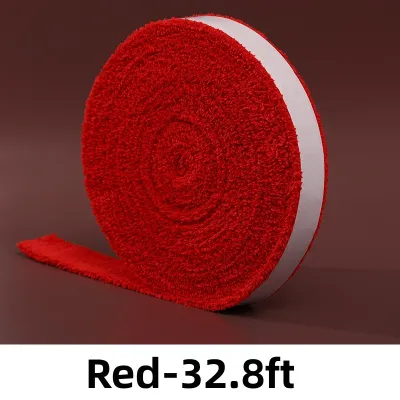
![[Ready Stock] Badminton Racket Towel Absorbent Non-Slip Anti-Sweat Grip Strap Grip Badminton Towel Grip 10 Meter Towel Grip Sweat Band And Yonex Towel Syntheric Wrap Strong Grap](https://img.lazcdn.com/g/p/cdc97e29ad35e1bbbd305e5982ce98c1.jpg_400x400q80.jpg_.webp)
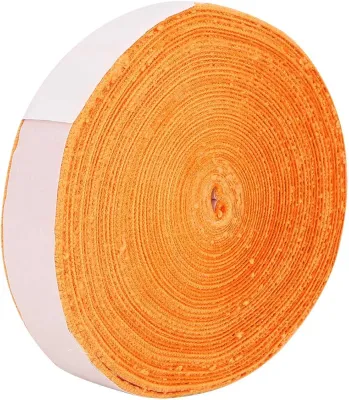
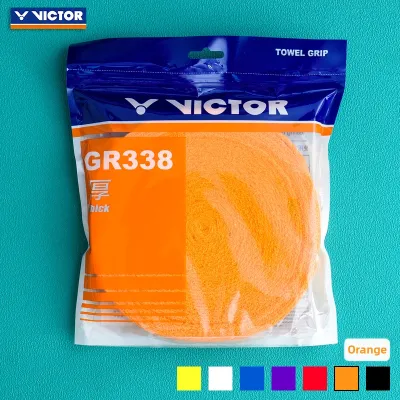

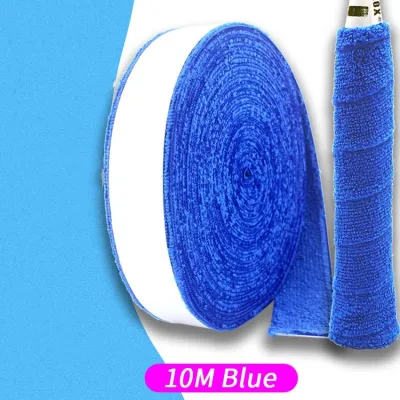
Prices are valid at publication and may change. Please refer to the product page for the latest price.
To estimate how many re-grips a single 10-meter roll provides, you must consider your racket’s handle size and your preferred wrapping style. A standard badminton racket handle requires approximately 70 to 80 centimeters of grip tape, depending on how high up the shaft cone you prefer to wrap. If you use a moderate overlap ratio, a 10-meter roll will typically yield between 12 and 14 fresh grips. If you prefer a thick, heavily overlapped wrap for extra cushioning, you may get closer to 10 wraps per roll, which still represents excellent long-term value.
Key Specifications to Compare Before Buying
Not all towel grips are manufactured equally, and comparing physical specifications on product labels is essential to finding a roll that matches your hand size and playstyle. The first specification to analyze is the thickness and cushioning of the cotton pile. Towel grips generally range from 1.0 millimeter to 1.5 millimeters in thickness. A thinner grip preserves the bevels of the racket handle, allowing for precise finger placement and quick grip transitions during fast-paced doubles play. A thicker grip provides superior shock absorption, reducing the impact on your wrist and elbow during heavy smashes, though it will noticeably increase the overall handle diameter.

Material composition directly dictates how the grip handles moisture and retains its texture over time. Pure 100% cotton grips offer the highest initial absorption and a soft, plush feel, making them ideal for players who sweat heavily. However, pure cotton can become heavy and waterlogged during long sessions. Cotton-synthetic blends, which incorporate polyester or nylon fibers, are designed to dry faster and resist wear, though they may feel slightly less soft. Checking the product specifications for the blend ratio helps you balance immediate sweat absorption with long-term durability.
The quality of the backing tape and adhesive layer is another critical specification that is often overlooked. High-quality towel rolls feature a double-sided adhesive strip running down the center of the underside, which secures the cotton firmly to the wooden handle or base grip. Lower-quality rolls may use weak adhesives that slip under the twisting force of a smash, causing the grip to bunch up or unravel mid-rally. Look for specifications that mention high-tack, residue-free acrylic adhesives, which hold the grip securely in place but can still be peeled off cleanly when it is time for a replacement.
Matching Grip Features to Court Conditions and Sweat Levels
The performance of a towel grip is highly dependent on the environment in which you play. In the Philippines, many local badminton courts are located in non-air-conditioned warehouses or sports centers where indoor temperatures and humidity levels soar. Under these conditions, players sweat profusely, and standard polyurethane grips quickly lose their traction. For these high-sweat environments, a high-density, thick cotton towel grip is essential. The dense pile acts like a sponge, drawing moisture away from your palm to maintain a secure hold even during intense, multi-hour training sessions.
Understanding the difference between moisture-activated tackiness and a dry, textured feel will help you choose the right grip style. Some towel grips are treated with a light adhesive or resin coating that feels slightly sticky to the touch when dry. Other grips rely purely on the natural texture of the cotton loops, which actually becomes grippier as it absorbs a small amount of moisture. If your hands sweat moderately, a dry-textured grip is often preferred, as it provides a consistent, non-slip surface without feeling gummy. For players with dry hands, a towel grip may feel too slick initially, requiring a light misting of water or the application of grip powder to activate its holding power.
Handle build-up is another factor to customize based on your physical hand size and grip preference. Wrapping a towel grip over a bare wooden handle will result in a thinner grip profile, which is excellent for players with smaller hands or those who prefer maximum control. If you have larger hands or suffer from joint fatigue, you can wrap the towel grip over an existing synthetic base grip or add cushion wrap underneath. Adjusting the overlap ratio during installation allows you to fine-tune the handle’s thickness, ensuring your fingers can wrap comfortably around the handle without straining your forearm muscles.
How to Verify Authenticity on E-Commerce Platforms
With the popularity of badminton in the Philippines, counterfeit sporting goods are common on online marketplaces. Purchasing a counterfeit 10-meter towel grip roll often results in receiving a product with thin, shedding cotton, weak adhesive, or a roll that is shorter than advertised. To ensure you are buying a genuine product, always prioritize official brand flagship stores or authorized local sporting goods distributors on major e-commerce platforms. These sellers typically display a verified mall or preferred badge, indicating they have been vetted by the platform.
Before finalizing your purchase, carefully examine the product photos and descriptions provided by the seller. Genuine 10-meter rolls are packaged in sealed, branded plastic containers or shrink-wrapped rolls that feature clear manufacturing details, batch codes, and often a holographic security sticker with a scratch-off verification code. If the product listing shows generic, unbranded packaging or lacks clear specifications, it is highly likely to be an imitation.
Customer reviews are an invaluable resource for verifying authenticity and quality. Scroll past the generic five-star ratings and look for detailed feedback from local buyers who have actually used the grip. Pay close attention to reviews that mention the adhesive backing peeling off prematurely, the cotton shedding fibers onto the court, or the roll measuring significantly less than 10 meters. If multiple reviews complain about a rough, synthetic texture that does not absorb sweat, avoid that seller and look for a more reputable source.
Measuring, Cutting, and Wrapping Your Towel Grip
Installing a towel grip from a 10-meter roll requires a bit more precision than using a pre-cut grip, but mastering the technique ensures a professional, comfortable finish. Start by preparing your racket handle. If you are wrapping directly over the wooden handle, ensure any old adhesive residue is cleaned off. Unroll a portion of the towel grip and hold it against the handle to estimate the length. For a standard wrap, you will need to cut a piece approximately 75 centimeters long. Use sharp scissors to make a clean, diagonal cut at the starting end; this angled cut allows you to begin wrapping smoothly at the butt cap without creating an awkward bulge.
When applying the grip, peel back the adhesive backing paper slowly as you go, rather than exposing the entire sticky surface at once. Start at the bottom of the handle, wrapping the angled cut flush with the edge of the butt cap. Maintain consistent, firm tension as you wrap upward, overlapping each turn by about two to three millimeters. Consistent tension is crucial; if you wrap too loosely, the cotton will shift and bunch up during play, while wrapping too tightly can stretch and thin out the cotton pile, reducing its cushioning and absorption properties.
As you reach the top of the handle near the plastic shaft cone, make another diagonal cut to finish the wrap on a clean, flat angle. This prevents the grip from ending in a thick, uneven ridge that can interfere with your thumb placement during backhand shots. Secure the final turn tightly using high-quality finishing tape. Many players prefer to wrap a turn of electrical tape over the end first for a secure hold, followed by the branded finishing tape for a clean, professional aesthetic.
Maintenance and Replacement Signals
Towel grips are consumable items that require regular replacement to maintain optimal performance, hygiene, and racket control. Unlike synthetic grips that can last for months, cotton towel grips degrade relatively quickly due to their organic nature. The most obvious signal that your grip needs replacing is severe compaction. Over time, the plush cotton loops flatten out under the pressure of your hand, turning the grip into a hard, slick surface that no longer absorbs sweat or cushions your hand.
Hygiene is another critical factor, especially in hot, humid climates. As the cotton absorbs sweat, skin oils, and dirt from your hands, it becomes a breeding ground for bacteria and fungi. If your racket begins to emit a persistent, sour odor that does not go away after airing out, or if you notice dark spots of mold or discoloration on the fabric, the grip must be replaced immediately. Continuing to use a dirty grip can lead to skin irritation or blisters on your palm.
The adhesive backing also degrades under the constant exposure to moisture. If you notice the grip shifting, twisting, or peeling away from the handle during play, the adhesive has failed. For active players in the Philippines, replacing the towel grip every two to three weeks—or sooner if you play multiple times a week—is highly recommended to ensure your racket remains hygienic, comfortable, and secure in your hand.
Frequently Asked Questions (FAQ)
Can I wash and reuse a badminton towel grip?
Washing a badminton towel grip is not recommended because it severely compromises the grip’s structural integrity and usability. When cotton towel grips are submerged in water or exposed to detergents, the adhesive backing on the underside dissolves or loses its tackiness, making it impossible to reapply securely to the handle. Additionally, washing can cause the cotton fibers to shrink, stiffen, or shed, leaving you with a rough, uncomfortable texture that lacks the necessary absorption and cushioning. Because a 10-meter roll provides multiple replacements at a very low cost per application, it is always better to cut a fresh piece rather than attempting to wash a dirty grip.
Do I need to remove the original synthetic grip before applying a towel grip?
Whether you should remove the original synthetic grip depends on your personal preference for handle thickness and the manufacturer’s instructions. Wrapping a towel grip directly over the original polyurethane grip provides extra cushioning and protects the wooden handle from sweat penetration, but it will significantly increase the overall grip size. If you prefer a thinner handle for better finger control and maneuverability, you should remove the original grip, wrap a layer of waterproof cushion wrap or electrical tape over the bare wood to protect it from moisture, and then apply the towel grip directly on top. Always check the manufacturer’s guidelines to ensure your wrapping method does not void any racket warranties.

Community discussion
Share your experience or ask a question. Comments are reviewed before publication.