
The type of basketball you should buy depends entirely on the surface of the court where you play most often. Indoor wooden courts require the high-performance grip of genuine or premium composite leather, while outdoor concrete, asphalt, and rough community courts demand the rugged durability of rubber or heavy-duty composite materials. Choosing the wrong material can ruin an expensive ball in a single session or leave you struggling with a slippery, uncontrollable bounce.
To get the most value and performance out of your purchase, you need to match the ball’s construction to your primary playing environment. Understanding how different materials interact with polished wood, abrasive concrete, and dusty outdoor surfaces will help you make an informed decision.
Understanding Basketball Materials and Court Compatibility
Basketballs are generally constructed from three primary materials: genuine leather, composite (synthetic) leather, and rubber. Each material has distinct physical properties that dictate how it performs and wears down on different court surfaces.
Products mentioned in this guide
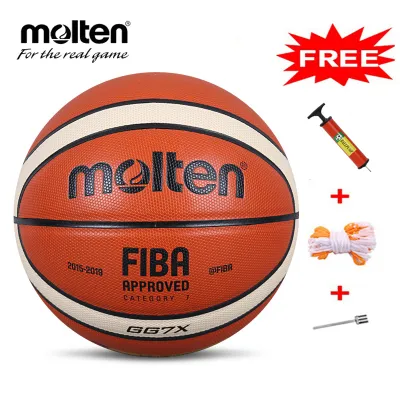
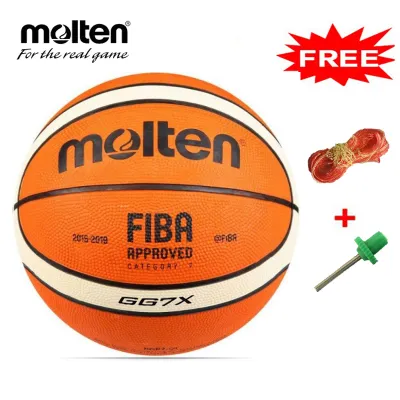
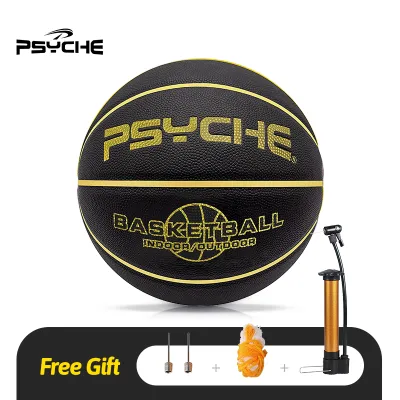
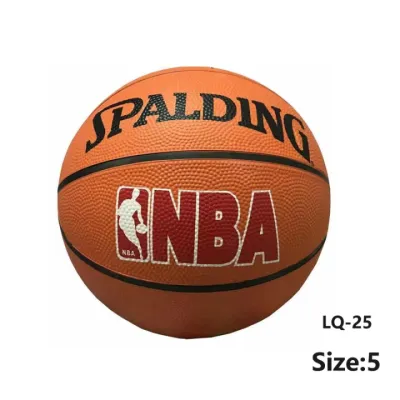
Prices are valid at publication and may change. Please refer to the product page for the latest price.
Genuine leather is the traditional standard for professional indoor play. It is exceptionally durable on smooth surfaces but requires a break-in period, during which the stiff outer hide gradually softens and gains grip through contact with natural hand oils. Because genuine leather is highly absorbent and delicate, playing with it on rough outdoor surfaces will scrape away the outer layer and ruin the ball almost immediately.
Composite leather is a synthetic material engineered to mimic the feel of real leather without the need for a break-in period. It offers excellent out-of-the-box grip and is available in various formulations, including indoor-only and indoor/outdoor versions. While highly versatile, composite leather can still wear down quickly if subjected to highly abrasive outdoor concrete.
Rubber is the most resilient and cost-effective material used for basketball construction. It provides excellent resistance to moisture, heat, and rough surfaces, making it the standard choice for outdoor play. While rubber balls do not offer the soft, cushioned feel of leather, their tough outer shell can withstand constant friction against paved ground without losing structural integrity.
Before making a purchase, always check the manufacturer’s labels and packaging for specific surface recommendations. Manufacturers clearly print designations such as “Indoor,” “Outdoor,” or “Indoor/Outdoor” on the box or the ball itself to guide your selection.
Choosing a Basketball for Indoor Wooden Courts
Polished wooden courts offer a smooth, consistent playing surface, but they require a ball that can deliver reliable grip and control. Genuine leather and premium composite materials are common choices for indoor wood because they provide a soft, cushioned feel and excellent tackiness.

The smooth finish of indoor courts means that any moisture or dust can quickly turn the surface slippery. Premium composite and genuine leather balls are designed to absorb a small amount of moisture from sweaty hands, helping players maintain a secure grip during fast-paced games.
Dust accumulation is a common challenge on indoor courts, especially in warm, humid climates where open-air ventilation is common. Fine dust settles on the polished wood and transfers to the ball, creating a slick layer that reduces control. To manage this, players should regularly wipe the ball with a damp cloth or use their hands to clear accumulated dust during breaks in play.
Using a ball designated for outdoor play on a clean indoor court is highly discouraged. Outdoor balls easily trap abrasive dirt, sand, and tiny debris within their deep channels and pebbled textures. When brought indoors, these particles can act like sandpaper, scratching the polished protective coating of the wooden floor and leaving permanent scuffs.
Additionally, always check local facility rules or league specifications before purchasing an indoor ball. Many organized leagues and indoor sports centers enforce strict guidelines regarding the exact material, brand, or size of the ball permitted for official games to ensure fair play and protect their court infrastructure.
Selecting a Durable Basketball for Concrete and Asphalt
Outdoor courts made of concrete or asphalt are highly abrasive and will rapidly wear down softer materials. To ensure your ball lasts, you must select a model specifically engineered to withstand the constant friction of paved surfaces.
Rubber and heavy-duty composite materials are highly effective options for concrete play. The thick, tough outer cover of a rubber ball resists scraping and gouging, maintaining its shape even after repeated impacts against rough ground. Heavy-duty composites are reinforced with stronger synthetic fibers to provide a balance of soft feel and outdoor durability.
When evaluating a ball for outdoor use, pay close attention to the tread depth, channel width, and pebble density. Deep, wide channels help you maintain a secure grip even when the ball collects outdoor dust and dirt. A dense, pronounced pebbled texture provides more surface area for your fingers to hold, compensating for the lack of natural tackiness in outdoor materials.
Moisture resistance is another critical factor for outdoor play, particularly in tropical regions prone to sudden rain showers and high humidity. Rubber is naturally waterproof and will not absorb moisture, preventing the ball from becoming waterlogged and heavy. Standard composite balls, however, can absorb water through the seams, leading to material peeling and a distorted bounce.
After playing outdoors, get into the habit of inspecting your ball for structural integrity. Check the seams for lifting, look for unusual bulges or lumps in the carcass, and test the inflation valve for slow leaks by applying a small amount of soapy water to the valve opening to see if bubbles form.
Finding the Right Basketball for Rough Community Courts
Many neighborhood courts, such as local barangay half-courts or unpaved community spaces, feature highly uneven concrete, dirt patches, or rough cement. Playing on these surfaces requires prioritizing maximum durability over premium feel.
For these unforgiving terrains, a thick rubber cover with deep channel designs is a highly practical choice. The rugged rubber construction prevents sharp stones and rough cement from puncturing the bladder, while the deep grooves ensure you can still grip and control the ball when the court is covered in fine dust or loose soil.
When choosing a ball for rough community courts, balance your upfront budget against the expected lifespan of the equipment. While a premium composite ball might feel more comfortable in your hands initially, the rough ground will degrade it rapidly, leading to frequent and costly replacements. A budget-friendly rubber ball offers a much longer lifespan under harsh conditions, providing better long-term value.
You can also adjust the inflation pressure of your ball to compensate for hard, unforgiving court surfaces. Concrete does not absorb impact, which can make a fully inflated ball feel rock-hard and bounce unpredictably. Slightly lowering the air pressure within the manufacturer’s recommended range can soften the feel of the ball and improve your overall control on hard ground.
Finally, always recognize when a court surface is too hazardous for standard play. If a court is littered with sharp debris, deep cracks, standing water, or loose gravel, it poses a high risk of puncturing your ball and causing slips or joint injuries. In these situations, it is safest to clear the debris before playing or find an alternative court.
Cross-Court Compatibility: Can One Ball Handle Multiple Surfaces?
If your playing routine involves a mix of indoor wooden courts and outdoor concrete, you might wonder if a single ball can handle both environments. While dedicated balls are always ideal, certain options can bridge the gap.
Composite leather balls labeled as “Indoor/Outdoor” serve as a transitional middle ground for mixed-surface players. These balls use a slightly tougher synthetic cover than pure indoor models, offering a softer feel than rubber while providing moderate durability on outdoor courts.
However, you must accept that bringing an indoor-designated ball outdoors even once will accelerate its wear. The abrasive concrete will quickly scrape off the soft outer coating, permanently reducing its grip and making it unsuitable for clean indoor courts.
To extend the lifespan of a multi-surface ball, establish a regular cleaning and storage routine. Wipe the ball down with a damp cloth after every outdoor session to remove dirt, sweat, and abrasive dust. Store the ball in a cool, dry place indoors, as leaving it exposed to direct sunlight or extreme tropical heat can warp the internal bladder and degrade the adhesives holding the cover together.
Eventually, you will need to decide when to retire a multi-surface ball from outdoor play. Once the pebbled texture begins to wear smooth or the bounce becomes inconsistent, stop using it for indoor games where grip is critical. Keep it strictly as an outdoor practice ball and invest in a new, dedicated ball for your indoor sessions.
Frequently Asked Questions (FAQ)
How do I know when it is time to replace my basketball?
You should replace your basketball when you notice significant physical wear that compromises your control and safety. Key signs include bald spots where the pebbled texture has worn completely smooth, visible lumps or bulges that cause an uneven bounce, and air retention issues where the ball requires reinflation before every session. If the seams are peeling or the outer cover is cracking, the structural integrity of the ball is compromised, and it is time for a replacement.
Does the size of the basketball change depending on the court surface?
No, the correct size of a basketball is determined by the player’s age, gender, and league rules, not by the court surface. Standard size guidelines dictate that adult men typically use a Size 7 ball, adult women and youth players use a Size 6 ball, and younger children use a Size 5 ball. Always verify the specific size requirements of your local league or tournament before purchasing a ball, regardless of whether you will be playing indoors or outdoors.

Community discussion
Share your experience or ask a question. Comments are reviewed before publication.