
Finding the perfect basketball ball requires looking beyond the brand name or color scheme. The right choice depends heavily on where you play and who is playing. In the Philippines, where basketball is a daily passion played on polished indoor hardwood, smooth painted concrete, or rough outdoor barangay courts, matching your ball to your specific environment is essential. Selecting the wrong size can hinder a player’s skill development, while choosing the wrong material can ruin an expensive ball in a matter of weeks. By understanding standard sizes and material characteristics, you can ensure optimal grip, consistent bounce, and long-lasting durability.
Decoding Basketball Sizes by Age and Gender
Using the correct basketball size is fundamental to developing proper shooting mechanics, ball-handling skills, and overall court confidence. Basketball sizes are standardized by age and gender to match the average hand size and physical strength of players at different developmental stages.
- Size 7 (Official Size): This ball has a circumference of approximately 29.5 inches and is the standard for men's professional, collegiate, and high school leagues, generally recommended for male players aged 15 and older.
- Size 6 (Intermediate Size): Measuring approximately 28.5 inches in circumference, this size is the official standard for women's professional, collegiate, and high school play. It is also the recommended size for youth players of all genders aged 12 to 14.
- Size 5 (Youth Size): With a circumference of approximately 27.5 inches, this ball is designed for youth players aged 9 to 11, allowing smaller hands to grip and control the ball comfortably.
Before purchasing, always verify the official size marking, which is typically embossed directly onto the ball’s casing near the inflation valve or printed clearly on the retail packaging.
Products mentioned in this guide
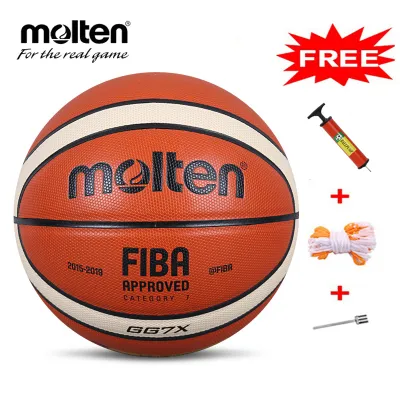
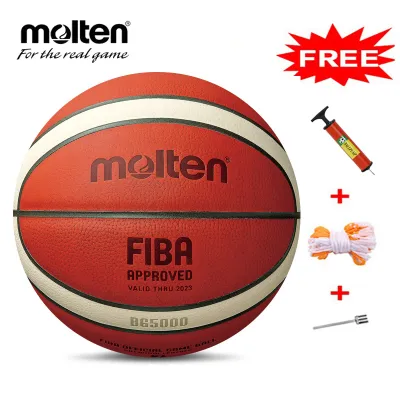
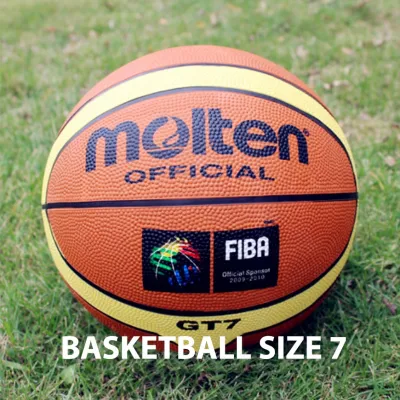
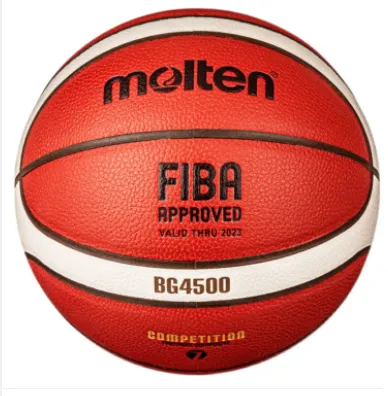
Prices are valid at publication and may change. Please refer to the product page for the latest price.
Using an incorrectly sized ball can severely disrupt a player’s physical development. When a ball is too large or heavy, players are forced to push the ball with two hands from their chest rather than executing a clean, one-handed release. This habit leads to rapid hand fatigue, incorrect finger placement along the seams, and poor muscle memory that becomes difficult to correct later in life.
Matching Surface Materials to Your Playing Environment
The court surface is the primary factor that determines how long your basketball will last and how well it will perform. Basketball covers are engineered from three primary materials, each tailored to specific playing conditions.

Rubber covers are the most resilient option, making them ideal for rough outdoor concrete, asphalt, or dirt courts. Vulcanized rubber resists the high-friction abrasion of outdoor surfaces and is highly weather-resistant. In tropical climates, rubber balls withstand intense sun exposure and sudden rain showers without warping or absorbing moisture, making them a staple for neighborhood street play.
Composite leather, often referred to as synthetic leather, offers a soft, premium feel and excellent grip that closely mimics genuine leather. It is designed primarily for smooth indoor hardwood or synthetic courts. While some manufacturers label certain composite balls as “indoor/outdoor,” playing with them on rough concrete will accelerate wear, causing the outer layer to scuff, lose its grip, and eventually peel.
Genuine leather is the gold standard for professional indoor play. These balls require a break-in period, during which the stiff, slick leather absorbs natural hand oils and becomes soft and exceptionally grippy. Genuine leather is highly sensitive to moisture and rough surfaces; using it outdoors or exposing it to wet conditions will permanently ruin the material.
When shopping, perform visual and tactile checks to identify these materials. Rubber balls have molded, uniform seams and a firm, rubbery texture. Composite leather feels slightly spongy to the touch, with glued-in panels and distinct, recessed channels. Genuine leather has a natural, irregular grain pattern and a stiff initial texture that softens only after hours of indoor use.
Evaluating Grip, Bounce, and Durability Specs
To understand how a basketball will perform on the court, you must look at its construction details, specifically the channel design, bladder quality, and wear indicators.
Channel depth and pebbling texture directly dictate ball control and shooting consistency. Deep channels allow your fingertips to find natural leverage, which is crucial for generating backspin on shots and maintaining control during crossovers. The raised pebbling across the panels increases the surface area in contact with your skin, helping to wick away sweat and maintain a secure grip even during high-humidity games.
Underneath the cover lies the bladder and carcass construction, which determine the ball’s shape and bounce consistency. High-quality balls utilize a butyl rubber bladder, which offers superior air retention compared to latex bladders, meaning you will not have to inflate the ball before every session. This bladder is wrapped in nylon or polyester windings (the carcass) to maintain a perfectly spherical shape and ensure a predictable, uniform bounce off the floor and backboard.
Evaluating wear indicators helps you anticipate when a ball needs retirement. On outdoor courts, monitor the degradation of the pebbling; once the pebbles wear down to a smooth, flat surface (known as balding), the ball will become slippery and difficult to control. For composite balls, check the seams regularly for any lifting or separation of the panels, which indicates that court friction has compromised the adhesive.
Quick Selection Checklist for Your Next Purchase
To simplify your decision, use this quick reference matrix to match your profile and playing environment to the ideal basketball configuration:
| Player Profile | Primary Court Type | Recommended Size | Recommended Material |
|---|---|---|---|
| Youth (Ages 9-11) | Outdoor Concrete | Size 5 | Rubber |
| Youth (Ages 9-11) | Indoor Wood / Vinyl | Size 5 | Composite Leather |
| Females (12+) / Males (12-14) | Outdoor Concrete | Size 6 | Rubber |
| Females (12+) / Males (12-14) | Indoor Wood / Vinyl | Size 6 | Composite Leather |
| Males (Ages 15+) | Outdoor Concrete | Size 7 | Rubber / Heavy-Duty Composite |
| Males (Ages 15+) | Indoor Wood / Vinyl | Size 7 | Composite / Genuine Leather |
If you are testing a ball in a physical store, perform three quick quality checks before heading to the register. First, perform a drop-bounce test: inflate the ball to its recommended pressure (usually stamped near the valve) and drop it from chest height; it should bounce back up to approximately waist height. Second, run your fingers along the seams to ensure all panels are perfectly flush and glued down securely. Third, squeeze the area around the inflation valve to check for any immediate air leaks.
Budget is another practical consideration. Durable outdoor rubber balls are highly cost-effective, typically ranging from ₱500 to ₱1,500, making them perfect for casual street play. Premium indoor composite leather balls generally range from ₱2,000 to ₱5,000 or more. If you play primarily on outdoor concrete, investing in an expensive indoor-only composite ball is a poor financial decision, as the rough surface will destroy it quickly. Save the premium composite purchases for dedicated indoor court use.
Frequently Asked Questions (FAQ)
Can I use an indoor composite leather basketball on outdoor courts?
Using an indoor composite leather basketball on rough outdoor concrete or asphalt courts is not recommended. The abrasive nature of outdoor surfaces quickly grinds down the soft composite cover, causing it to lose its grip and peel at the seams within a few sessions. This leads to a highly cost-inefficient cycle of replacing expensive indoor balls prematurely due to avoidable outdoor wear and tear.
How do I know if my basketball needs to be replaced?
Your basketball needs to be replaced when it exhibits clear physical and performance signs of degradation. Visually, look for balding pebbles, peeling outer panels, structural lumps, or exposed carcass threads. Performance-wise, if the ball suffers from poor air retention (requiring inflation before every game) or exhibits an inconsistent, lopsided bounce, it is time to replace it to maintain proper training and play quality.

Community discussion
Share your experience or ask a question. Comments are reviewed before publication.