
Selecting the correct basketball size is the foundation of developing proper shooting form, ball control, and overall confidence on the court. Using a ball that is too large or too heavy can force a player to alter their natural mechanics, leading to bad habits that are difficult to break later on. Conversely, a ball that is too small for an older player can hinder their transition to competitive play. By matching the ball’s dimensions to the player’s physical development and skill level, you ensure that every dribble, pass, and shot contributes to genuine skill progression.
To find the right fit, you must evaluate the player’s age, gender, and primary playing environment. Standard sizes range from Size 7 for adult men to Size 3 for young children, each designed to match specific hand sizes and physical strength. Choosing the correct material, such as rubber for outdoor concrete or composite leather for indoor courts, is equally important for durability and grip.
Understand Standard Basketball Sizes and Specifications
To make an informed choice, you must first understand the standard categories established by major sports organizations worldwide. Basketballs are classified by size numbers, each corresponding to specific circumference and weight ranges. These standards are carefully calibrated to match the physical hand size and upper-body strength of players at different developmental stages.
Products mentioned in this guide
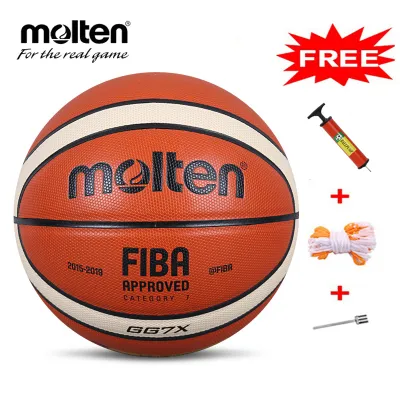
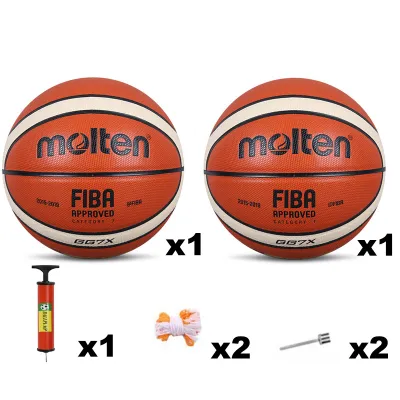
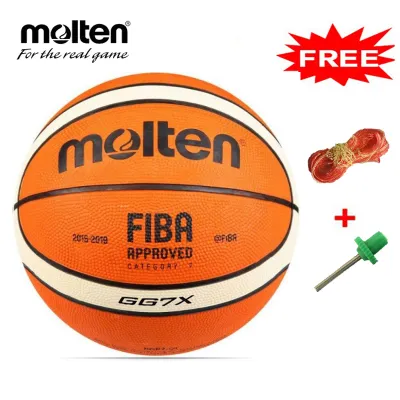
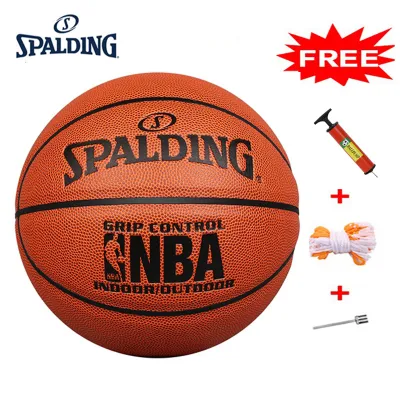
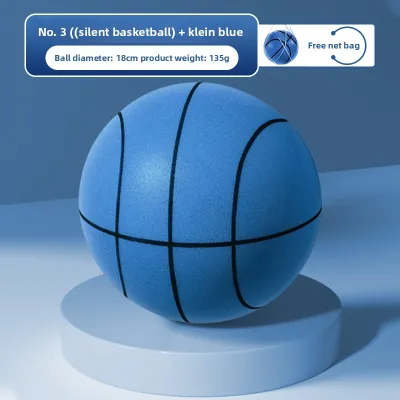
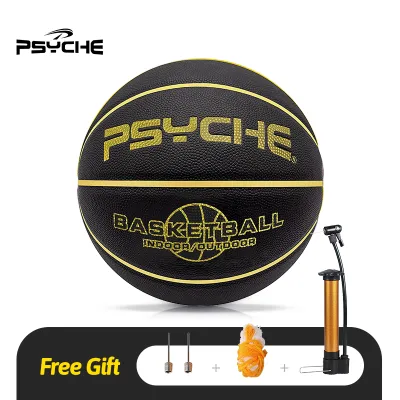
Prices are valid at publication and may change. Please refer to the product page for the latest price.
Size 7 is the official standard for men’s professional, collegiate, and high school competition, including leagues like the NBA and FIBA. It features a circumference of approximately 29.5 inches (75 centimeters) and a weight of about 22 ounces (624 grams). This size requires significant hand span and forearm strength to control effectively, especially during high-speed dribbling and long-range shooting.
Size 6 is the official size for women’s professional and collegiate leagues, such as the WNBA, as well as youth boys’ competitions. It measures approximately 28.5 inches (72.4 centimeters) in circumference and weighs about 20 ounces (567 grams). The slightly smaller diameter allows players with smaller hands to maintain a secure grip and execute proper wrist snap during a shot.
Size 5 is designed specifically for youth players, typically measuring 27.5 inches (69.8 centimeters) in circumference and weighing around 17 ounces (482 grams). This size is standard for primary school competitions and early youth leagues. It provides a manageable weight that prevents young players from having to heave the ball with two hands from their chest, which ruins shooting mechanics.
Mini basketballs, which include Size 3 and Size 1, are built for toddlers and very young children. Size 3 balls usually have a circumference of 22 inches (55.9 centimeters) and weigh about 10 ounces (283 grams). These are ideal for introductory play, active recreation, and indoor mini-hoops, allowing early hand-eye coordination to develop without physical strain.
Match the Basketball Size to Age and Gender
Matching the basketball to the player’s age and gender is the most reliable way to support healthy physical development and prevent injury. While it can be tempting to buy a larger ball so a child can “grow into it,” doing so often backfires. An oversized ball forces young players to use improper shooting forms, such as pushing the ball from the waist or using both hands equally, which can strain developing shoulder and wrist joints.

For male players aged 15 and older, Size 7 is the standard requirement. By this age, most players have developed the hand size and muscular strength necessary to handle the official game ball. Training with a Size 7 prepares them directly for high school, college, and local community league play.
Female players aged 12 and older, as well as male players aged 12 to 14, should utilize a Size 6 basketball. This size is standard for girls’ junior high and high school divisions. It ensures that female athletes can develop advanced ball-handling skills and consistent shooting forms without being hindered by a ball that is disproportionately large for their average hand span.
For children aged 9 to 11, regardless of gender, Size 5 is the recommended standard. At this stage of growth, players are beginning to learn structured team play and basic offensive sets. The Size 5 ball allows them to practice chest passes, bounce passes, and layups with a realistic level of control, fostering a more positive learning experience.
Children aged 8 and under should start with a Mini basketball, such as a Size 3. At this early stage, the focus is entirely on fun, basic coordination, and getting used to the feel of a bouncing ball. Using a lightweight, small ball ensures they can easily lift and throw it toward low-height rims without risking joint strain.
Always verify the specific guidelines of your local school athletic association or community youth league before making a purchase. While these age brackets are standard globally, some local organizers or school boards may adjust size requirements based on tournament rules or available equipment.
Adjust for Skill Level and Specific Training Goals
While age and gender provide the primary framework, a player’s current skill level and specific training objectives can occasionally justify temporary adjustments. Beginners of any age sometimes struggle with ball control and finger placement. In some instructional settings, coaches may introduce a slightly smaller ball to help a novice player build confidence and establish the correct hand position on the ball before moving up to their designated size.
However, this adjustment should be temporary. As a player advances, transitioning to their official competition size is critical for building reliable muscle memory. The weight and feel of the ball dictate how much force is required to execute a pass or release a shot. If an athlete trains exclusively with an incorrect size, they will struggle with distance control and accuracy when stepping onto a competitive court.
Specialized training equipment can also play a role in skill development. For example, some players use undersized, heavy-grip balls or lightweight training balls to perform specific dribbling drills. These tools are designed to improve finger dexterity, hand speed, and forearm strength. When using these specialized items, remember they are meant to supplement your routine, not replace standard-sized practice. The majority of your training time should still be spent with the exact ball size you will use in a real game.
Choose the Right Material for Your Playing Surface
The environment where you play most often should heavily influence the material of the basketball you choose. In tropical climates like the Philippines, where outdoor concrete courts, barangay half-courts, and high-humidity indoor gyms are common, selecting the wrong material can lead to rapid wear and poor performance.
Indoor basketballs are typically made from full-grain leather or high-grade composite leather. Genuine leather balls require a “break-in” period to soften up and offer the ultimate grip, while composite leather provides a soft, ready-to-play feel right out of the box. These materials are designed to absorb moisture from sweaty hands, maintaining a consistent grip during intense indoor games. However, they are highly sensitive to rough surfaces. Using an indoor leather ball on outdoor concrete or asphalt will quickly scuff the cover, ruin the grip, and permanently damage the ball.
Outdoor basketballs are constructed from durable rubber or specially formulated outdoor composite materials. Rubber balls are highly resistant to abrasion, moisture, and dirt, making them the ideal choice for rough neighborhood courts and backyard driveways. They offer a high, consistent bounce on hard concrete and are easy to clean. Outdoor composite balls offer a middle ground, providing a feel closer to indoor leather while retaining enough durability to withstand outdoor wear.
When shopping, perform a quick visual and tactile check of the ball’s surface. Look for deep pebbling and defined channels, which help channel away sweat and dust, ensuring a secure grip even in humid conditions. If you primarily play outdoors, stick to rubber or rugged composite options to ensure your investment lasts through many sunny afternoons and sudden tropical downpours.
Test the Fit, Grip, and Bounce Before Playing
Before taking your new basketball to the court, performing a few simple physical checks will ensure it is properly inflated, structurally sound, and comfortable to use. Proper maintenance and initial inspection prevent poor performance and extend the lifespan of the ball.
First, perform a standard drop test to verify the inflation level. Hold the basketball at eye level (approximately 1.8 meters high) and drop it onto a solid concrete or hardwood floor. A properly inflated ball should bounce back up to a height between your waist and chest (roughly 1.2 to 1.4 meters). If it bounces lower, it needs more air; if it bounces higher, it is overinflated, which can stretch the seams and cause an unpredictable bounce.
Next, conduct a hand-wrap test to check the fit. Place your dominant shooting hand on top of the ball, spreading your fingers naturally. Your fingers should be able to span across the pebbles and channels comfortably without feeling overextended or cramped. You should feel a secure contact point on the pads of your fingers, not just your palm, which is essential for generating backspin on your shot.
Finally, run through a quick structural checklist. Inspect the inflation valve to ensure there are no audible air leaks, and apply a drop of water or valve oil to see if bubbles form, which indicates a slow leak. Examine the seams and channels around the ball; they should be uniform in depth and tightly sealed without any peeling edges. Lastly, roll the ball across a flat, smooth floor. It should roll in a straight line without wobbling or veering off course, confirming that the bladder inside is perfectly round and balanced.
Frequently Asked Questions (FAQ)
Can a 10-year-old use a Size 6 basketball?
While a 10-year-old child may occasionally practice with a Size 6 ball, it is generally not recommended for regular play unless they possess exceptional physical height, hand size, and upper-body strength. Moving up to a larger, heavier ball too early often forces the child to push the ball from their chest or shoulder to reach the rim, which can ruin their shooting form and place unnecessary strain on their developing joints. It is usually best to stick to the standard Size 5 until they reach the recommended age bracket.
Does a heavier basketball improve shooting strength?
Weighted training basketballs are specialized tools designed primarily for improving passing power, dribbling strength, and hand speed. They should not be used for repetitive, long-range shooting drills. Attempting to shoot a heavily weighted ball can severely disrupt your shooting mechanics, alter your release angle, and increase the risk of shoulder or wrist strain. For shooting practice, always use a standard-weight ball of the correct size to build accurate, repeatable muscle memory.
How often should I check the air pressure of my basketball?
You should check your basketball’s air pressure before every serious practice session or game. Changes in ambient temperature and humidity can cause the air inside the bladder to expand or contract, directly affecting the bounce and feel of the ball. Instead of relying solely on a manual squeeze test, use a reliable pressure gauge to ensure the ball meets the manufacturer’s recommended pressure range, which is typically printed directly around the inflation valve.

Community discussion
Share your experience or ask a question. Comments are reviewed before publication.