
Choosing the right basketball size for your child is one of the most important decisions you can make for their athletic development. A ball that is too large or heavy forces young players to use poor shooting mechanics, often leading to a pushed, two-handed shot from the chest that is difficult to correct later. Conversely, a ball that is too small can hinder their ability to develop a proper finger spread and ball control. By matching the basketball to your child’s age, physical development, and hand size, you set them up for a more enjoyable and successful experience on the court.
In the Philippines, where basketball is a daily passion played on neighborhood concrete courts and indoor gyms alike, selecting the right gear is crucial. The tropical heat and humidity also play a role in how a ball feels and wears over time. Understanding standard sizing guidelines and physical checks will help you make an informed purchase that supports your child’s growth and skill progression.
Basketball Size Chart: Matching Age, Gender, and Ball Specs
Standard sporting guidelines categorize basketballs by size numbers, each designed for specific age groups and developmental stages. Using the correct size ensures that the weight and circumference of the ball match a child’s physical strength and hand span.
Products mentioned in this guide
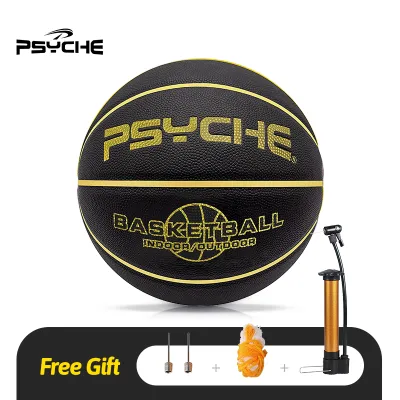
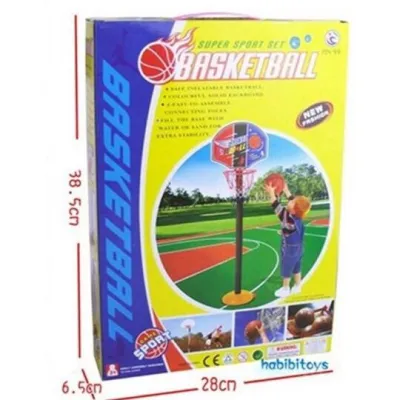
Prices are valid at publication and may change. Please refer to the product page for the latest price.
| Basketball Size | Target Age Group | Average Circumference | Average Weight | Primary Use Case |
|---|---|---|---|---|
| Size 3 (Mini) | Ages 4–8 | 22 in (56 cm) | 10 oz (280 g) | Toddlers and young beginners learning basic coordination |
| Size 5 (Junior) | Ages 9–11 | 27.5 in (70 cm) | 17 oz (480 g) | Standard youth play for boys and girls bridging early skills |
| Size 6 (Intermediate) | Boys 12–14, Girls 12+ | 28.5 in (72.4 cm) | 20 oz (567 g) | Girls' high school/adult play, and transitional boys' play |
| Size 7 (Official) | Boys 15 and older | 29.5 in (75 cm) | 22 oz (623 g) | Standard adult regulation size for men's high school and up |
Size 3 (Mini)
Size 3 basketballs are lightweight and highly manageable for toddlers and young children. At this stage, the focus is entirely on hand-eye coordination, catching, and basic dribbling. The small circumference allows tiny hands to wrap around the ball comfortably, preventing frustration and building early confidence.
Size 5 (Junior)
Size 5 is the standard youth size for boys and girls under the age of 11. This ball is designed to bridge the gap between play-centric activities and structured training. It is heavy enough to bounce predictably on outdoor concrete courts but light enough that children can practice proper one-handed release forms without straining their wrists.
Size 6 (Intermediate/Women's)
Size 6 is the official size for women’s basketball from high school to the professional level, and it serves as the intermediate size for boys aged 12 to 14. As players enter middle school, their hand size and upper body strength increase, making the transition to a heavier, larger ball necessary to maintain realistic game-play dynamics.
Size 7 (Official/Men's)
Size 7 is the official regulation size for boys aged 15 and older, as well as adult men’s leagues. Transitioning to this size represents the final step in youth basketball development. The added weight requires established shooting form and wrist snap, which younger players cannot safely execute without compromising their technique.
Beyond Age: Testing Hand Size and Grip for the Right Fit
While age-based charts provide an excellent starting point, children grow at vastly different rates. A tall ten-year-old may have the hand span of a teenager, while a smaller twelve-year-old might struggle with an intermediate ball. Evaluating your child’s actual hand size and physical comfort with the ball is essential before making a final choice.

To perform a simple at-home grip test, have your child hold the basketball with their dominant hand. Their fingers should be able to spread comfortably across the black rubber seams of the ball without overstretching or feeling strained. If they try to hold the ball with one hand and it immediately slips away, or if they must claw their fingers tightly to keep a grip, the ball is likely too large.
When a child is transitioning between two sizes, it is generally wiser to prioritize control and confidence over rushing to the next tier. If your child is eleven years old but has smaller hands, keeping them on a Size 5 ball for a few more months allows them to refine their shooting form. Forcing them onto a Size 6 too early can lead to hitching their shot or pushing the ball from their shoulder, habits that are incredibly difficult to break once established.
Decoding Material and Surface Specs for Indoor and Outdoor Play
Once you know the correct size, you must select the right material. The playing environment dictates which material will offer the best durability and grip, especially under local tropical conditions.
Rubber basketballs are the most durable and cost-effective option, making them ideal for rough, outdoor concrete courts. They resist moisture, dirt, and heat exceptionally well, which is crucial for outdoor play in humid climates. However, rubber has a harder, less forgiving feel that can cause quicker hand fatigue for younger players.
Composite leather offers a softer, more premium feel that mimics genuine leather but is engineered for greater durability. Many composite balls are rated for both indoor and outdoor use. While they provide excellent grip and comfort, playing with them on wet concrete or in high-humidity outdoor environments can cause the material to wear down faster than rubber.
Genuine leather is reserved strictly for indoor hardwood courts. These balls require a break-in period to soften the leather and are highly susceptible to damage from moisture, dirt, and rough surfaces. Avoid buying a genuine leather ball for outdoor neighborhood play, as the concrete will quickly ruin the surface.
Always check the manufacturer’s label or product specifications for official size stamps and surface suitability warnings. The label will clearly state whether the ball is designed for “Indoor,” “Outdoor,” or “Indoor/Outdoor” play. Choosing the wrong surface rating can lead to premature peeling, loss of grip, and a compromised bounce.
Matching Hoop Height to Ball Size for Proper Shooting Form
To ensure your child develops a fluid, natural shooting motion, the size of the basketball must align with the height of the hoop. Shooting on a standard ten-foot rim with a heavy ball too early forces kids to fling the ball upward, destroying their shooting arc.
For children aged 5 to 8 using a Size 3 ball, the hoop should ideally be set between 6 and 8 feet. For kids aged 9 to 11 using a Size 5 ball, a hoop height of 8 to 9 feet is recommended. Once players reach age 12 and transition to Size 6 or 7 balls, they can comfortably shoot on a standard 10-foot hoop.
This biomechanical relationship is simple: a lower hoop allows a child to focus on pushing upward and forward with their legs and arms, creating a high, soft arc. If the hoop is too high, they will flatten their shot just to reach the rim, which decreases their shooting percentage and increases physical strain.
Safety is paramount when setting up youth basketball equipment. If you are using a portable hoop in your driveway or on a local street, always properly weight the base with sand or water according to the manufacturer’s instructions. Regularly check the stability of the unit, and strictly prohibit children from hanging on the rim, as portable hoops can tip over and cause serious injury.
Frequently Asked Questions (FAQ)
Can my child use a smaller basketball to improve ball handling?
Yes, using a smaller basketball can be a helpful training tool for developing quick hand-eye coordination and finger sensitivity. Dribbling a smaller ball forces the player to control a faster bounce and react more quickly. However, this practice should be limited to ball-handling drills. For shooting practice, children should always use their recommended regulation size to avoid disrupting their shooting muscle memory and release mechanics.
How do I know if a basketball is properly inflated for a kid?
An easy, tool-free way to check inflation is the drop test. Hold the basketball at eye level (approximately 6 feet or 1.8 meters for an adult) and drop it onto a flat, solid concrete surface. A properly inflated ball should bounce back up to about waist or chest height (roughly 49 to 54 inches). If the ball barely reaches the hips, it is underinflated and will hinder dribbling; if it bounces past the chest, it is overinflated, which makes it feel too hard on a child’s hands and causes erratic bounces.

Community discussion
Share your experience or ask a question. Comments are reviewed before publication.