
Selecting the right tent is the difference between a refreshing outdoor getaway and a cramped, sleepless night. When exploring the Blackdog lineup, the key to making the right choice lies in balancing your group size, gear volume, and typical camping environment against the physical dimensions of the shelter. In tropical climates like the Philippines, where high humidity and sudden downpours are common, choosing a tent with the correct capacity and ventilation is essential for safety and comfort.
Quick Decision Guide: Matching Group Size to Tent Capacity
To avoid the common mistake of buying a tent that feels too cramped, always apply the “plus-one” rule of thumb. If you are camping alone, a two-person tent offers the necessary space to keep your backpack and clean clothes dry inside. For two adults, a three-person tent provides the breathing room needed to sleep comfortably without bumping elbows.
When planning your purchase, use this quick reference matrix to map your group size to the recommended minimum tent capacity:
Products mentioned in this guide
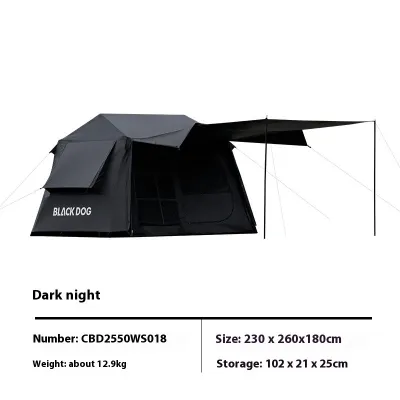
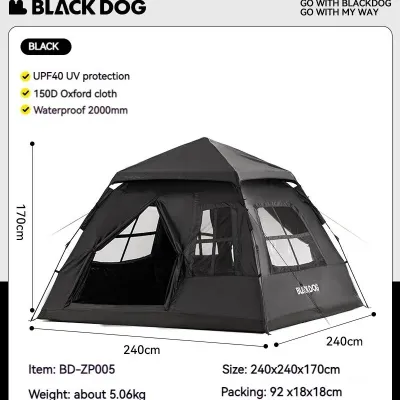
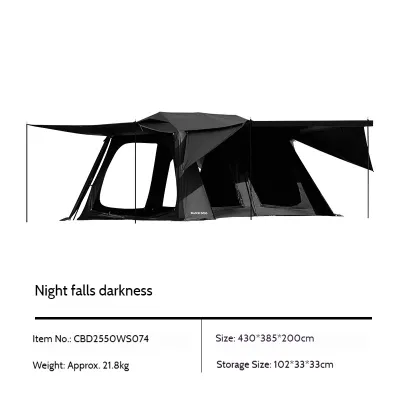
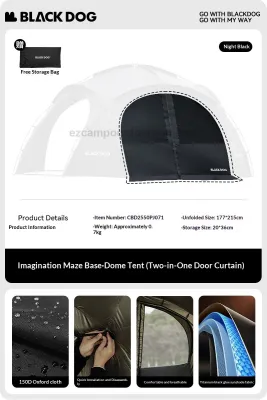
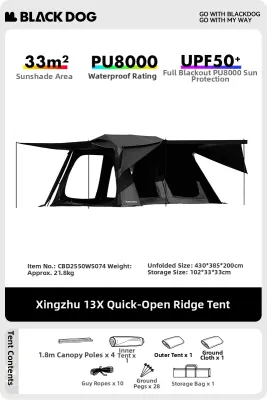
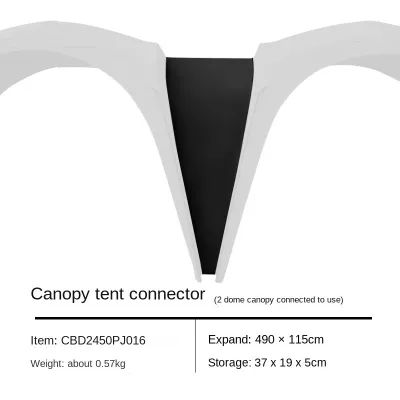
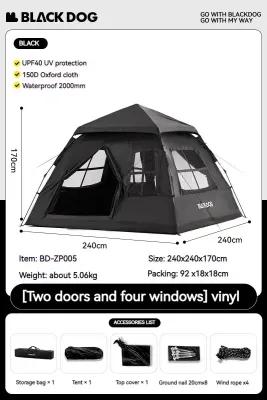
Prices are valid at publication and may change. Please refer to the product page for the latest price.
| Group Size | Camping Style | Recommended Minimum Capacity | Key Focus |
|---|---|---|---|
| Solo Camper | Backpacking / Trail | 1-Person or Compact 2-Person | Packed weight and folded size |
| Solo Camper | Car Camping / Moto-camping | 2-Person | Extra room for riding gear |
| Couple | Weekend Car Camping | 3-Person | Dual doors and vestibule space |
| Family (3-4) | Basecamp / Car Camping | 4-Person to 6-Person | Peak height and standing room |
Your camping style dictates whether you should prioritize weight or interior volume. If you are hiking long distances or traveling by motorcycle, every gram matters; you must prioritize a lightweight, compact package over standing room. Conversely, if you are car camping at an established campsite, prioritize a taller, more spacious tent that allows you to move freely and sit comfortably during a rainy afternoon.
Understanding Stated Capacity vs. Real-World Comfort
The “person capacity” printed on a tent box is a technical measurement, not a comfort rating. Manufacturers calculate this capacity by tiling standard-sized sleeping pads—typically measuring 50 to 60 centimeters wide—directly next to each other on the tent floor. This calculation assumes zero space for luggage, personal items, dog beds, or even the natural turning space a sleeper requires during the night. If you pack a four-person tent with four adults, you will sleep shoulder-to-shoulder with no room for your bags.

To maintain a comfortable living space, look closely at the vestibule design. A vestibule is an extension of the rainfly that creates a sheltered porch area outside the inner tent door. This space is invaluable for storing muddy hiking boots, wet backpacks, and cooking gear. By keeping these bulky items outside the main sleeping compartment, you preserve the entire interior floor area for sleeping and changing.
Furthermore, the tent’s shape heavily influences how spacious it feels. Dome tents feature sloping walls that meet at a single peak, which restricts head and shoulder room as you move away from the center. Cabin-style tents utilize near-vertical walls and frame systems that maximize usable interior volume. While a dome tent might have the same floor dimensions as a cabin tent, the cabin tent will feel significantly larger because you can stand upright and utilize the corners of the room.
Matching Blackdog Tents to Your Camping Scenario
Different outdoor activities require distinct shelter designs. Understanding how you plan to transport and use your gear will help you navigate the trade-offs between packed weight, setup complexity, and interior living space.
Solo and Backpacking Scenarios
For the solo adventurer carrying all their gear on their back, mobility is the primary concern. Your target should be a lightweight 1-person or a highly compact 2-person model that fits easily inside or on the outside of your backpack.
- Key Checks: Verify the packed weight (ideally under 2.5 kilograms) and the folded dimensions to ensure it fits your carrying system. Also, check the setup speed; a freestanding design with a simple hubbed pole system is highly desirable when arriving at a campsite late or in the rain.
- Trade-offs: To achieve a low trail weight, you must sacrifice peak height and vestibule space. You will likely have to crawl into the tent and change clothes while lying down, and your gear storage options will be limited to a small vestibule or the space right next to your sleeping pad.
Couple and Weekend Car Camping
When camping as a pair with vehicle access, you can afford to trade a bit of weight for a massive upgrade in comfort. A spacious 2-person or a standard 3-person tent is the sweet spot for weekend getaways.
- Key Checks: Look for a floor length of at least 210 centimeters if either camper is tall, and prioritize models with dual-door access. Having a door on each side of the tent allows either person to exit for a midnight bathroom run without crawling over their partner and waking them up.
- Trade-offs: These tents feature thicker fabrics, sturdier poles, and larger footprints, resulting in a heavier packed weight. While unsuitable for long-distance backpacking, they are easily managed when carried from the car trunk to a nearby campsite.
Family and Basecamp Setups
For multi-day stays with children or larger groups, the tent becomes a portable home. Interior space, organization, and privacy are the top priorities for keeping everyone comfortable and organized.
- Key Checks: Seek out cabin-style or multi-room models rated for 4 to 6 people (or more). Look for built-in room dividers to separate sleeping areas, a peak height of at least 180 centimeters so adults can stand upright, and multiple gear pockets or overhead lofts to keep small items off the floor.
- Trade-offs: These large shelters are heavy, bulky when packed, and require a significant amount of flat ground for proper pitching. They also take longer to set up and are highly susceptible to strong winds if not properly staked and guyed out.
Key Specifications to Verify on the Product Label
Before finalizing your purchase on any online marketplace or at a local retailer, carefully inspect the technical specifications on the product label to ensure the tent can handle your expected camping conditions.
- Season Rating: For tropical climates, a 3-season tent is generally the most appropriate choice. These tents prioritize ventilation with extensive mesh panels to manage heat and humidity. Avoid 4-season tents unless you are climbing high-altitude peaks; they are designed to retain heat and withstand heavy snow loads, which will make them stiflingly hot in typical tropical lowlands.
- Hydrostatic Head Rating: This rating, measured in millimeters (such as 1500mm, 2000mm, or 3000mm), indicates the water pressure the fabric can withstand before leaking. For reliable protection against sudden tropical downpours, look for a rainfly rating of at least 2000mm and a floor rating of 3000mm or higher to prevent ground moisture from seeping through.
- Pole Material: Aluminum poles are highly recommended for their superior strength-to-weight ratio and flexibility under wind loads. Fiberglass poles are more economical but are heavier, less flexible, and can splinter under extreme stress.
- Ventilation Features: Check for adjustable rainfly vents, low-level ground vents, and double-walled construction. Proper airflow is critical to prevent condensation—the moisture from your breath that condenses on the cold tent walls, making the interior damp even if it is not raining outside.
Frequently Asked Questions (FAQ)
Can I use a 2-person Blackdog tent for two adults and a dog?
While a 2-person tent can technically fit two adults, adding a dog will make the space extremely tight. A dog occupies floor space equivalent to a small child or a large duffel bag. If you plan to camp with your pet, it is highly recommended to size up to a 3-person tent to ensure everyone has room to sleep comfortably. Alternatively, ensure the tent has a large, secure vestibule where your dog can sleep protected from the elements, provided the weather is mild and your pet is comfortable sleeping outside the main inner tent.
How do I know if a Blackdog tent will fit my specific camping cot?
To verify compatibility, first measure the exact length, width, and height of your camping cot. Compare these measurements against the tent’s official interior floor dimensions. Keep in mind that many tents taper toward the head and foot ends, and sloping walls will reduce the usable space at cot height. A cot raised 15 to 20 centimeters off the ground may push against the sloping fabric of a dome tent, causing water to seep through during rain. For cot users, cabin-style tents with vertical walls offer the best compatibility.

Community discussion
Share your experience or ask a question. Comments are reviewed before publication.