
Choosing your first kayak is an exciting step toward exploring the beautiful lakes, quiet rivers, and sheltered coastal coves of the Philippines. Decathlon has become a popular destination for water sports enthusiasts in the country, offering a range of options that cater to different budgets and storage capacities. However, there is no single kayak model that fits every beginner perfectly. The right choice depends entirely on how you plan to transport the vessel, where you intend to paddle, and your personal comfort level on the water.
For beginners, the primary focus must always be on stability, ease of handling, and safety. Before making a purchase, you must evaluate the trade-offs between inflatable models and rigid hard-shell designs. While one offers unmatched portability for city dwellers, the other provides rugged durability and instant readiness. By understanding your logistical limits and matching them to local water conditions, you can select a kayak that keeps you safe and confident during your first paddling adventures.
Defining Your Beginner Paddling Goals
Before browsing the aisles or online catalog, clarify what you want to achieve during your first season on the water. Beginners typically fall into two categories: recreational paddlers who want short, relaxing excursions on calm water, and touring paddlers who hope to eventually cover longer distances along sheltered coastlines. Identifying your primary activity helps narrow down the hull shape and features you will need.
Products mentioned in this guide
Prices are valid at publication and may change. Please refer to the product page for the latest price.
If your goal is casual recreation—such as paddling around a calm lake like Lake Taal, exploring quiet mangrove channels, or floating near the shore in a protected bay in Batangas—stability is your absolute priority. You will want a wider, shorter kayak that resists tipping and is easy to maneuver. These boats are forgiving of poor paddling technique and allow you to focus on enjoying the scenery and learning basic strokes.
If you aspire to go on longer day trips or explore coastal islands, you will eventually need a kayak that tracks well, meaning it holds a straight line with minimal effort. However, longer and narrower kayaks can feel tippy to a novice. Beginners should start with a stable platform to build muscle memory and confidence before transitioning to narrower, performance-oriented touring models.
Your physical comfort and swimming ability also play a major role in your goals. If you are less confident in deep water, a highly stable sit-on-top model will ease your anxiety. Conversely, if you are paddling in areas with intense tropical sun and want to stay drier, you might consider how different seating positions affect your exposure. Always align your purchase with your current skill level rather than your future aspirations; a boat that feels too unstable will simply sit unused in your storage space.
Evaluating Decathlon Kayak Types for Beginners
Decathlon categorizes its kayak lineup primarily by construction type: inflatable models and rigid, hard-shell sit-on-top models. Both styles have distinct advantages and limitations that directly impact how often you will actually use them.

Inflatable Kayaks for Easy Transport
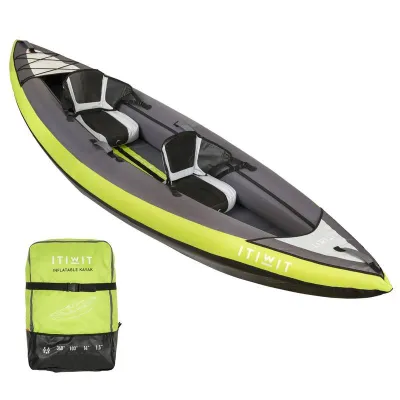
Inflatable kayaks are highly popular in the Philippines, especially for those living in metropolitan areas like Metro Manila or Cebu where residential storage space is limited. These boats deflate and pack down into a large backpack, allowing you to store them in a condo closet, transport them in the trunk of a small sedan, or even take them on public transport. They eliminate the need for expensive roof racks and dedicated garage space.
Modern inflatable kayaks from Decathlon utilize multiple air chambers to ensure buoyancy even if one chamber is compromised. Many beginner-friendly models feature low-pressure side tubes combined with a stable floor. For improved performance, some models incorporate high-pressure drop-stitch technology in the floor, which inflates to a rigid state, mimicking the feel of a hard-shell boat and reducing the flexing that can make paddling inefficient.
However, inflatable kayaks require a commitment to maintenance. You must dedicate time to inflating the boat before each launch and, more importantly, rinsing and drying it thoroughly after use. In the hot, humid Philippine climate, packing away a damp inflatable kayak will quickly lead to mold, mildew, and the deterioration of the fabric and seams. Additionally, because they sit higher on the water and are lighter than rigid boats, inflatables are more susceptible to being pushed off course by strong winds.
Sit-on-Top Hard-Shell Kayaks for Stability
Rigid, hard-shell sit-on-top kayaks are the traditional choice for recreational paddling and rental fleets. Made from durable, impact-resistant polyethylene, these boats are virtually indestructible. They can handle being dragged across sandy beaches, bumped against concrete docks, or scraped against hidden rocks without risking a puncture. This durability makes them incredibly reliable for rugged coastal exploration.
For a beginner, a sit-on-top hard-shell offers unmatched peace of mind. These kayaks feature self-draining scupper holes that allow any water splashing over the deck to drain out immediately. If you capsize, there is no enclosed cockpit to fill with water; you simply flip the kayak back over and climb back on from the side. This makes self-rescue significantly easier than in a traditional sit-in kayak.
The primary drawback of a hard-shell kayak is logistics. You must have a dedicated space to store a boat that is typically three to four meters long. Transporting it requires a roof rack system installed on your vehicle, along with the physical strength to lift the heavy kayak onto the roof after a tiring day of paddling. If you lack storage space or a suitable vehicle, the logistical hurdle of moving a rigid boat can quickly discourage you from going out.
Critical Specifications to Check on the Product Label
When comparing different models in-store or online, do not rely solely on marketing descriptions. You must carefully read the technical specifications on the product label to ensure the kayak is safe and suitable for your body type and paddling plans.
- Maximum Weight Capacity: This is the most critical safety specification. The maximum weight capacity must accommodate your body weight, the weight of any gear, dry bags, water bottles, and a safety margin. As a rule of thumb, your total loaded weight should not exceed 70% to 80% of the kayak's rated maximum capacity. Operating a kayak near its weight limit reduces its freeboard (the height of the side above the water), making it highly unstable and prone to taking on water.
- Width (Beam): Look for the width measurement on the label. For beginners, a wider kayak (typically 80 centimeters or wider) provides excellent primary stability, making it feel steady when you are sitting still or paddling slowly. Narrower kayaks (under 70 centimeters) are faster but require better balance and core stability to keep upright.
- Number of Chambers (for Inflatables): Ensure the inflatable kayak has at least three independent air chambers (usually two side tubes and one floor chamber). This design ensures that if one chamber suffers a puncture, the remaining chambers provide enough buoyancy to keep you afloat while you paddle back to shore.
- Recommended Inflation Pressure: For inflatable models, check the pressure rating, which is measured in PSI (pounds per square inch) or bar. Standard low-pressure inflatables typically require around 1.5 PSI, while high-pressure drop-stitch floors can require 10 PSI or more. You must use a pump with a built-in pressure gauge to avoid under-inflating (which causes the boat to sag) or over-inflating (which can rupture the seams in the hot sun).
- Weight of the Kayak: Check how much the empty kayak weighs. You must be able to lift, carry, and launch the boat safely. If you plan to paddle solo, ensure you can manage the weight of the kayak by yourself, or invest in a kayak trolley to assist with transport from your vehicle to the water.
Local Logistics and Water Conditions in the Philippines
Paddling in the Philippines presents unique environmental factors that you must prepare for before buying and launching your Decathlon kayak. The tropical climate, coastal geography, and seasonal weather patterns dictate how you should care for your gear and plan your trips.
Our intense tropical sun is a major factor for both gear longevity and personal safety. High temperatures cause the air inside inflatable kayaks to expand rapidly. If you inflate your kayak to its maximum pressure in the cool morning air and then leave it sitting on a hot beach in the midday sun, the expanding air can easily blow out the seams. Always release a small amount of air when resting on land, and keep the kayak in the shade whenever possible. Additionally, UV rays degrade plastics and PVC over time; applying a UV-protectant spray and storing your kayak out of direct sunlight will significantly extend its lifespan.
Saltwater exposure requires strict post-paddle maintenance. Salt is highly corrosive to metal zippers, valve springs, and paddle joints. After every outing in the ocean, you must rinse the entire kayak, seat, paddles, and your personal flotation device (PFD) with clean, fresh water. For inflatable models, pay close attention to the valve areas where salt crystals can build up and cause slow air leaks. Allow all components to dry completely in a shaded, well-ventilated area before folding or storing them.
Understanding local wind and tidal patterns is essential for safe coastal paddling. The Philippines experiences two main seasonal winds: the Amihan (cool northeast monsoon) and the Habagat (warm southwest monsoon). These winds can create sudden, strong offshore currents that make paddling back to shore incredibly difficult for a beginner. Always check local marine forecasts, wind speeds, and tide tables before launching. If the wind is blowing away from the shore, it is best to postpone your paddle or stick to highly sheltered inland waters.
Finally, be mindful of the local marine environment. Shallow coral reefs, volcanic rocks, and sharp oyster beds are common along Philippine shorelines. While a hard-shell kayak can slide over these obstacles with minor scratches, an inflatable kayak can suffer catastrophic punctures. Always launch and land in designated sandy areas, and avoid paddling over shallow reef flats where you might damage the marine life or your kayak.
Pre-Purchase Inspection and In-Store Testing
Before finalizing your purchase at a Decathlon store, take advantage of the physical retail environment to conduct a thorough inspection and fit test. Do not hesitate to ask the store staff to assist you with setting up the display models.
First, perform a physical fit test. Sit inside the kayak on the showroom floor. Adjust the seat back and footrests to your height. Your knees should be slightly bent and resting comfortably against the sides of the cockpit or the molded footwells. Ensure there is adequate legroom and that the seat provides sufficient lower back support. If you feel cramped or unstable just sitting on the floor, you will likely feel uncomfortable after an hour on the water.
Second, inspect the build quality and included accessories. For inflatable models, check the quality of the valves, the thickness of the outer skin, and the stitching on the carry handles. Verify what accessories are included in the box. Many beginner packages do not include a paddle or a pump, meaning you will need to budget extra for these essential items. Ensure you select a paddle of the correct length for your height and the width of your kayak.
Third, select a properly fitted Personal Flotation Device (PFD). A PFD is a non-negotiable safety requirement for every paddling trip, regardless of your swimming ability. Try on different life jackets in the store, fastening all straps securely. Have someone pull up on the shoulder straps; if the jacket slides up past your chin or ears, it is too large. Choose a PFD designed specifically for paddling, which features large armholes to allow a full range of motion without chafing.
Lastly, inquire about the local warranty and spare parts availability. Decathlon typically offers warranties on their kayak hulls and seams, but you should clarify what is covered locally. Ask if they stock replacement parts, such as spare fins, valves, or repair patches, so you know you can easily service your kayak if a component is lost or damaged during your excursions.
Frequently Asked Questions (FAQ)
Do I need a license to kayak in the Philippines?
No, you do not need a personal operator’s license or a permit to paddle a recreational, non-motorized kayak for personal use in public waters in the Philippines. However, you must comply with local regulations set by municipal governments, marine protected areas, or private resorts. Some popular tourist destinations, such as El Nido or Coron, require visitors to pay environmental user fees or register at designated entry points before entering protected lagoons. Always check with the local tourism office or barangay officials before launching your kayak in a new area.
Can I use a beginner kayak in ocean waves?
No, beginner-friendly recreational kayaks are not designed to handle breaking surf, heavy ocean swells, or strong offshore winds. These boats are typically wide and flat-bottomed, which makes them highly stable on calm water but difficult to control in rough seas. Attempting to paddle a beginner kayak through ocean waves poses a severe safety risk, as the boat can easily capsize or be swept away by currents. Limit your initial paddling trips to calm, sheltered waters such as lakes, slow-moving rivers, and protected bays, and always monitor local weather conditions before heading out.

Community discussion
Share your experience or ask a question. Comments are reviewed before publication.