
Quick Answer: Finding Your Correct Exercise Ball Size
To find the correct exercise ball size, sit on the inflated ball and check your posture: your knees and hips should bend at a 90-degree angle with your feet resting flat on the floor. While manufacturer height charts on the packaging serve as your primary reference for selecting a diameter, your specific workout goals will dictate whether you should size up or down. For instance, using a ball as an active desk chair often requires a larger size to align with standard desk heights, whereas intense core training might benefit from a slightly smaller, more responsive ball. Always verify the manufacturer’s sizing guide before purchasing, as dimensions can vary slightly between brands.
Why the Right Diameter Matters for Safety and Effectiveness
Using an incorrectly sized exercise ball does more than just make your workout uncomfortable; it actively compromises your safety and limits your fitness progress. When a ball is too small, your hips sink below your knees, placing excessive strain on your lower back and knee joints. This collapsed posture reduces your ability to engage your core muscles effectively, turning a stability exercise into a potential source of strain.

Conversely, a ball that is too large prevents you from establishing a secure connection with the ground. If your feet cannot rest flat on the floor, your center of gravity shifts upward, significantly increasing your risk of losing balance and falling. Proper sizing ensures that your body remains in optimal alignment, allowing targeted muscle groups to activate fully during planks, bridges, and seated balance exercises.
Products mentioned in this guide
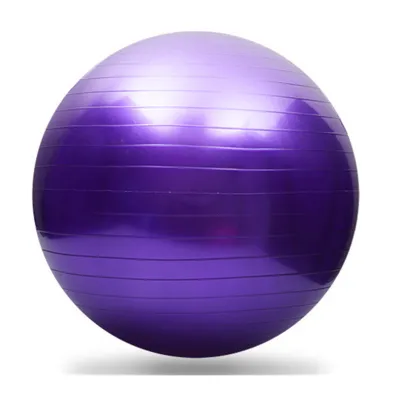
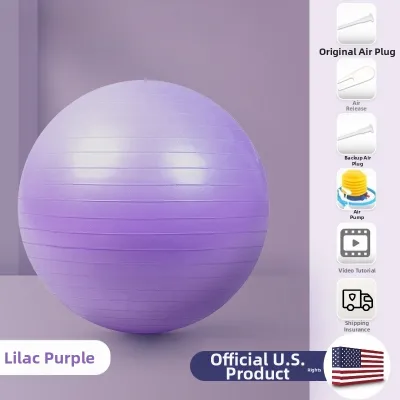
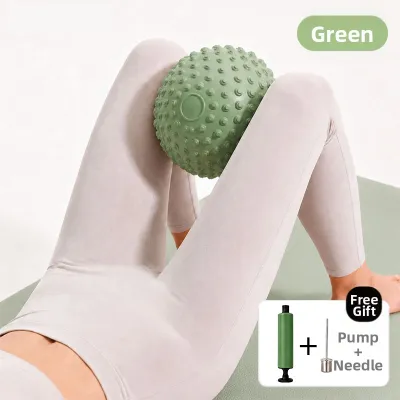
Prices are valid at publication and may change. Please refer to the product page for the latest price.
Step 1: Matching Ball Size to Your Height
The foundation of selecting the right exercise ball is your physical height. Before browsing online marketplaces or local fitness shops, measure your height accurately without shoes. Once you have your measurement, your first step is to locate the manufacturer’s specific height-to-diameter chart, which is typically printed on the product packaging or detailed on their official website.
While standard industry sizing tiers exist, they should only serve as a general starting point. Typically, these tiers are categorized by the ball’s fully inflated diameter:
- 55 cm (Small): Generally recommended for individuals between 4'11" and 5'3" (approximately 150 cm to 160 cm).
- 65 cm (Medium): Generally suited for individuals between 5'4" and 5'11" (approximately 162 cm to 180 cm).
- 75 cm (Large): Generally designed for individuals between 6'0" and 6'5" (approximately 183 cm to 195 cm).
Because material elasticity and molding processes differ across brands, never assume a medium ball from one manufacturer will behave exactly like a medium from another. Always defer to the brand’s specific sizing recommendations.
If your height falls directly on the boundary between two size tiers—such as being exactly 5’3″ or 5’11″—you must consider your physical proportions. Individuals with proportionally longer legs relative to their torso generally need to size up to ensure their knees are not pushed higher than their hips. If you are a beginner who is still developing core stability, leaning toward the larger size is highly recommended, as a larger ball offers a slightly more forgiving surface and a more stable base of support.
Step 2: Adjusting for Your Specific Workout Goals
Your height provides a baseline, but how you plan to use the ball determines the final size you should choose. Different activities place unique demands on your body’s positioning and the ball’s stability.
Core and Stability Training For dedicated abdominal workouts, planks, and intense core conditioning, a slightly smaller or firmer ball is often advantageous. A smaller diameter lowers your center of gravity, allowing you to perform advanced movements with greater control. It also increases the instability challenge, forcing your deep stabilizing muscles to work harder to maintain balance during dynamic exercises like roll-outs or jackknives.
Yoga, Pilates, and Stretching If your primary goal is flexibility, gentle stretching, or Pilates, a standard or slightly larger ball is ideal. A larger diameter provides ample surface area to support your spine during deep backbends and passive chest openers. It also offers a comfortable, stable platform for seated pelvic tilts and lateral stretches, ensuring you can relax into the movements without feeling like you are constantly on the verge of rolling off.
Active Sitting and Desk Chair Replacement Replacing your traditional office chair with an exercise ball requires a different sizing strategy. Standard desks are designed for rigid chairs, so a ball used for sitting must be larger than one used for floor exercises. To maintain proper desk ergonomics, your hips should sit slightly higher than your knees, promoting a natural forward tilt of the pelvis that prevents slouching. When choosing a ball for active sitting, plan to size up by one standard tier (for example, moving from a 65 cm to a 75 cm ball) to compensate for the compression that occurs when sitting for extended periods.
Rehabilitation and Beginner Balance If you are recovering from an injury, working with a physical therapist, or are completely new to balance training, stability is your top priority. In these scenarios, select a larger ball and inflate it slightly below its maximum capacity. This under-inflation creates a flatter bottom surface where the ball contacts the floor, widening the base of support and slowing down the ball’s movement, which allows you to build confidence and strength safely.
Step 3: Testing the Fit and Verifying Proper Form
Once you have selected and inflated your ball, you must perform a physical fit test to verify that the size matches your body geometry. Do not rely solely on visual estimation; sit on the ball to feel how your weight is distributed.
To conduct the standard seating test, sit directly in the center of the ball with your feet flat on the floor, spaced about shoulder-width apart. Keep your spine tall and let your arms hang naturally at your sides.
Observe your lower body alignment using a mirror or by having someone take a side-profile photo:
- Thigh Alignment: Your thighs should rest parallel to the floor, or angle slightly downward toward your knees.
- Knee Angle: Your knees must form a 90-degree to 100-degree angle. If your knees are bent at an acute angle (less than 90 degrees), the ball is too small or under-inflated.
- Foot Placement: Your entire foot, from heel to toe, must rest comfortably flat on the ground without requiring you to stretch or lift your heels.
Next, assess your upper body posture. Your ears, shoulders, and hips should align vertically without forcing you to strain your lower back or grip the floor with your toes. If you find yourself constantly leaning forward to stay balanced, or if your knees are positioned higher than your hip joints, stop using the ball immediately. These signs indicate that the ball is either too small or lacks sufficient air pressure, both of which compromise your form and safety.
Inflation Guidelines to Maintain True Size and Safety
An exercise ball cannot perform as designed if it is not inflated correctly. The material must be stretched to its intended tension to achieve the correct diameter and provide the necessary support.
To prevent seam stress and minimize the risk of bursting, follow a standard two-stage inflation process. When you first unbox the ball, inflate it to approximately 80% of its target size. Let the ball rest for 24 hours in a room-temperature environment; this waiting period allows the heavy-duty vinyl or plastic material to expand and adjust to the air pressure. After the resting period, finish inflating the ball to its full specified diameter, measuring the height against a wall or using the measuring tape often provided by the manufacturer.
Avoid the temptation to over-inflate the ball to make it firmer. Over-inflation stretches the seams beyond their design limits, making the material dangerously rigid and highly susceptible to sudden punctures or ruptures during use. Conversely, under-inflation reduces the effective height of the ball, causing your hips to sink too low and rendering your ergonomic adjustments useless.
Keep in mind that environmental factors directly influence air pressure. In tropical climates with high humidity and fluctuating temperatures, such as the Philippines, the air inside the ball will naturally expand and contract. Perform routine pressure checks by sitting on the ball weekly, and add or release air as needed to maintain the correct 90-degree seating angle.
Frequently Asked Questions (FAQ)
Can I use the same exercise ball size for both workouts and as an office chair?
While it is possible to use one ball for both purposes, you will likely face a compromise in comfort or ergonomics. Desk chairs require your hips to sit slightly higher than your knees to align with standard desk heights, which usually demands a larger ball size. For workouts, however, a ball that is too large can make floor exercises awkward and unstable. If you must use a single ball, prioritize your primary activity. If you spend hours sitting at your desk and only minutes exercising, size the ball for your desk. You can also make minor adjustments by slightly under-inflating the ball during workouts to lower your height, though using two dedicated balls is the ideal solution.
What should I do if my height falls exactly between two recommended ball sizes?
When your height sits on the boundary of a manufacturer’s sizing chart, base your decision on your fitness experience and body proportions. Beginners should almost always choose the larger size, as it can be slightly under-inflated to provide a wider, more stable base of support as you build balance. Advanced users may prefer the smaller size to increase the instability challenge during core workouts. Additionally, look at your leg length; if you have long legs relative to your torso, the larger ball will help you maintain the necessary 90-degree knee angle without your knees rising above your hips.
Does the weight capacity of the exercise ball change depending on the size I choose?
Weight capacity is determined by the thickness and quality of the material, along with its burst-resistance rating, rather than the physical diameter of the ball. A high-quality 55 cm ball can have a much higher weight limit than a cheaply made 75 cm ball. Always check the manufacturer’s packaging or user manual for the explicit static and dynamic weight limits before purchasing. Exceeding these limits compromises the structural integrity of the vinyl, increasing the risk of a sudden pop during dynamic movements, regardless of how perfectly the ball fits your height.

Community discussion
Share your experience or ask a question. Comments are reviewed before publication.