
Selecting the right Felet badminton racket requires a clear understanding of your physical capabilities, your tactical role on the court, and how specific racket engineering elements interact with your swing. In a sport where split-second reactions and precise shuttle control dictate the outcome of a rally, playing with an unsuitable racket can hinder your progress and increase the risk of repetitive strain injuries. Whether you are a beginner learning the basics in a local sports center or an advanced player competing in high-intensity tournaments, matching your gear to your current skill level is essential for consistent performance.
In tropical environments where high humidity is a constant factor, racket selection becomes even more critical. Humidity affects not only string tension and grip tackiness but also how heavy a racket feels during extended play sessions. By analyzing your playing style and understanding technical specifications, you can make an informed decision that enhances your strengths, protects your joints, and ensures you get the most out of your investment on the court.
Assess Your Skill Level and Playing Style
Before evaluating specific racket models, you must objectively assess your current proficiency on the court. Beginners are typically characterized by developing hand-eye coordination, inconsistent contact with the sweet spot, and slower swing speeds. At this stage, players are still learning the mechanics of basic strokes, such as the overhead clear, drop shot, and serve. A beginner’s movement across the court is often reactive rather than anticipatory, meaning they require equipment that is highly forgiving and assists in generating depth without requiring perfect technique.
Products mentioned in this guide
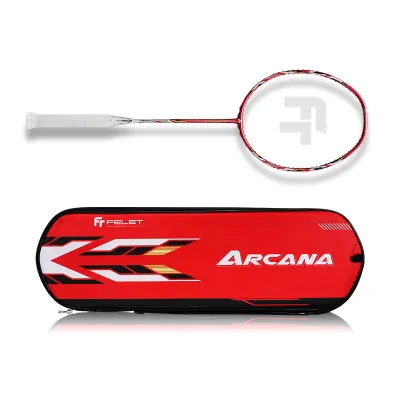
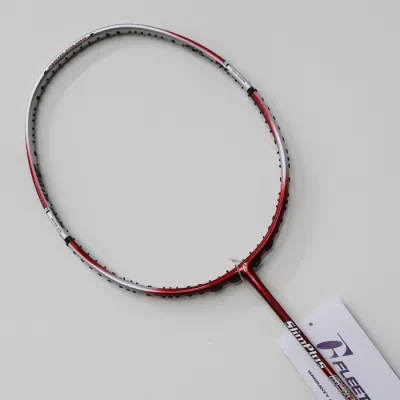
Prices are valid at publication and may change. Please refer to the product page for the latest price.
Intermediate players have established a foundation of consistent stroke production and are beginning to develop tactical preferences. If you are an intermediate player, you can reliably clear the shuttle from baseline to baseline, execute basic smashes, and maintain short rallies. Your swing speed is moderate, and you are starting to understand court positioning and shot placement. At this level, players benefit from rackets that offer a balance of control and power, allowing them to refine their tactical style without being limited by their equipment.
Advanced players possess rapid swing speeds, excellent wrist snap, and precise footwork that allows them to get behind the shuttle early. They can generate explosive power from almost any position on the court and require a racket that offers immediate feedback, high structural stability, and precise control. Advanced players often have highly specific preferences for string tension, weight distribution, and shaft stiffness, as they can exploit minor variations in racket design to gain a competitive edge.
Your playing style is the second critical component of the selection equation. Attacking players rely on heavy smashes, steep drop shots, and aggressive baseline play to force errors from their opponents. Defensive players focus on control, placement, rapid lifts, and long rallies, waiting for the opponent to make a mistake. Doubles players operate in a fast-paced environment where quick drives, flat exchanges, and rapid net interceptions are crucial, requiring equipment that can transition quickly from defense to offense.
To pinpoint your primary role and physical strengths, ask yourself a few key questions. Do your shoulders or wrists feel fatigued after a few games? If so, you may be using a racket that is too heavy or stiff for your current strength. Do you prefer staying at the back of the court to deliver powerful smashes, or do you excel at quick net play and defensive blocks? Are your clears consistently reaching the opponent’s baseline without excessive physical effort? Answering these questions honestly will guide you toward the correct racket specifications.
Key Specifications to Check on a Felet Racket
When browsing Felet rackets, you will encounter several technical specifications printed on the shaft or cone. The first is the weight category, designated by the letter “U” followed by a number. A 3U racket weighs between 85 and 89 grams, offering more mass behind each shot, which translates to heavier smashes and greater stability at the cost of higher physical demand. A 4U racket (80 to 84 grams) is the highly versatile standard for most players, offering an optimal balance of speed and power. A 5U racket (75 to 79 grams) or lighter maximizes maneuverability and reduces arm fatigue, making it ideal for fast-paced defensive play.

The balance point of a racket, measured in millimeters from the handle base, determines how the weight is distributed. Head-heavy rackets (above 295mm) shift the weight toward the frame, adding momentum to your swings for more powerful smashes, though they can slow down defensive recovery. Even-balanced rackets (285mm to 295mm) distribute weight evenly, offering a versatile blend of power and speed. Head-light rackets (below 285mm) concentrate weight in the handle, allowing for lightning-fast defensive reactions and quick net play.
Shaft stiffness is another critical factor that dictates how energy is transferred from your arm to the shuttle. A flexible shaft bends easily during a swing, creating a whip-like effect that assists players with slower swing speeds in clearing the shuttle deep into the opponent’s court. A medium shaft offers a balanced mix of control and power, suitable for developing players. A stiff shaft requires a fast swing speed and strong wrist action to bend, but it provides advanced players with unmatched precision, immediate feedback, and rapid recovery during fast exchanges.
Finally, pay attention to grip size, typically labeled as G5 or G6, which dictates the circumference of the handle. A smaller grip (G6) allows for more finger play and quick grip transitions, which is highly beneficial for deceptive shots and net play. In tropical climates where high humidity leads to sweaty hands, players often choose a smaller grip size and customize it with absorbent polyurethane or towel overgrips to maintain a secure hold and prevent slippage during intense rallies.
Matching Racket Features to Your Game
To make the selection process easier, you can align your assessed skill level and playing style with specific specification ranges. For beginners, the priority should always be forgiveness, ease of use, and joint protection. A racket with a 4U or 5U weight, a flexible shaft, and an even-balanced frame is highly recommended. This combination provides a larger sweet spot, reduces the physical effort required to clear the shuttle, and minimizes the risk of elbow or shoulder strain as you develop proper technique.
Intermediate players transitioning to specific tactical roles should look for combinations that enhance their playing style. If you lean toward an attacking game, a 4U racket with a medium-stiff shaft and a slightly head-heavy balance will help amplify your smash power without overwhelming your transition speed. If you prefer a defensive or control-oriented game, an even-balanced racket with a medium shaft will offer the versatility needed for quick drives, precise drops, and reliable defensive lifts.
Advanced players require rackets that can handle high-tension strings and deliver precise energy transfer. An advanced attacking singles player will benefit from a 3U, stiff, head-heavy racket that maximizes smash velocity and court depth. Conversely, an advanced doubles specialist who dominates the front court will perform better with a 4U or 5U, stiff, head-light racket that allows for instantaneous net interceptions and rapid flat drives.
Many players do not fit neatly into a single category, and navigating style overlaps requires careful consideration of trade-offs. For instance, an attacking doubles player needs both smash power from the backcourt and quick defensive reactions at the net. In such cases, a 4U racket with a slightly head-heavy balance and a medium-stiff shaft serves as an excellent compromise, offering enough speed for defensive drives while still retaining sufficient head weight for offensive play.
Pre-Purchase Checks and Authenticity Verification
Before finalizing your purchase, conduct a thorough visual inspection of the racket to ensure its structural integrity. Examine the frame for any hairline cracks, uneven paint application, or misaligned grommets. Run your fingers along the joint where the shaft meets the T-joint to ensure it is perfectly smooth and structurally sound. Any physical imperfections can compromise the racket’s integrity under high string tension, leading to premature frame failure.
To protect yourself from counterfeit products, check for official Felet security features. Genuine rackets feature high-quality holographic stickers, clearly engraved serial numbers on the cone or shaft, and come with official warranty cards. Avoid rackets with blurry decals, poorly printed logos, or serial numbers that appear painted on rather than engraved. Checking these details ensures you are purchasing a genuine product made from high-quality carbon fiber.
Always purchase your gear from authorized local sporting goods stores or official online mall flagship stores. Be cautious of deals that seem too good to be true on unverified online marketplaces or peer-to-peer selling platforms. Counterfeit rackets often use inferior materials that can snap easily during play, posing a safety hazard to you and other players on the court.
Every Felet racket has its maximum recommended string tension printed clearly on the frame. While some advanced models can support high tensions up to 35 lbs, it is crucial to stay within your physical limits and the racket’s specifications. High humidity and temperature variations can affect string tension and frame stress. Always have your racket strung by a certified professional who uses a calibrated electronic stringing machine to ensure even tension distribution and prevent frame warping.
Frequently Asked Questions (FAQ)
How often should I restring my Felet badminton racket?
Strings lose tension over time, a process known as tension creep, even if the racket is not being used. For regular players who step onto the court two to three times a week, restringing every two to three months is highly recommended to maintain consistent playability and control.
You should also look out for physical signs of wear, such as fraying fibers, deep notches where the strings cross, or a dull, hollow sound upon impact. In highly humid tropical environments, strings can lose their elasticity faster, making regular restringing essential for maintaining control and power.
Can I use a head-heavy Felet racket for doubles?
Yes, you can use a head-heavy racket for doubles, but it comes with distinct trade-offs. A head-heavy racket is highly advantageous when you are positioned in the backcourt, allowing you to deliver powerful, steep smashes to break through the opponent’s defense.
However, the extra weight in the head can slow down your reaction time during fast-paced flat drives and defensive blocks at the net. If you prefer a head-heavy setup for doubles, opting for a lighter weight category, such as 4U, can help balance the need for offensive power with the agility required for rapid doubles exchanges.

Community discussion
Share your experience or ask a question. Comments are reviewed before publication.