
Selecting the right fishing hook is one of the most critical decisions you make before casting your line. The hook is your direct connection to the fish, and using the wrong size or style can lead to missed strikes, lost bait, or damaged fish. To make an informed choice, you must understand how a hook is built and how manufacturers label their sizes.
Understanding Fishing Hook Anatomy and Sizing Systems
A standard fishing hook consists of five primary parts: the eye, the shank, the bend, the point, and the barb. The eye is the loop at the top where you tie your fishing line. The shank is the straight section of wire extending down from the eye, and its length determines how much bait you can present. The bend is the curved portion that sweeps down and back up, distributing the pressure when a fish pulls. The point is the sharp tip designed to penetrate the fish’s mouth, while the barb is the backward-facing projection that prevents the hook from slipping out once set.
Understanding the sizing system requires navigating two distinct scales: the standard scale and the aught scale. The standard scale uses whole numbers, where larger numbers represent smaller hooks. For example, a tiny size 16 hook is ideal for small baitfish, while a size 1 hook is much larger and suited for medium-sized catches. Once hooks grow larger than size 1, they transition to the aught scale, written as a number followed by a slash and a zero (e.g., 1/0, 2/0, 3/0). On the aught scale, larger numbers indicate larger hooks, meaning a 5/0 hook is significantly bigger than a 1/0 hook.
Products mentioned in this guide
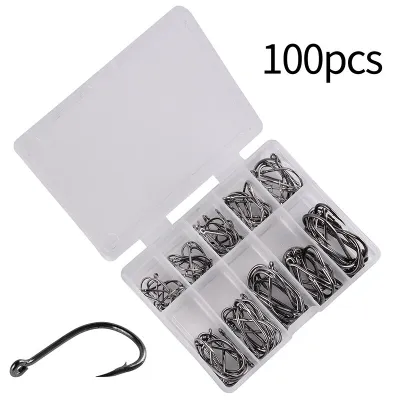
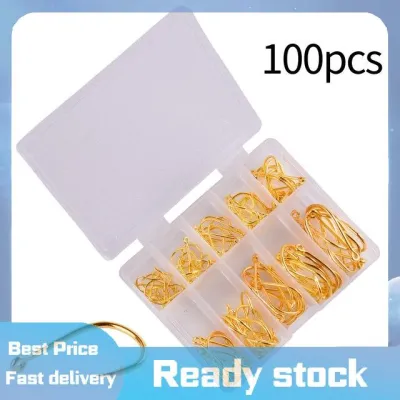
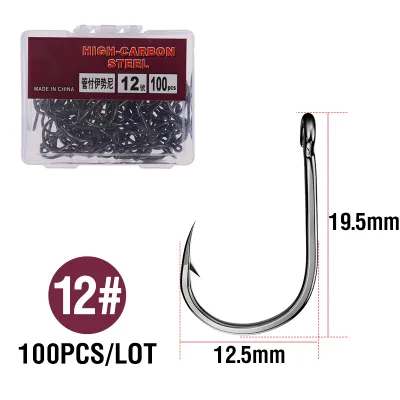
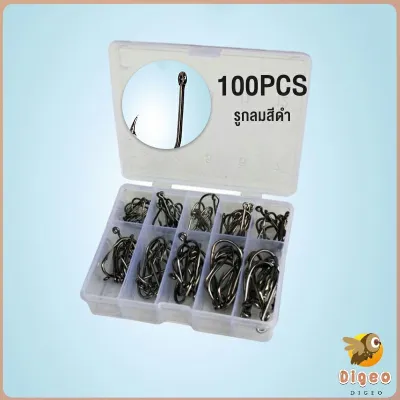
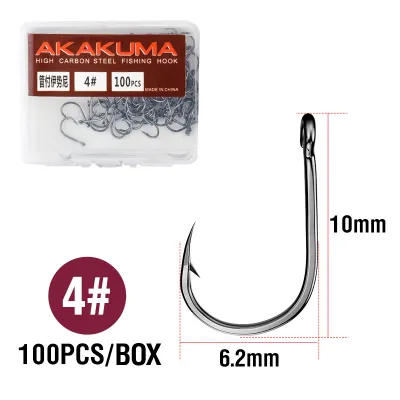
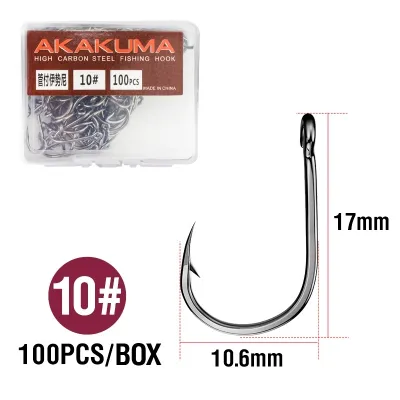
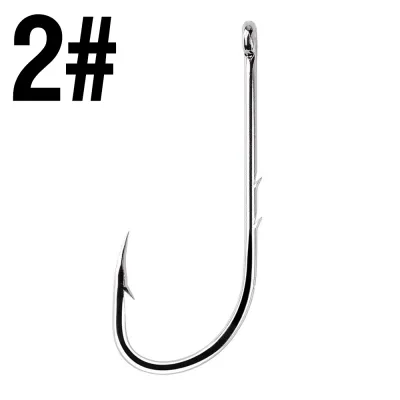
Prices are valid at publication and may change. Please refer to the product page for the latest price.
It is important to note that hook sizing is not universally standardized across all brands. A size 2 hook from one manufacturer may have a slightly wider gap or a longer shank than a size 2 hook from another. Because of these variations, you should physically compare hooks when switching brands rather than relying solely on the printed numbers on the packaging.
Matching Hook Types to Your Fishing Method and Bait
Different fishing techniques and baits require specific hook shapes to maximize your hookup ratio and ensure the bait behaves naturally in the water. Choosing the right shape is a matter of matching the hook’s mechanical design to your presentation.

Circle hooks are designed with a point that curves sharply back toward the shank. This unique geometry prevents the hook from catching in the fish’s throat or stomach. Instead, as the fish swims away, the hook slides safely out of the throat and embeds itself firmly in the corner of the mouth. This makes circle hooks highly effective for live bait fishing and is the preferred choice for conservation-minded anglers who practice catch-and-release.
Classic J-hooks feature a straight point parallel to the shank. They require an active hookset—a quick, firm upward sweep of the rod—to drive the point into the fish’s jaw. J-hooks are highly versatile and work well with active retrieval techniques, but they carry a higher risk of gut-hooking if a fish swallows the bait before you can set the hook.
Treble hooks consist of three points forged together from a single eye. They are commonly found on hard lures like crankbaits and spinners, offering a high probability of securing a hookup when a fish strikes aggressively. However, treble hooks snag easily on underwater structures like weeds and rocks, and they can cause more tissue damage to the fish.
Octopus hooks feature a short, curved shank and an upturned eye, making them excellent for presenting small, natural baits like shrimp or earthworms. Wide gap hooks, on the other hand, offer extra clearance between the shank and the point. This extra space is essential when rigging thick soft plastic lures weedlessly, as it allows the plastic to slide down easily and expose the point when a fish bites.
Before heading out, always verify local fishing regulations for your specific destination. Some managed inland lakes, rivers, or marine protected areas in the Philippines mandate the use of barbless hooks or single-hook configurations to minimize injury to local fish populations, especially when targeting protected or vulnerable species.
Selecting the Correct Hook Size for Your Target Species
Matching the hook size to your target species requires a careful balance between the fish’s mouth anatomy, the size of your bait, and the wariness of the fish. A hook that is too large or too small will drastically reduce your chances of landing a catch.
The gap of the hook—the distance between the shank and the point—must be wide enough to clear your bait and still leave enough room to catch the fish’s jaw. If you use a hook with a gap that is too narrow for your bait, the bait itself can mask the point, preventing it from penetrating when you set the hook. Conversely, if the hook is too large, the fish may not be able to fit it into its mouth, or the heavy wire may ruin the natural action of your bait.
A common mistake among beginners is using hooks that are far too large for their target species. Large hooks add unnecessary weight, causing live bait to tire quickly and sink unnaturally. In clear tropical waters, fish rely heavily on their vision and can easily spot a large, shiny piece of metal, causing them to reject the bait entirely. Downsizing your hook often leads to more consistent bites from cautious feeders.
When you are on the water, be prepared to adjust your hook size based on observed bite patterns. If you feel constant nibbles but fail to hook the fish, it is a clear sign that your hook is too large or your bait is too big for the fish in the area. Downsizing both your hook and bait can turn a frustrating day into a successful one. If you find that fish are swallowing the hook too deeply, upsizing to a larger hook or switching to a circle hook can help ensure cleaner, safer hookups.
Evaluating Hook Materials and Finishes for Different Environments
The material and finish of a fishing hook determine its strength, flexibility, and resistance to the harsh elements of the marine environment. Selecting the right material ensures your hook will not bend or snap under the pressure of a hard-fighting fish.
High-carbon steel is a popular choice because it is incredibly sharp, retains its point well, and offers a slight flex that prevents snapping under sudden loads. However, high-carbon steel is highly susceptible to rust if the protective coating is compromised. Stainless steel hooks offer superior corrosion resistance and are highly durable, making them a favorite for saltwater angling. The trade-off is that stainless steel is stiffer, harder to sharpen, and remains in the environment much longer if your line breaks.
Forged hooks undergo a manufacturing process that compresses the wire, making them significantly stronger than standard wire hooks of the same diameter. These are ideal when fishing in heavy cover, such as mangroves or submerged structures, where you must apply heavy pressure to keep a powerful fish from tangling your line.
The finish on a hook serves to protect the metal from corrosion and reduce underwater visibility. Bronze finishes are traditional and inexpensive but offer minimal rust protection. Nickel and black nickel coatings provide excellent corrosion resistance and a smooth surface for easier penetration. Teflon or PTFE coatings offer an extremely slick surface that slides easily into a fish’s mouth, while their matte finish eliminates metallic glare that might spook wary fish in clear water.
Tropical heat and high humidity accelerate the corrosion process, especially when saltwater is involved. Regardless of any manufacturer claims regarding rustproof coatings, you must rinse your hooks with fresh water and dry them thoroughly after every trip. Storing damp hooks in a closed tackle box will quickly ruin your entire selection.
Building a Versatile Hook Selection for Your Tackle Box
You do not need to own every hook size and style to be a successful angler. Instead, focus on building a versatile, well-organized selection that covers your most common fishing scenarios without cluttering your tackle box.
A practical starter kit should include a range of sizes to handle different environments. For light estuary or freshwater fishing targeting smaller species like tilapia or local panfish, keep a selection of J-hooks and octopus hooks in sizes 6, 8, and 10. For general bait fishing targeting medium-sized coastal species, stock up on circle hooks and J-hooks in sizes 1, 1/0, and 2/0. If you plan to target larger predators or use large soft plastics, add some wide gap and circle hooks in sizes 3/0 to 5/0 to your inventory.
To manage your budget effectively, purchase your high-use, standard hooks in bulk. Spending around ₱200 to ₱400 on a bulk pack of basic circle or J-hooks ensures you always have replacements on hand. Save your specialized, heavy-duty, or premium-coated hooks for smaller, targeted purchases, buying them only when a specific trip or technique requires them.
Proper storage is essential to keep your hooks sharp and rust-free. Use compartmentalized tackle boxes with secure latches to keep different sizes and styles separated. To combat tropical humidity, place moisture-absorbing silica gel packets inside your tackle trays, and avoid mixing used hooks back into compartments with clean, dry hooks.
Frequently Asked Questions (FAQ)
How often should I replace my fishing hooks?
You should inspect your hooks regularly for rust, bent shanks, and dull points. To check sharpness, perform the fingernail test by dragging the hook point lightly across your fingernail. If the point slides without catching, it is dull and needs to be sharpened with a hook file or replaced. Any hook showing structural rust or a bent shank should be discarded immediately to prevent losing a fish.
Do I need to flatten the barbs on my hooks?
Flattening the barbs on your hooks is highly recommended for catch-and-release fishing, as it allows for quick hook removal and minimizes tissue damage to the fish. You can easily crush the barb flat against the shank using a pair of needle-nose pliers. Keep in mind that when fishing with barbless hooks, you must maintain constant line tension while fighting a fish, as any slack can allow the hook to slip out easily.
Why do I keep losing fish even when they bite?
Losing fish repeatedly often indicates that your hook size is mismatched or your presentation is flawed. If the hook is too large, the fish may not be able to fully inhale it, resulting in missed strikes. Additionally, check if your bait is bunched up and covering the hook point, which prevents proper penetration. Ensure your hook points are perfectly sharp and that your reel’s drag is set correctly to drive the hook home during the strike.

Community discussion
Share your experience or ask a question. Comments are reviewed before publication.