
Choosing the right fishing lead sinker weight is a fundamental skill that directly influences your presentation, bite detection, and overall success on the water. If your sinker is too light, the underwater currents will sweep your bait away from the target zone, leaving it suspended in unproductive water. Conversely, if your sinker is too heavy, it can plunge deep into muddy substrates, snag on underwater structures, or create unnatural resistance that frightens cautious fish away. Finding the ideal balance requires analyzing the environmental conditions of your fishing spot and understanding how different fish species interact with your rig.
Understand the Core Factors Affecting Sinker Weight
To select the correct sinker weight, you must evaluate the primary environmental and biological variables at play. Water current speed is often the most dominant force you will encounter. When water flows against your fishing line, it creates hydrodynamic drag. This drag pushes the line downstream or down-current, forming a large bow that lifts your sinker off the bottom. A stronger current requires a heavier sinker to counteract this drag and keep your bait anchored where fish are actively feeding.
Water depth also plays a critical role in determining your baseline weight. As depth increases, your sinker must travel through a longer column of water to reach the bottom. A light sinker will descend slowly, giving currents more time to carry your rig far away from your target area. Furthermore, deeper water requires more line to be deployed, which increases the total surface area exposed to water resistance. To maintain a direct, sensitive connection to your bait in deep water, you generally need to increase your sinker weight to keep the line taut.
Products mentioned in this guide
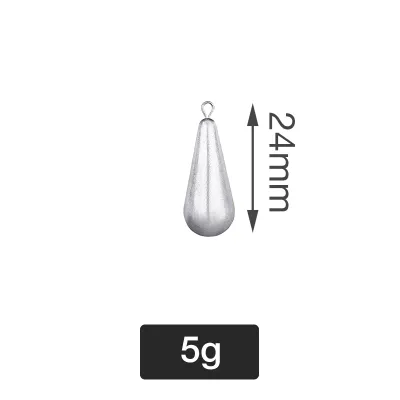
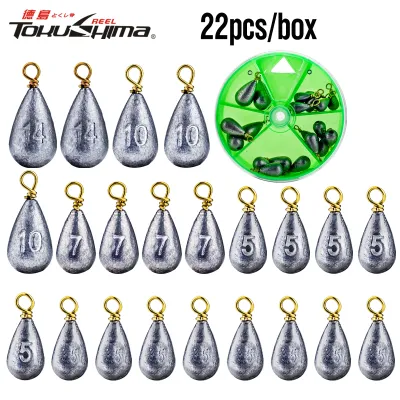
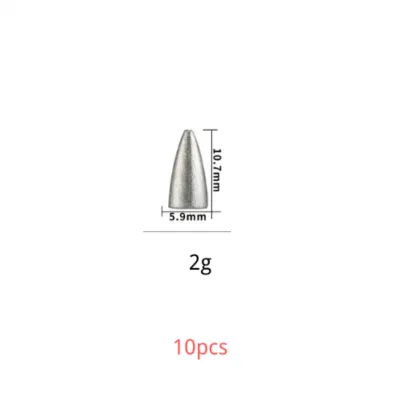
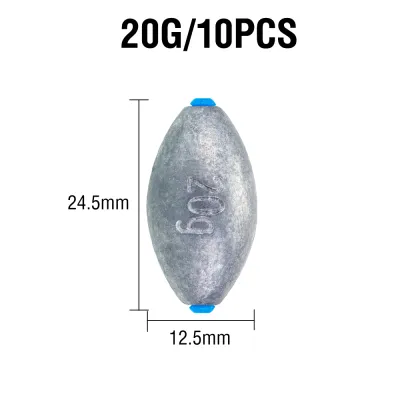
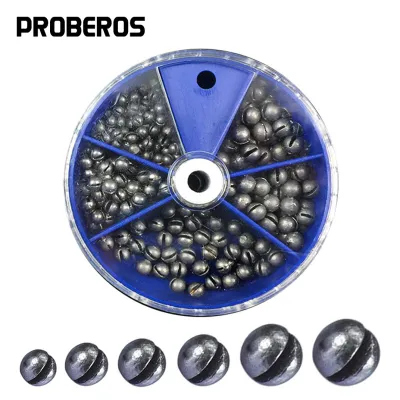
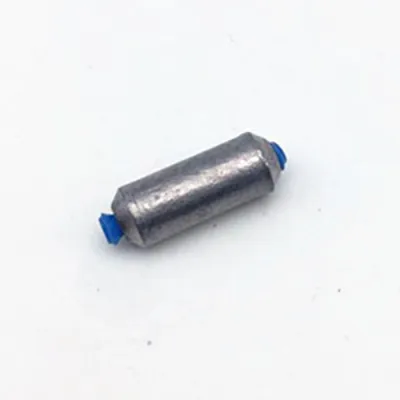
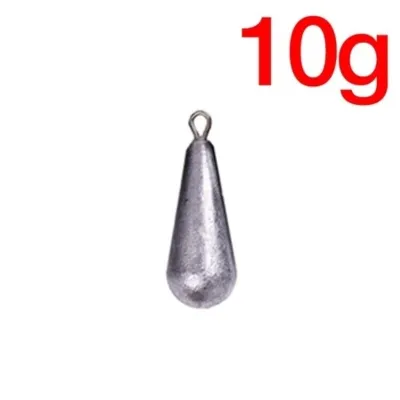

Prices are valid at publication and may change. Please refer to the product page for the latest price.
Beyond physical forces, you must consider the feeding behavior and sensitivity of your target species. Some fish, such as predatory groupers or jacks, strike bait with aggressive force and are rarely deterred by a heavy sinker. However, many species are highly sensitive to resistance. When a cautious fish picks up your bait and feels the immediate, dead weight of a heavy sinker, it will often spit the hook before you can react. Understanding whether your target is a bold predator or a timid nibbler helps you decide if you can use a heavy anchor or if you must downsize to the lightest weight possible.
Match Sinker Weight to Water Current and Depth
Matching your sinker weight to the specific current and depth of your fishing environment is an ongoing process of observation and adjustment. In still water environments, such as calm lakes, farm ponds, or sheltered coastal bays, environmental drag is minimal. Here, your primary goal is simply to cast your bait and let it sink at a natural pace. You can often use very light weights, sometimes just a few grams, to achieve a delicate presentation that does not startle nearby fish.

In moving water, such as tidal estuaries, flowing rivers, or surf zones, you must observe the angle of your fishing line after casting to judge if your weight is sufficient. After your rig hits the water, watch where the line enters the surface. If the line quickly sweeps to the side or forms a wide, bowing arc, your sinker is too light to hold its position. Ideally, the line should settle at a controlled, stable angle, indicating that the sinker has successfully anchored on the bottom. If you notice the line continuously drifting, increase your weight incrementally until the rig remains stationary.
However, you must balance the need for a fast sink rate against the physical characteristics of the bottom substrate. In deep water areas with soft, muddy bottoms, a heavy sinker will plunge directly into the silt, burying your bait and making it invisible to passing fish. If you suspect a soft bottom, try using a lighter weight with a wider surface area to help it sit on top of the mud. Conversely, on rocky or gravelly bottoms, a heavy weight can easily wedge itself into tight crevices, leading to frequent snags and lost gear. In these environments, using the minimum weight necessary to maintain bottom contact is key to avoiding constant frustration.
Adjust for Target Species and Fishing Technique
Once you have accounted for current and depth, you must fine-tune your sinker weight to match your target species and chosen fishing technique. When bottom fishing for species that feed directly on the seabed, such as catfish or flatfish, your sinker must keep the bait firmly anchored. However, if you are targeting species that feed in the mid-water column, a heavy sinker is counterproductive. For these suspended presentations, a lighter weight allows the bait to drift naturally down through the water column, mimicking injured prey and triggering instinctive strikes.
Reducing your sinker weight is particularly important when targeting cautious or light-biting species. Fish like sea bream or milkfish often nibble at bait before committing to a swallow. If they feel the heavy resistance of a static sinker, they will quickly abandon the offering. By using the lightest weight that still allows you to reach the target depth, you minimize this resistance. Combining a light weight with a sliding rig setup ensures that the fish can pull the line freely without lifting the weight of the sinker itself.
Your fishing technique also dictates your weight requirements. Surf casting from sandy beaches requires aerodynamic, heavier sinkers to cut through strong coastal winds and hold against crashing waves. In these conditions, weights ranging from 60 to 150 grams are common to achieve the necessary casting distance and stability. On the other hand, light freshwater finesse fishing in shallow ponds or quiet streams relies on minimal weight. A heavy splash in shallow water can easily spook resident fish, so using tiny split shots or lightweight bullet sinkers is essential for a stealthy approach.
Select the Right Sinker Shape and Material
The shape and material of your sinker are just as important as its weight when optimizing your fishing setup. Different shapes are engineered to perform in specific underwater environments. Pyramid sinkers, with their flat sides and pointed tips, are designed to dig into sandy or muddy bottoms, providing excellent holding power in strong currents. Egg sinkers are rounded and roll easily over rocks and through light weeds, making them highly versatile for sliding rigs. Bullet sinkers feature a streamlined, cone-like shape that allows them to slip through thick aquatic vegetation without snagging, making them a suitable choice for weedy freshwater areas.
When considering materials, traditional lead remains the most common and affordable option, with basic assortments often costing between ₱20 and ₱100 at local tackle shops. Lead is dense and easy to mold, but it is soft and can deform when bouncing off rocks. Alternative materials like tungsten offer distinct advantages, though at a higher cost. Tungsten is significantly denser than lead, meaning a tungsten sinker of the same weight is much smaller than its lead counterpart. This smaller profile reduces water resistance, sinks faster, and transmits vibrations more clearly to your rod, allowing you to feel subtle bottom structures and light bites. Other alternatives like steel or bismuth are environmentally friendly but less dense, requiring larger sizes to achieve the same weight.
You must also match the sinker’s attachment method to your fishing style. Sliding sinkers feature a hole through the center, allowing your main line to pass through freely. This setup is highly sensitive because a biting fish pulls line directly from your reel without feeling the weight of the sinker. Fixed sinkers, such as split shots or clip-on weights, are clamped directly onto the line. While they are easier to attach and adjust, they offer less sensitivity because the fish must move the entire weight of the sinker to register a bite on your rod tip.
Test and Fine-Tune Your Setup on the Water
Finding the ideal sinker weight is rarely a one-time calculation; it requires active testing and adjustment during your fishing session. When you arrive at a new spot, start with a conservative weight based on your estimation of the depth and current. Perform a few initial test casts and pay close attention to how the rig behaves. Feel for the distinct vibration of the sinker hitting the bottom. If you do not feel the bottom, or if your line continues to peel off the reel after the cast, your weight is too light.
Once your rig is in place, monitor your bite detection carefully. If you feel sudden, sharp tugs on your rod tip but fail to hook any fish, the sinker may be creating too much resistance. The fish are likely picking up the bait, feeling the heavy weight, and dropping it immediately. In this scenario, try reducing your sinker weight by a few grams or switching to a sliding rig. Conversely, if you are catching fish but find your rig constantly drifting into snags, you may need to increase the weight or switch to a more secure sinker shape, like a pyramid, to lock your bait in place.
Establish clear conditions for when to stop adjusting your weight. If you find yourself adding heavier and heavier weights to combat a raging current, to the point where your fishing rod is bending excessively during the cast, you have reached the practical limit of your gear. Using a weight that exceeds your rod’s rated casting capacity can damage your equipment. In such cases, instead of adding more weight, the most logical decision is to adapt your strategy by moving to a sheltered cove, a slower-moving stretch of water, or waiting for the tide to change.
Frequently Asked Questions (FAQ)
Can I use multiple smaller sinkers instead of one heavy sinker?
Using multiple smaller sinkers, such as a series of split shots spaced along your leader, can be highly effective for creating a natural, slow-falling presentation. This technique allows your bait to drift gently through the water column, which is excellent for targeting suspended fish in slow currents. However, you must space the weights carefully to prevent tangles. Placing them too close together can cause them to bunch up, while spacing them too far apart can make casting difficult and reduce your ability to feel subtle bites.
How do I know if my sinker is too heavy for the fish I am targeting?
The clearest sign that your sinker is too heavy is a high rate of missed bites. If you feel quick, aggressive taps on your line but find that the fish never fully commit or hook themselves, they are likely rejecting the bait due to the unnatural resistance of the weight. Additionally, if your bait constantly sinks like a stone and buries itself in bottom silt or gets wedged in rocks immediately after casting, your sinker is too heavy for the environment. Gradually reduce your weight until you find the minimum amount needed to maintain contact with the bottom.

Community discussion
Share your experience or ask a question. Comments are reviewed before publication.