
Selecting the perfect foldable tent outdoor setup requires looking past the simple “person capacity” printed on the box. While a tent labeled for four people might technically fit four sleeping bags side-by-side, it rarely accounts for real-world comfort, gear storage, or the need to move around. In tropical climates like the Philippines, where high humidity and sudden rain showers are common, a cramped tent quickly becomes stuffy and uncomfortable. To ensure a successful camping trip, you must evaluate actual floor dimensions, plan for your group’s specific sleeping gear, and account for the physical constraints of your campsite and transport vehicle.
Decoding Manufacturer Capacity Ratings
Manufacturers establish tent capacity ratings based on a best-case, ultra-compact scenario. These ratings typically assume that campers are sleeping in standard sleeping bags laid directly on the floor, shoulder-to-shoulder, with no space between them and absolutely no luggage inside the cabin. While this standard helps categorize tents, it rarely reflects how people actually camp. If you pack a tent to its maximum rated capacity, you will likely find yourself pressed against the tent walls, which can cause condensation to transfer to your sleeping gear.
Instead of relying solely on the person count, prioritize the actual floor dimensions listed in the product specifications. Look for the length and width measurements in centimeters or inches. A good rule of thumb for comfortable camping is to subtract at least one person from the manufacturer’s rated capacity. For example, a three-person tent is often ideal for two adults, while a six-person tent provides a comfortable environment for a family of four.
Products mentioned in this guide
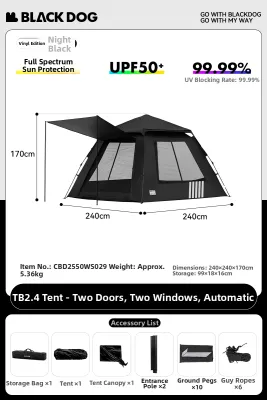
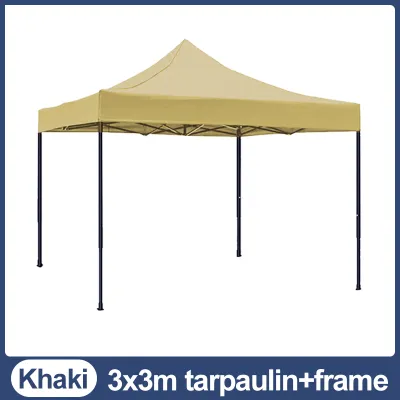
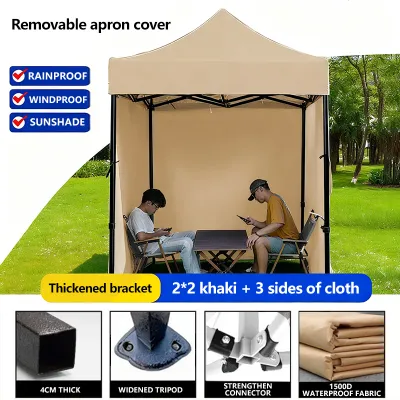
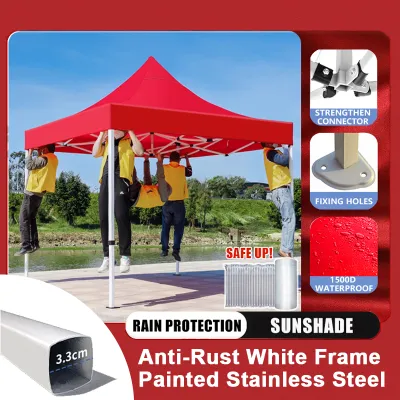
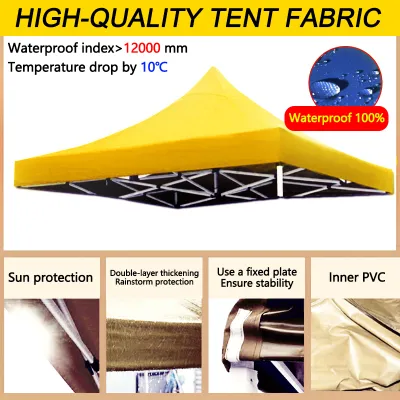
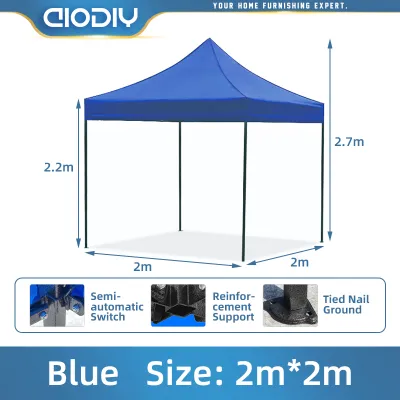
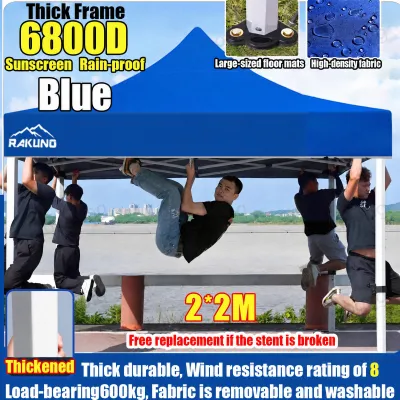
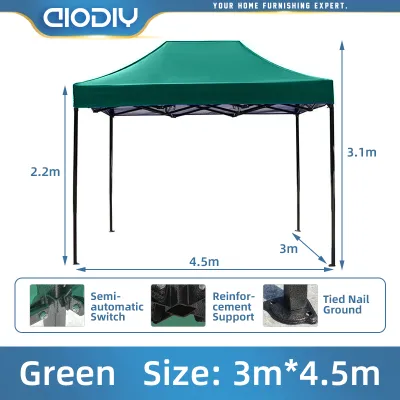
Prices are valid at publication and may change. Please refer to the product page for the latest price.
Beyond the floor footprint, evaluate the peak height and the slope of the tent walls. Dome-style foldable tents often have steep, sloping walls that significantly reduce the usable headroom near the edges of the tent. If your group plans to spend time sitting up, playing card games during a rainy afternoon, or changing clothes inside, a cabin-style tent with near-vertical walls will offer much more functional space than a dome tent with the exact same floor dimensions.
Calculating Floor Space for Campers and Sleeping Pads
To determine the exact footprint your group needs, start by measuring the sleeping gear you actually plan to use. Sleeping pads, self-inflating mattresses, and elevated cots vary widely in size. A standard single camping pad is typically about 50 to 65 centimeters wide, but luxury air mattresses or double-sized pads can easily take up the space of two or more standard pads. Write down the dimensions of every pad your group will use and add them together to establish your baseline floor requirement.

Sleeper size and individual movement habits also play a major role in how much width you need per person. Active sleepers who toss and turn throughout the night require a wider buffer zone to avoid bumping into their tent mates. Furthermore, thicker air mattresses raise you higher off the ground, bringing your body closer to the sloping walls of the tent where the interior width is naturally narrower. If members of your camping group are taller or prefer extra elbow room, you must factor in these individual needs when calculating your total required width.
Do not forget to incorporate buffer space between individual sleeping zones. Placing pads directly against each other makes it difficult to move around at night without stepping on someone else’s gear. Leaving a gap of 10 to 15 centimeters between pads, as well as a clear pathway to the tent door, ensures that late-night bathroom trips do not disrupt the entire group. You can easily test this at home by laying out your group’s sleeping pads on the floor and measuring the total bounding box required to accommodate them comfortably.
Adjusting for Gear Storage and Indoor Movement
A successful camping trip requires keeping your gear organized and protected from the elements. When choosing a foldable tent outdoor model, you must decide which items need to stay inside the main sleeping cabin. Valuables, electronics, dry clothing, and food should always be kept secure inside the tent to protect them from moisture, insects, and local wildlife. If you store these items at the foot or sides of your sleeping pads, they will quickly consume valuable floor space, meaning you will need to size up your tent accordingly.
To maximize interior space, look for tents that feature built-in storage solutions like gear lofts, wall pockets, and vestibules. Vestibules are particularly valuable in tropical environments. These extended rainfly sections act as an outdoor mudroom, providing a sheltered area outside the main door where you can store muddy hiking boots, wet outerwear, and bulky backpacks. Utilizing a vestibule keeps the interior of your tent clean, dry, and dedicated entirely to sleeping and relaxation.
If your group plans to camp for multiple days or expects to spend significant time inside the tent due to unpredictable weather, consider sizing up even further. Having enough room to stand up, change clothes comfortably, or store a small cooler can transform a cramped shelter into a highly functional basecamp. For groups traveling with children or pets, the extra floor space is almost always worth the slight increase in tent size and weight.
Verifying Folded Dimensions and Campsite Clearance
Before finalizing your purchase, you must ensure that the tent is practical to transport and set up. Foldable tents, especially “instant” or “pop-up” models, are designed for rapid deployment, but this convenience often comes at the cost of a larger packed size. Unlike traditional tents that disassemble into small, compact bundles, foldable tents often pack down into long, flat discs or lengthy carrying bags. Measure your vehicle’s trunk or cargo area to verify that the packed tent will fit alongside your coolers, bags, and other camping essentials.
Once you arrive at your destination, the physical footprint of the tent must match the available space at your campsite. Many established campgrounds, especially in forested or mountainous regions, feature designated wooden pitching platforms or cleared dirt clearings. Your chosen tent must fit entirely within these designated areas. Remember that the total footprint is not just the tent floor itself; you must also account for the space required to extend guy lines, drive stakes into the ground, and secure the rainfly.
Additionally, consider the physical effort required to transport the tent from your vehicle to the actual pitch site. If you are car camping where you can park directly next to your campsite, a heavy, bulky tent is perfectly manageable. However, if you must carry your gear along a trail, down a beach, or across a grassy field, a heavy foldable tent with basic carry handles can quickly become exhausting to transport. Always check the packed weight to ensure it aligns with your group’s physical capabilities and carrying methods.
Common Tent Sizing Mistakes to Avoid
One of the most common mistakes campers make is assuming that all brands adhere to the same sizing standards. A “4-person” tent from a budget brand may feel significantly smaller than a “4-person” tent from a premium outdoor manufacturer. Never rely on the generic person rating alone; always cross-reference the exact floor dimensions and peak height before making a decision.
Another frequent oversight is failing to account for seasonal gear variations. While warm-weather camping in coastal areas requires minimal bedding, high-altitude camping in cooler mountain regions demands thicker sleeping bags, extra blankets, and bulkier cold-weather clothing. This extra gear takes up physical space inside the tent, quickly turning a cozy setup into a cramped and disorganized environment.
Finally, be cautious of choosing an excessively large foldable tent without considering setup complexity and wind resistance. While a massive tent offers unmatched interior comfort, it can be incredibly difficult to pitch in confined campsites with limited clearance. Larger tents also act like sails in high winds; if you choose an oversized model, you must verify that it includes robust guy lines and sturdy stakes to secure the structure safely during sudden tropical gusts.

Community discussion
Share your experience or ask a question. Comments are reviewed before publication.