
To find the right gym ball size for your height, you must ensure that when you sit upright on the fully inflated ball, your hips and knees bend at a 90-degree angle with your feet flat on the floor. While general height charts offer a helpful starting point, the ultimate fit depends on your individual body proportions and the specific manufacturer’s guidelines. Choosing the correct diameter ensures you maintain proper posture, maximize core engagement, and stay safe during your workouts.
Quick Guide to Gym Ball Sizing
The most reliable way to determine if a gym ball fits your body is the 90-degree knee angle rule. When sitting upright on the ball, your thighs should be parallel to the ground, forming a right angle at both your hips and knees. This position keeps your center of gravity stable and prevents unnecessary strain on your lower back and joints.
While general height brackets exist, you should always prioritize the specific sizing instructions provided by the manufacturer. Different brands use varying PVC thicknesses and elastic properties, which can slightly alter how much the ball compresses under your weight.
Products mentioned in this guide
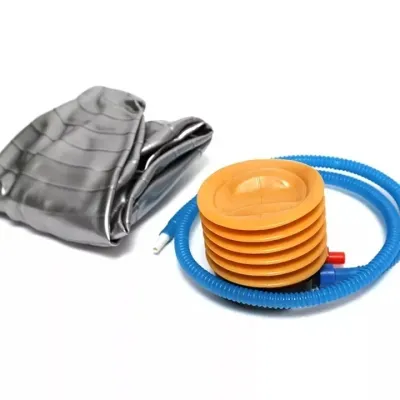
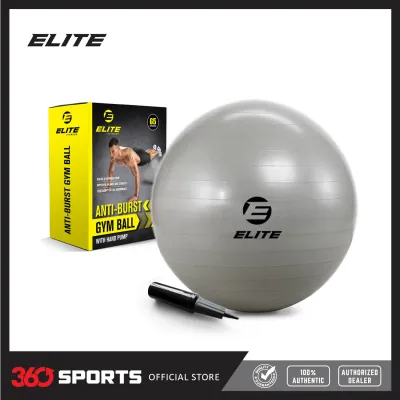
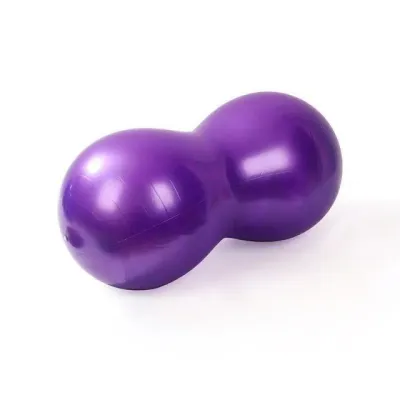
Prices are valid at publication and may change. Please refer to the product page for the latest price.
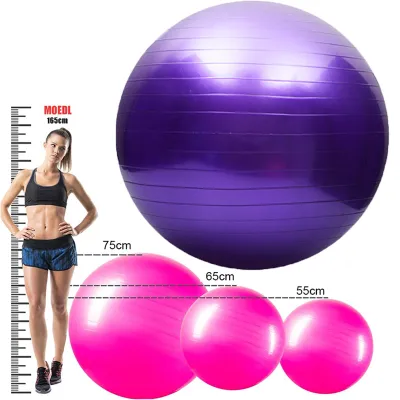
In the fitness market, gym balls are typically categorized by their inflated diameter, with the most common sizes being 55 centimeters, 65 centimeters, and 75 centimeters. Selecting the correct category is the first step toward a safe and effective home workout routine.
Why the Correct Diameter Matters for Your Form
Using a gym ball that is too large or too small can quickly compromise your exercise form and lead to physical discomfort. If the ball is too small, your knees will sit higher than your hips, tilting your pelvis backward and placing excessive pressure on your lower lumbar spine. Conversely, a ball that is too large forces your hips into an awkward upward tilt, making it difficult to keep your feet flat on the floor.

Proper sizing is also essential for optimal core muscle activation. When the ball matches your height, your deep stabilizing muscles must work efficiently to maintain balance without overcompensating in other areas. An incorrect size reduces this training effect, turning a core-strengthening exercise into an unstable struggle.
Stability and balance control are particularly critical during dynamic movements or when incorporating light weights. A well-fitted ball provides a predictable, supportive base that allows you to focus on your movement patterns rather than constantly fighting to avoid slipping off, which is especially important when exercising in warm, humid conditions where sweat can affect your grip.
General Height-to-Size Reference Brackets
While you must always verify the sizing on the product packaging, general industry standards offer a helpful starting point for your purchase. These brackets align your overall height with the corresponding ball diameter to narrow down your options.
- 55 cm Ball: Generally suitable for individuals with heights ranging from approximately 4 feet 11 inches to 5 feet 3 inches (around 150 to 160 centimeters).
- 65 cm Ball: Typically fits users between 5 feet 4 inches and 5 feet 10 inches (around 162 to 178 centimeters), making it the most common size for home gyms.
- 75 cm Ball: Usually recommended for taller individuals between 5 feet 11 inches and 6 feet 3 inches (around 180 to 190 centimeters).
Keep in mind that inflation levels directly impact these measurements. Under-inflating a large ball to make it smaller, or over-inflating a small ball to make it taller, alters the material tension and ruins the intended support. Always check the specific brand’s sizing chart before finalizing your order on any online marketplace.
How to Perform the 90-Degree Fit Test
Once your gym ball arrives and is inflated according to the manufacturer’s instructions, you can perform a simple physical check to confirm the fit. Position the ball near a wall or a full-length mirror so you can safely observe your posture during the test.
Sit comfortably on the center of the ball with your feet flat on the floor, spaced about shoulder-width apart. Look at your reflection or have someone check your profile to evaluate the alignment of your hips, knees, and ankles.
Your hips should be level with or slightly higher than your knees, creating a clean 90-degree angle. If your knees point upward toward your chest, the ball is either under-inflated or too small for your frame. If your heels lift off the floor to keep you balanced, the ball is too large.
If the alignment is slightly off, you can adjust the air volume within the manufacturer’s safe limits to fine-tune the height. However, never exceed the maximum recommended diameter printed on the ball or the packaging, as this can compromise the material integrity.
Adjusting for Body Proportions and Specific Uses
Standard height charts assume average body proportions, but individual differences in limb length can affect your ideal gym ball size. If you have exceptionally long legs relative to your torso and your height falls on the borderline between two sizes, choosing the larger ball is generally more comfortable.
Your intended use also plays a major role in selecting the right diameter. If you plan to use the gym ball as an active office chair alternative to sit at a standard desk, you may need to size up. A slightly larger ball, such as a 65-centimeter ball instead of a 55-centimeter one, helps you reach typical desk heights without slouching.
For targeted core training, physical therapy, or balance exercises, staying true to your exact height bracket is crucial. Sizing up in these scenarios can make the base of support too wide and stable, reducing the instability needed for core engagement, while sizing down can make exercises excessively difficult and unsafe.
Safety and Material Specs to Check Before Buying
When shopping for a gym ball, safety features are just as important as getting the right size. Look for products explicitly labeled as “anti-burst” or “slow-deflate.” These materials are designed to release air slowly if punctured by a sharp object, preventing a sudden collapse that could lead to injury.
Always verify the maximum weight capacity limits specified by the manufacturer. This limit must accommodate your body weight plus any additional equipment, such as ankle weights or dumbbells, that you plan to use during your workouts.
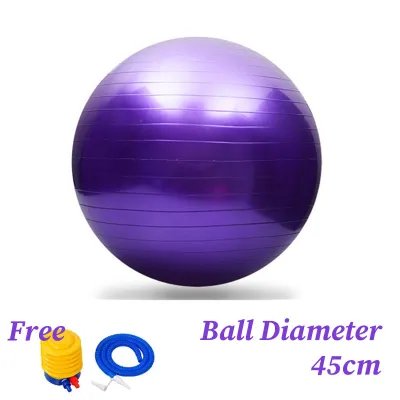
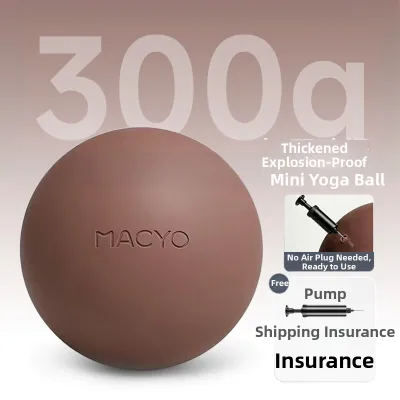
Be sure to check what accessories are included in the package. A reliable hand pump, inflation straw, and a measuring tape or sizing template are highly beneficial for achieving the correct inflation diameter. Avoid generic listings that make unverified weight claims without clear material specifications.
Frequently Asked Questions (FAQ)
Can I just buy a larger ball and under-inflate it to fit my height?
No, under-inflating a larger ball to make it sit lower is not recommended. An under-inflated ball becomes excessively soft and squishy, which significantly reduces its stability and causes your body to sink too deeply. This lack of support places uneven stress on the PVC material and can lead to poor posture and joint strain during exercises. It is always safer and more effective to purchase the correct diameter and inflate it to its intended firmness.
How do I know if my gym ball is fully inflated to its correct size?
To ensure your gym ball is inflated to its proper diameter, use the wall-mark method during inflation. Measure the target height (such as 65 centimeters) against a wall and make a light pencil mark. Inflate the ball until the top reaches this mark. Because new PVC material is stiff, you may need to inflate the ball to about 80% capacity, let it rest for 24 hours to stretch, and then add the remaining air to reach the final specified size.

Community discussion
Share your experience or ask a question. Comments are reviewed before publication.