
Setting up a home training space for Muay Thai requires careful consideration of your personal protective gear, starting with what goes directly on your hands. To train safely at home, you need a hand wrap that balances wrist stability for heavy bag strikes with the flexibility required for clinching and catching drills. For most home practitioners, a semi-elastic, 180-inch Mexican-style hand wrap is the most versatile choice. It conforms closely to the unique contours of your hand, stays secure during dynamic movements, and fits comfortably inside standard Muay Thai gloves.
Understanding Muay Thai Hand Wrap Requirements
Muay Thai training demands a different level of hand and wrist articulation than traditional Western boxing. While boxing primarily focuses on closed-fist punching, Muay Thai incorporates open-hand techniques, clinching, elbow strikes, and catching kicks. Your hand wraps must accommodate these diverse movements without cutting off circulation or restricting your grip.
When you clinch or catch a kick during home drills, your hands must transition quickly from a tight fist to an open, grasping posture. A wrap that is too rigid will restrict this movement, making it difficult to secure a proper grip on a training partner or a dummy. Conversely, a wrap that is too loose will fail to protect your wrist when you transition back to striking the heavy bag. The ideal wrap provides dynamic tension, offering support when your hand is closed and yielding slightly when your hand opens.
Products mentioned in this guide
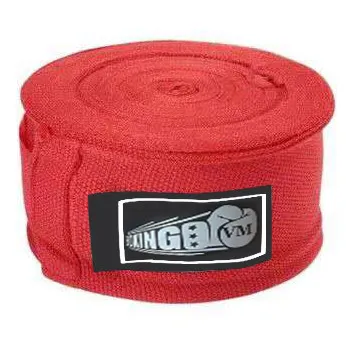
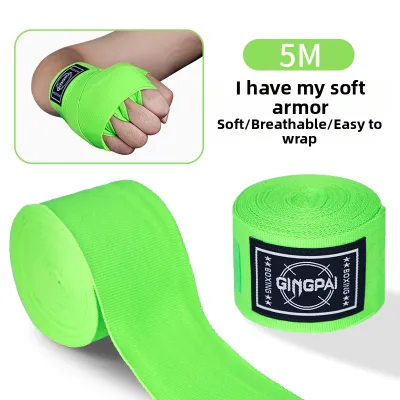
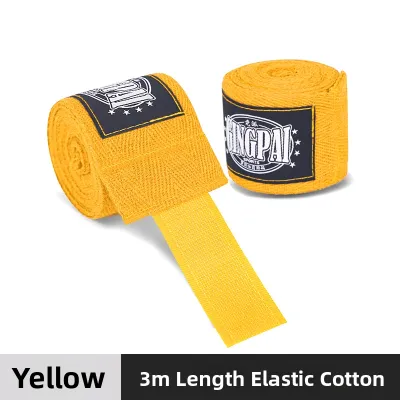
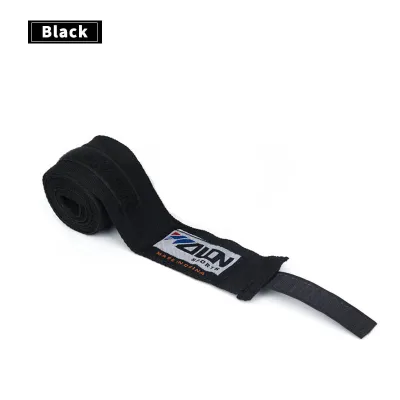
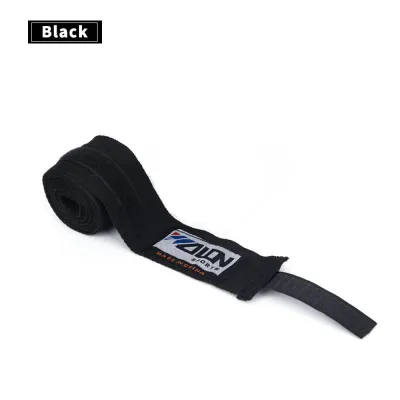
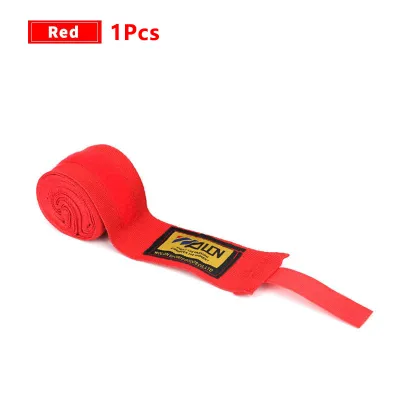
Prices are valid at publication and may change. Please refer to the product page for the latest price.
Knuckle protection is another critical factor, especially for home setups where you might be striking a dense heavy bag without the immediate feedback of a trainer. Home training bags often settle over time, becoming incredibly hard near the bottom. Your hand wraps must allow you to build a sufficient protective pad over your knuckles to absorb these impacts and prevent bruising or skin tears.
Finally, you must consider how the wrapped hand fits inside your gloves. Muay Thai gloves generally feature a more distributed weight profile and a shorter, more flexible cuff than boxing gloves to facilitate clinching. This design means the internal volume can be tighter around the back of the hand. Your wrapping style and material choice must provide adequate protection without creating bulk that prevents your hand from closing fully inside the glove.
Comparing Hand Wrap Materials and Types
Selecting the right hand wrap material directly impacts how much support your wrists receive and how comfortable your hands remain during long, sweaty home sessions. The material determines how the wrap stretches, how it handles moisture, and how long it will last under regular washing.

Traditional Cotton vs. Elastic Blends
Traditional cotton hand wraps, often referred to as herringbone or canvas wraps, are made from 100% non-stretch cotton. These wraps are highly valued for their durability and the rigid, unyielding support they offer. Once wrapped tightly, they lock the wrist and knuckles into a solid structure, which is excellent for heavy bag work where maximum wrist stabilization is required. However, because they do not stretch, they require precise wrapping techniques. If wrapped too tightly, they can easily restrict blood flow; if wrapped too loosely, they will unravel quickly during active movement. For Muay Thai, their lack of give can make clinching drills feel stiff and uncomfortable.
Elastic blends, commonly known as Mexican-style wraps, combine cotton with synthetic fibers like spandex or polyester. This blend creates a semi-elastic fabric that stretches slightly as you wrap your hands. This elasticity allows the wrap to contour precisely to the shape of your hand, knuckles, and wrist, creating a custom-fit feel. When you open your hand to clinch, the material stretches slightly to accommodate the movement, and when you close your fist, it snaps back to provide firm support. This adaptability makes semi-elastic wraps highly popular for Muay Thai training. They are also more forgiving for beginners to apply, as the stretch helps maintain consistent tension throughout the wrapping process.
Quick Wraps and Gel Inner Gloves
For those looking to save time during quick home workouts, quick wraps or gel inner gloves offer a slip-on alternative to traditional fabric wraps. These products typically feature a glove-like design with a neoprene or fabric body and a gel pad positioned over the knuckles, often accompanied by a short attached wrist strap.
While quick wraps are highly convenient and take only seconds to put on, they have notable limitations for dedicated Muay Thai training. The gel padding provides decent impact absorption for light speed-bag or shadowboxing sessions, but it lacks the customized, layered structure of a hand wrap. Traditional wraps allow you to direct extra material to specific areas, such as adding extra loops around a weak wrist or building a thicker pad over injured knuckles. Quick wraps do not offer this level of customization.
Furthermore, the wrist support provided by quick wraps is generally inferior to that of a full-length fabric wrap. The short straps on most slip-on models cannot provide the multi-layered binding necessary to keep the wrist joint aligned during heavy impacts. If you are training on a heavy bag at home, relying solely on quick wraps may increase the risk of wrist strain. They are best reserved for light, non-impact workouts or shadowboxing sessions when time is limited.
Selecting the Right Length and Closure System
The dimensions and fastening mechanisms of your hand wraps are just as important as the material. Choosing the wrong length can leave your hands under-protected or overly bulky, while a poor closure system can ruin a workout by coming undone mid-combination.
Hand wraps generally come in two standard lengths: 120 inches (approximately 3 meters) and 180 inches (approximately 4.5 meters). For the vast majority of adults practicing Muay Thai, the 180-inch length is highly recommended. The extra length is necessary to properly wrap between each finger, secure the thumb, and build a substantial knuckle pad while still leaving enough material to wrap the wrist multiple times. A 120-inch wrap is typically only suitable for children or individuals with exceptionally small hands, as it rarely provides enough material to cover all critical joint areas adequately.
The closure system is almost universally a hook-and-loop (velcro) fastener. When evaluating wraps, pay close attention to the width and quality of this fastener. A wide, high-quality hook-and-loop strip ensures that the wrap stays anchored to your wrist even when rubbing against the inner lining of your glove. Traditional tie-up wraps exist but are highly impractical for home training, as they require another person to help tie them securely.
Another critical design feature is the thumb loop. This loop anchors the start of the wrap to your hand. Look for wraps with a flat, reinforced thumb loop. Some cheaper options feature a twisted or bulky seam at the loop, which can press painfully into the web of your thumb once your glove is tightened. A flat seam ensures comfort and prevents distraction during training.
Building Your Home Training Shortlist
To choose the right hand wraps for your home setup, you should match the product specifications to your specific training routine and environment. Home training in the Philippines presents unique challenges, particularly regarding heat and humidity. High humidity means your gear will absorb sweat quickly, making breathability and washability top priorities.
If your home routine consists primarily of heavy bag work and power striking, prioritize 180-inch semi-elastic wraps with a higher cotton percentage (around 90% cotton and 10% spandex). This blend offers the breathability of cotton to handle heavy sweating while retaining enough stretch to support your wrists during high-impact strikes. For sessions focused on shadowboxing, footwork, and light clinch flow, a lighter, highly elastic wrap can provide comfortable joint warmth and light stabilization without adding unnecessary bulk.
Before purchasing from an online marketplace or local sports store, perform a quick specification check. Verify that the product description explicitly states a length of 180 inches (or 4.5 meters) and mentions a semi-elastic or “Mexican-style” blend. Look closely at product images to check the stitching around the thumb loop and the velcro closure; double-stitched edges are a strong indicator of durability.
Be aware of red flags that suggest poor quality. Avoid wraps described as “one-size-fits-all” without a specified length, as these are often too short. Watch out for raw, unhemmed edges, which will fray rapidly after a single wash cycle. Extremely thin materials should also be avoided, as they fail to provide adequate cushioning and tend to bunch up uncomfortably inside your gloves.
Maintaining and Caring for Your Hand Wraps
Proper maintenance is essential to preserve the elasticity, hygiene, and structural integrity of your hand wraps, especially in a warm, humid tropical climate. Neglecting your wraps can lead to bacterial growth, unpleasant odors, and rapid material degradation.
After every training session, do not leave your wet wraps crumpled inside your gym bag or gloves. This creates a breeding ground for mold and mildew. Instead, hang them up immediately to air dry. When it comes to washing, hand washing in cool water with a mild detergent is the gentlest method to preserve the elastic fibers. If you prefer using a washing machine, always place your wraps inside a mesh laundry bag. This prevents them from tangling around the agitator or other clothes, which can stretch out the fabric and ruin the hook-and-loop fasteners. Fasten the velcro closures to themselves before washing to prevent them from snagging the wrap fabric.
Drying your wraps correctly is crucial in humid conditions. Hang them flat or drape them over a drying rack in a well-ventilated indoor area or in partial shade. Avoid exposing them to direct, intense tropical sunlight for extended periods, as extreme heat can break down the synthetic elastic fibers over time, causing the wraps to lose their stretch. Never put semi-elastic wraps in a hot clothes dryer, as this will shrink the cotton and degrade the elastic components.
Regularly inspect your wraps for signs of wear. Over time, the elastic fibers will inevitably break down, leaving the wraps feeling limp and offering less support. If you notice the fabric fraying significantly, the hook-and-loop fastener losing its grip, or the wrap failing to snap back after being stretched, it is time to replace them. Keeping two or three pairs in rotation is an excellent way to ensure you always have a clean, dry set ready for your next home session.
Frequently Asked Questions (FAQ)
Can I use standard boxing wraps for Muay Thai clinching?
Yes, you can use standard boxing wraps, but semi-elastic (Mexican-style) wraps are highly preferred. Standard non-stretch cotton boxing wraps can feel overly restrictive when you try to open your hands to secure a clinch or catch kicks. Semi-elastic wraps provide the necessary give to allow comfortable hand opening and closing while still maintaining solid wrist support when you form a fist to strike.
Do I need hand wraps if I am only shadowboxing at home?
While not strictly mandatory for non-impact shadowboxing, wearing hand wraps is highly beneficial. Wrapping your hands during shadowboxing helps build muscle memory for how your hands will feel inside your gloves. It also provides light wrist stabilization, which helps you maintain proper fist alignment as you throw punches into the air, reducing the risk of minor joint strain from hyperextension.

Community discussion
Share your experience or ask a question. Comments are reviewed before publication.