
Choosing a kite for your child is more than just picking a colorful design off a shelf; it is about finding an outdoor toy that balances aerodynamics, physical safety, and structural durability. For a child, a successful flight builds confidence and encourages physical activity, while a poorly designed kite that constantly dives or breaks leads to immediate frustration. To ensure a rewarding experience, focus on kites that offer high stability, minimal assembly, and lightweight frames that match your child’s physical strength. Whether you are exploring a traditional vietnam kite for kids or a modern, frameless parafoil, understanding how materials and shapes interact with local winds is the key to a successful family outing.
Quick Guide: What to Look for in a Kid-Friendly Kite
When selecting a first kite, parents should prioritize three core factors: ease of assembly, material durability, and manageable pull. A child’s kite must be simple to put together, ideally requiring only a few clicks of a frame or no assembly at all, as is the case with frameless parafoils. The materials must be robust enough to survive high-velocity impacts with the ground; flexible fiberglass frames and ripstop polyester sails are the industry standards for durability. Finally, the size of the kite must match the child’s weight and strength, ensuring they can hold the line comfortably without being pulled or experiencing painful line tension.
Local wind conditions are just as critical as the kite’s physical build. A heavy, intricate kite will refuse to launch in a gentle park breeze, while a lightweight, fragile kite will rapidly break or spin out of control in strong coastal winds. For children, the goal is always stability and forgiveness over high-speed performance or complex maneuvers. A stable kite stays aloft with minimal input, allowing young flyers to learn the basics of wind direction, line tension, and coordination without constant frustration.
Products mentioned in this guide
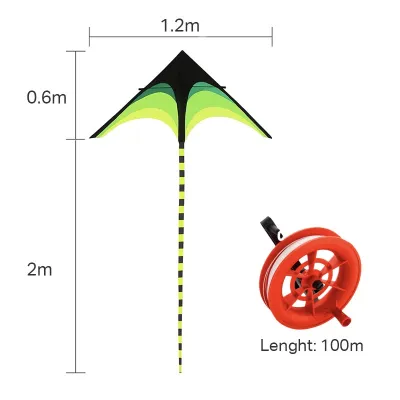
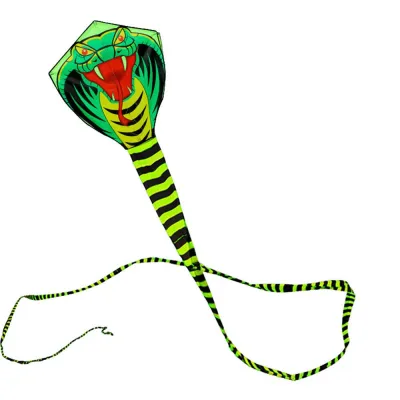
![[deveodo] Kids Adults 3D Kite Easy to Fly Heavy Duty Outdoor Beach Park Lawn Beginner-friendly Family Toddlers Boys Girls Colorful Grids Flying Kite Toy](https://img.lazcdn.com/g/p/80c574bb3bc5e715570afaf05a80ea92.jpg_400x400q80.jpg_.webp)
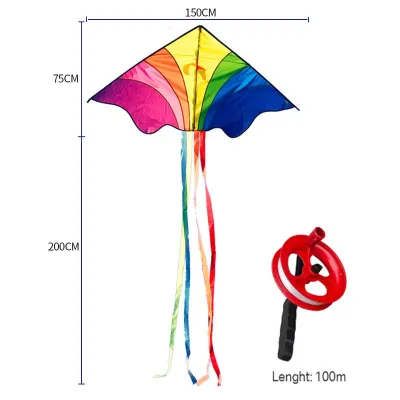
![[🇵🇭 Stock&COD] Long Tail Rainbow Kite With Kite String 50m Outdoor Kites Flying Toys Kite For Children Kids](https://img.lazcdn.com/g/p/50b886e6d7993578c3d9b9d8a22141a9.jpg_400x400q80.jpg_.webp)

Prices are valid at publication and may change. Please refer to the product page for the latest price.
Essential Features to Check Before Buying a Vietnam Kite for Kids
To make an informed purchase on an online marketplace or at a local specialty store, you must understand the components that make up a kite. Evaluating these features beforehand ensures the kite is safe, durable, and suited for your environment.

Frame Materials
The skeleton of a kite, known as its spars, determines its shape, weight, and flexibility. Selecting the right frame material directly impacts how well the kite survives the learning curve of a young flyer.
- Fiberglass: This is the premier choice for children's kites. Fiberglass rods are highly flexible, relatively lightweight, and incredibly resilient against high-impact crashes. They bend without snapping, making them perfect for beginners who are still mastering the art of launching and steering. Solid fiberglass rods offer maximum durability, while hollow fiberglass tubes provide a lighter weight profile for lighter breezes.
- Carbon Fiber: Carbon fiber is exceptionally lightweight and rigid, offering top-tier performance in low-wind conditions. However, it is significantly more expensive and can be brittle under sudden, sharp impacts, making it less practical for young children who are prone to crashing their gear.
- Wood and Bamboo: Traditional materials like wood or bamboo are common in classic artisan builds, including many traditional Vietnamese designs. While they offer an authentic, organic feel and excellent natural flexibility, they are susceptible to splintering, snapping upon hard impact, and warping if exposed to high humidity or moisture.
Sail Fabrics
The sail captures the wind to generate lift, meaning its fabric must be both lightweight and tough enough to resist tearing when dragged across grass, sand, or branches.
- Ripstop Nylon and Polyester: These synthetic fabrics are woven with a reinforcing technique that makes them highly resistant to tearing and ripping. If a small puncture occurs, the grid pattern prevents the tear from spreading. They are also water-resistant, vibrant, and highly durable under intense tropical sun exposure.
- Paper and Thin Plastic: Often found in ultra-low-cost, mass-produced kites, these materials are highly fragile. A single rough landing on dry grass or a sudden gust of wind can tear the sail completely, rendering the kite useless. They also degrade quickly when exposed to moisture or humidity.
Line and Reel Quality
The connection between your child and the kite is the flying line, which must be managed safely to prevent tangles and physical injury.
- Tangle-Free Line: Look for braided polyester or nylon lines, which are strong and less prone to looping into tight knots. Avoid cheap, twisted cotton strings that fray easily under tension.
- Child-Sized Grip Reels: The reel should fit comfortably in small hands. Hoop reels or ergonomic handles with built-in winding mechanisms allow children to reel line in and out without pinching their fingers.
- Safety Warning: Never use metallic, abrasive, or extremely sharp lines (such as glass-coated strings used in competitive fighter kite games). These can cause severe lacerations, cut through other lines, and present extreme electrical hazards if they contact overhead wires.
Tails and Stability
Tails are not merely decorative; they serve a vital aerodynamic purpose by adding drag and balance to the kite’s flight profile.
- Adding Drag: A tail adds weight and drag to the lower end of the kite, which helps keep the nose pointed upward into the wind. This prevents the kite from spinning, rolling, or diving unexpectedly.
- Single-Line Kites: For single-line kites, a long ribbon tail or a series of small bows can transform an unstable flyer into a highly cooperative one. Some modern designs are aerodynamically balanced to fly without a tail, but having an attachable tail option is always beneficial for gusty conditions.
Matching Kite Designs to Your Child’s Age and Skill
Choosing a kite that matches your child’s developmental stage prevents frustration and ensures safety. The table below outlines a general decision matrix for parents.
| Age Group | Recommended Kite Type | Ideal Wind Condition | Supervision Level | Price Band (PHP) |
|---|---|---|---|---|
| Toddlers (Ages 3–5) | Lightweight Single-Line, Sled, or Small Delta | Light Breeze (6–11 km/h) | Full Active Supervision | ₱150 – ₱400 |
| School-Age (Ages 6–9) | Medium Delta, Diamond, or Small Parafoil | Gentle to Moderate Breeze (12–19 km/h) | Moderate Supervision | ₱400 – ₱1,000 |
| Older Kids (Ages 10+) | Large Delta, Dual-Line Stunt, or Cultural Designs | Moderate to Fresh Breeze (20–28 km/h) | Minimal/Independent | ₱1,000 – ₱2,500+ |
Toddlers and Preschoolers (Ages 3–5)
At this early developmental stage, children lack the coordination and physical strength to manage high-pulling forces or complex steering. The focus should be entirely on lightweight, small single-line kites, such as miniature sleds or simple delta shapes, that launch effortlessly in the lightest breezes.
For these young flyers, parents will do the vast majority of the assembly, launching, and wind-tracking. The child’s joy comes from holding the reel, feeling the gentle tug of the wind, and watching the colorful shape dance in the sky. Keep the line short—usually under 15 meters—so the kite remains close, easy to manage, and less likely to tangle in nearby obstacles.
School-Age Beginners (Ages 6–9)
Children in this age range are developing better hand-eye coordination, spatial awareness, and physical strength. They can transition to slightly larger delta or diamond kites that require basic active steering and line management. This is the perfect age to teach them how to read the wind by watching leaves rustle or feeling the air on their cheeks.
At this stage, kids can learn to launch the kite themselves using the “two-person launch” method, where one person holds the kite downwind and releases it as the other pulls the line taut. They can also practice letting out more line to reach higher altitudes and retrieving it systematically. Parents should still supervise closely to assist with sudden wind shifts or tangles, but the child can take primary control of the reel.
Older Kids and Enthusiasts (Ages 10+)
Older children possess the physical capability and cognitive skills to handle more challenging setups. They can successfully fly larger single-line kites that generate significant pull, or transition to dual-line stunt kites (also known as sport kites). Dual-line kites allow the flyer to actively steer the kite left, right, and in loops, requiring rapid reflexes and continuous spatial calculations.
This age group is also well-suited for exploring traditional and cultural designs, such as intricate bamboo-framed kites. These models require careful assembly, precise bridle adjustments, and a deeper understanding of wind dynamics. Flying these advanced styles teaches patience, physics, and appreciation for global craftsmanship.
Recommended Kite Styles for Family Outdoor Adventures
Different kite designs behave uniquely in the air. Understanding these styles helps you select the right match for your family’s typical outdoor destinations, whether you are visiting a local park or a windy coastal beach.
Delta and Diamond Kites (Best for First-Time Flyers)
The classic triangular delta and the traditional four-cornered diamond are the most reliable shapes for beginners. Their aerodynamic designs naturally channel air to create stable lift, making them highly forgiving even in inconsistent, gusty winds.
These kites typically require very simple assembly, usually involving inserting a single crossbar (spreader) to tension the sail. They fly beautifully in light to moderate breezes and are excellent for teaching children the basic mechanics of flight. In stronger winds, simply attach a long ribbon tail to the bottom loop to prevent the kite from swaying or diving.
Soft Parafoils (Best for Travel and Quick Setup)
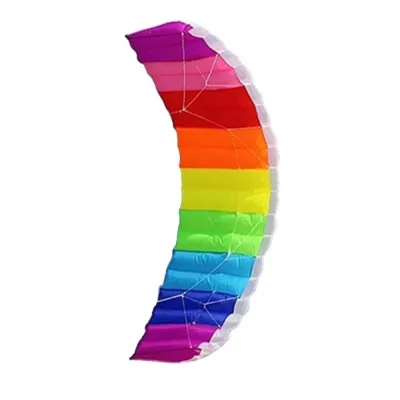
Parafoils are completely frameless kites modeled after parachutes. They rely on the wind to inflate internal pockets (cells), which creates an airfoil shape that generates lift. Because they have no rigid spars, there are absolutely no rods to break during hard crashes, making them virtually indestructible.
These kites are incredibly convenient for family trips because they fold down into a tiny storage pouch that fits easily into a backpack or beach bag. They require zero assembly—simply unpack, attach the flying line, and launch. However, parents should note that larger parafoils can capture a large volume of air and pull surprisingly hard in strong winds, so always match the kite’s size to your child’s physical capacity.
Traditional and Cultural Designs (Exploring Vietnam Kites for Kids)
For families looking to combine outdoor play with cultural appreciation, exploring a traditional vietnam kite for kids is an enriching option. In Vietnam, kite flying (thả diều) is a deeply rooted cultural tradition, famous for unique designs like the diều sáo (flute kite), which features lightweight bamboo flutes attached to the frame that emit a beautiful, haunting hum as the wind passes through them.
While authentic, artisan-crafted Vietnamese flute kites are delicate and require expert handling, modern manufacturers produce kid-friendly adaptations of these cultural styles. These adapted models utilize durable synthetic fabrics instead of fragile paper, flexible fiberglass or treated bamboo frames, and simplified single-line setups. They allow children to experience the unique aesthetics and flying characteristics of traditional Southeast Asian designs without the fragility and complex tuning of historical builds.
Safety Rules and Tips for a Successful First Flight
Kite flying is a low-risk, highly rewarding activity, but basic safety precautions are essential to prevent injuries, damage to gear, or conflicts with others. Establish clear rules before letting your child launch their kite.
- Location Selection: Always fly kites in wide-open, flat spaces free of overhead obstructions. Ideal spots include public parks, sports fields, and open beaches. Strictly avoid flying near overhead power lines, busy roads, railway tracks, airports, or dense stands of trees. If a kite does become tangled in a tree or utility pole, never attempt to retrieve it yourself; contact local utility services if power lines are involved.
- Weather Awareness: Teach your child to observe weather conditions before launching. Safe flying requires a steady breeze where leaves rustle and small branches move. Immediately cease flying and pack up the gear if you spot approaching storm clouds, lightning, or if the wind becomes violently gusty. Lightning is an extreme hazard, as a wet kite line can act as a conductor.
- Handling the Line: High-tension kite lines can cause painful friction burns or deep cuts if they slide quickly through bare hands. Instruct children never to wrap the flying line around their fingers, hands, or wrists. For larger kites or stronger winds, have your child wear lightweight protective gloves and use a reel with a secure, insulated grip handle to maintain safe control.
- Sun and Hydration: Spending hours under the open sky exposes children to intense ultraviolet radiation and heat, particularly in tropical climates like the Philippines. Always apply broad-spectrum sunblock before heading out, wear wide-brimmed hats and UV-blocking sunglasses, and bring plenty of fresh water to keep everyone hydrated throughout the day.
Frequently Asked Questions (FAQ)
What is the best wind speed for flying a child's kite?
While wind speed is technically measured in kilometers per hour, parents can easily judge suitability through visual cues. A gentle breeze where leaves and small twigs are in constant motion (typically 8 to 18 km/h) is ideal for most children’s kites. If flags are flapping fully or dust is blowing off the ground, the wind may be too strong for beginners. Always check the manufacturer’s packaging or product description, as many kites list a recommended wind range for optimal performance.
How do I fix a kite that keeps spinning in circles?
A kite that spins or dives repeatedly is usually suffering from an aerodynamic imbalance. First, inspect the frame to ensure all spars are fully inserted, symmetrical, and undamaged. Second, check that the bridle (the string harness attached to the kite body) is perfectly centered and not tangled. Finally, the most common solution is to add more drag to the bottom of the kite; attaching a tail or lengthening an existing one will stabilize the flight and keep the nose pointed upward.
Can I fly a kite at the beach in the Philippines?
Yes, beaches in the Philippines are fantastic locations for kite flying due to the steady, predictable onshore breezes. However, always prioritize safety by choosing a clear area away from crowded swimming zones, sunbathers, and beach umbrellas. Be mindful of sudden coastal gusts, keep a firm grip on the reel, and ensure the kite line does not cross paths with other beachgoers or low-flying coastal birds.

Community discussion
Share your experience or ask a question. Comments are reviewed before publication.