
Finding the right goggles with grade is essential for maintaining clear vision, safety, and confidence in the water. Whether you are navigating a busy public pool or swimming in open coastal waters, struggling with blurry vision can compromise your safety. Choosing the correct prescription swimming goggles requires a clear understanding of your optical needs, a comparison of pre-made versus custom lenses, and a careful evaluation of fit. By taking a systematic approach to your eye prescription and physical comfort, you can find a pair of goggles that provides crisp underwater vision without causing eye strain or leaks.
Understand Your Prescription and Vision Needs
Your everyday glasses prescription cannot simply be copied directly to your swimming goggles without adjustment. Water has a different refractive index than air, which naturally alters how light bends before reaching your eyes. Underwater, the water itself acts as a magnifying medium, making objects appear closer and larger than they actually are. Because of this physical phenomenon, wearing your exact land-based prescription underwater can lead to over-correction, resulting in headaches, dizziness, and spatial disorientation.
To determine the correct power for your goggles, you must first examine your current ophthalmic prescription sheet. This document typically lists three primary values for each eye: Sphere (SPH), Cylinder (CYL), and Axis. Sphere indicates the primary strength of the lens needed to correct nearsightedness (indicated by a minus sign) or farsightedness (indicated by a plus sign). Cylinder and Axis represent the correction needed for astigmatism, which is an irregular curvature of the eye’s cornea or lens.
Products mentioned in this guide
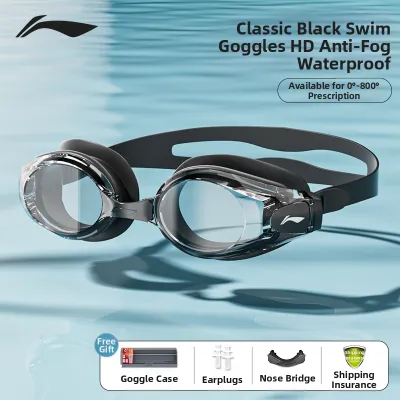
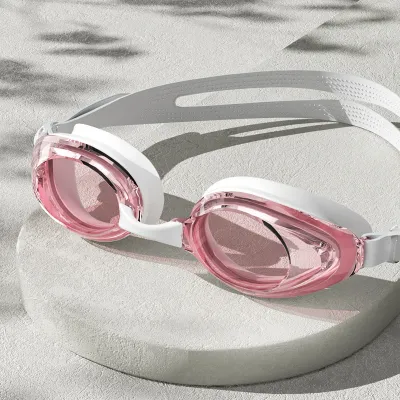
Prices are valid at publication and may change. Please refer to the product page for the latest price.
For swimmers with mild or no astigmatism, a common approach is to calculate the spherical equivalent of your prescription. This is done by taking the Sphere value and adding half of the Cylinder value. For example, if your prescription shows a Sphere of -3.00 and a Cylinder of -1.00, your spherical equivalent would be -3.50. If your Cylinder value is negligible or below -0.75, you can often focus solely on the Sphere value when selecting your swim lenses.
Once you have your base value, the general rule of thumb for pre-made goggles is to round down to the nearest weaker diopter step rather than rounding up. Because water provides a slight magnifying effect, rounding down helps prevent the eye strain associated with over-correction. If your calculated spherical equivalent is -3.75, selecting a lens power of -3.50 is generally more comfortable than choosing -4.00. Always consult with your optometrist to verify these calculations, especially if you have a high prescription or complex vision needs.
Decide Between Pre-Made and Custom Prescription Goggles
When shopping for goggles with grade, you will generally choose between two manufacturing categories: pre-made step-diopter goggles and custom-made optical goggles. Pre-made options are mass-produced with set prescription strengths, usually changing in increments of 0.50 diopters. Custom-made goggles are fabricated by optical laboratories to match your exact prescription, including precise astigmatism correction and individual pupillary measurements.

The choice between these two options depends on your budget, the complexity of your vision, and how often you swim. Pre-made goggles are highly accessible and budget-friendly, making them an excellent choice for recreational swimmers or those with simple, symmetrical prescriptions. Custom-made goggles require a higher financial investment, but they are highly recommended for swimmers with significant astigmatism, prism requirements, or highly asymmetrical vision between their left and right eyes.
Evaluating Pre-Made Step-Diopter Goggles
Pre-made step-diopter goggles are the most common entry point for swimmers seeking vision correction. When evaluating these off-the-shelf options, you must check how the manufacturer packages and sells the lenses. Some basic models package both eyes with the exact same diopter strength, which can be problematic if your eyes have different prescriptions.
To accommodate asymmetrical vision, look for modular pre-made systems. Many sports brands offer interchangeable lens kits where you can purchase the left lens, right lens, and strap assembly separately. This allows you to customize each side to match your specific eye needs without paying for a fully bespoke custom build.
If you must choose a single-strength pair of goggles for two slightly different eyes, prioritize your dominant eye or select the lower prescription strength of the two. For example, if one eye requires a -3.00 and the other requires a -3.50, opting for a uniform -3.00 pair will minimize the risk of dizziness and allow your brain to adapt more comfortably to the underwater environment.
Ordering Custom-Made Prescription Goggles
For swimmers who require precise vision correction, ordering custom-made prescription goggles is the most effective route. To initiate this process, you must provide your optical provider or specialized manufacturer with a complete, up-to-date prescription. This must include your exact Sphere, Cylinder, and Axis values for each eye, as well as your Pupillary Distance (PD).
Pupillary Distance is the measurement in millimeters between the centers of your pupils. In custom goggles, aligning the optical center of the lens directly with your pupils is critical. If the optical center is misaligned, it can create an unwanted prism effect, causing double vision, eye fatigue, and coordination issues while swimming.
When ordering custom lenses, verify that the manufacturer uses high-quality, impact-resistant materials. Polycarbonate is the industry standard for sports eyewear due to its high impact resistance and lightweight properties. Ensure that the lenses are certified for sports use to protect your eyes from accidental impacts, such as colliding with another swimmer or hitting the pool wall.
Ensure a Secure and Comfortable Fit
Even the most optically precise goggles with grade are useless if they leak water or cause painful pressure points on your face. Achieving a proper physical fit is just as important as selecting the correct lens power. A poor fit allows chlorinated or salty water to seep inside, which not only ruins your visibility but can also cause severe eye irritation.
To test the fit of a pair of goggles before entering the water, perform a simple suction test. Press the goggle eyepieces firmly against your eye sockets without putting the strap over your head. If the goggles stick to your face for a few seconds through gentle suction alone, it indicates a good seal that matches your facial bone structure. If they fall off immediately, the frame shape or gasket size is likely incompatible with your face.
Once the suction is verified, adjust the nose bridge and head strap. Many goggles come with interchangeable nose bridges of varying widths or an adjustable center piece. The nose bridge should allow the eyepieces to sit comfortably in the center of your eye sockets without pinching the bridge of your nose. The head strap should only be tight enough to keep the goggles secure during movement; overtightening the strap to force a seal will only cause headaches and deep pressure marks around your eyes.
Consider the gasket material based on your skin sensitivity and swimming habits. Silicone gaskets are highly popular because they are hypoallergenic, soft, and highly resistant to degradation from chlorine and UV exposure. This makes them ideal for the warm, humid climate of the Philippines, where materials can degrade quickly. Foam gaskets are softer and can feel highly comfortable initially, but they tend to absorb water, harbor bacteria, and wear out much faster than silicone alternatives.
Select Features for Your Swimming Environment
Your swimming environment plays a major role in determining the ideal lens features for your goggles. If you primarily swim in indoor pools or during early morning hours, clear or light-colored lenses (such as light blue or yellow) are ideal because they maximize light transmission and maintain natural visibility.
For outdoor swimming in the bright tropical sun of the Philippines, mirrored or dark-tinted lenses are highly recommended. These lenses act like sunglasses, reducing glare off the water’s surface and protecting your eyes from squinting-induced fatigue. Ensure that any outdoor goggles you select feature certified UV protection to shield your eyes from harmful ultraviolet radiation.
To maintain clear vision, pay close attention to anti-fog coatings and maintenance. Most modern goggles come with a factory-applied anti-fog coating on the inner surface of the lenses. To preserve this delicate layer, never rub or wipe the inside of the lenses with your fingers, towels, or cloths. Instead, gently rinse the goggles in clean, cool tap water after each swim to remove chlorine or salt residue, and allow them to air-dry completely in a shaded area away from direct sunlight.
Finally, choose a frame profile that matches your swimming goals. Low-profile, hydrodynamic frames are designed for competitive swimmers and triathletes to minimize water resistance during high-speed starts and turns. Cushioned, wide-view frames are larger and offer a wider field of vision, making them the preferred choice for recreational swimmers, open-water enthusiasts, and fitness swimmers who prioritize long-term comfort over absolute speed.
Frequently Asked Questions (FAQ)
Can I wear contact lenses with regular swimming goggles instead?
Wearing contact lenses while swimming carries significant health risks and is generally discouraged by eye care professionals. Pool water, lakes, and ocean water contain microscopic pathogens, such as Acanthamoeba, which can easily become trapped behind a contact lens. This environment can lead to severe corneal infections, corneal ulcers, and potential vision loss. Additionally, contact lenses can easily dislodge, warp, or wash away if water enters your goggles. Switching to dedicated goggles with grade is the safest and most reliable way to maintain clear vision while protecting your ocular health.
How do I prevent my prescription goggles from fogging up?
To prevent fogging, always avoid touching or rubbing the inner surface of the lenses, as this quickly rubs off the factory anti-fog coating. Before you enter the water, dip your goggles briefly into the pool or clean water to equalize the temperature of the lenses with the water temperature, which helps minimize condensation. If the factory coating eventually wears off over time, you can restore clarity by applying a specialized anti-fog spray or drops designed for swim gear. Apply the solution according to the manufacturer’s instructions, rinse gently, and avoid touching the lens surface.
What should I do if my prescription changes after buying custom goggles?
If your vision prescription changes after you have invested in custom goggles, check if your specific frame model features interchangeable lens inserts or removable optical pods. Some high-end custom systems allow you to swap out the individual prescription lenses while retaining the same outer frame and strap assembly, saving you the cost of a complete replacement. If your goggles are a single-piece molded design, you will likely need to purchase a new pair. Consult with your optical provider or the original manufacturer to see if they offer lens replacement services or loyalty discounts for returning customers.

Community discussion
Share your experience or ask a question. Comments are reviewed before publication.