
Finding the correct fit for a young skater requires balancing immediate safety with the reality of rapid growth. To choose the right size roller shoes or skates for girls, you must measure her feet in centimeters while she is standing, compare those measurements directly to the manufacturer’s specific size chart, and consider adjustable models that expand across multiple sizes. Avoid the temptation to buy skates that are several sizes too large, as loose boots compromise ankle support and increase the risk of falls on the pavement.
Step 1: Measure Her Feet Accurately at Home
To get a reliable baseline, you need a few simple tools: a blank sheet of paper larger than her foot, a sharp pencil or pen, a standard ruler or measuring tape, and the exact socks she plans to wear while skating. Thick athletic socks are highly recommended for skating because they cushion the foot and absorb sweat, which is especially important during warm, humid afternoons in the Philippines.
Have your child stand up straight on a flat, hard floor, such as tile or polished concrete. Do not let her sit down during this process; sitting prevents the foot from expanding under her full body weight, which can lead to an underestimation of her actual size. Place the sheet of paper flat on the floor against a wall, and have her step onto it with her heel lightly touching the wall.
Products mentioned in this guide
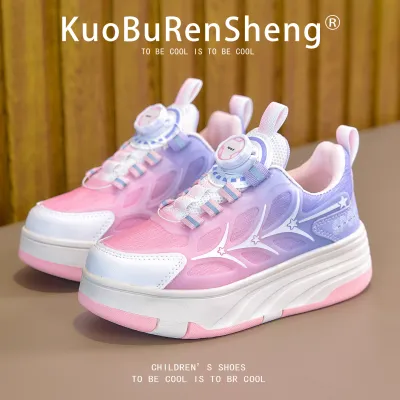
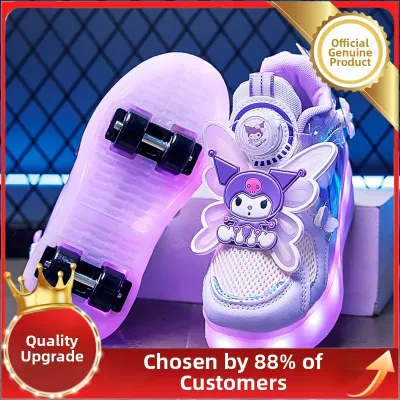
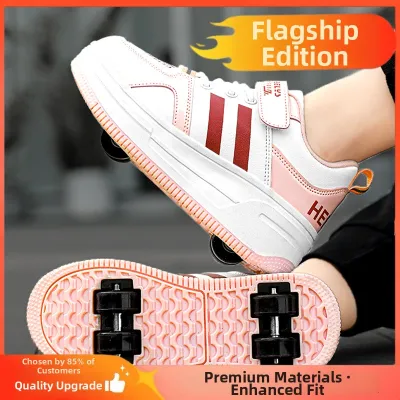
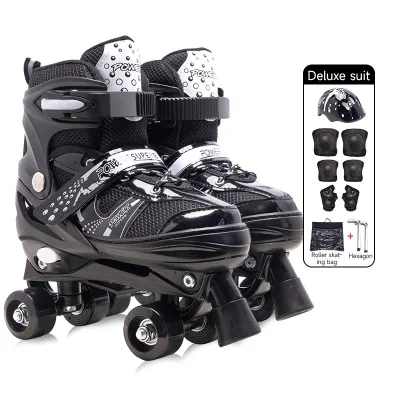
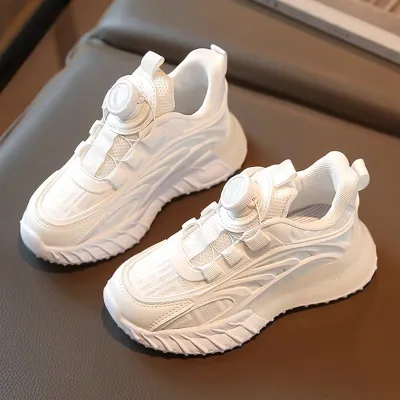
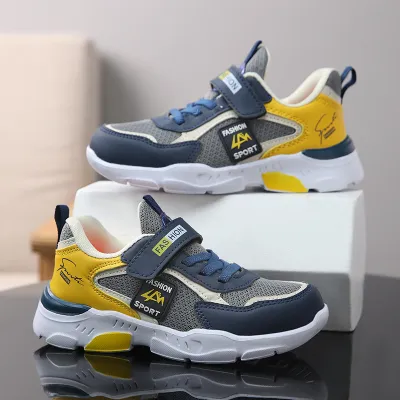
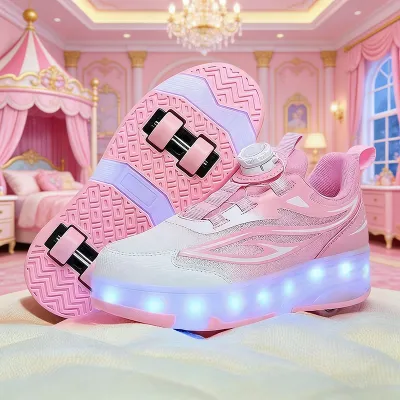
Prices are valid at publication and may change. Please refer to the product page for the latest price.
Carefully trace the outline of her foot, keeping the pen completely vertical. Tilting the pen inward or outward will distort the measurement, resulting in a skate that is either too tight or too loose. Once the outline is complete, use your ruler to measure the distance from the back of the heel to the tip of the longest toe in centimeters. Repeat this process for both feet, as it is very common for one foot to be slightly larger than the other. Always use the measurements of the larger foot to determine the correct skate size.
Step 2: Decode Roller Skate Sizing Charts
Many parents make the mistake of purchasing roller skates based entirely on their child’s everyday school shoe size. However, standard shoe sizing is not uniform across different footwear categories, and roller skates require a much more precise, snug fit to ensure stability on wheels. A skate that fits like a loose sneaker will not provide the structural support needed to balance safely.

When shopping online or in local sports stores, ignore generic age-based size recommendations. Instead, look for the manufacturer’s specific sizing chart, which should list measurements in centimeters or millimeters. Compare your child’s actual foot length to this chart to find the corresponding skate size. If her foot measurement falls between two sizes on a fixed-size skate chart, it is generally safer to choose the larger size and use a thicker sock or an additional insole to adjust the fit.
Keep in mind that sizing standards vary significantly between different brands and styles. A size 3 in one brand might correspond to a completely different foot length in another. Some brands design their boots with a narrower profile, while others offer a wider toe box. Always consult the specific fit guide for the exact model you are considering rather than relying on a universal sizing assumption.
Step 3: Evaluate Adjustable and Expandable Skate Options
For parents looking to accommodate growing feet without constantly purchasing new equipment, adjustable roller skates are an excellent solution. These skates feature a built-in expansion mechanism, typically operated by a simple push-button, a lever, or an internal screw system. This design allows the toe cap of the boot to slide forward, expanding the skate across three to four full sizes.
When evaluating adjustable options, check the mechanism’s ease of use and locking security. The adjustment system must lock firmly into place so that the boot does not shift or collapse while your child is skating. Look at the current size of your child’s foot relative to the adjustment range; if she is already at the very top of a size range, it is wiser to purchase the next size range up so she has room to grow.
While adjustable skates offer outstanding cost-efficiency, they do involve certain trade-offs compared to fixed-size skates. Because of the moving parts and overlapping plastic shells, adjustable boots can be slightly heavier and bulkier. Additionally, the ankle support on some entry-level adjustable models may not be as rigid as that of a high-quality fixed-size skate. Ensure the model you choose still features a sturdy cuff and secure strapping to protect her ankles during use. You should also match the skate style to her primary skating venue; indoor rink skating requires different wheel hardness than navigating rough outdoor asphalt in local parks.
Step 4: Perform the Physical Fit Test
Once the roller skates arrive or are tried on in a store, you must perform a physical fit test before allowing your child to skate outdoors. Have her put on her skating socks, lace up the skates completely, and secure all buckles and straps. She should stand up and bend her knees slightly into a basic skating stance to see how the boot responds to her weight. Remember that even highly secure skates cannot replace proper training, adult supervision, and essential safety gear like helmets, knee pads, and wrist guards.
Ask her to wiggle her toes inside the boot. Her toes should have enough room to move slightly without pressing hard against the front of the toe box. If her toes are curled or pinched, the skates are too small and will cause pain quickly. Conversely, if she can slide her foot forward and backward inside the boot, the skates are too large, which can lead to friction blisters and a lack of control.
Next, check the heel lock by gently holding the skate wheel while she tries to lift her heel inside the boot. Her heel should remain firmly seated at the back of the skate with minimal lifting. If the heel lifts significantly, the boot is too wide or too long, which compromises her stability. Before removing any tags or testing the skates on rough outdoor pavement, verify the return and exchange policies of your online marketplace or retailer to ensure you can swap them if the fit is not correct.
Step 5: Recognize Signs of Poor Fit and When to Size Up
Children do not always communicate when their footwear is uncomfortable, so parents must actively look for physical signs of a poor fit. After a skating session, inspect her feet for red marks, pressure points, or blisters, particularly around the ankles, heels, and the sides of the big and pinky toes. Complaints of numbness, tingling, or cold toes during a session are clear indicators that the skates are too tight or laced too restrictively.
You can also identify sizing issues by observing her performance and posture on the wheels. If she constantly rolls her ankles inward or outward while trying to stand straight, the skates are likely too loose or lack the necessary lateral ankle support. Dragging her toes, tripping frequently, or struggling to maintain a basic stride can also indicate that the skates are too heavy or too large for her current physical strength.
If you notice any of these signs, or if the adjustable mechanism is already extended to its maximum limit, it is time to stop using the current pair. Continuing to skate in ill-fitting boots increases the risk of ankle strains, falls, and chronic foot discomfort. Re-measure her feet using the steps outlined above to determine her new size before purchasing her next pair.
Common Sizing Mistakes to Avoid
One of the most frequent mistakes parents make is buying roller skates that are two or three sizes too large, hoping the child will “grow into” them over several years. While this seems economical, oversized skates are highly dangerous. The extra space inside the boot prevents proper ankle stabilization, making it incredibly difficult for a young skater to control her movements and significantly increasing the risk of severe falls.
Another common error is ignoring the width of the child’s foot. A skate might be the correct length according to the chart, but if your child has wide feet, a narrow boot will cause severe pinching and discomfort. Always check if a brand is known for running narrow or wide, and look for adjustable models that offer a more accommodating toe box shape.
Finally, avoid relying solely on customer reviews for sizing decisions. While reviews can provide helpful context regarding whether a skate runs slightly small or large, they cannot replace actual physical measurements. Every child’s foot shape is unique, and a skate that fit another child well based on their age may not suit your daughter’s specific foot dimensions.
Frequently Asked Questions (FAQ)
Should I buy roller skates one size bigger for growing feet?
Buying roller skates that are too large is not recommended because the excess space compromises ankle support and control, which can lead to falls and injuries. Instead of buying oversized fixed-size skates, opt for adjustable roller skates that can expand across multiple sizes. If you do choose a fixed-size skate and her measurement falls between sizes, going up to the next nearest size is acceptable, provided you use thick socks or specialized insoles to ensure a snug, secure fit.
Do roller skates stretch out over time?
The boots of roller skates do not stretch out significantly in length, but the internal padding will compress and mold to the shape of the foot over time. This break-in period can make a snug skate feel slightly roomier and more comfortable after a few hours of use. However, this natural softening will not compensate for a skate that is physically too short, so you should never buy skates that pinch her toes in the hope that they will stretch out later.

Community discussion
Share your experience or ask a question. Comments are reviewed before publication.