
Choosing the right swivel shackle for your kayak, stand-up paddleboard (SUP), or inflatable boat is a critical decision that directly impacts your safety and gear security on the water. Whether you are navigating tidal currents in coastal waters, anchoring in a calm cove, or securing gear against tropical humidity, your rigging hardware must match your specific watercraft and activity. The ideal choice depends on understanding your vessel’s physical attachment points, the nature of the loads you will encounter, and the environmental conditions of your paddling or boating environment.
To make an informed decision, you must evaluate the physical dimensions of your watercraft’s mounting hardware, verify the manufacturer’s load ratings, and select materials designed to withstand continuous saltwater exposure. A mismatched shackle can lead to binding, accelerated wear on your boat’s attachment points, or sudden hardware failure. By systematically matching the shackle’s design to your specific setup—whether it is a low-profile gear tether for a kayak or a robust anchor connection for an inflatable boat—you ensure a reliable connection that keeps your equipment secure and your watercraft manageable.
Before heading out onto the water, remember that high-quality equipment cannot replace proper water safety training, weather awareness, and sound personal judgment. Always assess your paddling or boating ability, check local weather forecasts, and inspect your gear before launching. If you encounter severe weather, strong currents, or equipment malfunction, prioritize returning to shore safely rather than pushing your limits.
Products mentioned in this guide
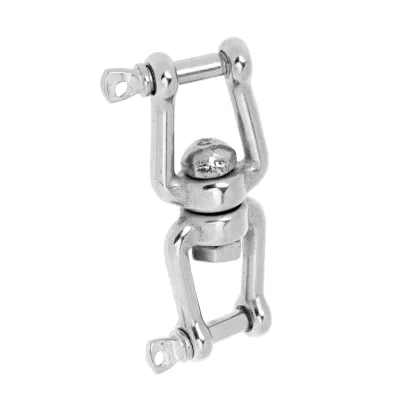
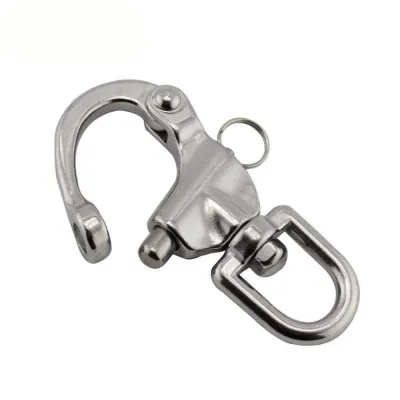
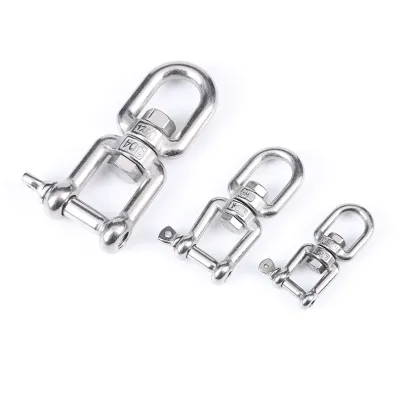
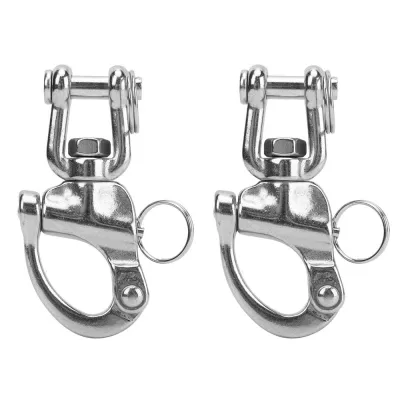
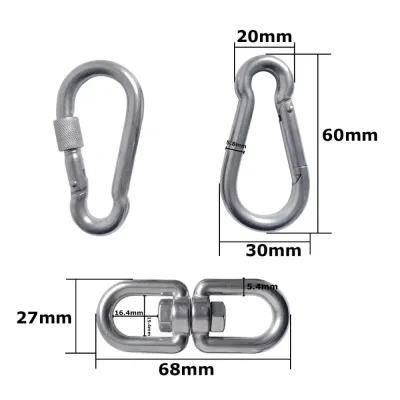
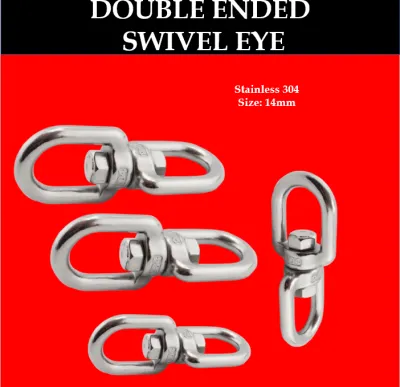
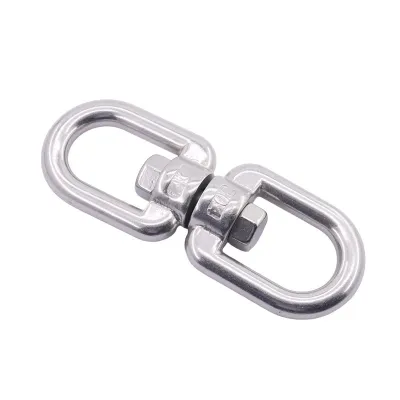
Prices are valid at publication and may change. Please refer to the product page for the latest price.
Understanding Swivel Shackle Basics and Safety Boundaries
A swivel shackle is a specialized piece of rigging hardware designed to connect two components while allowing them to rotate independently. This dual-function device consists of three primary components: the shackle body (often a D-shaped or bow-shaped loop), the threaded or clevis pin that secures the load, and the integrated swivel joint that permits 360-degree rotation. By allowing the connected lines or gear to spin freely, the swivel joint prevents twisting, hockling, and binding, which can otherwise severely compromise the strength of your ropes and attachment points.
When selecting hardware for marine environments, particularly in warm, humid, and high-salinity tropical climates, material composition is your first line of defense against structural failure. Look for shackles forged from marine-grade stainless steel, such as 316 stainless steel, or high-strength titanium alloys, which offer excellent resistance to pitting and crevice corrosion. Before purchasing, always locate and read the manufacturer’s stamped markings on the shackle body. These markings typically indicate the material grade and, most importantly, the Working Load Limit (WLL), which represents the maximum mass or force the component is authorized to support under normal operating conditions.
A fundamental safety rule of marine rigging is that a system is only as strong as its weakest link. Your swivel shackle must be evaluated as part of an entire assembly that includes your watercraft’s deck fittings, the connecting lines, and the anchor or gear being secured. Never exceed the lowest rated component in your rigging system. Always prioritize safety by matching all components to the expected forces of your specific activity, and remember that hardware ratings are only valid when the equipment is used in accordance with the manufacturer’s instructions.
Matching Swivel Shackles to Your Watercraft and Setup
The physical design of your watercraft and its existing mounting hardware dictate the specific profile of the swivel shackle you should select. Standard shackle profiles generally fall into two categories: D-shackles (or chain shackles) and bow shackles (or anchor shackles). D-shackles feature a narrow, straight-sided loop designed primarily for straight-line, in-line tension, whereas bow shackles have a larger, rounded loop that can accommodate loads from multiple angles without binding. Choosing between these profiles requires a close examination of where and how the hardware will be attached to your vessel.

Kayaks and Paddleboards: Deck Pad Eyes and Gear Tethers
On kayaks and stand-up paddleboards, space is limited, and mounting hardware is typically lightweight and low-profile. When rigging gear tethers, leash attachments, or small anchor systems on these watercraft, you must carefully measure the clearance and hole diameter of your deck pad eyes or molded-in bungee attachment points. A shackle with a pin diameter that is too large will not fit through the pad eye, while a pin that is too small may slide excessively, causing premature wear on both the plastic deck and the metal hardware.
For quick-release gear tethers, such as those used to secure dry bags, fishing rods, or paddles, look for swivel shackles featuring quick-release pins or captive pins that cannot be easily dropped into the water during adjustment. It is equally important to select a low-profile, compact shackle design to avoid creating snag hazards. Bulky hardware on a kayak deck or paddleboard can easily catch on your paddle shaft during a stroke, snag your clothing during a re-entry maneuver, or interfere with your seating and footwell comfort. Keep your deck rigging streamlined and closely matched to the scale of your craft.
Inflatable Boats: Bow Eyes, Transoms, and Anchor Lines
Inflatable boats, including rigid inflatable boats (RIBs) and soft-bottom dinghies, present different rigging challenges due to their flexible hulls and dedicated metal hardpoints. These vessels often feature heavy-duty bow eyes, transom D-rings, or towing patches glued directly to the fabric. When selecting a swivel shackle for these connection points, you must verify that the shackle’s pin diameter matches the thickness of the metal D-ring or bow eye precisely to prevent point-loading and uneven wear.
For anchor lines and mooring setups on inflatable boats, bow-style swivel shackles are highly recommended. The rounded shape of a bow shackle allows the anchor rode to shift angles smoothly as the boat swings with the wind or current, preventing the line from binding against the shackle body. Additionally, you must always consult your inflatable boat’s user manual to check the maximum load rating of the glued or welded hardpoints. A high-strength steel shackle can easily tear a poorly maintained or low-rated towing patch off an inflatable collar if subjected to forces beyond the manufacturer’s specified limits.
Selecting the Right Configuration for Your Intended Use
Beyond matching the physical dimensions of your watercraft, your choice of swivel shackle must align with the specific force dynamics of your intended activity. In water sports and light boating, loads are rarely static; instead, they are dynamic, meaning they change rapidly in response to waves, wind, currents, and vessel movement. Understanding how these dynamic forces interact with your hardware is essential for selecting a configuration that will perform reliably under real-world conditions.
Anchoring and Mooring: Managing Dynamic Loads
When anchoring your kayak or inflatable boat in moving water, the vessel is subjected to continuous dynamic loads as waves lift the bow and currents pull the hull. A swivel joint is a critical safety component in this scenario, positioned between the anchor chain or rode and the boat’s bow attachment. Without a functioning swivel, the natural twisting action of the rope as it deploys and retrieves—combined with the boat’s tendency to yaw or circle its anchor—will create severe twists in the line, reducing its strength and making retrieval difficult.
To ensure your anchoring setup remains secure, check the swivel mechanism to verify that it rotates smoothly even when subjected to lateral tension. In cheap or worn hardware, the swivel joint can lock up under load, defeating its purpose entirely. Furthermore, pay close attention to the pin securing method. The constant vibration and motion of anchoring can back out a standard threaded pin over time; always use a shackle that allows the pin to be wired shut, or select a model with a locking pin mechanism to prevent accidental unscrewing while submerged.
Towing and Sail Rigging: Handling High Tension
Towing an inflatable boat, a tender, or rigging a small sail on a multi-use kayak subjects your hardware to sustained high-tension loads and sudden shock forces. When selecting a swivel shackle for towing, you must verify that its Working Load Limit (WLL) is rated to handle the maximum expected dynamic shock load, which can be several times the static weight of the towed vessel, especially when crossing wakes or navigating rough chop.
For these high-tension applications, inspect the swivel joint’s axial alignment to ensure that the bearing surfaces align perfectly and rotate freely under a direct, heavy pull. If the shackle is pulled at an awkward angle, the swivel may bind, transferring bending forces to the pin and body. Always utilize a dedicated towing harness that distributes the load across multiple points on the towed vessel, and ensure the shackle pin is fully compatible with the harness’s thimbles or splicing rings to prevent chafing and uneven load distribution.
Installation, Inspection, and Maintenance Checklist
Proper installation and regular maintenance are vital to ensuring your swivel shackle performs safely throughout its lifespan. Before heading out onto the water, perform a thorough visual and tactile inspection of your hardware. Check the swivel joint for smooth, unhindered 360-degree rotation, and inspect the pin threads for any signs of stripping, cross-threading, or galling. Examine the shackle body closely for any visible deformation, bending, or hairline cracks, particularly around the eyelets where the pin inserts. If you detect any structural changes or stiffness in the rotation, retire the shackle immediately.
When installing the shackle, follow these general guidelines to secure the connection:
- Clean the pin threads of any debris, sand, or salt crystals before insertion.
- Hand-tighten the pin completely until the collar is flush against the shackle eye.
- For semi-permanent installations, such as anchor rodes, use a small pair of pliers to turn the pin an additional one-quarter turn, and secure it using a manufacturer-recommended method, such as marine-grade safety wire or a cotter pin through the eye of the pin.
- Avoid over-tightening, which can deform the threads and make field removal impossible.
After every outing, especially in the warm, high-salinity coastal waters of the Philippines, rinse your hardware thoroughly with clean, fresh water to wash away salt deposits and sand. Pay special attention to flushing the internal cavity of the swivel joint, as trapped salt crystals can crystallize and cause abrasive wear or binding. Allow the hardware to dry completely in a shaded, well-ventilated area before storing it away from direct sunlight. Refer to the manufacturer’s product care label for any specific lubrication recommendations, ensuring that any lubricant used is environmentally safe and compatible with marine life.
Frequently Asked Questions (FAQ)
Can I use a standard carabiner instead of a swivel shackle for my kayak?
Standard carabiners are highly convenient for securing lightweight, non-structural gear on your kayak deck, such as water bottles, dry bags, or sponge kits. However, they are not a safe substitute for a rated swivel shackle in structural or load-bearing applications like anchoring, towing, or safety leashes. Carabiners generally lack an integrated swivel mechanism, meaning they cannot relieve line twist, which can lead to binding and unexpected gate opening under load. For any application where hardware failure could result in the loss of your craft, anchor, or personal safety, always use a rated swivel shackle with a secure, locking pin.
How do I know if my swivel shackle is failing?
A failing swivel shackle will exhibit clear visual and tactile warning signs that indicate it is no longer safe for use. Tactile signs include a stiff, gritty, or completely seized swivel joint that no longer rotates smoothly under hand pressure. Visual warning signs include visible cracking along the body or weld points, bent or warped pins, elongated pin holes, or severe rust and pitting that has eaten into the metal. If you observe any of these conditions, or if the pin becomes difficult to thread smoothly by hand, stop using the shackle immediately and replace it to prevent a catastrophic failure on the water.

Community discussion
Share your experience or ask a question. Comments are reviewed before publication.