
Choosing your first badminton racket is about finding a tool that complements your current physical strength and helps you master basic strokes without straining your wrist or shoulder. For beginners playing in the tropical climate of the Philippines, where high humidity can affect grip traction and string performance, selecting a racket with forgiving specifications is the fastest way to enjoy the sport and build consistent rallies. The right choice prevents early fatigue and allows you to focus on developing proper footwork and swing mechanics.
Instead of buying the most expensive model used by professional players, a beginner should focus on finding a lightweight, evenly balanced racket with a flexible shaft and moderate string tension. This combination provides a larger sweet spot, absorbs shock, and helps generate power with slower swing speeds. By understanding how weight, balance, grip size, and tension interact, you can make an informed decision that supports your growth on the court.
Understanding Racket Weight and Balance for Your Playstyle
Weight is one of the most critical specifications to check when selecting a racket, as it directly impacts your swing speed and how quickly your arm tires during a long session. Manufacturers classify racket weight using the “U” rating system, which you can typically find printed on the cone just above the handle or on the shaft. A lower number before the “U” indicates a heavier racket, while a higher number indicates a lighter one.
Products mentioned in this guide

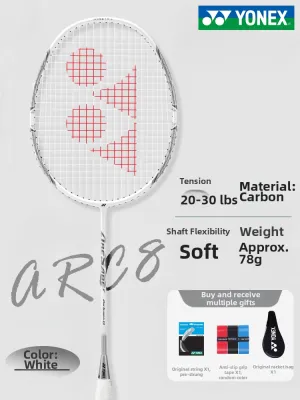
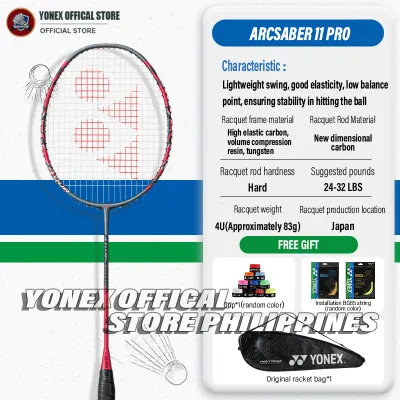
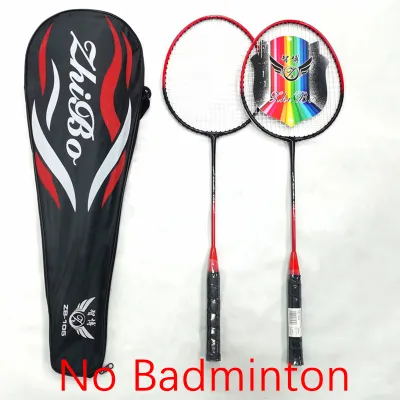
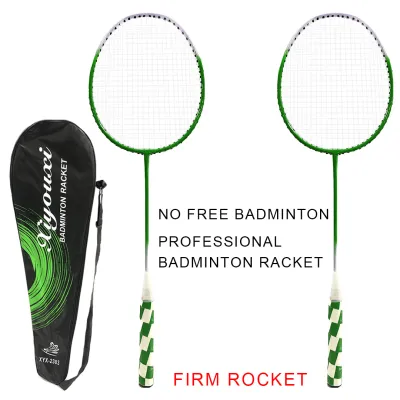
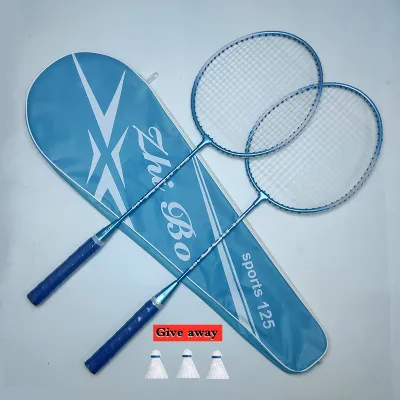
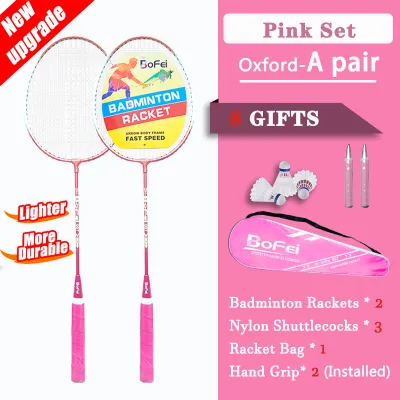
Prices are valid at publication and may change. Please refer to the product page for the latest price.
Most standard rackets fall between 2U (90–94 grams) and 5U (75–79 grams). For beginners, a 4U (80–84 grams) or 5U racket is highly recommended. These lighter weight classes reduce the strain on your wrist and shoulder, allowing you to react quickly to fast shots and practice your swing technique for longer periods without experiencing muscle fatigue.
Balance is another key factor that determines how the racket feels in your hand during a swing. Rackets are categorized into three balance types: head-heavy, head-light, and even balance. Head-heavy rackets concentrate weight at the top of the frame to generate more power for smashes, but they require stronger wrist muscles to control. Head-light rackets distribute more weight toward the handle, offering excellent speed for defensive maneuvers and quick net play, though they generate less power.
An even-balance racket distributes weight uniformly, making it the most suitable choice for beginners. It offers a versatile middle ground, allowing you to practice both offensive clears and defensive blocks without overcompensating for a heavy frame.
To assess your needs, consider your physical comfort during a quick self-test. If you struggle to swing a racket repeatedly without your wrist dropping or feeling tight, prioritize a lighter 4U or 5U even-balanced frame. If you already have decent forearm strength from other sports, a 4U even-balance racket will provide a stable foundation for your games.
Finding the Correct Grip Size for Comfort and Control
Selecting the right grip size is essential for maintaining control over your shots and preventing painful blisters. Grip sizes are designated by the letter “G” followed by a number, usually ranging from G2 (largest) to G6 (smallest). In Asian markets, G5 is the most common standard size and fits the hands of most recreational players comfortably.

To verify if a grip size is correct for your hand, you can perform the finger gap test. Hold the racket handle using a standard forehand grip, as if you are shaking hands with the racket. Look at the space between your fingertips and the palm of your hand. There should be a gap roughly equal to the width of your index finger; if your fingertips press deeply into your palm, the grip is too small, and if your fingers cannot wrap securely around the handle, the grip is too large.
Playing with a grip that is too small forces you to squeeze the handle tightly, which can lead to forearm fatigue and restrict your wrist movement. Conversely, a grip that is too large limits your ability to snap your wrist quickly during quick exchanges.
In humid tropical conditions, sweat can quickly make a standard synthetic grip slippery. You can easily customize a slightly small handle by wrapping an overgrip over the original factory grip. Polyurethane (PU) overgrips offer a tacky feel for secure handling, while cotton towel grips are excellent for absorbing heavy sweat, though they require frequent replacement to maintain hygiene.
Selecting String Tension and Shaft Flexibility
String tension and shaft flexibility determine how much effort is required to send the shuttlecock to the back of the opponent’s court. Beginners often make the mistake of requesting high string tension, believing it will increase their power. In reality, high tension (above 25 lbs) creates a stiff, board-like string bed that requires precise timing and high swing speeds to generate depth.
For developing players, a lower string tension between 20 lbs and 24 lbs is ideal. Lower tension allows the strings to stretch more upon impact, creating a trampoline effect that easily repels the shuttlecock with less physical effort. This lower tension also enlarges the sweet spot, meaning your shots will still travel relatively well even if you do not hit the exact center of the racket head.
Shaft flexibility refers to how much the racket bends during a swing. Rackets range from flexible to medium, stiff, and extra stiff. A flexible shaft bends easily during your backswing and whips forward at impact, acting as an energy booster for players who are still developing their wrist snap and swing speed.
Stiff shafts do not bend easily and are designed for advanced players who possess explosive wrist power and precise control. If a beginner uses a stiff shaft, the racket will not flex enough to assist the shot, resulting in short clears and a high amount of vibration traveling directly into the elbow and shoulder.
Pay attention to how your arm feels after a session. If you experience persistent joint discomfort or find that your deep clears consistently land short of the opponent’s baseline, it is a clear warning sign that your racket shaft is too stiff or your string tension is too high.
Evaluating Racket Materials and Build Quality
Modern badminton rackets are constructed from various materials that affect their durability, weight, and overall performance. Entry-level rackets are often made of aluminum, steel, or carbon fiber graphite composites. Understanding these materials helps you avoid low-quality options that can hinder your progress.
Aluminum and steel rackets are highly durable and inexpensive, but they are heavy and rigid. They do not absorb vibrations well, which can cause discomfort in your hitting arm over time. Full graphite or carbon fiber rackets are lightweight, flexible, and excellent at dampening shock, making them the preferred choice for anyone looking to play regularly.
When inspecting a racket in a local sports store, look closely at the joint where the racket head meets the shaft. Cheaper aluminum rackets often feature an external T-joint, which is a visible metal piece connecting the two parts. High-quality graphite rackets feature a built-in T-joint inside the frame, creating a seamless, aerodynamic, and structurally strong one-piece design.
Next, examine the plastic grommets lining the frame. These small eyelets protect the strings from rubbing against the sharp edges of the frame holes. Ensure that all grommets are present, straight, and undamaged, as missing or split grommets can cause your strings to snap prematurely during play.
Avoid purchasing extremely cheap, unbranded rackets from non-specialty stores. These products often use low-grade metals that warp easily under standard string tension and lack the structural integrity to withstand accidental clashes with a partner’s racket, posing a safety risk if the frame snaps mid-swing.
Step-by-Step Buying Checklist for Your First Racket
To ensure you select a reliable and comfortable racket, use this step-by-step checklist before making your purchase:
- Confirm the Specifications: Look for a 4U weight class, an even-balance distribution, a flexible shaft, and a pre-strung tension between 20 lbs and 22 lbs.
- Set a Realistic Budget: Allocate around ₱1,500 to ₱3,500. This price range is sufficient to purchase a durable, full-graphite racket from established sports brands at local retail outlets in the Philippines.
- Inspect the Physical Build: If buying in-store, check for a seamless one-piece construction, verify that the frame is perfectly symmetrical, and ensure the grip feels comfortable in your hand.
- Verify Online Sellers: When shopping on online marketplaces, buy exclusively from official brand stores or authorized local distributors. Read customer reviews to confirm the racket arrives in a sturdy protective box to prevent warping during transit.
- Check the Return Policy: Ensure the retailer offers a clear return or replacement policy in case of manufacturing defects or shipping damage.
Frequently Asked Questions (FAQ)
How often should a beginner restring their badminton racket?
A beginner should generally restring their racket every three to six months, depending on how often they play. Even if the strings do not snap, they gradually lose tension over time due to environmental factors like heat and humidity, which reduces the racket’s responsiveness. Inspect your strings regularly for visual signs of wear, such as fraying fibers, deep notches where the strings intersect, or strings that shift out of place easily after a hit. If you play once a week, a bi-annual restringing is usually sufficient to maintain a consistent feel.
Is it better to buy a pre-strung racket or an unstrung frame as a beginner?
Buying a pre-strung racket is highly recommended for beginners because it is convenient, cost-effective, and ready for immediate use on the court. Factory strings are typically set at a moderate, forgiving tension that suits learning players perfectly. As your skills progress, your swing speed increases, and you develop a distinct playing style, you can transition to buying unstrung frames. This transition allows you to select specific string types and customize the tension to match your growing power and control requirements.

Community discussion
Share your experience or ask a question. Comments are reviewed before publication.