
Selecting your first compound bow archery set is an exciting milestone, but the sheer volume of technical specifications can feel overwhelming to a beginner. Unlike traditional recurve bows, a compound bow relies on a sophisticated system of cams, cables, and synthetic strings to maximize energy storage and shooting accuracy. To make an informed decision, you must align the bow’s physical dimensions with your body mechanics, establish a realistic budget, and ensure the package includes reliable, compatible accessories. By taking a systematic approach to your selection, you can avoid common beginner mistakes and invest in a setup that will support your development for years to come.
Understand Your Archery Goals and Budget
Before browsing specific models, define your primary shooting goals and establish a clear spending limit. Archery in the Philippines is growing rapidly, with outdoor ranges and indoor clubs offering diverse shooting environments. If your goal is weekend recreational shooting or local target competitions, your equipment needs will differ slightly from those required for bowhunting or long-range outdoor sports. Defining your primary use case helps narrow down the physical size, weight, and accessory options that will best serve your journey.
Setting a realistic budget is the next crucial step. A complete starter compound bow archery set typically ranges from ₱15,000 to ₱30,000. When planning your budget, remember that the initial cost must cover more than just the bow itself. You will also need to account for essential accessories, arrows, a mechanical release aid, protective gear like an arm guard, and a durable target block for home practice. Allocating a portion of your funds for professional setup and maintenance at a local pro shop is also highly recommended.
Products mentioned in this guide
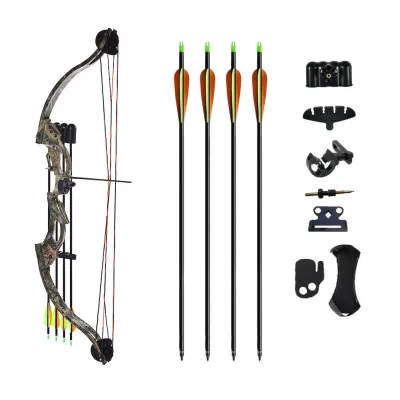
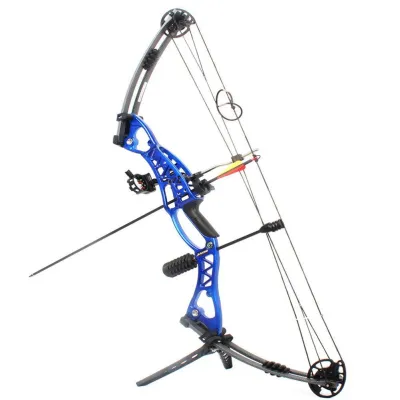
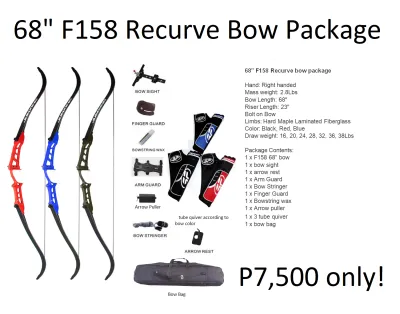
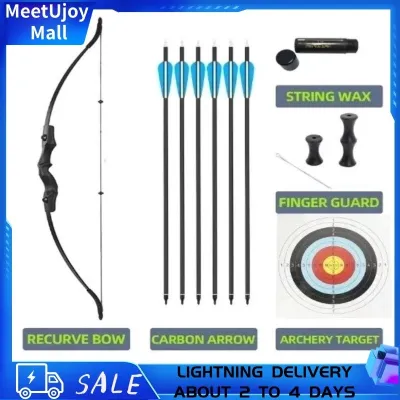
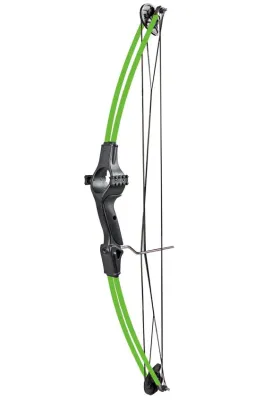
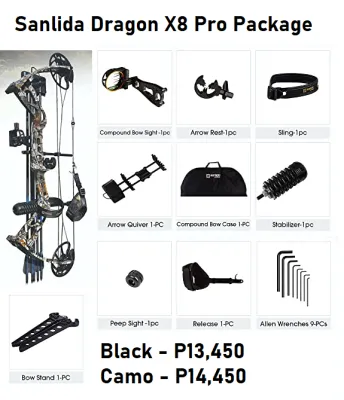
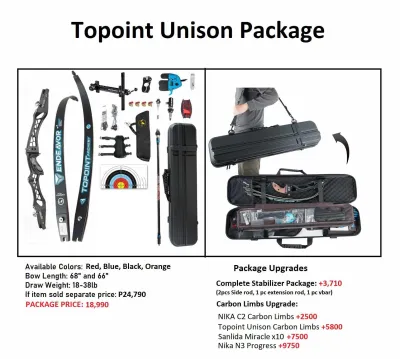
Prices are valid at publication and may change. Please refer to the product page for the latest price.
Beginners must choose between a ready-to-shoot (RTS) package and a modular, custom setup. Ready-to-shoot sets are highly recommended for first-time buyers because they bundle the bow with pre-installed accessories at a significantly lower price point than purchasing each component individually. While the included accessories in an RTS package are generally entry-level, they provide a functional starting point. A modular setup allows you to handpick every component, but this path is more expensive and requires a deeper understanding of equipment compatibility.
Determine Your Dominant Eye and Draw Length
Proper shooting form and consistent accuracy depend heavily on matching the bow to your physical dimensions. The first step is identifying your dominant eye, which determines whether you need a right-handed or left-handed bow configuration. Eye dominance does not always align with hand dominance. To find your dominant eye, extend both hands in front of you, form a small triangular opening with your thumbs and forefingers, and look through it at a distant object. Close your left eye; if the object remains centered, you are right-eye dominant and require a right-handed bow, which is held in the left hand and drawn with the right. If the object shifts out of the frame, close your right eye to verify left-eye dominance.

Once you know which hand configuration you need, you must measure your draw length. Stand flat against a wall with your arms extended out to your sides, parallel to the floor, forming a T-shape. Have someone measure the distance from the tip of one middle finger to the tip of the other in inches. Divide this total wingspan measurement by 2.5 to calculate your estimated draw length. For example, a wingspan of 70 inches translates to an estimated draw length of 28 inches.
When shopping for a starter compound bow archery set, prioritize models that feature highly adjustable cams. Your draw length may shift slightly as you develop proper back-tension form and consistent anchor points. Choosing a bow with a wide, adjustable draw length range ensures that you can fine-tune the fit without needing to purchase expensive replacement parts or a completely new bow. Always check the manufacturer’s specifications to confirm that your measured draw length falls comfortably within the bow’s adjustable limits.
Select the Right Draw Weight and Let-Off
Draw weight refers to the maximum amount of force required to pull the bowstring back to full draw. A common mistake among beginners is choosing a draw weight that is too heavy, a situation often referred to as being “over-bowed.” Struggling to draw a bow leads to poor shooting form, rapid physical fatigue, and a high risk of shoulder injuries, particularly rotator cuff strains. For average adult beginners, starting with an adjustable range of 30 to 50 pounds is ideal, while youth or smaller-framed shooters should look for ranges between 15 and 30 pounds.
One of the greatest advantages of a compound bow is the concept of let-off. As you pull the string past the peak draw weight, the cams rotate and dramatically reduce the holding weight at full draw. Most modern starter bows offer a let-off of 70% to 80%. If you are drawing a 40-pound bow with an 80% let-off, you only hold 8 pounds of tension at full draw. This reduction allows you to hold the bow steady, focus on your sight picture, and execute a clean release without muscle tremors.
When starting out, adjust your bow to the lower end of its weight range. You should be able to draw the bow smoothly in a straight line without lifting the bow toward the sky or twisting your torso. As your back muscles adapt and strengthen, you can gradually increase the draw weight in small, comfortable increments. Prioritize mastering consistent form, clean releases, and solid anchor points before attempting to shoot heavier draw weights.
Evaluate Bow Adjustability and Forgiveness
Your physical strength and shooting technique will evolve rapidly during your first few months of practice. An adaptable compound bow archery set is essential for accommodating this growth. Look for highly adjustable entry-level models that allow you to modify both draw length and draw weight using simple, integrated cam modules. Many modern starter bows can be adjusted across a wide range of weights and lengths using standard hex keys, eliminating the immediate need for a specialized professional bow press.
Beyond adjustability, consider the physical dimensions of the bow, specifically the axle-to-axle (ATA) length and the brace height. The ATA length is the distance between the center of the top pulley and the bottom pulley. Shorter bows (under 31 inches) are lightweight and highly maneuverable, but they can be less stable and more sensitive to hand torque. Longer bows (32 inches or more) offer greater stability and are generally more forgiving of minor form errors, making them excellent choices for target practice and consistent group shooting.
Brace height is the distance from the deepest part of the grip to the bowstring when the bow is at rest. A longer brace height (7 inches or more) is highly recommended for beginners. Because the arrow leaves the string faster during the shot cycle on a bow with a longer brace height, there is less time for minor hand movements or form flaws to disrupt the arrow’s flight path. Conversely, a shorter brace height produces faster arrow speeds but requires highly consistent form to shoot accurately.
Inspect the Accessories in the Archery Set
To ensure your compound bow archery set is truly ready to shoot, you must carefully evaluate the quality and compatibility of the included accessories. A standard starter package typically includes a multi-pin sight, an arrow rest, a stabilizer, a peep sight, and a wrist sling. The sight, usually featuring three or five fiber-optic pins, allows you to set reference points for different distances. The arrow rest supports the arrow during the draw cycle; a full-containment brush rest, often called a whisker biscuit, is ideal for beginners because it keeps the arrow securely in place even if your hands shake.
While the pre-installed accessories in an RTS package are sufficient for learning the basics, some components may require future upgrades as your skills progress. For instance, plastic arrow rests can wear down over time, and basic sights may lack fine windage and elevation adjustments. A mechanical release aid is another critical accessory that is sometimes sold separately; this device clips onto the string’s D-loop and allows you to trigger the shot cleanly with your index finger, preventing the finger-pinch and erratic string deflection common with manual releases.
Finally, verify the compatibility of the arrows included in your set. Arrows must have a stiffness rating, known as spine, that matches your bow’s specific draw weight and draw length. Shooting an arrow with an incorrect spine is highly dangerous and can result in the arrow shattering upon release. Additionally, consider the local climate when choosing arrow fletching. In the humid, tropical conditions of the Philippines, synthetic plastic vanes are highly preferred over natural feathers, as plastic vanes maintain their shape and aerodynamic properties when exposed to moisture, rain, and sweat.
Final Safety Checks and Setup Conditions
Archery is a safe and rewarding sport, but compound bows store an immense amount of mechanical energy that must be handled with respect. If you purchase your compound bow archery set online or through an online marketplace, do not attempt to shoot it straight out of the box. Take the set to a local archery pro shop or consult a certified instructor to ensure the peep sight is aligned with your eye level, the D-loop is secure, and the cams are properly timed. Professional tuning ensures the bow operates safely and efficiently.
Before every shooting session, perform a thorough visual safety check of your equipment. Inspect the bowstring and cables for any signs of fraying, separation, or wear, and apply specialized bowstring wax regularly to protect the fibers from humidity and friction. Check the composite limbs and riser for hairline cracks, chips, or delamination. You should also perform a flex test on your carbon arrows by bending them slightly and listening for any cracking or splintering sounds; discard any damaged arrows immediately.
Establish strict stop conditions to protect yourself and your equipment. Never, under any circumstances, “dry-fire” a compound bow—which means releasing the string without an arrow loaded. Dry-firing causes the stored energy to violently vibrate through the bow rather than transferring into an arrow, which can shatter the limbs, bend the cams, and cause severe physical injury. If your bow is ever dry-fired, or if you hear unusual creaking, clicking, or popping noises during your draw cycle, stop shooting immediately and have the bow inspected by a qualified technician.

Community discussion
Share your experience or ask a question. Comments are reviewed before publication.