
Upgrading or replacing your fishing knob is one of the quickest ways to improve your grip, reduce hand fatigue, and enhance your overall control during a long day on the water. However, finding a knob that fits perfectly requires matching the exact thread specifications of your reel handle and choosing a size that complements your fishing style. A mismatched thread can permanently strip your handle arm, while an improperly sized knob can ruin the balance of your setup. To ensure a seamless fit, you must decode your reel’s thread standards, select an ergonomic shape, and verify physical clearance before your next outing.
Decode Your Reel's Thread Specifications
To find a fishing knob that fits securely, you must first identify the exact thread specifications of your reel handle. Manufacturers use different thread standards depending on the reel’s design, origin, and size. For example, many modern reels utilize metric thread pitches, while others may rely on imperial measurements. To locate these details, consult your reel’s official user manual or visit the manufacturer’s website, where technical schematics and parts lists are typically hosted.
Attempting to force a mismatched knob onto your handle arm carries significant mechanical risks. If the thread pitch or diameter does not align perfectly, forcing the components together will strip the soft aluminum or alloy threads on the handle shaft. This damage is often irreversible, requiring you to replace the entire handle assembly rather than just the knob. If you feel any binding or resistance within the first few turns, stop immediately to prevent permanent damage.
Products mentioned in this guide
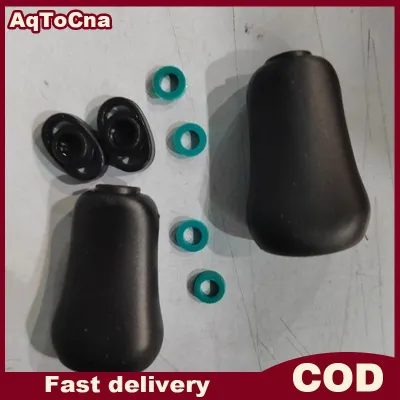
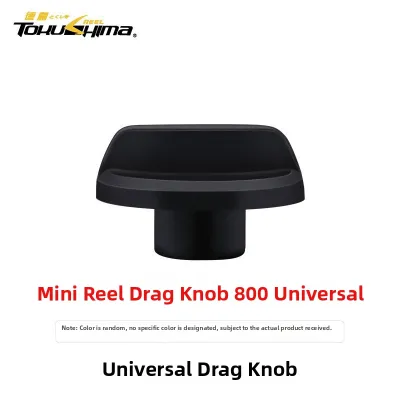
Prices are valid at publication and may change. Please refer to the product page for the latest price.
If you no longer have the original documentation and cannot find the specifications online, avoid guessing the thread size. Instead, contact the manufacturer’s customer support or visit an authorized service center. Many local specialty tackle shops can also assist by using a thread pitch gauge to safely identify the exact measurements of your handle shaft, ensuring you purchase a compatible replacement.
Select the Right Knob Diameter and Shape
Once you know the correct thread specifications, you can select a fishing knob diameter and shape that matches your hand size, grip preference, and target species. The diameter of the knob directly influences your grip comfort and cranking leverage. Smaller knobs, typically ranging from 20mm to 30mm, are highly responsive and lightweight, making them excellent for finesse fishing where quick, delicate retrievals are necessary. Conversely, larger knobs measuring 35mm to 45mm or more provide substantial torque, which is highly beneficial when battling powerful game fish in deep tropical waters. However, keep in mind that larger knobs add rotational weight, which can alter the natural balance of your reel.

The shape profile of the knob also plays a critical role in how you retrieve your line. Common shapes include:
- Round knobs: These offer a consistent grip from any angle, making them highly popular for jigging and heavy cranking where your hand position might shift rapidly.
- Teardrop or T-bar knobs: These provide maximum leverage for high-drag situations, allowing you to pull with your entire hand rather than just your fingertips.
- Flat knobs: These are ideal for precise, high-speed retrievals and constant casting, as they naturally align with a two-finger pinch grip.
Ultimately, personal comfort and hand size are the primary decision factors. An angler with larger hands will likely find a small flat knob cramping, while someone with smaller hands might struggle to maintain a secure grip on a massive round power knob. Choose a shape that feels natural during repetitive casting and retrieving.
Measure Clearance and Verify the Fit
Before finalizing your purchase, you must perform a physical clearance check to ensure the new knob will operate smoothly without interfering with the reel body. Use a precise measuring tool, such as a digital caliper, to measure the gap between the base of the existing knob and the handle arm. If the replacement knob has a wider base, it may rub against the handle arm or the reel body during rotation. This friction can scratch the reel’s finish, restrict smooth movement, or bind the handle entirely. Ensure there is a clear, unobstructed gap so the knob can spin freely.
Next, inspect your existing handle arm for any signs of wear, cross-threading, or corrosion. In humid, coastal environments, saltwater exposure can quickly lead to salt buildup or oxidation around the handle shaft. If the shaft is already corroded or structurally weakened, installing a new knob will not resolve the underlying issue and may lead to failure under load. Clean the shaft thoroughly with a soft cloth to ensure a clean mounting surface.
When installing the new knob, always perform a careful test fit using only your fingers. Do not use tools like wrenches or pliers for the initial threading, as they can easily mask the feeling of cross-threading. The knob should thread on smoothly with minimal effort. If you encounter any sudden resistance, stiffness, or catching, stop immediately. Back the knob out, inspect the threads for debris, and verify your measurements. If the resistance persists, consult a professional technician to avoid damaging your gear.
Frequently Asked Questions (FAQ)
Can I use an adapter to fit a different thread type on my reel?
While thread adapters are available, they introduce mechanical risks that can compromise your reel’s performance. Adding an adapter creates an extra point of connection, which often leads to slight play, wobble, or a loose feel during retrieval. Under heavy loads—such as when fighting a strong fish—the adapter may fail if its material strength and thread tolerances cannot withstand the reel’s maximum cranking force. For long-term durability and structural integrity, direct thread matching remains the safest and most reliable approach.
How do I clean and maintain the threads on my reel handle?
Proper maintenance is crucial, especially in humid or coastal environments where salt and sand can quickly degrade metal components. After every fishing trip, gently rinse the handle area with fresh water and use a soft-bristled brush to clear away any salt crystals, sand, or debris from the exposed threads. Avoid using harsh chemical solvents or abrasive metal brushes, as these can strip protective anodized coatings and weaken the threads. Always allow the components to dry completely before reassembling the knob to prevent moisture from becoming trapped and causing hidden corrosion.

Community discussion
Share your experience or ask a question. Comments are reviewed before publication.