
Finding the right badminton racket handle grip size is essential for maximizing your control on the court and preventing unnecessary hand strain. The correct size allows your fingers to wrap comfortably around the handle, enabling quick wrist snaps and stable defensive blocks. In tropical climates where humidity is high, choosing the right grip size becomes even more critical to prevent the racket from slipping during intense rallies.
Understanding Badminton Grip Size Standards
Badminton manufacturers use standardized sizing systems to help players select the right handle thickness. The most common system is the “G” scale, where a higher number indicates a smaller handle diameter. For example, a G6 handle is thinner than a G5 handle, which in turn is thinner than a G4 handle. While this G-scale is widely used across major brands in Asia, some regions or alternative brands may use fractional inch measurements.
Because exact dimensions can vary slightly between manufacturers, it is always wise to check the specific brand’s size chart before purchasing. Remember that the size printed on the racket cone refers to the bare wooden handle. This baseline measurement does not account for any replacement grips, overgrips, or towel grips you plan to wrap over it.
Products mentioned in this guide



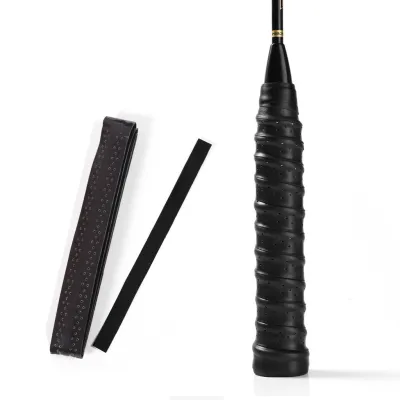
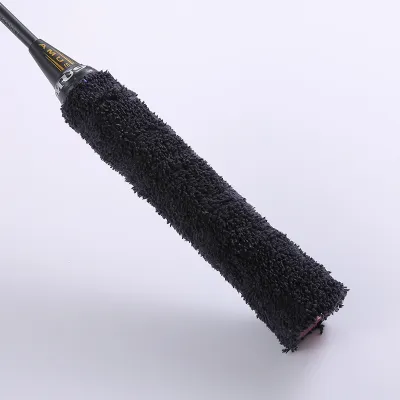
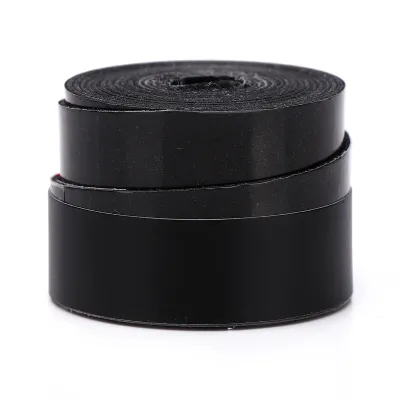
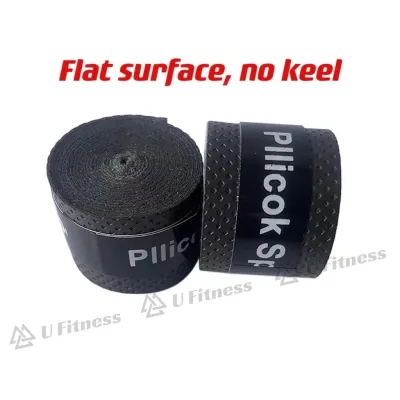
Prices are valid at publication and may change. Please refer to the product page for the latest price.
How to Measure Your Hand for the Perfect Fit
To find your baseline grip size, you can use a simple ruler measurement. Extend your playing hand flat with your fingers held tightly together. Measure the distance from the second crease of your ring finger to the tip of the finger. This measurement in millimeters or inches can be compared to manufacturer sizing charts to find your starting G-size.

Another practical method is the finger wrap test, which you can perform using a bare racket handle. Hold the racket using a standard eastern or continental grip. When you wrap your fingers around the handle, there should be a small gap—roughly the width of an index finger—between the tips of your fingers and the palm of your hand. If your fingertips press deeply into your palm, the grip is too small; if your fingers cannot wrap far enough to secure a firm hold, the grip is too large.
In warm, humid playing environments, such as indoor courts in the Philippines, players often experience hand swelling and heavy sweating. If you play in these conditions, you may want to select a slightly smaller bare handle size. This choice leaves enough physical space to add highly absorbent overgrips or thick towel grips without making the final handle diameter too bulky for your hand.
Adjusting for Playstyle and Overgrips
Your preferred style of play should heavily influence your final racket handle grip size. A smaller overall grip diameter allows for greater finger maneuverability and rapid wrist movement. This setup is highly beneficial for doubles players who rely on quick defensive reflex shots, deceptive net drops, and rapid drive exchanges.
Conversely, a larger grip diameter provides more stability and relies more on arm-driven power. Players who favor a heavy attacking game with powerful smashes often prefer a slightly thicker grip because it allows the hand to transfer force from the forearm more efficiently. However, a grip that is too thick can limit your ability to change grip angles quickly mid-rally.
When purchasing a new racket, many experienced players intentionally choose a smaller bare handle size, such as G5 or G6. This strategy provides the flexibility to customize the handle. You can apply a cushioned overgrip or a specialized sweat-absorbing wrap to achieve the exact thickness and texture you prefer, rather than being stuck with a handle that is permanently too thick.
Signs Your Current Racket Handle Grip Is the Wrong Size
Using an incorrectly sized racket handle grip often leads to clear physical warning signs. If your grip is too small, you will naturally squeeze the handle much harder to keep it from slipping. This constant over-clenching can cause premature forearm fatigue, hand cramps, and painful blisters or calluses along the friction points of your fingers.
Control issues on the court are another major indicator of a poor fit. If the racket frequently twists in your hand when you hit off-center shots, your grip is likely too small to provide adequate stability. On the other hand, if you find it difficult to transition quickly between forehand and backhand grips during fast-paced rallies, your handle may be too thick.
Fortunately, adjusting the fit is relatively straightforward. If your handle is too small, you can easily build up the thickness using layers of overgrip tape or a specialized heat shrink sleeve. If the bare handle is too large, your options are more limited, though you can try removing the factory replacement grip and wrapping a thin overgrip directly onto the bare wood.
Frequently Asked Questions (FAQ)
Can I make a small racket handle bigger?
Yes, increasing the size of a small racket handle is a common and simple modification. The most popular method is wrapping one or more overgrips over the factory grip until you reach your desired thickness. For a more permanent and uniform increase, you can apply a plastic heat shrink sleeve directly to the bare wooden handle before adding your grip tape. Keep in mind that while building up a handle is easy, adding excessive layers of heavy grip material can alter the racket’s overall weight distribution.
Does grip size affect racket weight and balance?
Adding grip materials to your racket handle will inevitably add a small amount of weight to the bottom of the racket. This extra weight shifts the balance point slightly toward the handle, making the racket feel a bit more head-light than its original factory specifications. While this shift is usually minimal—often only a few millimeters—highly sensitive players may notice that the racket feels slightly faster to swing but offers marginally less plow-through power on smashes.

Community discussion
Share your experience or ask a question. Comments are reviewed before publication.