
Condominium living in urban centers offers convenience, but space is always at a premium. Adding fitness equipment like a walkable treadmill requires careful planning to ensure it does not clutter your living area or compromise safety. Fitting a compact walking pad into a small unit is entirely feasible if you systematically measure your layout, verify the machine’s physical specifications, and establish a dedicated storage routine. By treating your floor plan as a puzzle where every centimeter counts, you can maintain an active lifestyle without sacrificing your home’s comfort or aesthetic.
Assessing Your Condo Layout and Clearances
Before purchasing any fitness equipment, you must map out the exact zone where you plan to exercise. A walkable treadmill requires more than just its physical footprint; you must account for your natural stride length and arm swing. When walking at a brisk pace, your body naturally moves slightly forward and backward, and your arms swing outward. Ensure there is a clear zone of at least half a meter on both sides of the machine to prevent your hands or elbows from striking nearby walls, shelves, or delicate home decor.
Next, trace the delivery path from the building’s entrance to your unit. Many condo residents overlook the physical journey of the boxed product. Measure the width and height of your building’s elevator doors, the tight turns in the common hallways, and your unit’s main doorway. If your entryway has a narrow foyer or a fixed shoe cabinet, verify that the boxed or fully assembled unit can clear these obstacles without damaging the walls or the machine itself.
Products mentioned in this guide
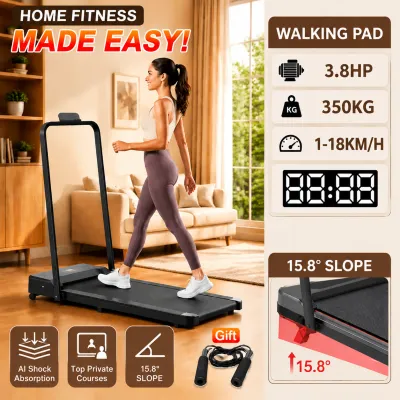
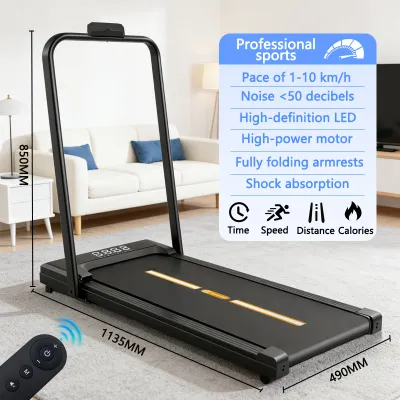
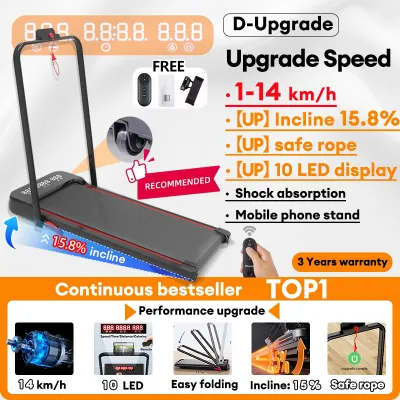
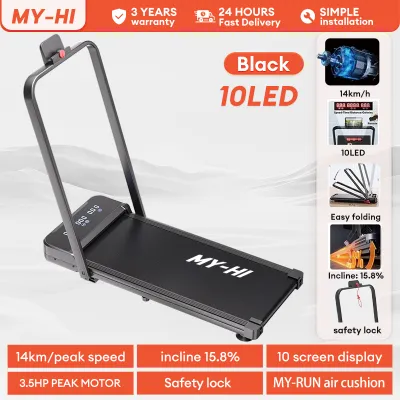
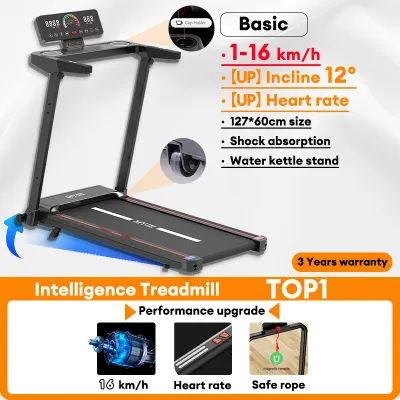
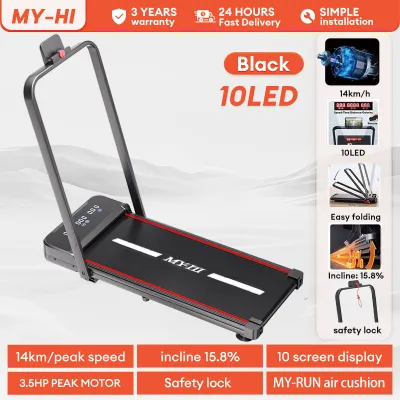
![[COD] Foldable Manual Home Treadmill with Adjustable Slope LED Display Anti-Slip Running Belt Free Twist Disc & Resistance Rope Space Saving Walking Machine for Home Fitness Exercise](https://img.lazcdn.com/g/p/1446617c7dcf63717d1a1640b68a647e.jpg_400x400q80.jpg_.webp)
Prices are valid at publication and may change. Please refer to the product page for the latest price.
Ceiling height is another critical factor, especially in modern high-rise developments with dropped ceilings or exposed ductwork. Calculate your total height when standing on the treadmill deck. Take your physical height, add the deck’s step-up height (usually found in the product specifications), and compare this to your ceiling. If you plan to store the unit vertically, ensure the standing height of the treadmill is lower than your ceiling and clear of any light fixtures, smoke detectors, or sprinkler heads.
Finally, locate your power sources. Walkable treadmills should be plugged directly into a grounded wall outlet. Running long extension cords across high-traffic walking paths in a small condo creates a severe tripping hazard and can cause electrical resistance issues. Position the machine close enough to an outlet so the power cord lies flat and out of the way, or use cord covers if the cable must cross a minor walkway.
Matching Treadmill Specifications to Your Space
Selecting the right walkable treadmill requires a direct comparison between your physical measurements and the manufacturer’s specification sheet. Do not rely on promotional images that depict the machine in spacious, minimalist lofts. Look closely at the unfolded deck dimensions. A taller user with a longer stride will require a longer walking belt to prevent stepping off the rear of the machine, whereas a shorter user can comfortably use a more compact deck.

Weight and folded dimensions dictate how easily you can manage the machine on a daily basis. If you live alone or have physical limitations, check the total weight of the unit. Even with transport wheels, lifting a heavy machine to store it vertically or slide it under a high bed can strain your back. Look for lightweight models if you plan to move the treadmill after every single workout session.
Always consult the product manual or official specifications regarding storage orientation. Some compact treadmills are designed strictly for horizontal storage. Storing a horizontal-only model vertically against a wall can cause internal components to shift, damage the motor casing, or create a tipping hazard if the unit lacks a dedicated kickstand or locking mechanism. Verify whether the manufacturer explicitly supports vertical storage before attempting to stand it up.
Avoid the assumption that all under-desk or compact treadmills share identical spatial requirements. A difference of just five centimeters in width or height can determine whether a machine slides smoothly under your sofa or remains stuck in the middle of your living room. Keep a detailed checklist of your condo’s measurements and compare them line-by-line with the exact specifications of any model you consider.
Smart Storage and Placement Solutions for Daily Use
Maximizing a small condo layout requires creative storage solutions that keep the treadmill out of sight when not in use. Utilizing the empty space under a bed or a raised sofa is one of the most effective methods for flat-folding models. Before purchasing, measure the clearance height from the floor to the lowest point of your furniture frame. Ensure this clearance exceeds the folded thickness of the treadmill by at least two to three centimeters to prevent scratching the machine’s console or tearing the underside of your furniture.
If you choose to store the treadmill vertically, do so only if the manufacturer provides a built-in standing base or wall-mounting hardware. Lean-to storage without proper locking mechanisms is highly risky, especially in earthquake-prone regions or homes with pets and young children. Ensure the vertical storage spot is away from direct sunlight and high-humidity areas, such as open balcony doors, to protect the electronic console and prevent premature wear of the belt.
Integrating the treadmill into a multi-functional zone, such as a home office setup, is highly efficient. Placing the walking pad under a standing desk allows you to transition from working to walking seamlessly. However, always maintain a clear, unobstructed path to your unit’s emergency exits. The treadmill should never block main pathways, balcony doors, or fire exit routes, even temporarily during a quick workout.
To move the machine without damaging your flooring, utilize the built-in transport wheels. If your condo features delicate hardwood, laminate, or vinyl plank flooring, check that the wheels are made of non-marring rubber or polyurethane. For carpeted areas or extra protection on hard floors, placing temporary furniture sliders under the non-wheeled base points can help you glide the machine into position smoothly without leaving deep scratches or scuff marks.
Ensuring Safe Setup and Operation in Tight Spaces
Operating fitness equipment in a multi-family residential building requires consideration for your neighbors and the building’s structural guidelines. Review your condominium association’s house rules regarding noise, vibration, and heavy equipment. While walkable treadmills operate at lower speeds and produce less noise than running models, the motor’s hum and the impact of your footsteps can still travel through the concrete floor slab. Using a high-density, noise-reducing rubber mat under the machine is highly recommended to absorb these vibrations.
Safety clearance zones are non-negotiable, even in tight quarters. The user manual will specify a mandatory safety clearance zone—often up to one meter—behind the rear roller of the treadmill. This open space ensures that if you lose your balance or trip, you are safely projected off the moving belt onto a clear floor rather than being pinned against a wall, desk, or glass window. Never position the rear of the treadmill directly against a wall or solid furniture.
Cable management is essential for preventing accidents in a multi-purpose room. Secure the power cord along the baseboards using adhesive cable clips or a heavy-duty rubber floor cord protector. This keeps the cable flat, prevents it from getting caught in the treadmill’s moving belt, and eliminates a major tripping hazard for anyone walking through the room.
Finally, pay close attention to room ventilation and heat dissipation. Treadmill motors generate heat during operation, and compact units have smaller internal fans. In warm, humid tropical climates, ensure the motor housing is not obstructed by curtains, walls, or storage boxes. Maintain adequate airflow by positioning the machine near an air conditioning vent or using a standing fan to keep both yourself and the treadmill motor cool during extended walking sessions.
Frequently Asked Questions (FAQ)
Can I store a flat walkable treadmill under my bed or sofa?
Yes, provided you measure the exact clearance height of your furniture frame and compare it to the treadmill’s folded thickness. There must be enough clearance to slide the unit in and out easily without scraping the console or damaging the furniture. Always check the manufacturer’s guidelines to confirm the unit is designed for horizontal storage and that storing it flat will not cause internal belt misalignment or fluid leaks.
Do I need a vibration mat for a walkable treadmill in a condo?
While walkable treadmills are quieter than running models, using a high-density vibration mat is highly recommended in a condo. The mat protects your flooring from scratches, prevents the machine from slipping, and dampens the low-frequency vibrations and footfall noise that can easily travel through concrete floors to the unit below. Check your condo association’s noise policies and the treadmill manual for specific mat recommendations.

Community discussion
Share your experience or ask a question. Comments are reviewed before publication.