
Finding the right golf bag rain cover requires matching the specific structural design of your bag—whether it is a stand bag, cart bag, or lightweight Sunday bag. A poorly fitted cover can slip, trap moisture, or flap violently in the wind, leaving your expensive clubs exposed to sudden downpours. In tropical climates where heavy afternoon showers and sudden monsoonal downpours can catch you by surprise on the fairway, having a reliable, form-fitting barrier is essential for protecting your gear. Investing in a cover that matches your bag’s exact configuration ensures that your grips stay dry, your pockets remain water-free, and your focus stays entirely on your game.
Understanding Your Golf Bag Type and Cover Needs
Stand bags, cart bags, and Sunday bags serve different playing styles, resulting in vastly different physical dimensions. Stand bags feature integrated legs and a medium-sized top cuff, usually ranging from 7 to 9 inches in diameter, with a tapered body. Cart bags are significantly bulkier, featuring wide, rigid bases, top cuffs often exceeding 9.5 inches, and large utility pockets that expand the bag’s overall width. Sunday bags are ultra-lightweight, minimalist carriers with a slim profile, a narrow top cuff of 5 to 7 inches, and minimal pocket space.
Using a “one-size-fits-all” or universal rain cover often leads to frustrating performance issues on the course. If a cover is too large, such as a cart bag cover placed on a slim Sunday bag, the excess fabric will sag, drag along the turf, or flap loudly in high winds. Conversely, a cover that is too small will stretch excessively, putting stress on the zippers and seams, and may fail to cover the bottom of the bag, leaving lower pockets vulnerable to water penetration.
Products mentioned in this guide
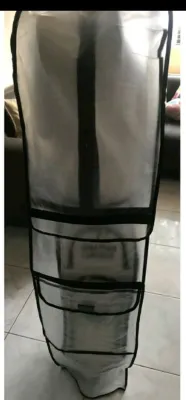
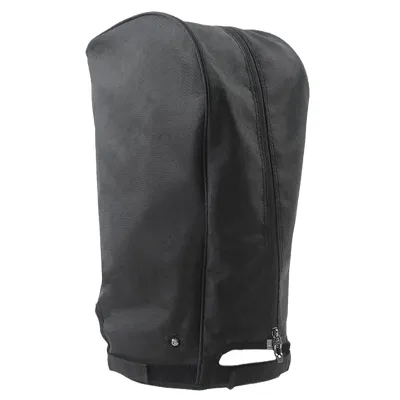
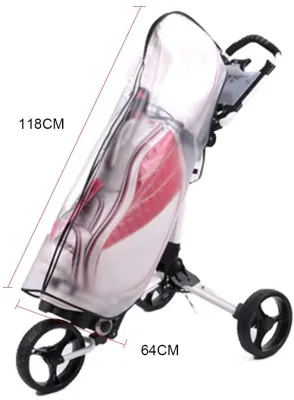
![[Winnereco Flagship Mall] PVC Golf Bag Rain Cover Transparent Clear Golf Cart Travel Bag with Hood Golf Pole Bag Cover Golf Rain Bag for Golf Push Carts& Golf Club](https://img.lazcdn.com/g/p/2a6e2fcbf3358829b2f113d21ccad922.jpg_400x400q80.jpg_.webp)
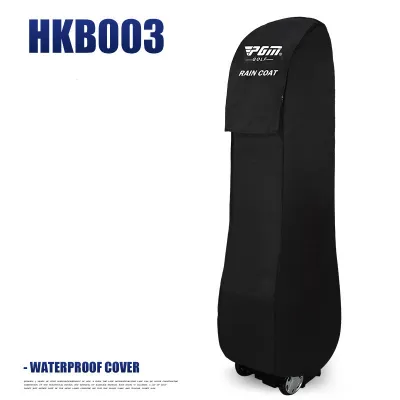
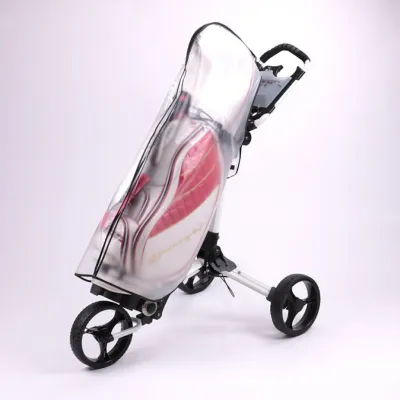
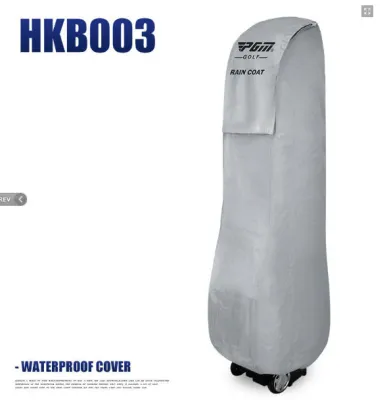
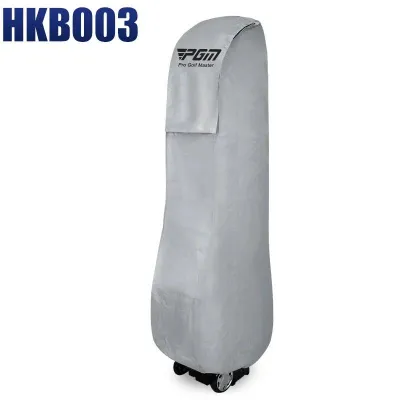
Prices are valid at publication and may change. Please refer to the product page for the latest price.
Before browsing online marketplaces or local pro shops, you must identify your bag’s specific capacity and structural design. Checking the manufacturer’s original specifications for your bag model provides a reliable baseline for its height, width, and cuff diameter. This step ensures you select a cover designed to accommodate the unique contours of your gear rather than relying on guesswork.
Essential Design Checks for Stand Bag Rain Covers
Stand bags present a unique challenge because their retractable legs must deploy easily while the bag is resting on the turf. When evaluating a rain cover for a stand bag, look for dedicated bottom openings, flexible slits, or zippered panels near the leg hinges. These design features allow the stand mechanism to extend fully without requiring you to remove or adjust the cover, keeping your clubs protected even when the bag is standing upright on a wet fairway.

The top opening of the cover must align closely with the stand bag’s moderately sized top cuff. A cover with an oversized top opening will allow water to seep down into the club dividers, defeating the purpose of the protective layer. Verify that the cover’s upper section is tailored to fit cuffs in the 7-to-9-inch range to maintain a dry environment for your club grips.
To secure the cover against the tapered shape of a stand bag, look for adjustable drawstrings, elasticized hems, or toggle locks. These fastening systems allow you to cinch the fabric tightly around the midsection and base of the bag. This prevents wind from getting underneath the cover and lifting it, which is particularly important during sudden tropical squalls where wind speeds can increase rapidly.
Additionally, check the placement of the access zippers. A good stand bag cover should feature dual-zipper access at the top, allowing you to quickly grab a club and zip the cover back up before rain can enter. This quick-access design is crucial for maintaining a smooth pace of play when the weather turns sour.
Essential Design Checks for Cart Bag Rain Covers
Cart bags are built for maximum storage and are designed to ride on push carts or motorized golf carts. Consequently, a compatible rain cover must feature a generous cut that easily accommodates the bag’s bulkier profile, protruding side pockets, and wide, rigid base. A cover that is too tight will restrict access to your pockets and put immense pressure on the cover’s seams, leading to premature tearing.
A critical feature for any cart bag cover is the inclusion of specialized strap pass-throughs or zippered utility slots. These openings allow you to secure the bag to the cart’s mounting brackets using the cart’s straps without pinching or trapping the rain cover fabric. Without these pass-throughs, you would have to run the cart straps over the cover, which can restrict access to your clubs and damage the waterproof material over time.
Because cart bags remain exposed on the back of a cart throughout your round, the cover’s material and seams must withstand prolonged, direct exposure to heavy rain. Look for covers featuring heavy-duty fabrics with reinforced, double-stitched seams. The seams should ideally be taped or sealed on the inside to prevent water from slowly weeping through the needle holes during extended play in wet conditions.
Furthermore, ensure the cover provides easy access to all major pockets. Since cart bags carry a large amount of gear, including balls, tees, and valuables, a rain cover with strategically placed zippered flaps allows you to retrieve items without exposing the entire bag to the elements.
Essential Design Checks for Sunday Bag Rain Covers
Sunday bags are designed for walkers who prefer a minimalist, lightweight setup. A rain cover for this bag type must feature a highly snug, form-fitting design that matches the slim profile and narrow top cuff of a carry bag. Excess fabric on a Sunday bag is not only unsightly but can also interfere with your walking stride as you carry the bag across the course.
Weight and packability are paramount when choosing a cover for a Sunday bag. Look for lightweight, high-density fabrics that can be folded down into a compact size, allowing you to store the cover easily in a small side pocket when the sun is shining. Heavy, bulky covers defeat the purpose of a lightweight carry bag and add unnecessary physical strain during an 18-hole walk.
Because Sunday bags have smaller top cuffs and less structural rigidity, the cover requires highly secure closure mechanisms to prevent it from sliding off. Look for covers equipped with strong hook-and-loop fasteners, snap buttons, or tight elastic collars that grip the top rim of the bag firmly. This ensures the cover remains in place even as the bag shifts and bounces on your shoulder while you walk.
It is also beneficial to check if the cover includes a dedicated towel loop or a small external pocket. Since Sunday bags have limited storage, having a small, dry compartment on the outside of the cover can be highly convenient for keeping a scorecard or glove dry.
How to Measure and Verify the Fit Before Buying
To ensure a precise fit, take manual measurements of your golf bag before making a purchase. Start by measuring the top cuff diameter from the outer edges at the widest point. Next, measure the total height of the bag from the very bottom of the base to the top of the cuff. Finally, measure the widest point of the bag’s body, typically across the side pockets when they are fully packed with your usual gear.
Once you have these measurements, compare them directly against the dimensions listed on the rain cover’s packaging or online product description. Do not rely solely on generic size labels like “medium” or “large,” as sizing standards vary significantly between different accessory brands. Ensuring the cover’s specified dimensions are slightly larger than your bag’s measurements—but not excessively so—guarantees a secure fit.
When inspecting product specifications, look for clear indicators of water resistance and durability. Check the product details for mentions of taped or heat-sealed seams, which prevent water from penetrating the stitching. Waterproof zippers with protective fabric flaps are also essential, as standard zippers are a common entry point for moisture. Additionally, look for fabrics treated with a durable water repellent (DWR) coating, which causes water to bead up and roll off the surface.
If your golf bag features an unusual shape, custom accessories, or non-standard attachment points, it is best to proceed with caution. If the rain cover’s compatibility details are vague or do not clearly state whether it supports your specific bag model, stop and consult the bag manufacturer’s customer service. They can often recommend approved accessories or provide exact compatibility guidelines to help you avoid a costly return.
Finally, consider the environmental conditions of your local course. In highly humid and tropical environments, look for covers that offer some level of breathability or ventilation flaps. This prevents condensation from building up inside the cover, which can cause moisture to accumulate on your club grips even if no rain directly touches them.
Frequently Asked Questions (FAQ)
Can I use a cart bag rain cover on a stand bag?
While you can physically drape a cart bag rain cover over a stand bag in an emergency, it is not recommended for regular use. The excess material of a larger cart bag cover will sag and flap excessively in the wind, which can distract you during your swing and potentially cause the cover to slip off. Furthermore, a cart bag cover lacks the necessary cutouts or flexible slits required for the stand legs to deploy, meaning you will have to lift or remove the cover every time you set the bag down on the turf.
How do I prevent the rain cover from blowing off in strong winds?
To keep your rain cover secure during windy rounds, always utilize all available fastening systems, including adjustable toggles, elasticized hems, and integrated straps. Before heading out onto the course, perform a quick check to ensure the cover is cinched tightly around both the top cuff and the base of the bag. If your cover features hook-and-loop straps, wrap them securely around the bag’s structural frame or carry handle to provide an extra anchor point against strong gusts.

Community discussion
Share your experience or ask a question. Comments are reviewed before publication.