
Finding the right mountain bike saddle size starts with measuring the distance between your ischial tuberosities, commonly known as your sit bones. When riding through rugged trails, muddy singletracks, or steep climbs, your saddle must support your skeletal structure rather than your soft tissues. You can easily measure this width at home using a piece of corrugated cardboard and a ruler. By capturing a clear impression of your sit bones and adding a small margin based on your typical riding posture, you can identify the correct saddle width to prevent numbness, chafing, and fatigue during long, humid rides.
Choosing a saddle based on looks, padding thickness, or what your riding partners use often leads to discomfort. A saddle that is too narrow forces your body weight onto the sensitive soft tissues and nerves of the perineum, leading to numbness. Conversely, a saddle that is too wide rubs against your inner thighs, restricting your pedaling efficiency and causing painful chafing. Measuring your sit bones provides a reliable baseline, allowing you to filter through the vast array of mountain bike saddles to find one that matches your anatomy.
Why Sit Bone Width Matters for Mountain Biking
When you sit on a mountain bike, your body weight should be supported primarily by the bony arches at the bottom of your pelvis. These contact points are designed to bear weight without restricting blood flow or compressing major nerves. A properly fitted saddle acts as a stable platform for these bones, allowing your legs to move freely through the pedaling stroke.
Products mentioned in this guide
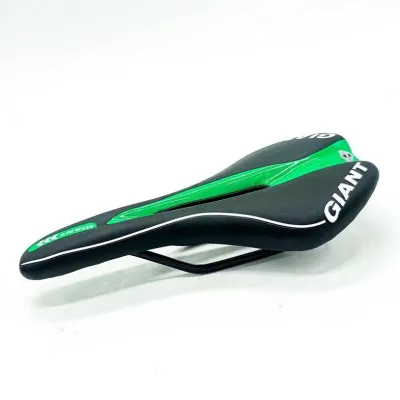

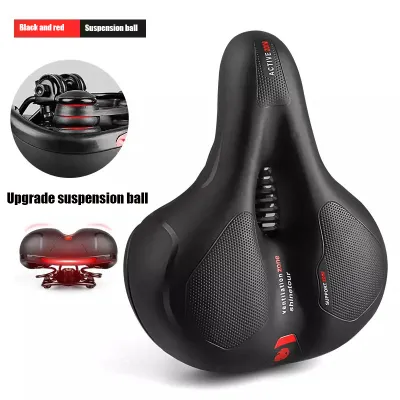
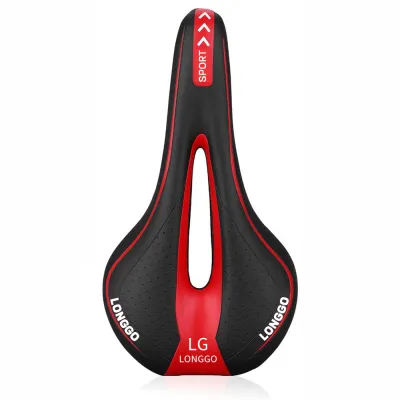
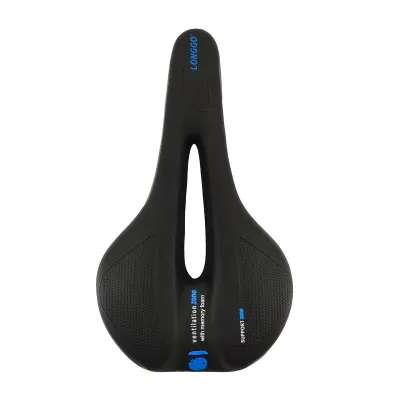
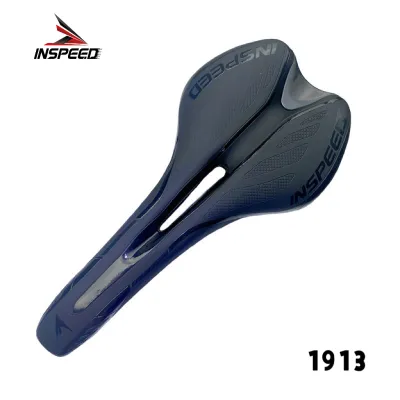
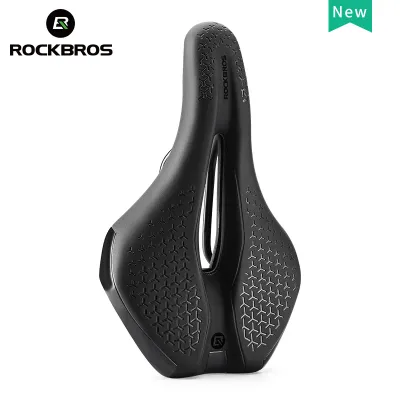
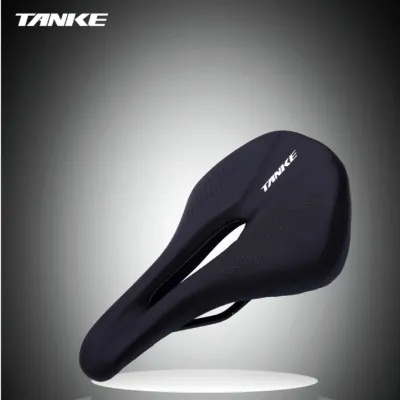
Prices are valid at publication and may change. Please refer to the product page for the latest price.
If your saddle is too narrow, your sit bones will hang over the sides of the seat. This causes your body weight to collapse onto the center of the saddle, compressing the soft tissues, nerves, and blood vessels in the perineal area. Over time, this pressure can lead to chronic numbness, pain, and long-term discomfort.
On the other hand, a saddle that is too wide can cause significant friction issues. As you pedal, your thighs must sweep past the sides of the saddle. If the nose or the wings of the saddle are too wide, your inner thighs will rub against the material with every pedal stroke. In hot and humid tropical climates, this friction combined with sweat can quickly lead to severe skin irritation and chafing.
Mountain biking requires a highly dynamic riding style compared to road cycling. You constantly shift your weight forward for steep climbs, slide behind the saddle for technical descents, and stand up to absorb impacts from rocks and roots. Because of these frequent transitions, your saddle must be wide enough to support you when seated, yet narrow enough to let you move around it without snagging your riding shorts.
Tools You Need to Measure at Home
You do not need expensive digital pressure sensors or professional bike shop equipment to find your sit bone width. A few common household items are highly effective for capturing an accurate physical impression of your pelvis.

First, find a piece of clean, corrugated cardboard. The cardboard from a standard shipping box works best because the internal ridges collapse easily under concentrated pressure, leaving a permanent, visible indentation. Avoid using flat, solid cardboard or thin paper, as these materials will not hold an impression.
Second, prepare a hard, flat surface to sit on. A wooden bench, a dining chair, a concrete step, or even a hard floor will work. Do not use a cushioned sofa, an office chair, or a bed, as these soft surfaces distribute your weight too evenly and prevent your sit bones from pressing deeply into the cardboard.
Third, grab a piece of chalk, a crayon, or a dark marker. This will help you highlight the edges of the indentations once you stand up, making the center points much easier to identify.
Finally, you will need a measuring tape or a rigid ruler with millimeter markings. Millimeters are the standard unit of measurement used by bicycle saddle manufacturers worldwide, so using a metric ruler simplifies the process and eliminates the need for unit conversions.
Step-by-Step Guide to Measuring Your Sit Bones
To get an accurate measurement, you must replicate the pelvic tilt of your typical riding position while making the impression. Follow these steps carefully to ensure a reliable result.
Begin by placing your piece of corrugated cardboard on the hard, flat surface you have chosen. Ensure the cardboard lies completely flat and does not slide around when you sit down.
Sit down slowly on the cardboard. To simulate your mountain biking posture, lean your torso forward at roughly a 60-degree angle. This is the typical moderate lean used on most trail, cross-country, and enduro mountain bikes.
Lift your feet slightly off the ground or rest them on a low stool so that your knees are bent at a 90-degree angle. This action mimics having your feet on the pedals and rotates your pelvis forward into its actual riding orientation.
Apply downward pressure to compress the cardboard. You can do this by grabbing the underside of your chair and pulling yourself downward, or by leaning your weight firmly into your seat. Hold this position for ten to fifteen seconds to ensure the cardboard fibers collapse under your sit bones.
Stand up carefully without shifting the cardboard. Look closely at the surface to locate the two distinct circular depressions left by your bones. If the marks are difficult to see, hold a piece of chalk or a crayon flat against the cardboard and rub it gently across the area. The chalk will color the flat surface while leaving the deep depressions clean and highly visible.
Use a pen or marker to place a dot directly in the center of each depression. These dots represent the center points of your sit bones.
Align your ruler with the two dots and measure the distance between them in millimeters. Write this number down as your raw sit bone width.
To ensure accuracy, repeat the entire process on a fresh piece of cardboard or on the reverse side. If your second measurement is within two millimeters of the first, you have a highly reliable baseline. If the difference is larger, check that your sitting surface is completely flat and try again.
How to Translate Your Measurement into Saddle Width
Once you have your raw sit bone width, you cannot simply buy a saddle of the exact same width. If your sit bones are 110 millimeters apart and you buy a 110-millimeter saddle, your bones will rest on the very edges of the seat, causing them to slip off and transfer your weight back onto your soft tissues.
To find your target saddle width, you must add a specific margin to your raw measurement. This margin accounts for the curved edges of the saddle and ensures your bones rest securely on the flat, supportive sections of the seat.
For a standard mountain biking posture with a moderate forward lean, the general recommendation is to add 20 to 30 millimeters to your raw sit bone width. For example, if your raw measurement is 115 millimeters, adding 20 millimeters gives you a target saddle width of 135 millimeters. If you prefer a slightly more upright riding position, adding 25 to 30 millimeters may provide better support.
It is helpful to understand how this differs from other cycling disciplines. Road cyclists often ride in a highly aggressive, aerodynamic tuck, which rotates the pelvis further forward and narrows the contact points. Consequently, road bike setups typically use smaller margins of 15 to 20 millimeters. Mountain biking requires a wider platform to handle the upright climbing positions and the constant physical impacts of off-road riding.
When shopping for a new mountain bike saddle, look at the manufacturer’s specification sheet for the width parameter. Most brands offer their popular saddle models in two or three distinct widths, such as 130mm, 142mm, and 152mm. Choose the size that is closest to your calculated target width. If your calculated width falls exactly between two sizes, it is generally safer to opt for the wider option, provided it does not interfere with your inner thighs.
Adjusting for Riding Style and Bike Geometry
While your sit bone measurement provides a solid starting point, your specific riding style and the geometry of your mountain bike play a significant role in final saddle selection.
Modern mountain bikes feature steep seat tube angles designed to position your hips directly over the bottom bracket for efficient climbing. This geometry keeps your torso relatively upright during seated climbs, which means your pelvis does not rotate forward as much as it would on an older bike. If you ride a modern trail or enduro bike with a steep seat tube, you may benefit from a slightly wider saddle to support this upright posture.
The profile shape of the saddle also affects how the width feels. Flat saddles allow you to slide forward onto the nose during steep climbs and slide back for flat sections. If you choose a flat saddle, you have more flexibility in your seating position. Waved or curved saddles, however, feature a raised tail that cradles your pelvis in a single, fixed position. If you prefer a waved saddle, matching your sit bone width precisely is critical, as there is less room to adjust your position on the fly.
After installing your new saddle, expect to make minor adjustments during your first few rides. Start with the saddle completely level. If you feel excess pressure on your hands or slide forward, tilt the nose up slightly. If you feel pressure in your soft tissues, tilt the nose down by one or two degrees. Small adjustments to the fore-and-aft position on the seat rails can also help align your knees and hips for optimal comfort.
Signs Your Current Saddle Width Is Wrong
Your body will provide clear physical feedback if your current saddle width is incorrect. Recognizing these warning signs can help you diagnose fit issues before they lead to chronic pain or injury.
Persistent numbness, tingling, or a “pins-and-needles” sensation in your groin area is a primary indicator that your saddle is too narrow. When the saddle cannot support your sit bones, your body weight rests entirely on the soft tissues, compressing the pudendal nerve and restricting blood flow. This issue should never be ignored, as prolonged nerve compression can lead to long-term health complications.
If you experience painful chafing, skin irritation, or raw spots on your inner thighs, your saddle is likely too wide. This excess width forces your legs to rub against the sides of the seat with every pedal stroke. This problem is often exacerbated during long climbs in hot, humid weather, where sweat softens the skin and increases friction.
Localized soreness or bruising directly on the outer edges of your sit bones can also indicate a width mismatch. This occurs when the saddle is slightly too narrow, causing your bones to rest on the sloping transition zone of the saddle wings rather than the flat, supportive top surface.
Frequently Asked Questions (FAQ)
Can I measure my sit bones without special equipment?
Yes, the cardboard impression method is highly effective and widely trusted by professional bike fitters. While specialized digital pressure mats can provide highly detailed maps of your pelvic pressure, they ultimately yield the same basic width measurement. The simple cardboard test provides a reliable, cost-free baseline that is more than accurate enough for selecting a standard consumer saddle size.
Does my sit bone width change over time?
The physical distance between your pelvic bones remains constant once you reach skeletal maturity. However, changes in your body composition, muscle mass in your glutes, or overall flexibility can alter how you sit on the saddle. Significant weight loss or gain can change the amount of natural tissue cushioning over your sit bones, which may make a previously comfortable saddle feel too hard or poorly fitted.
Should I buy a wider saddle for extra comfort?
No, buying an excessively wide saddle is a common mistake that often leads to new comfort issues. While a wider seat might feel soft and supportive when sitting stationary, it will quickly cause painful chafing and restrict your leg movement once you start pedaling. True saddle comfort comes from finding the precise balance where your sit bones are fully supported without the saddle wings interfering with your natural pedaling motion.

Community discussion
Share your experience or ask a question. Comments are reviewed before publication.