
Using an elastic tension rope is an efficient way to build strength, improve flexibility, and get a full-body workout at home. Unlike bulky gym equipment, these lightweight, portable bands rely on elastic resistance to challenge your muscles throughout their entire range of motion. This makes them highly suitable for home workouts, especially in the Philippines, where space can be limited and tropical humidity makes traveling to a local gym less appealing during the hottest hours of the day.
To get the most out of your training, you must understand how to structure your exercises, maintain proper form, and safely progress over time. Whether you are a beginner looking to establish a fitness routine or an experienced lifter seeking a convenient home alternative, an elastic tension rope can adapt to your specific fitness level. By focusing on controlled movements and consistent tension, you can effectively stimulate muscle growth and improve cardiovascular endurance in any clear space in your home.
Preparing for Your Elastic Tension Rope Workout
Before you begin your workout, taking a few minutes to prepare your equipment and environment is essential for preventing injuries and ensuring an effective session. Start by thoroughly inspecting your elastic tension rope. Look closely for any signs of wear, such as micro-tears, small cracks, discoloration, or areas where the elasticity has degraded. In tropical climates like the Philippines, high humidity and heat can accelerate the breakdown of rubber and latex materials, making this pre-workout check a critical safety habit. If you notice any structural compromises, replace the rope immediately to avoid sudden snapping during use.
Products mentioned in this guide
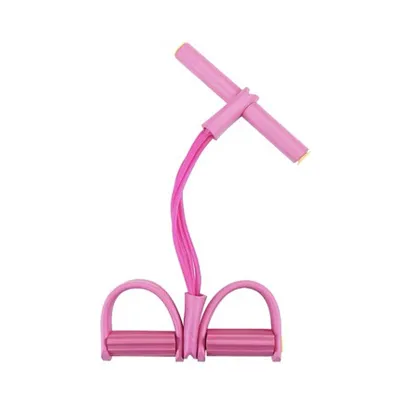
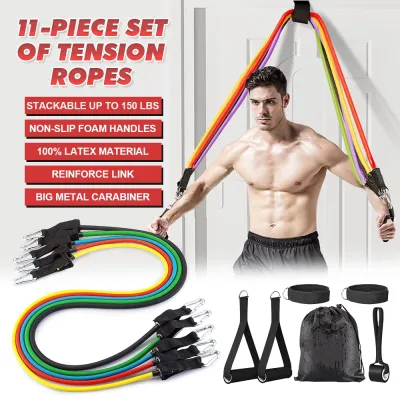

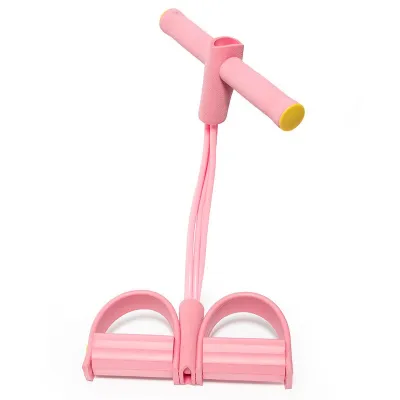
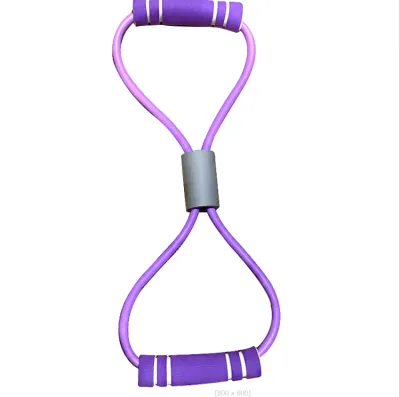
Prices are valid at publication and may change. Please refer to the product page for the latest price.
Next, select a resistance level that matches your current strength and the specific exercise you are performing. The ideal resistance should allow you to complete your target repetitions with controlled, steady movements through a full range of motion, without forcing you to compromise your posture. If you are using a door anchor or wall attachment, verify that the anchor point is completely stable and non-moving. Always secure the anchor on a door that closes toward you, and lock the door if possible to prevent anyone from opening it mid-exercise. Finally, clear your immediate surroundings of any sharp objects, low tables, or loose rugs that could snag the rope or cause you to trip, ensuring you have ample space to move freely in all directions.
Step-by-Step Full-Body Exercise Routine
To maximize the efficiency of your home workout, structure your routine to transition logically from large muscle groups to smaller ones. This systematic approach keeps your heart rate elevated while allowing specific muscle groups to recover while you target others. Perform each exercise with focus, prioritizing control over speed.

Lower Body and Core Movements
Your lower body contains some of the largest muscle groups in your body, making squats and lunges excellent foundational movements to kickstart your routine. To set up a tension-rope squat, stand with your feet shoulder-width apart, stepping securely onto the center of the elastic rope. Pull the handles up to shoulder height, keeping your palms facing forward or inward, which creates initial tension on the band. Keep your chest upright, brace your core, and lower your hips back and down as if sitting in a chair. Ensure your knees track in line with your toes and do not cave inward as you descend. Press firmly through your heels to return to the starting position, maintaining constant tension on the rope throughout both the lowering (eccentric) and rising (concentric) phases.
For lunges, place your right foot forward on the center of the rope and step your left foot back into a staggered stance. Hold the handles at shoulder height to create resistance. Lower your left knee toward the floor until your right thigh is parallel to the ground, keeping your front knee aligned directly over your ankle to prevent joint strain. Drive through your front heel to return to the starting position, then switch sides after completing your repetitions.
To target your core during these movements, focus on active stabilization. Keep your abdominal muscles engaged as if preparing to take a light impact, which supports your lower back and prevents excessive arching under the rope’s resistance. Avoid letting the rope pull you out of alignment; your core must work continuously to resist the lateral and vertical forces exerted by the elastic material.
Upper Body and Back Movements
Targeting your upper body requires a mix of pulling and pushing movements to ensure balanced muscular development across your chest, back, shoulders, and arms. To perform seated rows, sit on the floor with your legs extended straight in front of you. Loop the elastic tension rope securely around the soles of your feet, ensuring it cannot slip off. Hold the handles with your arms extended and your palms facing each other. Pull the handles toward your lower ribs by driving your elbows backward and squeezing your shoulder blades together in a controlled scapular retraction. Keep your spine tall and avoid leaning backward as you pull; slowly extend your arms to return to the start.
For overhead presses, stand on the center of the rope with feet hip-width apart. Bring the handles to shoulder height with your palms facing forward and elbows bent. Press the handles straight up toward the ceiling until your arms are fully extended, keeping your shoulders aligned and avoiding shrugging toward your ears to protect your rotator cuff. Lower the handles back to shoulder height with control.
To target your arms, perform bicep curls by standing on the rope and holding the handles at your sides with palms facing forward. Keep your elbows pinned to your ribs as you curl your hands toward your shoulders, squeezing your biceps at the top before slowly lowering down. You can easily adjust the resistance for any of these exercises by widening your stance to shorten the active length of the rope, or by choking up on the tubing to increase the tension.
Form Checks and Safety Stop Conditions
Maintaining proper technique is the most effective way to prevent injury when working out with elastic resistance. One of the most common errors is allowing the rope to snap back quickly during the return phase of an exercise. This uncontrolled release removes the muscular benefit of the eccentric phase and places sudden, jarring stress on your joints and tendons. Always resist the pull of the rope, taking two to three seconds to return to the starting position of every movement.
Pay close attention to your body’s alignment and posture throughout your session. Watch for joint hyperextension, such as locking your elbows during presses or locking your knees during squats, which shifts the load from your muscles to your skeletal structure. If you notice your lower back arching excessively or your core bracing failing, pause immediately, reduce the resistance if necessary, and reset your posture before continuing.
You must establish clear stop conditions to protect yourself from acute injury. Stop the exercise immediately if you experience sharp, sudden joint pain, which is distinct from the dull, warm burn of muscular fatigue. You must also halt your workout if you notice the anchor point slipping, or if you detect any new fraying, peeling, or cracking on the surface of the elastic tension rope. If you have pre-existing joint issues, chronic pain, or past injuries, consult a physical therapist or physician to tailor these movements safely to your physical capabilities.
Tracking Progress and Adjusting Resistance
To see continuous physical improvements, you must track your workouts and progressively challenge your muscles over time. Keep a simple training log on your phone or in a notebook, recording the exercises performed, the number of sets and repetitions, and your Rate of Perceived Exertion (RPE) on a scale of 1 to 10. This data provides a clear picture of your physical adaptation and helps you decide when it is time to increase the difficulty of your routine.
When you can comfortably complete all your target repetitions with perfect form and an RPE below 7, you should adjust the resistance. You can progress by upgrading to a thicker, higher-resistance rope, or by combining multiple bands if your equipment allows. If you do not have access to heavier ropes, you can increase the training stimulus by adding more repetitions to each set, up to a maximum of 20 to 25 reps.
Another highly effective progression method is manipulating your movement tempo. Try slowing down the lowering phase of your exercises to four seconds, or add a distinct two-second pause at the point of maximum contraction, such as the top of a bicep curl or the bottom of a squat. This increases your muscles’ time under tension, stimulating strength and endurance gains without requiring a change in your physical equipment.
Frequently Asked Questions (FAQ)
How often should I schedule full-body tension rope sessions?
For optimal results, schedule full-body tension rope workouts two to three times per week, ensuring you have at least 48 hours of rest between sessions. This recovery window is vital, as muscles do not grow during the workout itself, but rather during the rest periods when the body repairs the micro-tears caused by resistance training. You can adjust this frequency based on your personal recovery capacity, sleep quality, and overall daily activity level. If you experience persistent muscle soreness or fatigue, increase your rest days to allow your body to adapt fully.
Is an elastic tension rope enough to build muscle at home?
Yes, an elastic tension rope is highly capable of building muscle at home, provided you consistently apply the principle of progressive overload. Muscle hypertrophy occurs when muscle fibers are subjected to sufficient tension, regardless of whether that tension comes from iron plates or elastic rubber. To stimulate growth, you must perform your exercises close to muscular failure, meaning the final repetitions of each set should feel highly challenging to complete with proper form. Additionally, support your training with a balanced diet containing adequate protein to provide the building blocks necessary for muscle repair and hypertrophy.

Community discussion
Share your experience or ask a question. Comments are reviewed before publication.