
Starting your badminton journey in the Philippines is an exciting step, whether you are playing on a local outdoor street court or joining friends at an indoor sports center. For a complete beginner, the right racket is one that assists your learning curve rather than hindering it. Instead of investing in expensive, stiff, or head-heavy rackets designed for advanced players, you benefit most from a forgiving frame that helps you generate power with minimal effort. A lightweight, even-balanced, or slightly head-light racket with a flexible shaft is the most practical choice for developing proper swing mechanics while protecting your wrist and shoulder from strain.
In the tropical climate of the Philippines, factors like high humidity and heat also play a role in how your gear performs. Humidity affects grip traction and string elasticity, making certain racket specifications more suitable for local conditions than others. By understanding the basic physical properties of a racket, you can make an informed purchase that fits your budget and playing style. This guide will walk you through the essential specifications, budget considerations, and safety checks to ensure your first racket is a reliable partner on the court.
Key Selection Criteria for Your First Badminton Racket
When selecting your first badminton racket, the physical dimensions and weight distribution dictate how easy the racket is to swing. Weight is typically categorized using a “U” rating system, where a higher number denotes a lighter racket. For beginners, rackets in the 4U (approximately 80 to 84 grams) or 5U (approximately 75 to 79 grams) ranges are highly recommended. These lighter weights allow you to react quickly to incoming shuttlecocks, reduce fatigue during long playing sessions, and minimize the risk of repetitive strain injuries in your wrist and elbow.
Products mentioned in this guide
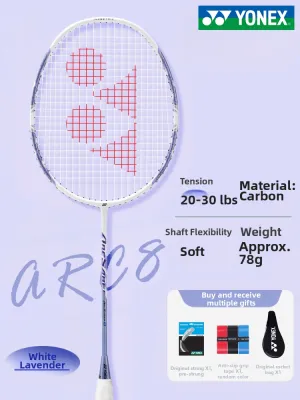
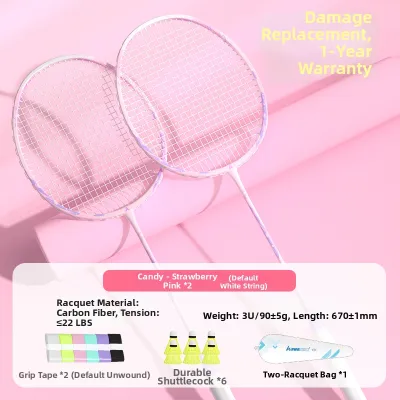
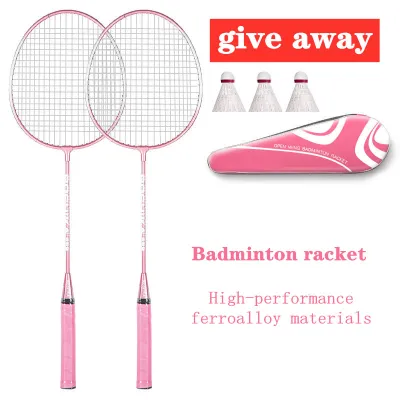
Prices are valid at publication and may change. Please refer to the product page for the latest price.
Racket balance is another critical factor that determines how the weight is distributed along the frame. Rackets are generally classified as head-heavy, even-balanced, or head-light. Head-heavy rackets place more weight at the top of the frame to generate extra power, but they require strong wrist technique and can quickly tire out a beginner’s arm. Head-light rackets offer excellent maneuverability for defensive play but make it harder to clear the shuttlecock to the back of the court. An even-balanced racket provides a neutral middle ground, offering a blend of speed and power that helps you learn both offensive and defensive strokes effectively.
The flexibility of the racket shaft determines how much the frame bends during a swing. Shafts range from stiff to flexible. Stiff shafts are designed for players with fast, explosive swing speeds who can generate power through precise wrist action. For beginners, a flexible shaft is far more forgiving. As you swing, a flexible shaft bends and snaps back, acting like a spring to generate extra power even if your timing or technique is not yet fully developed. This whip-like effect helps you clear the shuttlecock deep into the opponent’s court with less physical effort.
Finally, you must consider the grip size, which is denoted by a “G” rating, where larger numbers indicate thinner handles. In the Philippines, G5 is a common and versatile grip size that fits most hand sizes comfortably. A grip that is too large can cause you to squeeze the handle too tightly, leading to forearm fatigue and restricted wrist movement. Choosing a slightly smaller grip size like G5 allows you to customize the handle later by adding an absorbent overgrip. This is particularly important in warm, humid playing environments where sweat can quickly make a bare wooden handle slippery and difficult to control.
Decoding Racket Specifications for Beginners
Understanding the technical specifications listed on a racket’s shaft or product description helps you compare different models objectively. The primary material used in the construction of the racket determines its weight, durability, and overall feel. Entry-level rackets are typically made from steel, aluminum, or carbon graphite. Steel and aluminum rackets are highly durable and inexpensive, but they are heavy and do not absorb vibrations well, which can lead to joint discomfort over time. Carbon graphite rackets are significantly lighter and offer superior vibration dampening, making them the preferred choice for anyone planning to play regularly.

String tension is measured in pounds (lbs) and has a profound impact on how the racket feels when making contact with the shuttlecock. Beginners often assume that higher string tension is always better, but the opposite is true for those starting out. High tension (above 24 lbs) creates a stiff, board-like string bed that requires precise contact and high swing speed to generate power. For beginners, a lower string tension between 18 lbs and 22 lbs is ideal. This lower tension creates a “trampoline effect,” allowing the strings to stretch and propel the shuttlecock further with less effort, while also providing a larger, more forgiving sweet spot.
The shape of the racket head also influences the size of this sweet spot, which is the area on the string bed that produces the most power and control. Traditional rackets featured an oval head shape, which offers excellent control but has a relatively small and concentrated sweet spot. Modern beginner rackets almost exclusively utilize an isometric, or square-shaped, head. By squaring off the top corners of the frame, isometric rackets align more main and cross strings, expanding the sweet spot significantly. This design ensures that even off-center hits travel with reasonable speed and accuracy, reducing frustration as you hone your hand-eye coordination.
When reading product specifications, you will also encounter maximum tension ratings. This rating indicates the highest tension the frame can safely withstand without warping or cracking under the pressure of the strings. For entry-level graphite rackets, a maximum tension rating of 24 lbs to 26 lbs is standard and more than sufficient. Even if you plan to string your racket at a lower tension initially, having a frame that can support slightly higher tensions gives you room to grow as your skills develop and you begin to prefer a tighter string bed.
Matching Your Racket to Your Playing Environment and Budget
Your playing environment dictates the level of durability and performance you need from your badminton gear. If you plan to play casually outdoors—such as in your backyard, on a quiet street, or at a local park—you will face challenges like wind, uneven ground, and potential contact with concrete. In these settings, expensive graphite rackets are at a high risk of cracking if they accidentally strike the ground or clash with a partner’s racket. For casual outdoor recreation, durable aluminum or steel-composite rackets are highly practical because they can withstand rough handling and are typically sold in affordable multi-racket sets that include basic shuttlecocks.
If you are transitioning to regular indoor court sessions at a local sports complex or school gym, the playing conditions change dramatically. Indoor courts feature wooden or synthetic rubber mats that offer excellent traction, and the lack of wind allows for precise, strategic play. In this environment, investing in an entry-level, full-graphite racket is highly beneficial. The lightweight nature of graphite allows you to execute quick defensive maneuvers and practice proper stroke techniques without straining your arm. Furthermore, graphite’s ability to absorb vibrations protects your joints during repetitive hitting sessions on hard indoor surfaces.
Setting a realistic budget is essential to avoid overspending on advanced features that you cannot yet utilize. In the Philippine market, badminton rackets generally fall into three distinct price tiers. The budget tier, under ₱1,000, consists primarily of steel, aluminum, or low-grade composite rackets that are pre-strung and ideal for casual, infrequent backyard play. The entry-level training tier, ranging from ₱1,000 to ₱3,000, offers excellent value, featuring full-graphite frames, flexible shafts, and reliable construction from reputable sports brands. This is the sweet spot for beginners who want to improve their game without a major financial commitment.
The premium tier, which exceeds ₱3,000 and can go up to ₱10,000 or more, is designed for intermediate and advanced players. These rackets feature highly specialized technologies, such as ultra-stiff shafts, aerodynamic frame shapes, and head-heavy balances tailored for specific playing styles. For a complete beginner, these premium rackets are not only an unnecessary expense but can actually hinder your progress, as their stiff shafts and small sweet spots make it difficult to generate power and can lead to poor technique or physical strain.
Pre-Purchase Checks and Buying Safely Online
With the convenience of online shopping, many beginners choose to purchase their first racket from ecommerce platforms or online sports retailers. However, buying online requires careful verification to ensure you receive a genuine, high-quality product. When your package arrives, the first step is to conduct a thorough physical inspection of the racket. Check the frame and shaft for any visible hairline cracks, paint chips, or warping. Run your fingers along the outer edge of the frame to ensure the grommets—the small plastic eyelets that protect the strings from the sharp edges of the frame—are intact and properly seated.
Next, inspect the strings for even tension and alignment. Press down on the center of the string bed; it should feel firm but resilient, without any loose or sagging strings. If you purchased a pre-strung racket, verify that the strings are not rubbing against each other excessively or showing signs of premature fraying. It is also wise to gently flex the racket shaft to ensure there are no internal structural weaknesses or unusual clicking sounds, which could indicate a manufacturing defect or damage sustained during transit.
To avoid counterfeit products, which are common in the sports equipment market, always verify the credibility of the online seller. Look for official brand stores, authorized distributors, or highly rated sports retailers on your chosen ecommerce platform. Genuine rackets usually feature specific security labels, holographic stickers, or unique serial numbers engraved on the cone of the racket handle. Be skeptical of listings that offer high-end professional rackets at prices that seem too good to be true, as these are almost always low-quality counterfeits that lack the structural integrity and performance of the original models.
Finally, familiarize yourself with the seller’s warranty and return policies before finalizing your purchase. A reputable manufacturer’s warranty typically covers structural manufacturing defects, such as a frame that warps under normal stringing conditions or a shaft that snaps during a standard swing. Keep in mind that warranties do not cover accidental damage, such as frame cracks resulting from clashing with a partner’s racket, striking the floor, or improper restringing. Understanding these terms ensures you know your options if your racket arrives damaged or exhibits a clear manufacturing flaw during your first few sessions on the court.
Frequently Asked Questions (FAQ)
Do I need to buy a separate bag and accessories with my first racket?
While a dedicated racket bag is not strictly mandatory for a complete beginner, it is highly beneficial for protecting your investment. Many entry-level rackets come with a simple fabric cover or a half-length head cover, which is sufficient for keeping dust off the frame. However, if you travel to courts regularly, a full-length padded bag protects the graphite frame from accidental scratches and minor impacts during transit. In the humid climate of the Philippines, storing your racket in a dry bag also helps prevent moisture from degrading the grip and strings.
Aside from a bag, a few low-cost accessories can significantly improve your playing experience. Investing in a pack of synthetic overgrips is highly recommended, as they absorb hand sweat and provide a secure, non-slip hold on the handle. You will also need a tube of shuttlecocks suitable for your playing environment. For outdoor play, durable nylon (plastic) shuttlecocks are practical because they resist wind and last much longer than feather shuttlecocks, which are fragile and best reserved for controlled indoor court environments.
Should beginners buy pre-strung rackets or get them strung professionally?
For absolute beginners, purchasing a factory pre-strung racket is the most convenient and cost-effective option. Pre-strung rackets are ready to use straight out of the box and are typically strung at a moderate, forgiving tension (around 18 lbs to 20 lbs) that is ideal for learning basic strokes. This eliminates the extra cost and effort of purchasing unstrung frames and paying a professional stringer to customize the setup before you even know your playing preferences.
You should consider professional restringing once your skills begin to progress or when the factory strings eventually break. As you play more frequently, you will develop a better feel for the shuttlecock and may find that the factory strings have lost their tension, resulting in a mushy feel. When this happens, taking your racket to a local sports shop to be strung with high-quality strings at a specific tension (such as 21 lbs or 22 lbs) can breathe new life into your racket and provide a noticeable boost in control and power.
How often should a beginner replace their badminton racket?
There is no strict time limit on how long a badminton racket will last, as its lifespan depends heavily on how often you play and how well you care for it. A high-quality graphite racket can easily last for several years if it is stored properly and kept free from physical impacts. You should inspect your racket periodically for signs of structural fatigue, such as micro-fractures in the frame, severe warping, or loose grommets that can cause the strings to cut into the graphite. If you notice any visible cracks, the racket is no longer safe to use, as the high tension of the strings can cause the frame to collapse unexpectedly during a swing.
For most beginners, the decision to replace or upgrade a racket is driven by skill progression rather than physical wear and tear. As your technique improves, your swing speed will naturally increase, and you may find that your initial flexible, even-balanced racket feels too soft or lacks the precision you desire. When you can consistently hit deep clears and controlled drops, it may be time to transition to a slightly stiffer shaft or a racket with a different balance point that aligns with your developing playing style.

Community discussion
Share your experience or ask a question. Comments are reviewed before publication.