
Landing a massive fish requires a delicate balance of patience, physical leverage, and seamless coordination. Whether you are battling a powerful giant trevally in the tropical waters of the Philippines or pulling a heavy grouper from a deep reef, the final moments of the fight are when most catches are lost. Successfully bringing a large fish on board or onto the shore depends on choosing the correct tool for your specific goal—whether that is a conservation-minded landing net or a heavy-duty gaff—and executing the landing motion with deliberate, controlled movements. By understanding the physics of leverage and maintaining clear communication with your fishing partner, you can secure your trophy safely without snapping your line or risking injury.
Choosing the Right Landing Tool: Net vs. Gaff
Selecting the appropriate landing tool depends primarily on your target species, the design of your vessel, and whether you plan to release the fish. A landing net is the standard choice for catch-and-release fishing because it preserves the protective slime coat of the fish and minimizes physical trauma. Modern landing nets featuring knotless, rubber-coated mesh are highly recommended for this purpose, as they prevent hook tangles and do not scrape away the scales or skin of the fish. Nets are also ideal for toothy species or fish with delicate mouths where a precise hold is necessary to prevent the hook from tearing free.
Conversely, a gaff is reserved strictly for large, heavy fish intended for harvest. Because a gaff penetrates the flesh of the fish, it should never be used if there is any chance you will release the catch. Gaffs are highly effective when targeting large pelagic species like dorado, tuna, or wahoo from deep-water boats with high gunwales, where lifting a heavy fish in a net is physically impractical. The long handle of a gaff allows you to reach down and secure a heavy fish, utilizing your body weight to pull it upward rather than relying on the structural strength of a net frame.
Products mentioned in this guide
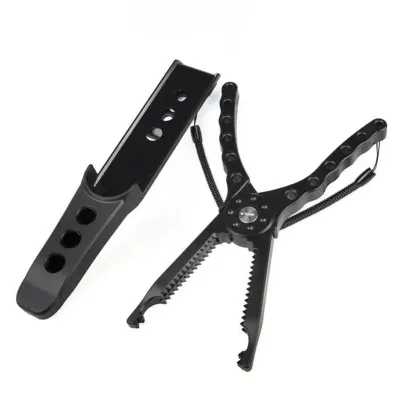
41 Lazada user ratings
di pa nagagamit..pero sana maayos sya maka hawak ng isda for the item purposes 😅 iwas lansa sa kamay at iwas kawala narin😂
Its very nice thoigh test it after fishing at sea
Perfect for big fish, Durable and reliable,
Good quality. No damage.
Prices are valid at publication and may change. Please refer to the product page for the latest price.
Before heading out onto the water, perform a thorough safety and maintenance check on your equipment. Inspect the net handle for hairline cracks and verify that the hoop joints are secure and free of corrosion. For gaffs, ensure the hook point is razor-sharp and free of rust, as a dull point will bounce off the tough skin of a large fish, potentially causing a dangerous redirect. In humid, tropical environments, sweat and salt spray can make handles incredibly slick; verify that your tools feature non-slip EVA foam or textured rubber grips to maintain a secure hold during critical moments.
Preparing for the Catch: Positioning and Teamwork
Successfully landing a large fish is rarely a solo endeavor and requires clear roles and synchronized movements between the angler and the assistant. The angler’s primary responsibility is to control the fish’s head and direction. Keep your fishing rod loaded with a steady bend, maintaining constant tension on the line without high-sticking—a common error where the rod is pointed straight up, putting extreme stress on the fragile tip. Lead the fish in wide, controlled circles, gradually coaxing its head toward the surface of the water as it tires.

The person operating the net or gaff must remain patient and positioned slightly downwind or downcurrent from the angler. Avoid standing directly at the edge of the gunwale or casting a large shadow over the water, as this can easily spook a weary fish and trigger a sudden, violent run. Keep the landing tool ready but out of the fish’s direct line of sight. If using a net, keep it low and near the water surface; if using a gaff, hold it ready with the hook facing downward, waiting for the perfect angle.
Establish simple, clear verbal cues before the fish is even near the boat. In the heat of the battle, loud splashes and engine noise can drown out complex instructions. Use basic commands such as “ready,” “lead him left,” or “hold” to coordinate your movements. The assistant should never swipe at the fish until the angler explicitly signals that the fish is spent and positioned correctly. If the fish suddenly dives, the assistant must back away immediately to give the angler room to work the rod and prevent the line from wrapping around the landing tool.
Step-by-Step Technique for Landing with a Net
When landing a fish with a net, the golden rule is to let the angler swim the fish into the net rather than trying to scoop the fish out of the water. Start by quietly submerging the net hoop into the water at a forty-five-degree angle, keeping the bag trailing behind the frame to prevent it from tangling. The angler should then lead the fish head-first over the submerged rim of the net. Never attempt to net a fish tail-first, as fish have no reverse gear and will instantly swim out of the hoop if they feel the mesh touch their tail.
Once the fish’s head and midsection are safely past the rim of the net, the netter must execute a smooth “scoop and lift” motion. Lift the hoop forward and upward in a single, continuous sweep to trap the fish in the bottom of the bag. Immediately after the scoop, transition your grip to lift the net vertically. Do not lift the net handle horizontally like a shovel, as the weight of a large fish will easily bend the hoop or snap the handle at the joint. Instead, pull the handle straight up hand-over-hand, keeping the hoop close to the side of the boat or dock to maximize your leverage.
Once the fish is secured inside the net bag on the deck, handle it with extreme care, especially if it is a toothy or spiny species. Keep the fish supported on a flat, wet surface and use long-nose pliers to remove the hook while the fish is still restrained by the mesh. If you are landing a fish from a rocky shoreline or wading in the surf, watch your footing on slippery rocks and avoid dragging the net across sharp barnacles or bottom snags, which can slice through the mesh and release your catch.
Step-by-Step Technique for Landing with a Gaff
Gaffing a large fish requires precise timing and a decisive, physical motion. Begin by positioning yourself slightly behind the angler, waiting until the fish is completely exhausted and swimming parallel to the boat. Do not attempt to gaff a fish that is still green and thrashing wildly. Visualise the target area on the fish: you want to aim for the thick shoulder area just behind the head. This placement secures the fish by its strongest muscle group and avoids damaging the valuable loin meat or puncturing the stomach cavity, which can ruin the quality of the harvest.
To execute the strike, reach over the back of the fish with the gaff handle, keeping the hook point facing downward toward the water. Position the hook slightly past the fish’s back, then pull the gaff hook toward you and upward in a single, fluid motion. This pulling motion uses the resistance of the water and the fish’s own weight to drive the hook deep into the shoulder. Never swing or chop at the fish like an axe, as this lacks accuracy and can easily slice through the skin, allowing the fish to tear free and break the leader.
Immediately after the gaff hook penetrates, lift the fish up and over the gunwale in one continuous, sweeping motion. Do not hesitate or let the fish hang against the side of the hull, as a thrashing fish can easily shake itself off the hook or damage the boat. Once the fish is on the deck, pin it down immediately using your body weight or a dedicated fish club to prevent dangerous thrashing. A large, powerful fish loose on a wet deck can easily bruise its own meat, break rods, or cause serious injury to the crew with its sharp fins and teeth.
Common Mistakes That Cause Fish to Escape at the Last Second
One of the most frequent errors anglers make is “chasing” the fish with the landing tool. When an assistant lunges at a fish that is still out of reach, it almost always spooks the animal, triggering a sudden burst of energy that can snap a tight leader. Chasing also increases the risk of accidentally hitting the line with the net frame or gaff hook, causing an instant break. Always wait patiently for the angler to bring the fish to the tool, rather than reaching out to meet it.
Reaching too far over the water is another dangerous mistake that compromises both your leverage and your personal safety. When you lean far over the gunwale or a slippery shoreline rock, you lose your center of gravity and the ability to lift vertically. This posture makes it incredibly easy to lose your balance and fall into the water, especially if the boat rolls unexpectedly in rough seas. If you cannot reach the fish comfortably without leaning, wait for the angler to make another pass and bring the fish closer.
Lifting a heavy net by the handle horizontally or attempting to drag a large fish out of the water using only the fishing line are also recipe for disaster. Monofilament and fluorocarbon leaders are highly susceptible to breaking when subjected to sudden, dead-weight tension out of the water. Similarly, gaffing too early or striking the fish in the thin tail section often results in the hook tearing through the flesh, leaving you with a lost fish and a damaged trophy. Take your time, breathe, and wait for the fish to present a clean, stable target.
Post-Landing Handling and Fish Care
Once the fish is safely on board or on the shoreline, immediate and proper handling is essential for both your safety and the quality of the fish. If you plan to release the catch, keep the fish in the water as much as possible while removing the hook. Use a long-nose pliers or a dedicated dehooking tool to grasp the hook shank firmly and twist it free. If you must lift the fish out of the water for a quick photograph, always wet your hands first to protect its delicate slime coat, and support its weight horizontally with one hand under the belly and the other gripping the tail wrist. Never hold a heavy fish vertically by its jaw, as this can severely damage its internal organs and skeletal structure.
For fish that are intended for harvest, quick and humane dispatching is crucial to preserve the quality of the meat. In hot, tropical climates, high temperatures can cause fish meat to spoil rapidly if not treated correctly. Immediately bleed the fish by cutting the gill arches or making a shallow incision behind the pectoral fin, then submerge it in a clean ice slurry. This rapid cooling stops the decay process, firms up the flesh, and ensures that your hard-won catch provides the best possible table fare for your family and friends.

Community discussion
Share your experience or ask a question. Comments are reviewed before publication.