
Exploring the rich marine biodiversity of the Philippines—from the world-class muck diving in Anilao to the deep, current-swept walls of Tubbataha—demands reliable equipment that performs flawlessly under pressure. Selecting the ideal Yupard diving flashlight requires a careful balance between your planned diving depth, the underwater environments you frequent, and your budget in ₱. While a dive light is an essential tool for restoring lost colors at depth, exploring crevices, and ensuring safety during night dives, it is crucial to remember that no piece of equipment can ever replace proper scuba training, certification, and sound underwater judgment. Before purchasing any lighting gear, you must assess your personal skill level, the specific demands of your dive sites, and the physical limits of the equipment.
Different diving activities dictate vastly different gear configurations. A casual recreational diver exploring shallow coral gardens under bright tropical sunlight has entirely different lighting requirements than an advanced technical diver navigating deep shipwrecks. By understanding how depth ratings, beam angles, build materials, and battery configurations interact, you can make an informed decision that keeps you safe without overspending. This guide will walk you through the essential evaluation criteria, verification steps, and maintenance practices necessary to choose and maintain a dive light that fits your specific underwater pursuits.
Understanding Dive Depth Ratings and Waterproof Standards
When browsing for a Yupard diving flashlight, understanding the distinction between surface-level water resistance and true underwater pressure resistance is a matter of safety. Many consumer electronics carry an IPX8 rating, which generally indicates that a device can withstand continuous immersion in water under conditions specified by the manufacturer. However, standard IPX8 ratings are often tested at shallow depths of only one to three meters. For scuba diving, where hydrostatic pressure increases by one atmosphere (approximately 14.7 pounds per square inch) for every 10 meters of depth, a standard IPX8 rating is entirely insufficient. You must look for a dedicated scuba depth rating, typically specified in meters or feet, which indicates that the flashlight’s housing, lens, and seals have been engineered to withstand the crushing forces of the deep.
Products mentioned in this guide
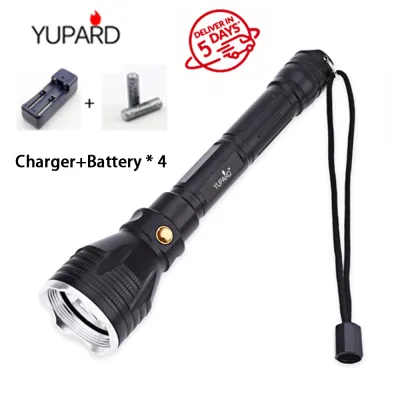
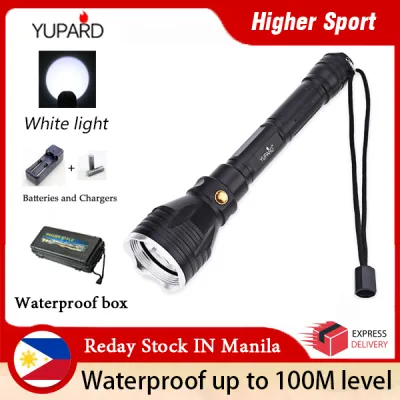
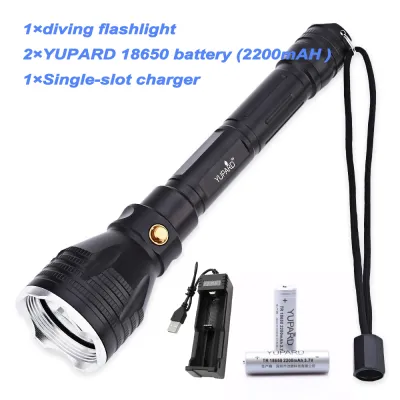
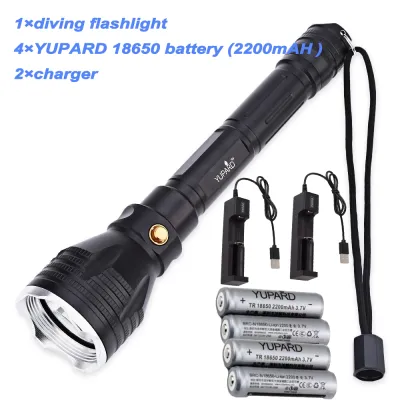
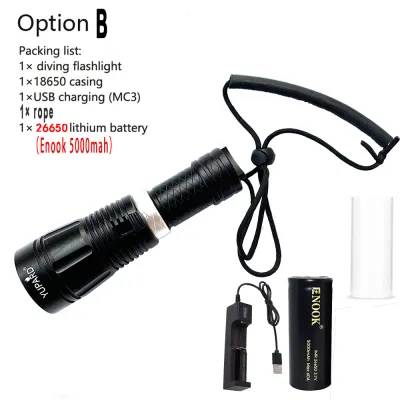
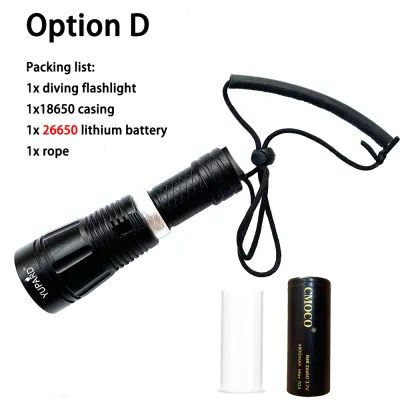
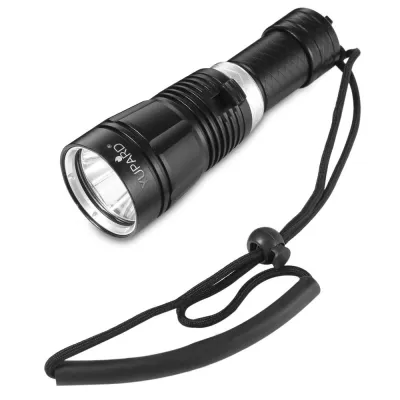
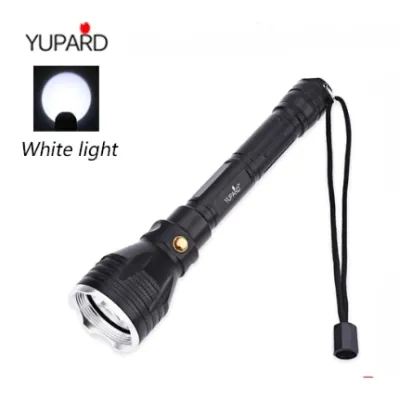
Prices are valid at publication and may change. Please refer to the product page for the latest price.
To safely interpret manufacturer depth specifications, always locate the official depth rating printed on the product packaging, engraved on the flashlight body, or detailed in the user manual. If a manufacturer specifies a depth limit of 60 meters, this means the light has been designed to remain watertight up to that specific pressure limit under controlled conditions. However, real-world factors such as temperature fluctuations, salt buildup, and seal wear can degrade this performance. Therefore, establishing a conservative safety margin is highly recommended. For recreational diving, which is strictly limited to a maximum depth of 40 meters, choosing a light rated to at least 60 or 100 meters provides an essential buffer against unexpected pressure spikes or minor seal imperfections.
For technical diving, which involves depths beyond recreational limits or penetration into overhead environments, equipment reliability is non-negotiable. Technical divers must never rely on a single light source. If you plan to engage in deep or technical diving, verify that your primary and backup lights are rated well beyond your planned maximum depth. Establish strict stop conditions: if your light shows any signs of flickering, moisture intrusion, or switch failure during your pre-dive check, the dive must be aborted immediately. A malfunctioning light in a deep or dark environment can quickly lead to disorientation and severe safety hazards.
Evaluating Beam Types and Brightness for Different Diving Scenarios
The effectiveness of your underwater light depends heavily on the beam angle and how it interacts with water clarity. In murky or high-turbidity waters, such as those found near river mouths or after heavy tropical rains in coastal areas, a narrow beam angle of 5 to 15 degrees is highly advantageous. A tight, focused beam cuts through suspended particles and silt, minimizing backscatter—the phenomenon where light reflects off debris back into your eyes, severely reducing visibility. Conversely, in the crystal-clear waters of offshore reefs, a wide beam angle of 60 to 120 degrees is preferred. Wide beams provide broad, even illumination that is perfect for night diving, situational awareness, and capturing the expansive beauty of marine landscapes.

Understanding lumen claims is another critical step in selecting the right light. Lumens measure the total amount of visible light emitted by a source, but high lumen numbers do not automatically translate to better underwater performance. Manufacturers often advertise maximum theoretical lumen outputs that may only be achievable for a few minutes before thermal throttling or battery depletion occurs. When evaluating a Yupard diving flashlight, look for verified runtime charts that show how brightness levels behave over time. For general recreational night diving, a real output of 800 to 1,200 lumens is typically more than sufficient to illuminate your surroundings without blinding your dive buddies or scaring away marine life.
Color temperature, measured in Kelvin (K), also plays a pivotal role in how you perceive the underwater world. Water acts as a natural filter, absorbing red, orange, and yellow light as you descend, leaving everything in a cold, blue-green hue. A dive light with a warm color temperature (around 4,000K to 5,000K) or a high Color Rendering Index (CRI) helps restore these lost warm tones, making it indispensable for underwater photography and observing the true colors of corals. On the other hand, cool white lights (6,000K and above) appear brighter and penetrate further, making them excellent for signaling and general navigation.
Balancing Budget with Build Quality and Battery Life
Finding the right balance between your budget in ₱ and the physical construction of a dive light is essential for long-term safety. Dive flashlights are generally constructed from either anodized aircraft-grade aluminum or high-strength engineering plastics. Aluminum bodies (such as 6061-T6 aluminum) offer superior durability, impact resistance, and efficient heat dissipation, which prevents high-output LEDs from overheating. However, aluminum is susceptible to galvanic corrosion if not properly rinsed in warm, salty tropical waters. High-strength plastic or polycarbonate bodies are immune to corrosion and are more budget-friendly, but they are more prone to cracking under impact.
Battery configuration is another major factor influencing both the initial purchase price and ongoing operating costs. Many modern dive lights utilize rechargeable lithium-ion batteries, such as the standard 18650 or 26650 sizes, due to their high energy density, stable voltage output, and long runtimes. While rechargeable setups require a higher upfront investment in ₱ for the batteries and a compatible charger, they are far more economical and environmentally friendly over time than disposable cells. Flashlights that rely on standard disposable alkaline batteries (like AA or AAA) have a lower initial cost, but they suffer from rapid voltage drop, resulting in a light that dims quickly during a dive. For active divers, investing in a rechargeable lithium-ion system is highly recommended.
When evaluating price points in the local market, it is important to distinguish between essential safety features and premium upgrades. Essential features that you should never compromise on include robust double O-ring seals, a reliable magnetic or mechanical switch that won’t accidentally activate in your gear bag, and a secure lanyard attachment point. Premium upgrades, such as digital battery level indicators, multiple power modes, and specialized mounting brackets, add convenience but are not strictly necessary for basic diving safety. By focusing your budget on core build quality and reliable sealing mechanisms rather than unnecessary aesthetic features, you can find a highly dependable light that fits your financial limits.
How to Verify Yupard Specifications Before Purchase
Because product specifications can sometimes be exaggerated or confusing on online marketplaces, taking the time to verify details before finalizing your purchase is a crucial step. Start by cross-referencing the specifications listed on the seller’s page with the official manufacturer documentation or packaging. Look for clear, unambiguous statements regarding the maximum depth rating, lumen output, and battery compatibility. If a listing uses vague terms like “highly waterproof” or “deep-sea rated” without providing a specific depth in meters, treat it with caution and contact the seller for clarification before spending your ₱.
Additionally, pay close attention to what is included in the product package. Some listings may offer the flashlight body alone at a very low price, requiring you to purchase compatible batteries, chargers, and spare parts separately. A complete, dive-ready kit should ideally include the flashlight, a high-quality rechargeable battery, a dedicated charger, a secure wrist lanyard, and a set of spare O-rings. Having spare O-rings is particularly important, as these small rubber seals are the primary barrier preventing water from entering the battery compartment and destroying the electronics.
Finally, verify the warranty terms and the availability of after-sales support within the Philippines. Because dive lights operate in highly demanding environments, having access to customer service, replacement parts, and warranty repairs is incredibly valuable. Check if the seller offers a local warranty or if you would be required to ship the item internationally for repairs, which can be costly and time-consuming. Reading customer reviews from other local divers can also provide valuable insights into the real-world performance, durability, and reliability of the specific Yupard model you are considering.
Essential Pre-Dive Checks and Maintenance for Dive Lights
Proper maintenance and pre-dive preparation are critical to ensuring your dive light functions reliably when you need it most. Before every dive, you must perform a thorough inspection of the flashlight’s O-rings. Open the battery compartment and carefully remove the O-rings using a soft tool (never use sharp metal objects that can scratch the groove). Inspect the rubber for any signs of cracking, flattening, dirt, sand, or hair. Even a single strand of hair or a grain of sand across an O-ring can compromise the seal under pressure, leading to a flooded light. Clean the O-rings and their grooves with a lint-free cloth, apply a very thin film of high-quality silicone grease to keep the rubber supple, and reinstall them carefully.
Once the light is assembled, conduct a surface test before entering the water. Turn the light on briefly to verify that the switch is responsive and that the beam is steady and bright. Because high-power LED dive lights generate significant heat and rely on surrounding water to cool down, avoid leaving the light turned on for more than a few seconds on land to prevent thermal damage to the internal circuitry. Ensure the battery compartment is securely tightened to the manufacturer’s recommended tightness, but avoid over-tightening, which can pinch or deform the O-rings and cause them to fail. Secure the lanyard to your wrist or clip the light to your buoyancy compensator (BC) to prevent accidental loss during entry or descent.
Post-dive care is equally vital for preserving the lifespan of your equipment. After every dive in saltwater, soak the flashlight in a tub of clean, warm fresh water for at least 15 to 20 minutes. While the light is submerged, operate the switch several times to flush out any trapped salt crystals, sand, or debris that could jam the mechanism. After soaking, dry the exterior of the light completely with a clean towel before opening the battery compartment. Never store your dive light with the batteries installed for extended periods, as battery leakage can cause irreparable damage to the internal contacts. Store the light in a cool, dry place away from direct tropical sunlight to prevent the rubber seals from drying out and cracking.
Frequently Asked Questions (FAQ)
Can I use a standard waterproof flashlight for scuba diving?
No, you should never use a standard household waterproof flashlight for scuba diving. Standard waterproof lights are typically designed to withstand rain, splashes, or brief shallow submersion, but they lack the structural integrity and specialized seals required to resist hydrostatic pressure at depth. At scuba depths, the immense pressure will compress the flashlight’s body, deform its seals, and force water into the battery compartment, causing immediate electrical failure and potentially destroying the light.
How often should I replace the O-rings on my dive flashlight?
Rather than relying on a strict calendar schedule, you should replace your dive flashlight’s O-rings based on regular visual and physical inspections. You must inspect the O-rings before every single dive. If you notice any signs of wear, such as cracking, flattening, nicks, dry rot, or loss of elasticity, replace them immediately with matching spare O-rings. As a general rule of thumb, even if they appear to be in good condition, replacing the O-rings annually is a wise preventative measure for active divers.

Community discussion
Share your experience or ask a question. Comments are reviewed before publication.