
Setting up an active space at home is an excellent way to help your child develop coordination, physical fitness, and focus. However, transforming a corner of your home into a functional boxing area requires more than simply unboxing a punching bag and handing over a pair of gloves. To ensure your young athlete can train without the risk of injury, you must systematically address space planning, floor preparation, equipment assembly, and behavioral guidelines. By taking a structured approach to this setup, you create an environment that supports physical development while minimizing the risk of slips, collisions, or equipment failures. Every element, from the density of the floor mats to the filling inside the punching bag base, plays a critical role in absorbing impact and maintaining stability.
Planning the Layout and Safety Perimeter
Selecting the right location is the foundation of a safe home boxing setup. In tropical climates like the Philippines, where indoor spaces can quickly become warm and humid, choosing a room with excellent ventilation is paramount. A stuffy room leads to rapid fatigue and excessive sweating, which can make both the floor and the equipment dangerously slick. Look for an area with consistent airflow, such as a room with large windows, access to a ceiling fan, or a dedicated air conditioning unit. Additionally, verify that the ceiling height allows your child to move dynamically without any risk of their hands or the equipment contacting light fixtures, ceiling fans, or low-hanging beams.
Once you have selected the room, calculate a dynamic safety perimeter around the boxing set. Do not rely solely on your child’s static standing reach. Instead, have your child stand at the spot where the punching bag will be positioned, extend their arm fully while wearing their boxing gloves, and then take two large steps outward in every direction. This total distance represents the active training zone. Within this perimeter, there must be absolutely no obstacles. The swinging motion of a punching bag, combined with a child’s natural momentum during footwork practice, requires a generous buffer zone to prevent accidental collisions.
Products mentioned in this guide
![99.9 BUY MORE SAVE MORE Toys Boxing Gloves and Punching Bag (Super Fighter Boxing Set) for Kids [2004B/8101-19/8101-43]](https://img.lazcdn.com/g/p/235fc65dcce2db00ef1988dbf2779fc1.jpg_400x400q80.jpg_.webp)
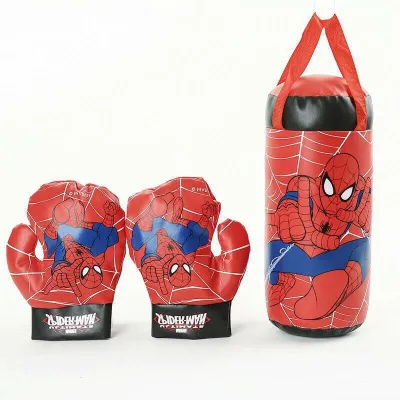


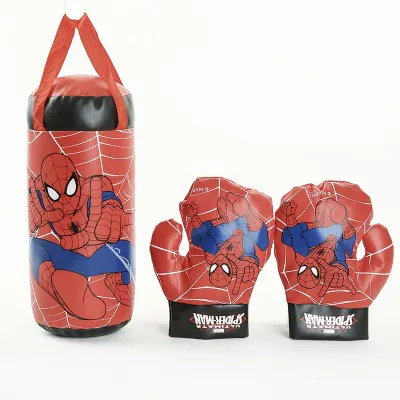

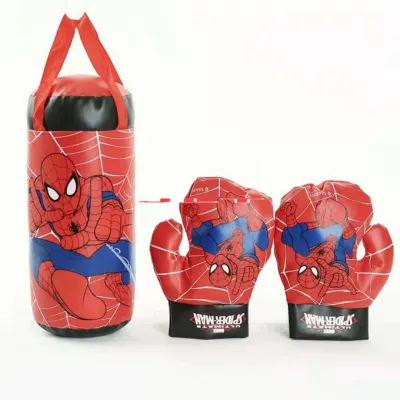
Prices are valid at publication and may change. Please refer to the product page for the latest price.
Finally, remove all environmental hazards. Walk around the designated training zone and identify any sharp furniture edges, glass windows, mirrors, or fragile decorative items. Even if an object seems outside the immediate reach of the bag, a slipping child or a missed punch can lead to unexpected contact. If you are setting up the corner in a multi-purpose room, use corner guards on nearby tables or temporarily move lightweight furniture out of the way during active training sessions. Ensuring a completely clear path allows your child to focus entirely on their form and movement without fear of bumping into household items.
Selecting and Installing Floor Protection
The flooring beneath a boxing set is just as important as the equipment itself, serving to absorb impact, protect your home’s subfloor, and provide essential traction. When comparing flooring options, interlocking foam mats (often made of “EVA foam”) and heavy-duty rubber tiles are the two primary candidates. Foam mats are highly popular for children’s spaces because they are lightweight, affordable, and offer excellent cushioning for lighter bodies. However, you must check the density of the foam; overly soft mats can compress too easily underfoot, leading to ankle instability. While high-quality rubber tiles may require a larger investment in pesos ₱ than basic foam, their durability, higher density, and exceptional slip resistance make them ideal if the setup will be used long-term or by older children.

Before laying down any protective flooring, inspect the condition of the subfloor. The surface must be completely level, clean, and dry. In humid regions, concrete subfloors can trap moisture beneath non-porous mats, creating a breeding ground for mold and mildew. Sweep away all dust and debris, and ensure there are no damp spots. If you are installing the mats over concrete, consider laying down a thin moisture barrier first, or plan to periodically lift the mats to inspect and air out the floor underneath.
When assembling interlocking mats, pay close attention to the seams. The tiles must fit together tightly without any gaps, warping, or curling edges. Loose seams or misaligned edges create immediate tripping hazards for a child moving quickly during footwork drills. If the mats tend to slide on a polished tile or hardwood floor, secure the outer perimeter with double-sided flooring tape or use a non-slip underlayment. A stable, unified floor surface ensures that your child can pivot, lunge, and plant their feet with confidence and safety.
Assembling and Securing the Boxing Set
Assembling a kids’ boxing set correctly is vital to prevent the unit from tipping over during use. Most freestanding boxing sets feature a hollow plastic base that must be filled to provide stability. Manufacturers typically recommend filling the base with either water or dry sand. While water is highly convenient to pour and drain, it can slosh around during heavy impacts, which slightly reduces the base’s overall stability. Furthermore, in warm climates, standing water inside a plastic base can eventually develop algae or leak if the cap seal degrades. Dry sand is significantly denser than water, providing a heavier, more stable anchor that eliminates sloshing. For the best results, use a funnel to fill the base with dry play sand, and ensure the cap is tightly sealed.
During the assembly process, carefully inspect the structural integrity of every component. Check the metal or plastic poles for any signs of bending, rust, or manufacturing defects. Pay close attention to the joints, spring mechanisms, and adjustable height collars. The height adjustment knob must tighten securely into the designated slots without slipping. If the set uses a spring-loaded neck to allow the bag to rebound, verify that the spring is properly lubricated and that the retaining bolts are fully tightened. A loose bolt or a slipping height collar can cause the bag to collapse unexpectedly mid-punch.
Before allowing your child to use the newly assembled set, perform a rigorous wobble test. Grasp the top of the punching bag and shake it firmly in several directions to simulate active use. Observe how the base reacts; if it lifts off the ground or slides excessively across the floor, you need to add more weight to the base or adjust the tension of the spring mechanism. If the base slides on your protective mats, placing a non-slip rubber pad directly underneath the base can help keep it anchored. Only when the unit remains firmly planted during your manual testing is it ready for your child’s first training session.
Organizing Gear and Setting Training Rules
A safe training corner requires organization and clear behavioral boundaries to prevent accidents and keep the space functional. Keep the training zone completely clear of clutter by establishing a dedicated storage system. Use breathable plastic bins or hanging mesh bags to store boxing gloves, hand wraps, and protective gear immediately after use. This not only prevents tripping hazards on the floor but also allows sweat-soaked gear to air out properly, which is especially important in humid environments to prevent the buildup of unpleasant odors and bacteria.
Before your child throws their first punch, establish a strict set of training rules that must be followed without exception. First, boxing equipment must only be used under direct adult supervision; unsupervised play can quickly lead to improper form or unsafe horseplay. Second, every session must begin with a brief, age-appropriate warm-up to prepare the muscles and joints for movement. Third, your child must always wear appropriate athletic footwear with non-slip soles to protect their feet and maintain grip on the mats. Bare feet or socks can easily slip on foam or rubber surfaces, leading to falls.
Finally, set clear limits on the duration and intensity of each training session. Children are often highly enthusiastic but may not recognize the early signs of physical fatigue or overexertion. Limit active punching sessions to short, structured intervals with mandatory water breaks. Monitor your child’s form; as they tire, their technique will naturally degrade, which significantly increases the risk of wrist strains or missed punches that strike the hard metal poles.
Inspecting and Maintaining the Setup
Maintaining a safe home boxing corner requires a commitment to regular inspections. Before every single training session, perform a quick visual check of the entire setup. Verify that the interlocking floor mats have not shifted or separated, creating gaps. Check the base of the punching bag for any signs of water leaks or escaping sand, and ensure that all adjustable knobs and structural bolts remain tightly fastened. Over time, the vibrations from repeated impacts can gradually loosen hardware, so keeping a small wrench nearby to tighten connections is a smart practice.
In addition to the hardware, inspect your child’s personal protective gear regularly. Examine the boxing gloves and hand wraps for signs of material wear, such as thinning foam padding, torn seams, or failing hook-and-loop fasteners. In humid climates, moisture retention can cause the internal padding of gloves to degrade rapidly, reducing their ability to absorb shock and protect your child’s wrists and knuckles. If you notice a persistent sour odor, visible mold, or a noticeable flattening of the padding, it is time to replace the gear.
Establish clear conditions under which training must stop immediately. If you observe any structural cracks in the plastic base, a bent adjustment pole, a failing spring, or if the punching bag begins to wobble excessively despite a fully weighted base, halt all use. Do not attempt temporary or makeshift repairs with tape or glue. Instead, consult the manufacturer’s manual or contact their customer support to obtain authorized replacement parts. Prioritizing equipment integrity ensures that your child’s training corner remains a secure space for physical growth.
Frequently Asked Questions (FAQ)
What is the minimum age for a child to start using a home boxing set?
Most manufacturers design introductory home boxing sets for children starting around five to six years of age. At this stage of development, children have typically acquired the basic motor skills, balance, and bilateral coordination required to stand, punch, and react to a moving target safely. However, age is secondary to individual maturity and physical readiness. Continuous, active adult supervision is absolutely mandatory during these early stages to guide their movement and prevent injury. If you are unsure about your child’s physical readiness, consider consulting a pediatrician or a qualified youth sports instructor for a personalized assessment.
Can a kids' boxing set be placed on a carpeted floor?
Placing a kids’ boxing set directly on a carpeted floor is generally not recommended due to stability and hygiene concerns. Thick or plush carpets can cause the weighted base of the boxing set to settle unevenly, leading to excessive tilting, shifting, or tipping during use. If your only available space is carpeted, you can place a solid, level plywood board over the carpet to create a stable foundation, provided the manufacturer’s instructions permit this setup. Additionally, you must regularly check for moisture retention beneath the base and mats, as trapped sweat and humidity can quickly lead to mold and mildew growth within the carpet fibers.

Community discussion
Share your experience or ask a question. Comments are reviewed before publication.