
Identifying a genuine Adela carabiner is a critical safety step for any climber in the Philippines before trusting their life to a piece of metal. In high-risk outdoor activities like mountain climbing, vertical rescue, and industrial rigging, a carabiner serves as a primary link in your safety chain. Counterfeit climbing hardware has become increasingly sophisticated, mimicking the visual appearance, colors, and markings of reputable brands while completely lacking the structural integrity required to hold a fall. Because a visual match does not guarantee that the metal has been properly heat-treated or forged, knowing how to perform a rigorous physical inspection is the only way to ensure your gear will perform when you need it most. This guide outlines the exact physical markers, mechanical checks, and purchasing strategies you need to verify the authenticity of your Adela carabiners.
Why Authenticity Matters in Climbing Carabiners
Carabiners are engineered to function as critical components within life-safety systems. During a fall, the carabiner must absorb and distribute sudden, high-impact forces to arrest the fall safely. Genuine climbing hardware is manufactured using precise metallurgical processes, such as hot forging or cold drawing of high-grade aluminum or steel alloys. This aligns the crystalline structure of the metal, allowing the hardware to withstand its rated load capacity without fracturing.
Visual inspection alone cannot reveal the internal structural integrity of a carabiner. While counterfeiters can copy the external shape and markings of an Adela carabiner, replicas are often made from cheap, cast metals containing internal air pockets or impurities. Under a sudden load, such as a fall arrest or a heavy haul, these hidden defects can cause the carabiner to snap instantly without warning. In mountain climbing, where a single gear failure can lead to catastrophic accidents, using unverified or counterfeit equipment is an unacceptable risk. Ensuring that every piece of hardware carries genuine, traceable manufacturer certifications is a fundamental rule of safe vertical progression.
Products mentioned in this guide
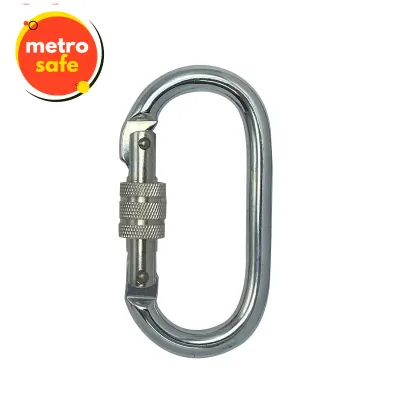
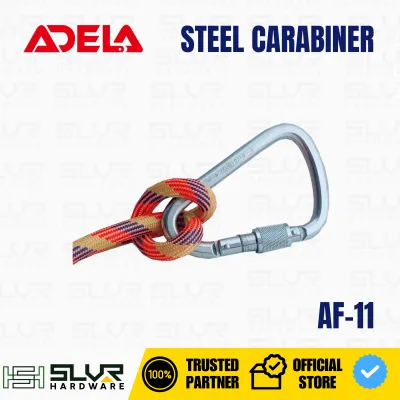
Prices are valid at publication and may change. Please refer to the product page for the latest price.
Observable Markers of Genuine Adela Carabiners
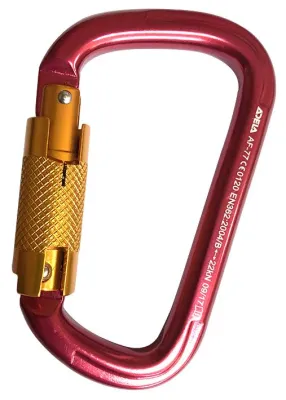
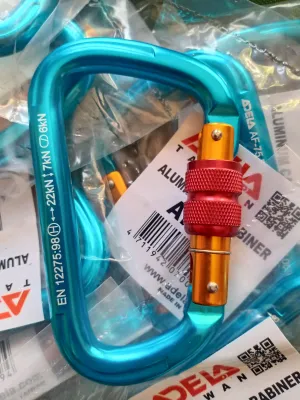
When evaluating an Adela carabiner, the first step is to conduct a detailed physical audit of its markings and construction. Genuine Adela climbing and industrial safety carabiners feature deeply stamped or highly precise laser-etched markings on the spine. These markings typically include the manufacturer’s name, the specific model identifier, the rated strength in kilonewtons (kN) for major axis, minor axis, and open-gate configurations, and relevant safety standards such as CE or EN codes. These markings should be perfectly aligned, sharp, and legible. Any blurring, uneven depth, or spelling errors in the etched text indicate a high probability of a counterfeit product.

The mechanical action of the gate and locking mechanism provides another reliable indicator of authenticity. A genuine carabiner is built with tight manufacturing tolerances, resulting in a smooth, fluid gate motion. When you open the gate, it should pivot without grinding, catching, or lateral play at the hinge. The spring tension should feel firm and consistent, snapping the gate shut instantly when released. For screw-gate or auto-locking models, the locking sleeve must thread smoothly along the gate without wobbling or binding. If the sleeve feels loose, grinds against the threads, or fails to align perfectly with the nose of the carabiner, the item does not meet the quality standards of a genuine manufacturer.
Packaging and documentation offer further clues during your inspection. Genuine Adela carabiners are supplied with comprehensive safety manuals, user instructions, and technical specifications written in clear, professional language. This documentation outlines the correct usage, maintenance procedures, and retirement criteria for the specific model. The packaging should also display a traceable batch or serial number that matches the number engraved on the carabiner itself. If your carabiner arrives in a plain plastic bag without any documentation, or if the printed safety instructions contain obvious typographical errors and poor translations, you should treat the gear with extreme suspicion.
Finally, you can verify the physical dimensions and weight of the carabiner against the official specifications listed on the manufacturer’s authorized channels. Counterfeiters often use different metal alloys or casting methods, which results in a product that is either noticeably heavier or lighter than the genuine model. Using a precise digital scale, weigh the carabiner and compare the reading to the official product catalog. Even a discrepancy of a few grams, when combined with other minor physical variations, is a strong indicator that the carabiner is not genuine.
Red Flags: Identifying Potential Counterfeits
Spotting a counterfeit carabiner requires a keen eye for manufacturing imperfections that are common in low-cost replica facilities. One of the most prominent red flags is poor surface finishing. Genuine Adela carabiners undergo rigorous deburring and anodizing processes to ensure there are no sharp edges that could cut or abrade a climbing rope. Inspect the inner radius of the basket, the gate hinge, and the nose area. If you feel sharp burrs, rough machining marks, or uneven anodizing where the color appears faded or blotchy, the carabiner has not undergone professional quality control.
Another major warning sign is the quality and type of certification markings. Counterfeiters frequently paint or print safety logos onto the metal surface rather than engraving or stamping them. These painted markings can be easily scratched off with a fingernail or a key. Furthermore, check the specific certification codes printed on the spine. Genuine carabiners list valid CE or EN standards that correspond to personal protective equipment (PPE). If the markings list non-existent standards, generic numbers, or mismatching codes that do not align with the manufacturer’s official documentation, the certification is fake.
Pricing is a highly reliable indicator of risk in the local market. If you encounter an Adela carabiner listed on an online marketplace or social media group at a price in ₱ that is significantly lower than the standard retail rate at authorized outdoor shops, you should assume it is a counterfeit. High-quality, certified climbing hardware cannot be manufactured or sold for a fraction of its market value. While finding a bargain is appealing, saving a few hundred pesos is never worth risking a catastrophic gear failure on a cliffside.
Additionally, pay close attention to the overall presentation and shipping origin of the product. Flimsy, unbranded packaging, missing safety warnings, and listings from unverified overseas sellers on ecommerce platforms are common indicators of counterfeit distribution networks. Genuine safety gear is distributed through structured supply chains that prioritize quality assurance, traceability, and customer support. If a seller cannot provide clear answers about the origin of their stock or refuses to show close-up photos of the actual product markings, avoid making the purchase.
Verification Methods and Trusted Purchasing Channels
To guarantee the safety of your climbing kit, you must establish a reliable verification routine and buy only from trusted sources. Before purchasing any Adela carabiner, consult the official manufacturer website or contact their customer service department to obtain a list of authorized distributors and retail partners in the Philippines. Buying directly from these recognized dealers is the most effective way to eliminate the risk of acquiring counterfeit hardware. Established outdoor specialty stores and official brand storefronts maintain strict quality control standards and source their inventory directly from the manufacturer.
If you have already purchased a carabiner and want to verify its authenticity, you can contact the manufacturer or a local authorized dealer directly. Take high-resolution, clear photographs of the carabiner from multiple angles, focusing closely on the engraved markings, the gate hinge, the locking sleeve, and any serial numbers. Send these images along with the batch number to the manufacturer’s technical support team. They can cross-reference the serial number with their production records to confirm if the item is a genuine product from their factory.
When navigating online marketplaces, avoid buying from third-party sellers who do not have a proven track record or official authorization. Look for sellers that carry official brand badges or are highly rated within the local climbing community. If you are purchasing a carabiner from the secondary market or a peer-to-peer platform, always request the original proof of purchase, such as a retail receipt or an invoice from an authorized dealer. A genuine seller who cares about safety will understand your concerns and should be willing to provide this documentation to prove the gear’s history.
Action Plan: Handling Suspected Fake Gear
If your physical inspection or verification process leads you to suspect that an Adela carabiner is counterfeit, you must take immediate action to protect yourself and the wider climbing community. First and foremost, immediately retire the carabiner from any life-safety, climbing, or load-bearing system. Do not use it for belaying, anchoring, hauling, or even as a gear loop connector where a failure could cause a heavy object to fall. Mark the carabiner clearly with a permanent marker or physically deform it so that no one else can accidentally find and use it for climbing in the future.
Next, document the counterfeit product thoroughly. Take clear photos of the physical defects, the fake markings, the packaging, and any labels. Keep a detailed record of your transaction, including the seller’s name, the online store link, the purchase date, and any communication you had with the seller. This documentation will be essential when you initiate a return or refund process through the ecommerce platform’s buyer protection program. Most reputable platforms have strict policies against the sale of counterfeit safety equipment and will issue a refund if you provide clear evidence.
Finally, report the fraudulent listing to the platform’s customer support and relevant consumer protection agencies. By reporting the seller, you help prevent other climbers from unknowingly purchasing dangerous, unverified hardware. Share your findings within local climbing clubs, gym communities, and online forums in the Philippines to raise awareness about the presence of counterfeit Adela gear in the market. Collective vigilance is one of the strongest tools the climbing community has to keep unsafe equipment off our crags.
Frequently Asked Questions (FAQ)
Can I use a suspected fake carabiner for non-climbing purposes? (FAQ)
No, you should not use a suspected fake carabiner for any task where its failure could result in injury, property damage, or the loss of valuable equipment. While it may be tempting to repurpose a rejected carabiner as a keychain, a dog leash connector, or a way to hang light camping gear, counterfeit metals are highly unpredictable. A sudden fracture can occur even under minimal tension, causing sharp metal fragments to fly off or allowing your gear to drop and break. If you cannot verify the material composition, manufacturing origin, and load rating of a carabiner, the safest course of action is to destroy and discard the item entirely.
Do all genuine Adela carabiners have a UIAA certification? (FAQ)
Not all genuine Adela carabiners carry a UIAA (International Climbing and Mountaineering Federation) certification, as this depends entirely on the specific model and its intended application. Adela manufactures a wide range of hardware, including industrial safety connectors, fall protection equipment, and general utility hardware, alongside climbing-specific gear. While industrial models are certified to rigorous standards like CE or EN, they may not carry the UIAA label if they were not designed specifically for recreational mountaineering. To verify what certifications your specific model should have, always consult the official Adela product catalog and match the stamped codes on your carabiner’s spine with the manufacturer’s specifications. Never assume a carabiner is safe for climbing based solely on its appearance; it must carry the correct, verified certifications for your specific activity.

Community discussion
Share your experience or ask a question. Comments are reviewed before publication.