
Finding an original racket in a market flooded with convincing replicas requires a sharp eye and a systematic approach to inspection. As badminton continues to be one of the most popular sports in the Philippines, played on indoor courts, barangay spaces, and school gymnasiums alike, players frequently look to upgrade their gear. However, the prevalence of counterfeit rackets makes it easy to accidentally purchase a low-quality replica. Distinguishing a genuine racket from a fake requires focusing on physical details, manufacturing quality, and verification steps before you finalize your purchase.
By understanding the specific markers of genuine equipment, you can protect your investment and ensure you are playing with gear that supports your skill development. Whether you are an intermediate player joining local tournaments or a casual player enjoying weekend matches, knowing how to spot a fake is an essential skill for any badminton enthusiast.
The Risks of Buying Counterfeit Badminton Rackets
Investing in a counterfeit racket introduces significant practical risks to your game, your wallet, and your physical safety. Genuine rackets are engineered using advanced carbon fiber composites designed to withstand high string tensions, often exceeding 28 to 30 pounds. Counterfeit rackets, on the other hand, are typically constructed from cheap aluminum, low-grade graphite, or recycled plastics painted to look like premium materials. When subjected to standard stringing tensions, these substandard frames can warp, crack, or catastrophically snap, potentially sending sharp fragments toward your face or eyes during a powerful swing.
Products mentioned in this guide
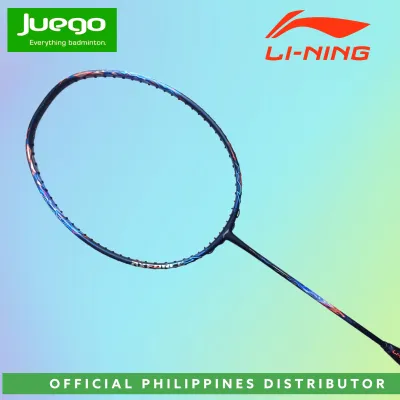
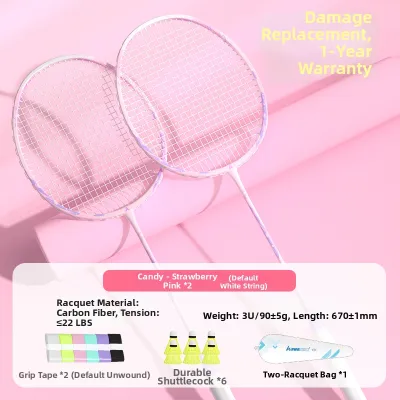
Prices are valid at publication and may change. Please refer to the product page for the latest price.
In the humid tropical climate of the Philippines, counterfeit rackets deteriorate even faster than usual. Cheap wooden handles on fake rackets are often not treated to resist moisture, leading to rapid rotting, mold growth, and structural softening under the grip due to sweat and humidity. Furthermore, the low-grade adhesives used to bond the shaft and cone can degrade quickly when exposed to heat, causing the racket to wobble or separate during intense rallies.
Beyond the safety hazards, the performance of a fake racket is highly unpredictable. Original rackets undergo strict quality control to ensure precise weight distribution, specific shaft flexibility, and effective shock absorption. A counterfeit model often suffers from an uneven balance point, an overly stiff or excessively whippy shaft, and poor vibration dampening. This lack of shock absorption transfers the impact of every hit directly to your wrist, elbow, and shoulder, increasing the risk of sports injuries like tennis elbow. Finally, fake rackets come with no manufacturer warranty or after-sales support, meaning a single frame fracture results in a complete loss of your money.
Key Visual and Physical Markers of an Original Racket
To identify an original racket, you must pay close attention to the fine details that counterfeiters often fail to replicate accurately. One of the most reliable indicators is the presence of holographic security stickers. Genuine manufacturers place multi-layered holographic decals on the cone of the racket. When you tilt the racket under direct light, these stickers should display clean, sharp color shifts and distinct patterns rather than a flat, dull reflection.

Another critical area to inspect is the serial number. Original rackets feature laser-engraved serial numbers on both the shaft and the cone. These numbers are not simply printed on the surface; they are etched into the material. If you run your fingernail gently over the serial number, you should feel a slight indentation. The font of these engravings is always uniform, crisp, and perfectly aligned, with consistent spacing between each character.
In the Philippines and wider Southeast Asia, genuine rackets often feature a specific distributor sticker on the shaft or handle, such as the Sunrise sticker for certain major brands. This sticker contains a scratch-off area revealing a unique verification code that can be checked online. Ensure this sticker is present, intact, and matches the official distributor’s design.
The overall paint job and decal application also reveal a racket’s authenticity. Genuine rackets undergo a meticulous painting and curing process, resulting in a smooth, flawless finish. The colors are vibrant, the lines are sharp, and the decals are perfectly symmetrical across the frame. There should be no paint runs, bubbles, rough patches, or misaligned graphics.
Finally, examine the base cap at the bottom of the handle. The manufacturer’s logo on the base cap of an original racket is deeply embossed, sharp, and centered. The color of the cap itself is consistent with the brand’s official specifications. If you remove the grip, the wooden handle underneath should be clean, smooth, and properly shaped, without splinters or uneven cuts.
Common Red Flags and Flaws in Fake Rackets
Counterfeiters operate on tight budgets and high-volume production, which inevitably leads to visible manufacturing shortcuts. One of the most common red flags is poor typography. Inspect all printed text on the frame, shaft, and cone very closely. Fake rackets often feature misspelled brand names, blurry fonts, uneven letter spacing, and smudged ink. The technical specifications, such as weight and grip size indicators, may use incorrect terminology or fonts that do not match the brand’s standard style.
The structural joints and grommets are also prime areas for flaws. On a counterfeit racket, the plastic grommets through which the strings pass are often unevenly spaced, loose, or made of brittle plastic that splits under tension. The joint where the shaft meets the cone may show visible glue residue, uneven gaps, or a slight wobble when twisted gently. These imperfections indicate a lack of structural integrity and poor assembly standards.
Pricing is another major indicator of authenticity. While everyone loves a good deal, suspiciously low prices should immediately raise suspicion. Premium badminton rackets from top brands generally retail for several thousand pesos in the Philippines. If an online seller offers a highly sought-after, professional-grade model for ₱1,000 to ₱2,000, it is highly likely to be a counterfeit. Genuine high-end rackets are rarely discounted by 70% or 80%, even during major online shopping events.
Steps to Verify Racket Authenticity Before Checkout
Before finalizing your purchase, especially when shopping online, take proactive steps to verify the racket’s authenticity. Start by utilizing official verification tools. Many leading badminton brands have dedicated authentication portals on their websites. You can enter the unique serial numbers found on the shaft and cone to check if they are registered in the manufacturer’s database. Be aware, however, that some advanced counterfeiters copy real serial numbers, so this step should be combined with physical inspections.
If you are buying from an online seller, do not rely solely on stock photos. Request high-resolution, unedited photos of the actual racket you will receive. Specifically ask for clear close-ups of the cone engraving, the holographic sticker, the base cap logo, and the inner frame grommets. A legitimate seller who is confident in their product’s authenticity will usually accommodate these requests.
Once you have these photos, compare them directly with the official product catalog or listings from authorized retailers. Check the exact colorways, the placement of specific decals, and the technical specifications. Even minor differences in color shade or the position of a warning label can confirm that a racket is a replica.
Choosing Safe Purchasing Channels and Handling Suspected Fakes
The most effective way to avoid counterfeit rackets is to buy exclusively from authorized channels. Prioritize physical sports specialty stores located in reputable malls, or purchase from official brand flagship stores on established e-commerce platforms. These outlets source their inventory directly from official distributors, ensuring that every product is genuine and covered by a valid manufacturer warranty.
If you decide to purchase from a third-party seller on an online marketplace, perform thorough due diligence. Check the seller’s overall rating, read customer reviews carefully, and look for reviews that include photos of the delivered rackets. Avoid sellers with a history of complaints regarding product authenticity or those who offer vague answers when asked if their products are original.
In the event that you receive a racket and suspect it is a fake, document everything immediately. Record a continuous, unedited video of the unboxing process, showing the shipping label, the packaging, and close-ups of the suspected flaws. This video serves as crucial evidence if you need to file a dispute with the e-commerce platform’s customer support. You can also report the seller to local consumer protection agencies to help prevent other players from falling victim to counterfeit goods.
Frequently Asked Questions (FAQ)
Can a fake badminton racket perform as well as an original racket?
No, a counterfeit racket cannot match the performance of an original racket. Fake rackets lack the advanced materials and precise engineering required for consistent shaft flex, accurate weight distribution, and effective shock absorption. This results in poor energy transfer, reduced control, and a significantly higher risk of the frame cracking or shattering under standard string tension.
Is a high price a guarantee that a badminton racket is original?
No, a high price tag is not a guarantee of authenticity. Some dishonest sellers price counterfeit rackets close to the standard retail price of genuine models to make them appear legitimate and avoid raising suspicion. Always rely on physical markers, serial number verification, and purchasing from authorized retailers rather than relying solely on the price.

Community discussion
Share your experience or ask a question. Comments are reviewed before publication.